
‘Ghost’ island fades away after mysteriously appearing in Caspian Sea. See it vanish
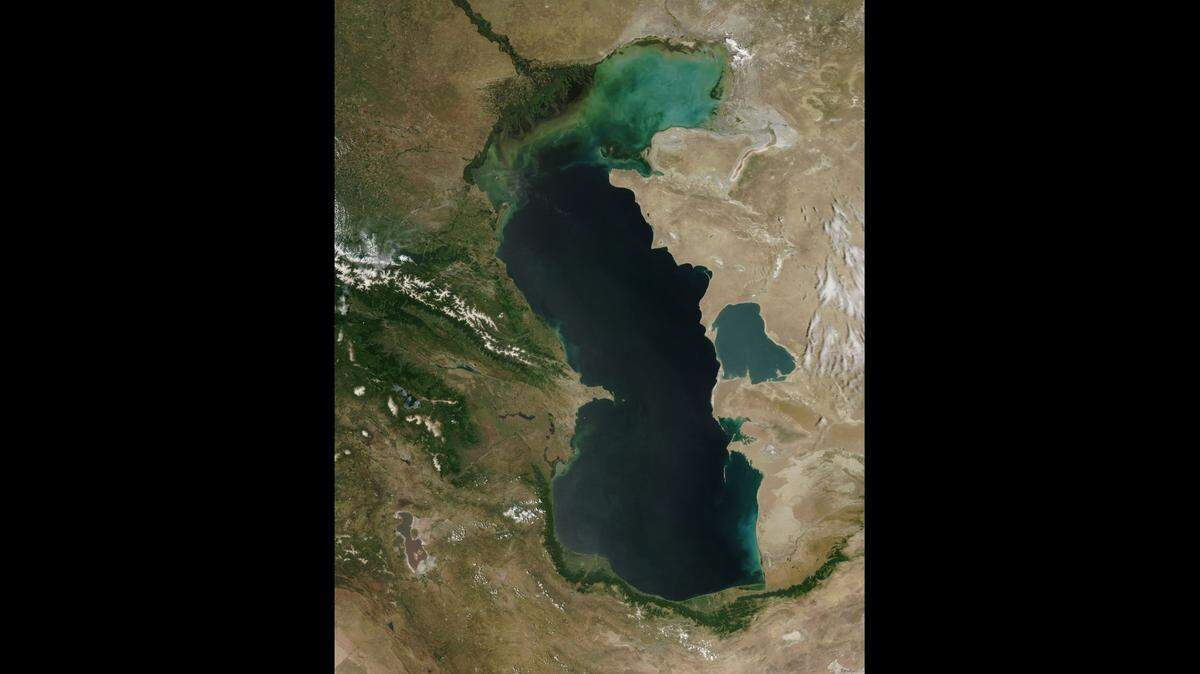
Like some sort of modern Atlantis, a “ghost” island has largely vanished just over a year after being discovered, according to NASA’s Earth Observatory.
The landmass, spotted by satellite in the Caspian Sea Feb. 14, 2023, is believed to have been birthed a month earlier by an eruption of the Kumani Bank mud volcano, the observatory said in a news release.
That eruption went unknown until the island was noticed 15 miles east of Azerbaijan, a nation bordering Iran, Armenia, Georgia, Turkey and Russia.
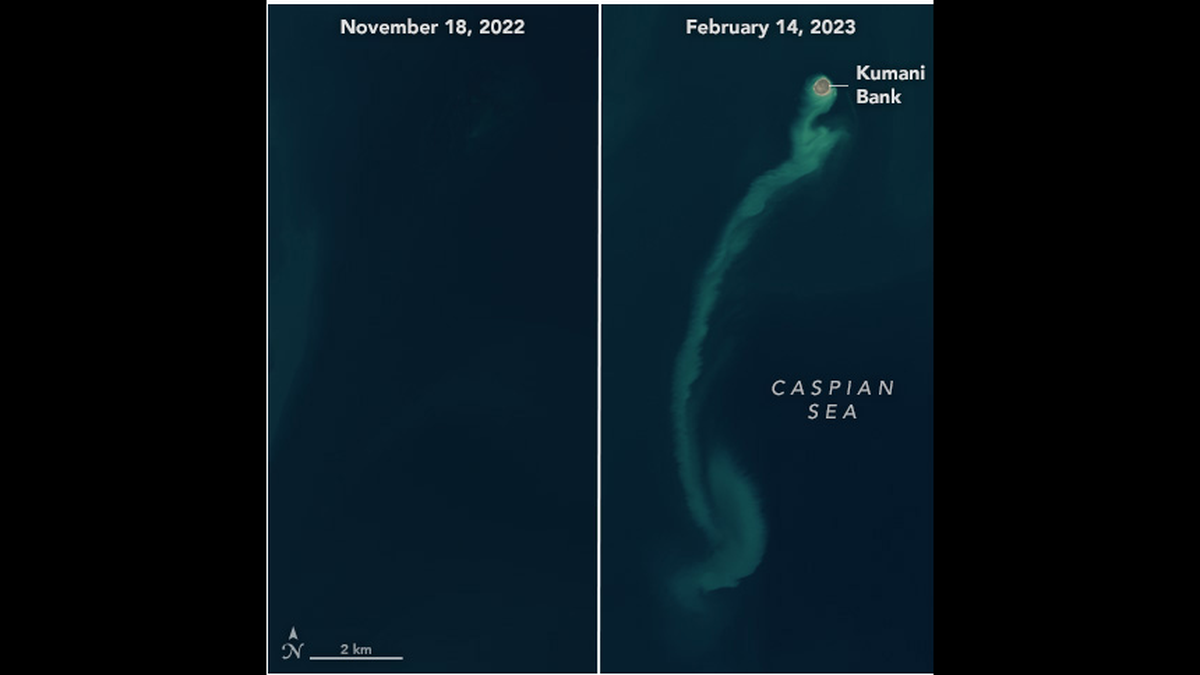
It’s estimated the island reached 1,300 feet across — just over the length of four football fields — at its largest.
A Dec. 25 satellite image shows the doomed island has largely vanished, perhaps before anyone dared set foot on it.
“It is uncertain if the 2023 Kumani Bank eruption was fiery, but past eruptions of this and other nearby mud volcanoes have sent towers of flame hundreds of meters into the air,” NASA noted.
.png "ghost island 2_fitted (1).png")
The Caspian Sea covers 143,200 square miles between Europe and Asia and the region’s 300 “weird and wonderful” mud volcanoes are largely understudied, according to researcher Mark Tingay of Australia’s University of Adelaide.
Mud volcanoes are like classic volcanoes but instead of molten rock, they spew a mixture of fluid and sediment.
“Powerful eruptions of the Kumani Bank mud volcano have produced similar transient islands several times since its first recorded eruption in 1861,” NASA reports.
“A May 1861 event resulted in an island just 87 meters (285 feet) across and 3.5 meters (11.5 feet) above the water. This one eroded away by early 1862. The strongest eruption, in 1950, produced an island 700 meters (2,300 feet) across and 6 meters (20 feet) high.”
This story was originally published January 10, 2025 at 2:15 PM with the headline "‘Ghost’ island fades away after mysteriously appearing in Caspian Sea. See it vanish."