Ancient sacrificial burial — of dismembered pregnant woman — discovered in Ecuador

On the ancient shores of Ecuador, the Manteño people were experts of the sea.
The coastal community invested in agriculture and public architecture, and became recognized in the long-distance trade network for their chaquira beads made from the insides of shells.
In 2006, surveys discovered a Manteño occupation with house mounds, waste piles and what is believed to be water management features. But it wasn’t until 2009 that human burials were discovered after local residents reported the graves eroding and artifacts being exposed, according to a study published Jan. 23 in the peer-reviewed journal Latin American Antiquity.
The graves were excavated in 2022, but one of them was unlike the others.
The burial of a young woman, possibly as young as 17, was identified as “burial 10” and dated to between 771 and 953 A.D., according to the study.
Fetal cranial fragments were found near her pelvis, indicating she was pregnant at the time of her death, and her hands and left leg were not with the rest of her body, researchers said.
Development of the fetal bones suggests the woman was 7 to 9 months pregnant.
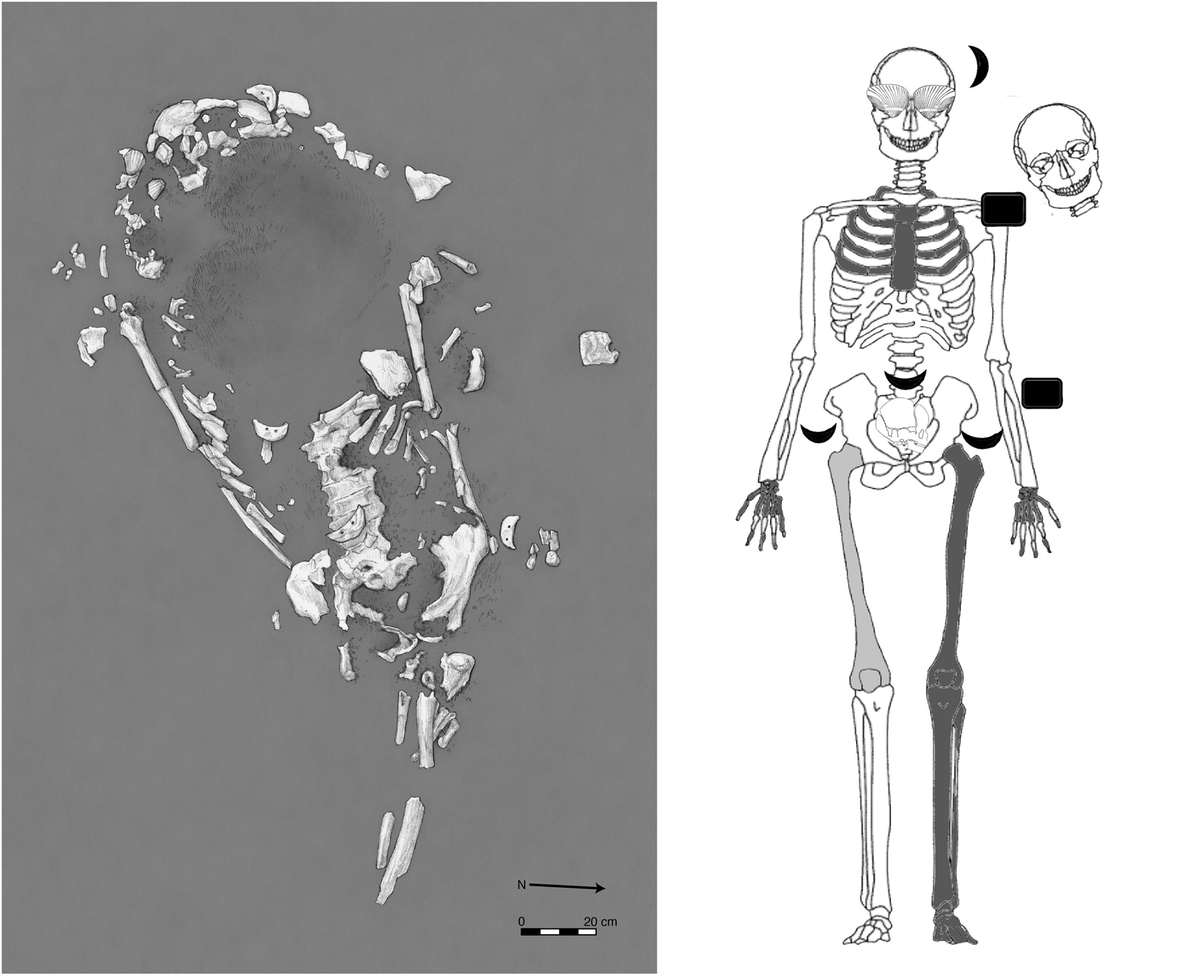
“Two ark clam shells covered the eye orbits, next to a large green clay stone and several ceramic fragments on the forehead,” researchers said.
Crescent-shaped shell pieces were found around her body, with two shell pendants along with beads at her shoulder and hip, according to the study.
Along with the woman’s body, the skull of a 25- to 35-year-old person was discovered, along with a burnt offering that had been placed in the chest cavity of the woman’s body.
The offering was dated to 991 to 1025 A.D., potentially centuries after the woman died, according to the study.
Evidence on the bones suggests the woman died from blunt force trauma to the head, and her hands and leg had been removed after her death, researchers said.
“We suggest the following sequence of events around the time of death of Burial 10. First, Burial 10 received a blow to the head (intentional or accidental) and died. Before burial but around the time of death, her hands and left leg were removed,” researchers said. “She was then buried in an earthen pit with a mix of Manteño and earlier offerings. Later, the burial was reopened, whether through accidental discovery or because the spot was marked, and a burnt offering was placed on her chest.”
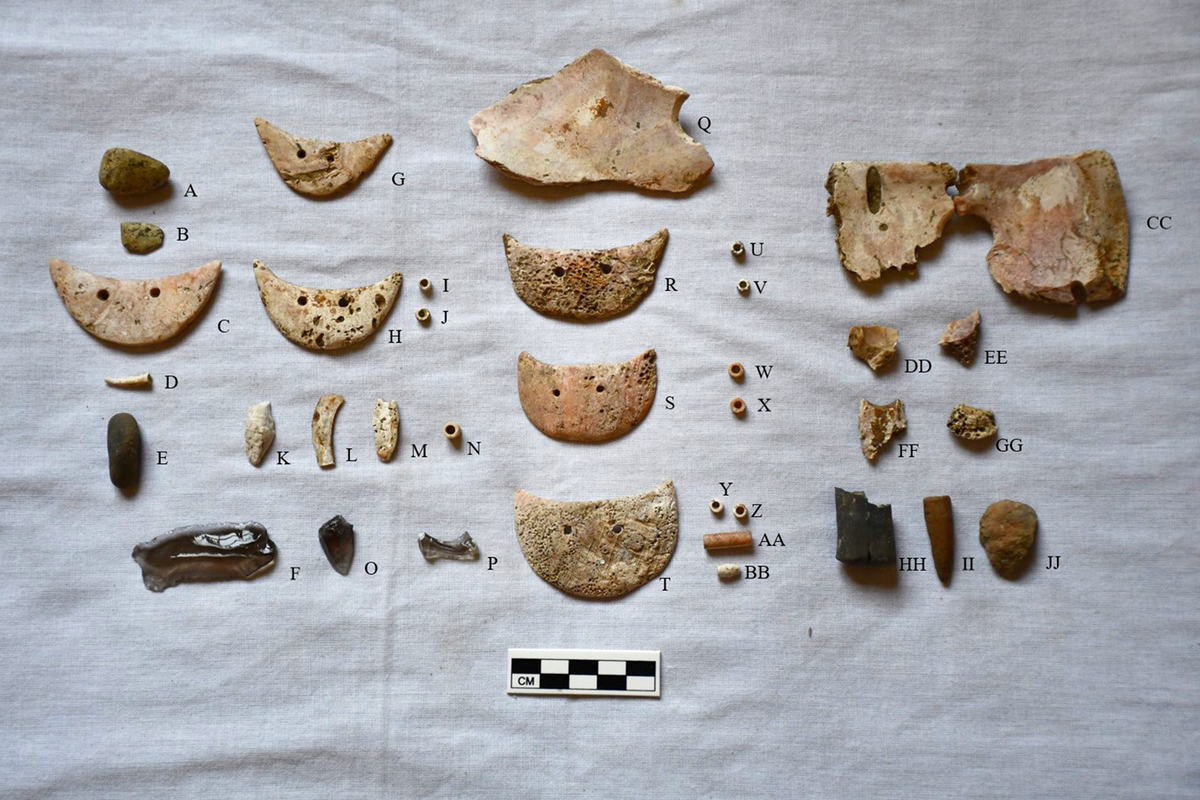
The head trauma and limb removal suggests the woman was “sacrificed or treated in a violent manner around the time of death,” according to the study.
“Evidence for human sacrifice in coastal Ecuador is rare but not entirely absent. European chroniclers mentioned that human sacrifice occurred when a local leader died or to ask favors from local deities,” researchers said.
The positioning of the woman suggests her wrists were tied together behind her back when she was buried. Researchers offer two possible explanations.
The woman died during a significant El Niño period that would have disrupted crop yields and impacted the community’s agriculture, so she may have been sacrificed because of her literal fertility in hopes of bringing back fertile soil, study author Sara Juengst told LiveScience.
A green stone found with the woman dates to a different culture, the Valdivian, who lived before the Manteño. The stone represented death and fertility to that group.
Alternatively, the woman may have been killed because of her power or social status, indicated by her “enigmatic” burial.
“If a rival of this woman wanted to take over, they would need to eliminate her and her unborn offsprings, but also give her honor based on her status,” Juengst told the outlet.
The burial was found along the coast of central-western Ecuador.
The research team includes Juengst, Sarah M. Rowe, Guy S. Duke, Mara Stumpf, Mozelle Bowers and Y. Zindy Cruz.
This story was originally published January 27, 2025 at 1:22 PM with the headline "Ancient sacrificial burial — of dismembered pregnant woman — discovered in Ecuador."