Tiny ‘pygmy’ creature vanished for over a century. Scientists just found it in Germany

A tiny, elusive moth species that can only feed on one kind of tree has been spotted in Germany after more than a century of going unseen in Europe.
Stigmella torminalis, a pygmy moth with a wingspan of less than 0.5 centimeters and tufts of black or orange hair on its head, was found in 2021 in Hesse, according to a study in the peer-reviewed journal Nota Lepidopterologica.
The species feeds on and lays its eggs exclusively on the wild service tree, Torminalis glaberrima, or “Elsbeere” in German. They’re a leaf-mining breed, leaving a telltale sign of their presence when they eat their way into the leaves — a tunnel and trail of waste.
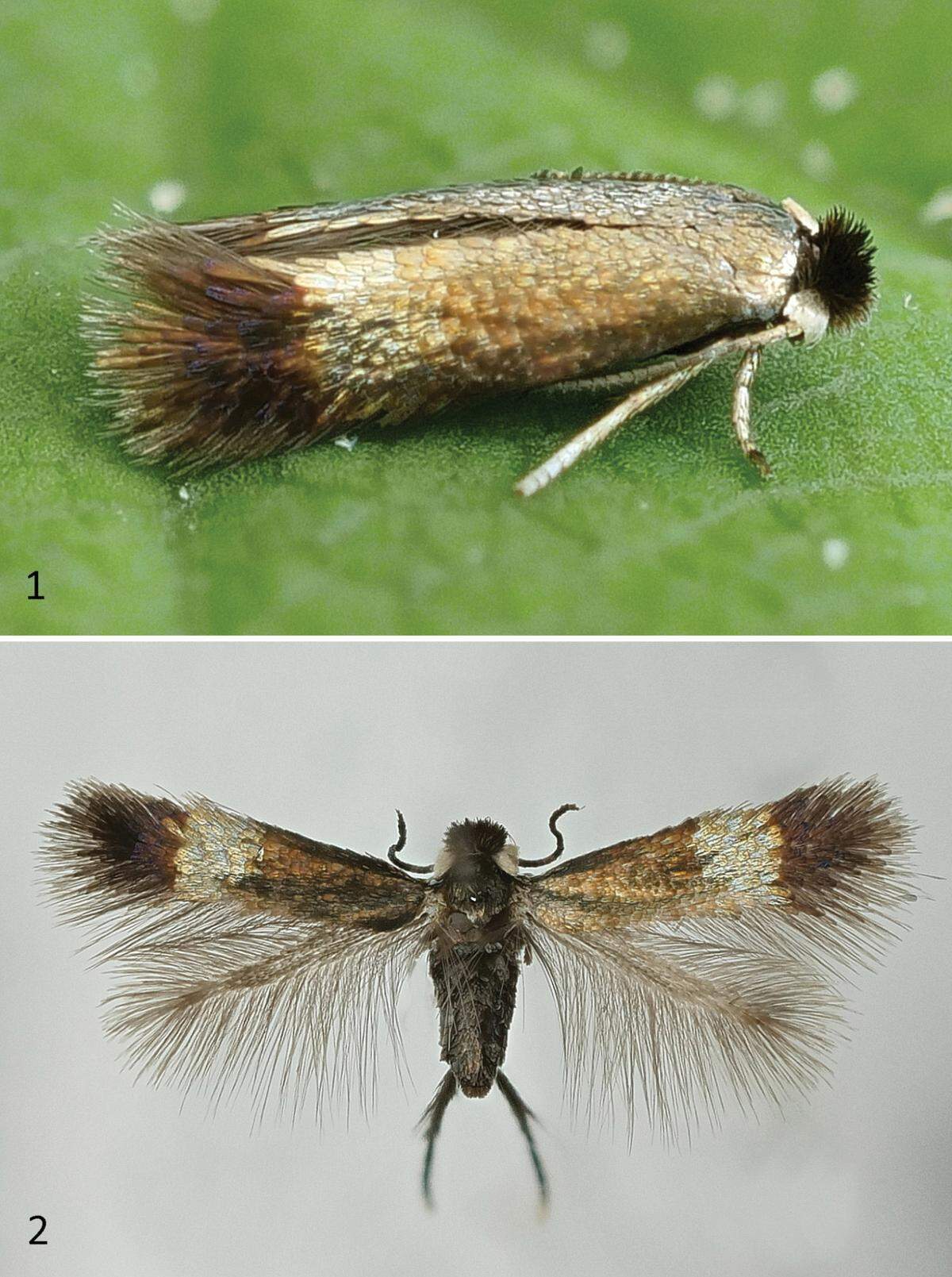
Researchers said coauthor Dieter Robrecht found the moths during fieldwork for the 2024 edition of a German publication.
The study also says a group of German amateurs and professionals began studying microlepidoptera, tiny moths and butterflies, in recent years, renewing interest in the subject.
The species was originally identified by John H. Wood on July 10, 1890, near Tarrington, England. After the discovery, Wood raised adult moths and distributed them to British collectors, and the species was described and mentioned in all major British handbooks, according to the study.
But after its discovery, it was never seen in the British Isles again.
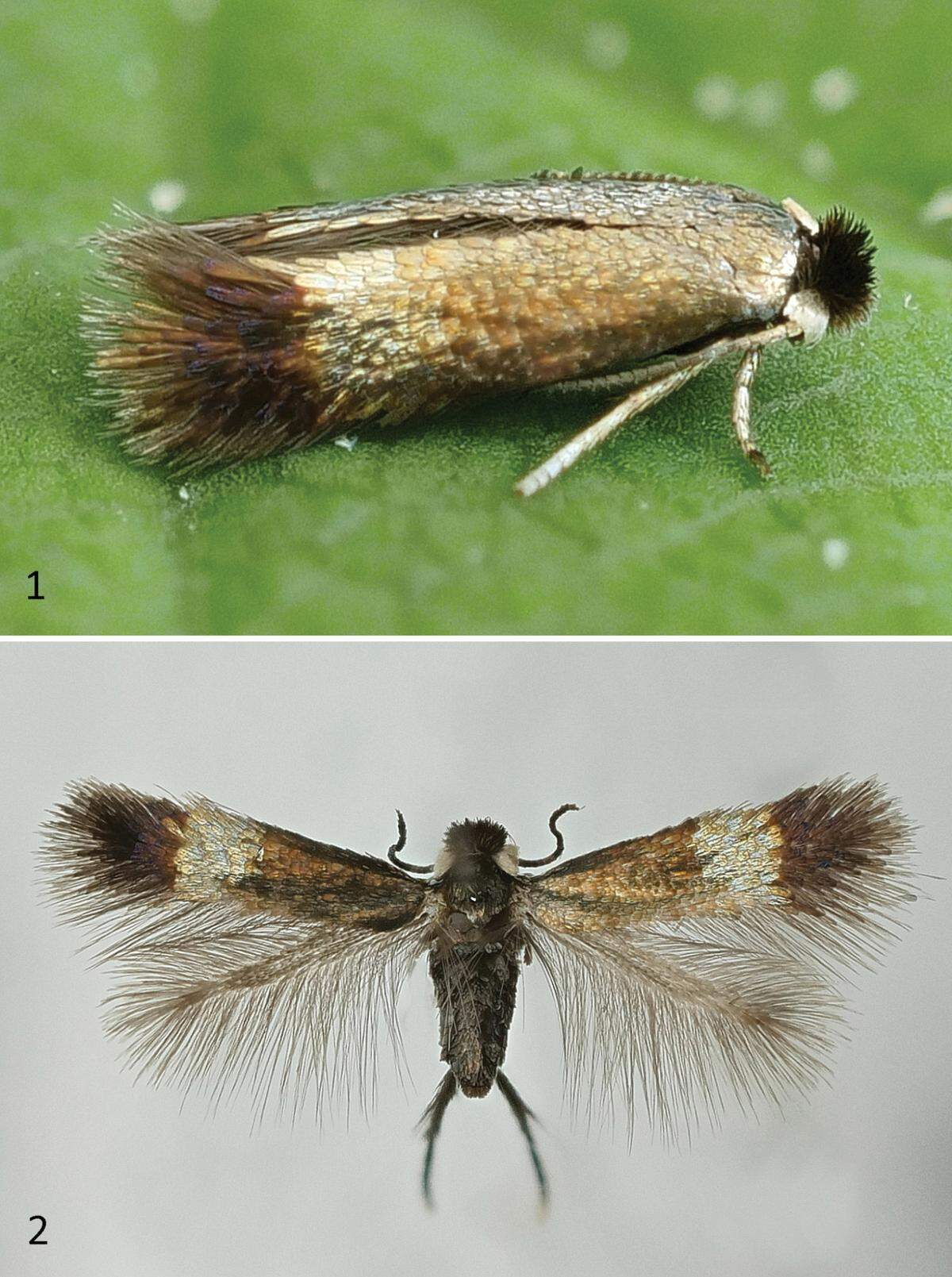
According to the study, the first record of the moth in Germany was in the handbook by a researcher named Hering in 1932. He acknowledged an earlier collector, Friedrich Eppelsheim, who lived in Grünstadt and focused on microlepidoptera.
“So far I have paid little attention to this genus, but I have almost all the species occurring in the Palatinate through the kindness of the late Chief magistrate Eppelsheim in Grünstadt, who devoted the last years of his life almost exclusively to the breeding of these smallest of the small,” Hering wrote.
No adults have been found in the wild, but researchers track the species down by finding wild service trees and searching for leaf mines, larvae or the pale orange-brown cocoons.
“Larvae were found in late June and July in England, Germany and Hungary, between 17 July and 4 August in the Crimea. Vacated leaf mines can still be found later… All adults emerged (in captivity) after hibernation the next spring, in May and June,” the study says.
Researchers hypothesize that France might also be home to the moths, as the country has one of the largest populations of wild service trees.
“Stigmella torminalis is still unknown from France,” the study says, “but almost certainly will be found there when searched for; localities in Belgium and Germany are not far away from its borders.”
Hesse, where the moth was found, is about a 60-mile drive northeast of Frankfurt.
This story was originally published February 27, 2025 at 3:36 PM with the headline "Tiny ‘pygmy’ creature vanished for over a century. Scientists just found it in Germany."