
Mystery on Pacific seafloor proves to be part of daring WWII saga, US Navy says
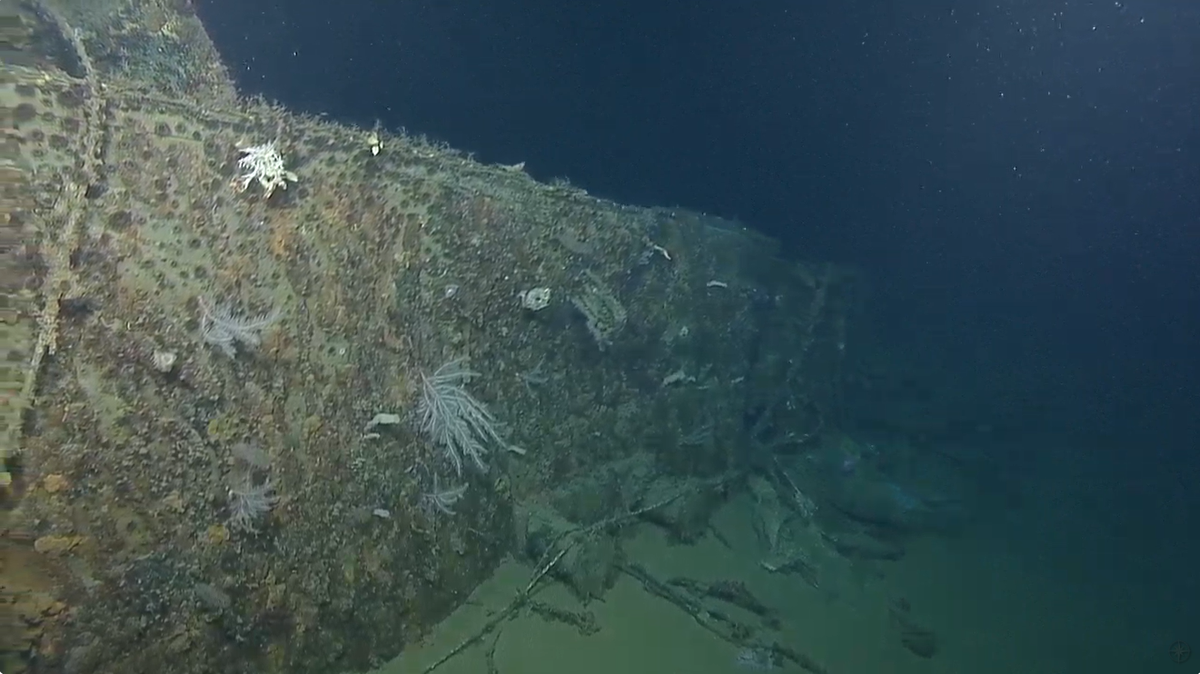
A mysterious object spotted on the South Pacific seafloor has been identified as the bow of a torpedoed World War II ship that famously sailed thousands of miles backwards to avoid sinking, historians say.
The nearly 100-foot long section of the USS New Orleans was found Sunday, July 6, by the Ocean Exploration Trust as it searched the seafloor near Guadalcanal with a remotely operated vehicle.
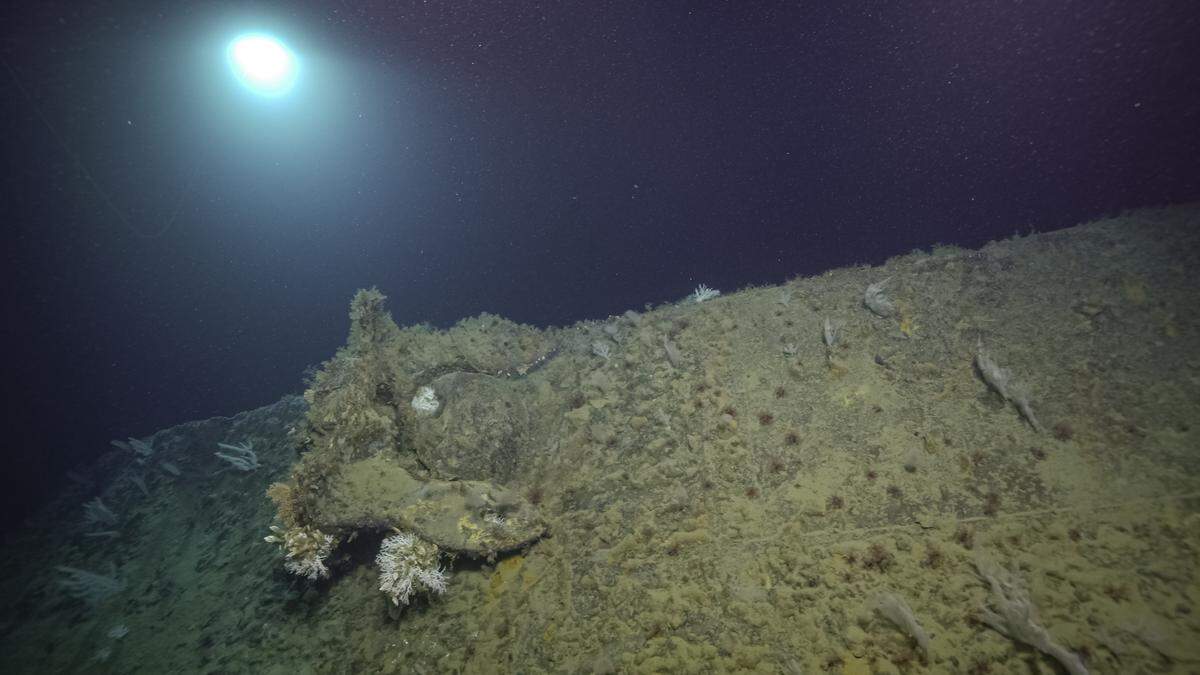
A positive identification was made with the help of paint fragments still clinging to the hull, along with an engraved anchor, the trust reported.
_fitted.jpeg "USS New Orleans with missing bow in Tulagi Harbor (1)_fitted.jpeg")
The bow, which fell to a depth of 2,214 feet, had been unaccounted for since Nov. 30, 1942, when a Japanese torpedo detonated the ship’s forward magazines during the Battle of Tassafaronga, the National WWII Museum reports.
The impact killed 182 men and left the USS New Orleans struggling to stay afloat, but the crew refused to give up, the museum says.
What happened next counts as an “improbable story,” the trust says.
To avoid the ship sinking, sailors “jury-rigged a bow of coconut logs” brought from shore, then sailed “backward to the United States for permanent repairs,” the trust reports.
A remarkable feat
The use of coconut trees was “sheer ingenuity” and the perilous voyage in reverse was “a remarkable feat of long-distance seamanship,” the Naval Historical Society of Australia wrote in a report about the ship docking briefly at Sydney for temporary repairs.
However, those accomplishments were never celebrated because of “wartime censorship restrictions,” the society says.
Discovering the bow is giving historians a second chance to highlight American grit at its most audacious.
“By all rights, this ship should have sunk, but due to the heroic damage control efforts of her crew, USS New Orleans became one of the most grievously damaged U.S. cruisers in WWII to actually survive,” according to Naval History and Heritage Command Director Samuel J. Cox, a retired U.S. Navy Rear Admiral.
“To find the bow of this ship is an opportunity to remember the sacrifice of this valiant crew, even on one of the worst nights in U.S. Navy history.”
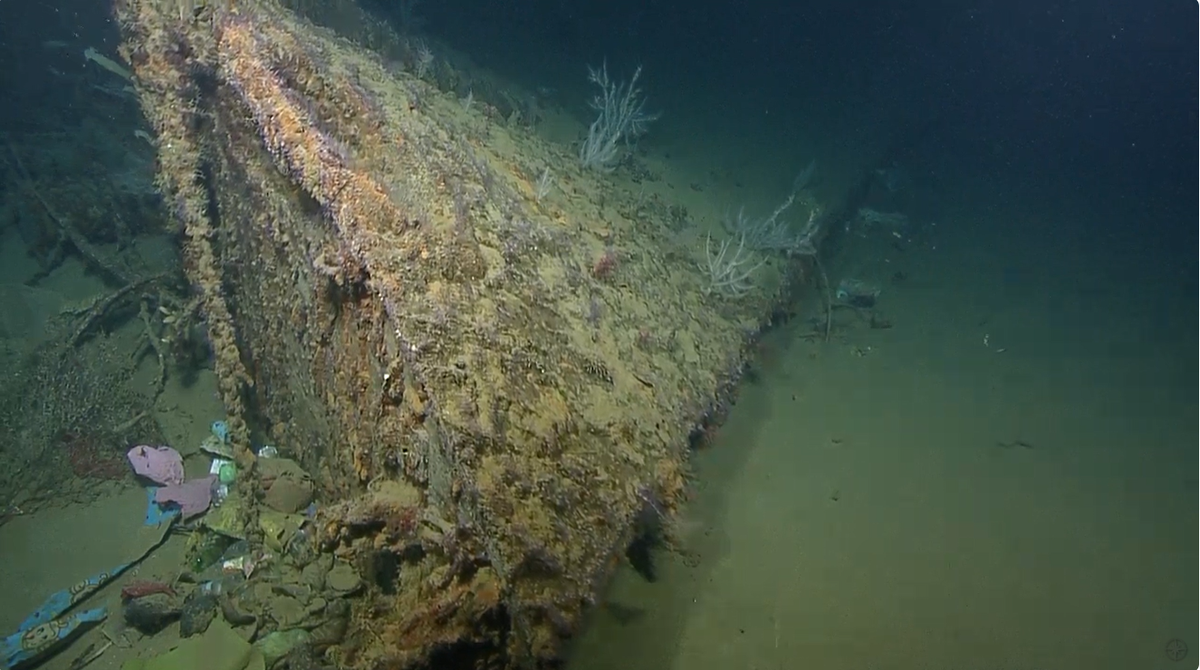
A team of scientists spent four hours documenting the USS New Orleans’ bow. Among the observations made: It has become heavily encrusted with sea life, and it’s collecting modern-day trash pushed along by the current.
Mission of discovery
The bow discovery came by surprise during a 21-day expedition that is using new technology to “conduct non-invasive archaeological surveys of cultural heritage sites in the Iron Bottom Sound.”
Five major naval battles were fought in the region from August to December 1942, resulting “in the loss of over 20,000 lives, 111 naval vessels, and 1,450 planes,” the trust reports.
”Fewer than 100 of these U.S., Japanese, Australian, and New Zealand military ships and planes have been located,” the trust says.
The bow was found by coincidence, as an uncrewed surface vessel recorded an anomaly while mapping the seafloor, officials said. The object aroused suspicions when it appeared to be too small to represent a warship.
A remotely operated vehicle from the Exploration Vessel Nautilus was sent to investigate, and the team broadcast the discovery live via Nautiluslive.org to scientists and historians watching around the world.
“The discovery highlights the power of having multiple scientists and technologies work together to achieve a common goal,” Ocean Exploration Trust Chief Scientist Daniel Wagner said in a July 8 news release.
Exact locations for the bow and other shipwrecks in the area are being kept secret to protect them. In some cases, the vessels are considered graves for sailors never recovered, historians say.
The Iron Bottom Sound expedition is scheduled to continue through July 23 and is funded by NOAA Ocean Exploration.
This story was originally published July 8, 2025 at 7:52 AM with the headline "Mystery on Pacific seafloor proves to be part of daring WWII saga, US Navy says."