More Fort Mill, less Rock Hill. Here’s how York County’s new council represents you
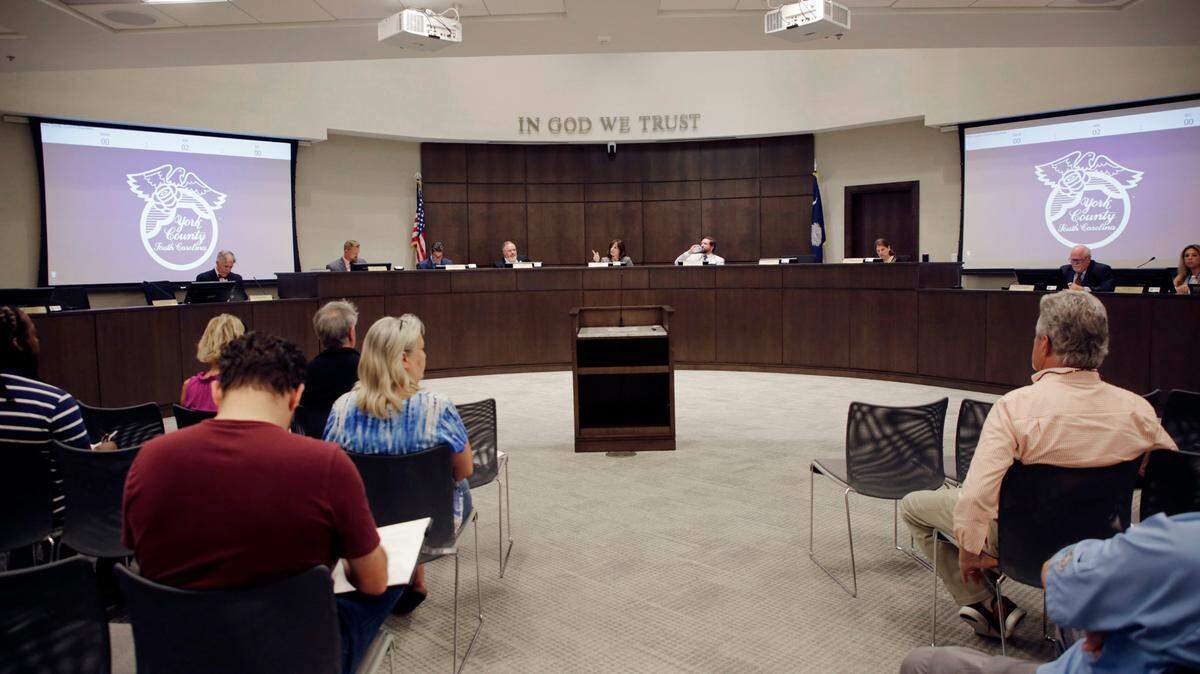
The York County Council now can get back to key issues like residential growth, land use and public service. But, after elections, how will the new council operate?
Even returning council members will face questions and change, given the new districts and council turnover. The seven-member council must face growth, though it’s different in urban areas like Rock Hill or Fort Mill compared to more rural western areas. Council will budget for law enforcement and other key services.
Here are four things to know about how York County Council will work heading into a new cycle:
Fort Mill township seats
Prior to redistricting after the 2020 Census, three county districts sliced through the Fort Mill township. Distict 1 covered the northern part. District 5 and District 7 included middle and southern parts of Fort Mill, but also significant parts of Rock Hill.
While that setup allowed the possibility of up to three representatives in Fort Mill or Tega Cay, elections didn’t turn out that way.
Only District 1, now represented by Tom Audette, has had someone who lives east of the Catawba River since district lines were drawn after the 2010 Census. Fellow Fort Mill residents David Bowman (2010 election) and now S.C. Sen. Michael Johnson (2012, 2014, 2016) also represented District 1 in that time.
The new maps guarantee more representation than Fort Mill has had. District 1 now covers a much smaller geographic area west of I-77 and east of the Catawba. The newly-drawn District 7 covers the Fort Mill area east of the interstate and no longer dips into Rock Hill. Fort Mill resident Debi Cloninger will represent District 7. She takes over for Rock Hill resident Joel Hamilton who didn’t run for re-election, and now wouldn’t reside in the district.
Those changes reflect massive residential growth for more than a decade in parts of York County nearest the North Carolina line and neighboring Charlotte. That’s the same growth that now has the Fort Mill School District — it includes Fort Mill, Tega Cay and unincorporated areas — larger than the Rock Hill School District.
The Fort Mill township no longer has the possibility of three residents on council, as no other district comes into the area now, but will be guaranteed two seats for the next decade.
Rock Hill in the minority
The new council district setup still is likely to elect more representatives from Rock Hill than any other area, but for the first time Rock Hill representatives won’t make up the majority.
Audette and and Cloninger in Fort Mill join District 2 representative Allison Love in Lake Wylie and newly elected District 3 representative Tommy Adkins in York on county council. Rock Hill has newly elected but long-time council member William “Bump” Roddey in District 4 and Chairwoman Christi Cox in District 5. District 6 also will seat someone from Rock Hill.
Future elections could change the council makeup. Two districts are guaranteed representatives from the Fort Mill or Tega Cay areas. Another is locked in to Lake Wylie or Clover. Two districts guarantee Rock Hill area seats.
One of the remaining two districts largely covers rural western York County, but includes small stretches of Rock Hill as far east as Adnah Church Road and Hands Mill Highway. The other largely includes Rock Hill, but stretches as far west on the southern border of the county toward McConnells. So, elections could offer as few as two or as many as four Rock Hill area seats at a time.
Special election to fill Distict 6 seat
How the new council will operate isn’t clear because council isn’t complete.
Councilman Brandon Guffey left the District 6 post with two years remaining on his term. Guffey was elected Tuesday to S.C. House District 48. Guffey’s resignation from the county spot leaves one spot open on the council.
A special election will be held Jan. 3.
Republican Watts Huckabee and Democrat Ryan Stephens look to replace Guffey. A special primary was called off when another Republican challenger removed his name. Huckabee and Stephens are Rock Hill residents. One of them will serve until the District 6 seat comes up again in its next election cycle in 2024.
Trends in voting
The two new council members, and a third new one from January’s special election, will join a group that largely moves in lockstep on county decisions.
Through the end of October, there were 18 regularly scheduled council meetings this year. In those meetings council held 206 substantive votes (not counting votes to close public hearings, return to open session, etc.). All but 23 of those votes — 89% of them — were unanimous.
Those substantive votes don’t include consent agenda items, which are grouped together and by definition have to be voted on unanimously. Consent agenda typically has the most items on any agenda, at times three or four times as many as the individual votes. Consent agenda items approve money for law enforcement, fund county programs and perform other business functions.
Of the 206 substantive decisions, council only split by a 4-3 voting margin five times.
Several of the 23 non-unanimous votes came on the same issue, like three votes on whether to abolish a special tax district. Other non-unanimous votes range from open space requirements to term limits to York school impact fees to whether the Panthers should’ve gotten a tax incentive agreement for the failed Rock Hill headquarters project.
Most of the 23 votes involved land use and rezoning decisions.
Of the 18 meetings held through last month, seven of them included only unanimous substantive votes.