
Can Trump overturn Biden’s ban on offshore drilling? ‘It’s not so simple,’ experts say
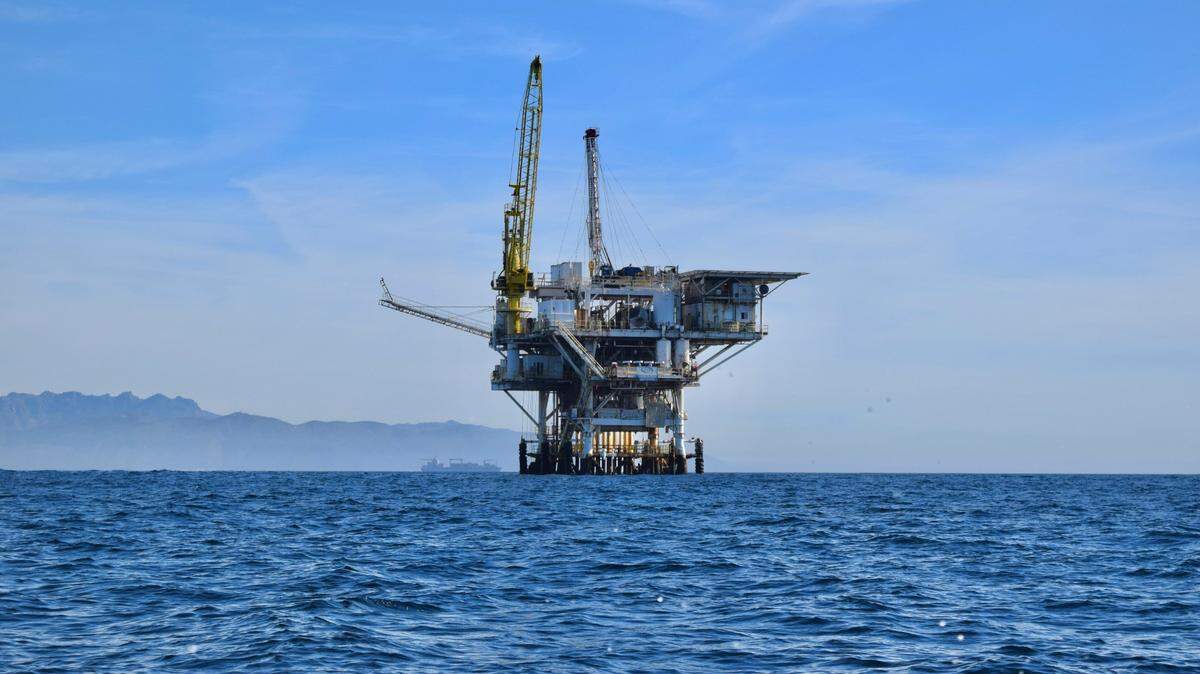
President-elect Donald Trump has vowed to overturn President Joe Biden’s sweeping, eleventh-hour ban on offshore drilling. But it’s easier said than done, according to legal experts.
On Jan. 6, two weeks before Trump’s inauguration, Biden issued an executive order protecting 625 million acres of unleased coastal waters from offshore oil and gas drilling.
Areas included in the ban — which has no expiration date — are the East Coast, much of the West Coast, the eastern portion of the Gulf of Mexico and part of the Northern Bering Sea.
“President Biden has determined that the environmental and economic risks and harms that would result from drilling in these areas outweigh their limited fossil fuel resource potential,” the White House said.
Hours later, Trump responded, telling radio host Hugh Hewitt, “I’ll unban it immediately.”
“We have oil and gas at a level that nobody else has,” the president-elect added. “And we’re going to take advantage of it.”
However, for a variety of reasons, reversing Biden’s ban will likely prove challenging, according to legal experts.
“It’s not so simple that he can overturn it,” Henry Lee, the director of the environment and natural resources program at the Harvard Kennedy School, told McClatchy News.
Can Trump overturn the ban?
In issuing the ban, Biden cited authority granted to him in the Outer Continental Shelf Lands Act, which was passed in 1953, during Dwight Eisenhower’s administration.
Section 12a of the act states, “the President of the United States may, from time to time, withdraw from disposition any of the unleased lands of the Outer Continental Shelf.”
The Outer Continental Shelf encompasses the coastal waters of the U.S. and its territories — broadly covering areas up to 200 nautical miles from land, according to the Department of the Interior.
“So, it’s clear that there’s authority for President Biden to do what he did,” Cary Coglianese, a law professor at the University of Pennsylvania, told McClatchy News.
“What’s not stated is whether that power to withdraw comes along with an implied power to un-withdraw,” said Coglianese, who is also the director of the Penn Program on Regulation.
Echoing this, Bruce Huber, a law professor at University of Notre Dame, told McClatchy News that “the law is ambiguous on this point.”
This means, Trump, upon assuming office, could very well issue an order reversing the ban, but the matter would likely be resolved in court — which would be a time-consuming process.
If it were subject to litigation, the Biden administration, based on the text of the 1953 law, would have “a very strong argument” that future presidents cannot revoke or modify a withdrawal, Coglianese said.
The Trump administration, in turn, might argue that “either the power to withdraw comes along implicitly with the power to un-withdraw or (that) the whole delegation of authority to withdraw is unconstitutional,” he said.
Would Trump garner a favorable ruling?
“Give him three years in court, he might, but I don’t think so,” Lee said.
This is in part because Trump already tried — and failed — to overturn similar drilling bans during his first term, Lee said.
In 2019, a district judge in Alaska struck down a Trump executive order reversing bans on drilling along the state’s coast, according to CNBC. The bans, put in place by President Barack Obama, also cited the president’s authority in the Outer Continental Shelf Lands Act.
“The wording of President Obama’s 2015 and 2016 withdrawals indicates that he intended them to extend indefinitely,” Judge Sharon Gleason said.
The Trump administration appealed the decision, but it was never taken up by the Supreme Court, so it’s never been “resolved squarely,” Coglianese said.
This time around, it’s possible that this legal quandary “could be of interest to the Supreme Court,” Huber said.
There is, however, one surefire way to reverse Biden’s drilling ban: an act of Congress.
“This is all in the realm of statutory powers, so what Congress has written right now … Congress can rewrite,” Coglianese said, stipulating rewriting the relevant legislation would be difficult given the GOP’s razor-thin majorities in both chambers.
Further context
In his Jan. 6 radio interview, Trump criticized Biden’s ban, accusing him of “giving up the biggest assets that we have.”
But the reality of offshore drilling — and Trump’s and Biden’s records on it — are more complicated, experts said.
For one, there is little industry demand to drill in the areas affected by Biden’s ban, Lee said.
Secondly, “they’re areas that states are adamantly opposed to drilling,” he said. “I mean, nobody wants to drill off the west coast of Florida, and that’s what we’re talking about here.”
Additionally, Trump himself has a checkered past when it comes to offshore drilling.
During the beginning of his first term, he planned to “vastly expand offshore drilling.” But in 2020, he issued a 10-year ban on new drilling operations off the coasts of Florida, Georgia and South Carolina, according to the Associated Press.
“So, this is all bluster to keep the message that ‘I love oil,’ and Biden doesn’t,” Lee said.
“But, if you look at the numbers, the biggest increase in oil and gas production in American history occurred during the Biden administration,” he said, “which of course he couldn’t boast about because the environmental community would be upset with him.”
This story was originally published January 7, 2025 at 2:33 PM with the headline "Can Trump overturn Biden’s ban on offshore drilling? ‘It’s not so simple,’ experts say."