
More than 1,000 SC voucher recipients were improperly enrolled in public schools
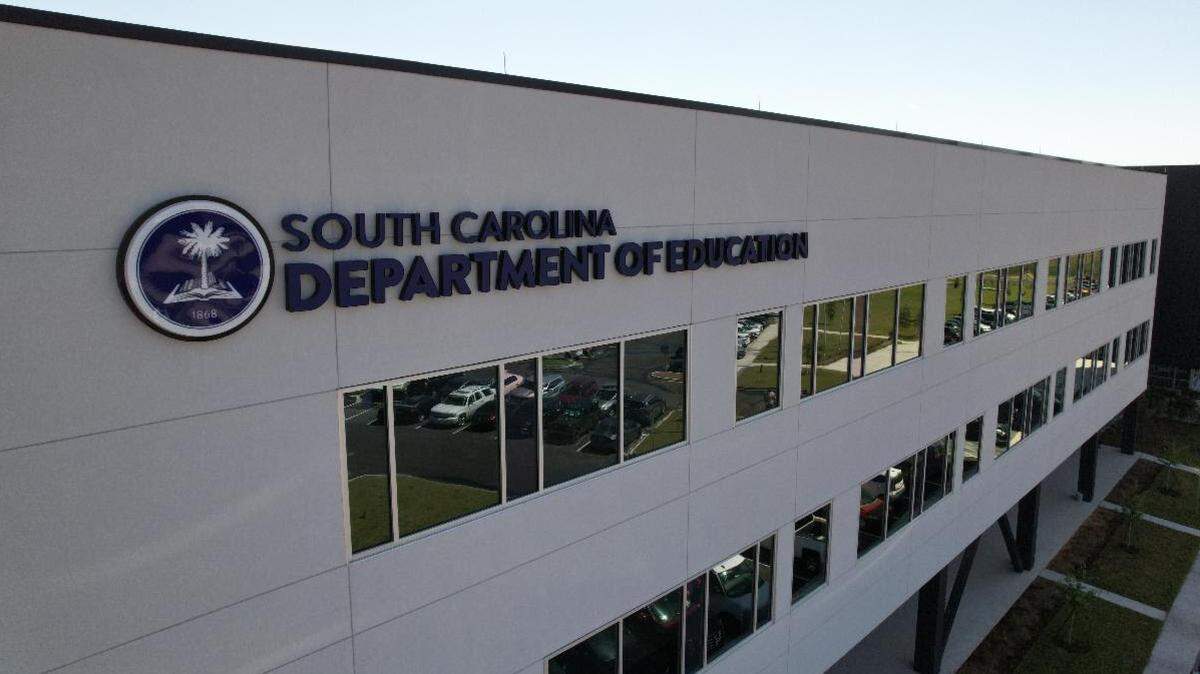
More than a third of the nearly 3,000 South Carolina students awarded taxpayer-funded school vouchers last year later withdrew or were removed from the program due to eligibility concerns, S.C. Department of Education data shows.
The department suspended the accounts of 1,229 voucher recipients last school year after they were flagged during enrollment checks conducted to verify that participants had left their zoned school districts, an education department spokesman said.
To be eligible for a voucher last year, a student could not be enrolled full-time in their local district.
About 1 in 5 of the suspended accounts were reinstated after further review confirmed their eligibility. The remaining 1,005 suspended participants, all of whom had already received at least one $1,500 scholarship payment, left the program.
All of the recipients who were removed from the program due to enrollment verification had been enrolled at their zoned public schools, S.C. Department of Education spokesman Jason Raven wrote in an emailed statement.
The department recovered all unused funds that remained in the scholarship accounts of former participants, but did not attempt to recover any scholarship money those participants had already spent.
“The law provides a process to suspend accounts but does not establish a recoupment mechanism,” Raven explained.
The department declined to disclose how much of the more than $1.5 million disbursed to ineligible recipients was recovered.
Launched last year, South Carolina’s school voucher program publicly subsidizes low- and middle-income families that send their K-12 children to private schools or public schools outside their residence area.
Families making no more than twice the federal poverty level, or $62,400 for a family of four, were eligible for $6,000 vouchers last school year.
Recipients could use the money for a variety of educational purposes, including tuition, tutoring, technology and transportation, as long as they weren’t enrolled in their local public school districts.
About six weeks into last school year, the S.C. Supreme Court struck down the portion of the law that permitted parents to use vouchers for private school tuition, but left the rest of the law intact.
Of the $3.1 million used by recipients during the program’s first five-and-a-half months, more than half was spent at three big box retailers — Best Buy ($1,394,642), Staples ($243,178) and Office Depot ($134,359), according to school voucher expenditure data obtained by The State.
The data, which identified broad purchase categories but not the individual items bought, showed the vast majority of purchases at those stores were for “computers and technological devices” and “instructional materials.”
Another $982,000 was spent at private schools — more than a third of which espouse anti-LGBTQ beliefs – $232,000 went for tutoring and $26,000 was used at public schools, expenditure data shows.
State education officials provided no evidence that voucher recipients who enrolled their children in local public schools were trying to cheat the system.
While recipients were advised of the program’s requirements ahead of time and signed affidavits promising to follow them, many participants apparently were unaware that enrollment in a resident district was prohibited.
“It’s not my opinion that anyone was trying to be unlawful or untruthful,” S.C. Rep. Shannon Erickson, R-Beaufort, said. “It was simply confusion.”
State education officials, who were required by law to check the names of scholarship students against public school enrollment lists by Sept. 1, said they realized in mid-October that hundreds of voucher recipients were still enrolled in local public schools.
The discovery came when the education department conducted its first student count on the 45th day of the school year, deputy superintendent Laura Bayne said in an emailed statement.
“This is the first opportunity to identify students who may have decided to remain in their resident school district and is consistent with how the Department verifies enrollment and funding for all students, including traditional public and public charter schools,” she said.
It isn’t clear whether voucher recipients the department determined were improperly enrolled had never left their public schools or had recently returned from private schools after the state Supreme Court ruled in September 2024 that taxpayer-funded private school tuition payments were unconstitutional.
Patrick Kelly, a critic of South Carolina’s school voucher law, said he wasn’t surprised that ineligible families were awarded vouchers last year.
“I think there are going to be problems in the first year of implementation of any program of this scale and of this sort,” said Kelly, a lobbyist for the Palmetto State Teachers Association. “It’s a learning curve for families, for private schools and for traditional school districts participating in the program.”
The department’s mass suspension of voucher recipients was revealed last December in a report published by the Education Oversight Committee, an independent body the state’s voucher law tasked with evaluating aspects of the program, and first reported by the S.C. Daily Gazette.
The EOC report, which evaluated the results of a parental satisfaction survey, found that many participants had been confused about the enrollment requirements.
“My fund got stopped because my daughter goes to the assigned school where she (is) supposed to,” one participant wrote in a survey response reproduced in the report. “I didn’t know she (was) not supposed to, if I would’ve known I wouldn’t even apply for this.”
Another parent told the committee that after spending $1,500 of the $6,000 voucher award, the remaining funds were removed from their child’s account without explanation.
“Why would you approve and award a scholarship then just take it away,” the parent wrote. “That’s not fair or professional.”
While state education officials said that all voucher participants removed from the program due to enrollment verification had been enrolled at their zoned public schools, the EOC report found that numerous survey respondents should have been found ineligible for other reasons.
As many as 50 respondents (20%) told the committee they had not attended a South Carolina public school the year before, as the law mandated for all students not entering kindergarten. Instead, some of the participants reported attending a private school, homeschool, school outside the state or college, which, according to the report, suggests they “should not have been found eligible to receive funds.”
“My daughter was awarded a scholarship, she hasn’t been able to use the funds,” one parent told the committee. “We were told she will not receive the funds because she goes to USC. We did not know the funds were for k-12 and it did not specify on the application.”
The S.C. Department of Education did not respond when asked whether it had suspended any voucher recipients for reasons other than enrolling at zoned public schools, as the EOC report indicates it should have.
The committee’s report concluded that poor implementation, specifically with respect to eligibility determination, was the primary reason for participant dissatisfaction with the voucher program. The panel recommended that going forward the department improve communication about program eligibility and confirm eligibility before releasing scholarship money to families.
The latter suggestion, said Bayne, the department’s deputy superintendent for strategic engagement, is not currently an option.
Because the law directs the department to release first-quarter scholarship payments in July, months before 45-day school counts are taken and enrollment verification is performed, it isn’t possible to ensure participants have complied with enrollment requirements until after scholarship money hits their accounts.
When asked whether the department would continue to distribute scholarships to participants prior to verifying their eligibility, Bayne replied in a written statement that the department would “continue to fully comply with the law regarding funding distribution and eligibility verification.”
Erickson, who chairs the S.C. House Education and Public Works Committee, said she expected fewer hiccups this year due to growing parental familiarity with the process.
“We’ve got a whole lot more contacts and have been able to do a whole lot better job of getting the details out, sharing the criteria and making sure folks know ahead of time what they are signing up for,” she said.
Changes to the voucher law, which state legislators revamped this year to better withstand another legal challenge, should also ease the burden of eligibility verification.
Recipients are no longer required to enroll outside their local public school districts — only outside their zoned schools — and prior public school attendance is no longer mandatory, making it simpler for state education officials to verify participant eligibility going forward.
As of late June, all 10,000 of the voucher slots available for the 2025-2026 school year had been filled, the department said.
This school year, families making no more than 300% of the federal poverty level, or $96,450 for a family of four, are eligible for $7,500 scholarships.
The money can be used to cover tuition and fees at private schools, public school attendance fees, transportation, uniforms, tutoring, educational therapies and technology, among other things.
A public teachers advocacy group that sued over the original voucher law is still weighing whether to challenge the new one.
This story was originally published August 21, 2025 at 5:00 AM with the headline "More than 1,000 SC voucher recipients were improperly enrolled in public schools."