SC Senate wants redistricting debate finished before early polls open
In hopes of passing new congressional districts in the state before South Carolinians start going to the polls, senators are planning a key procedural vote to accelerate debate.
But that vote to invoke cloture early on a White House-backed congressional map requires a two-thirds majority, as questions remain on whether enough senators in the Republican supermajority will agree to limiting debate.
If the vote fails, then finishing a congressional map redraw before early voting starts Tuesday will not be possible, state Senate leadership said. That would include senators meeting Saturday and Memorial Day, as they have been told to prepare for.
“If you can’t suspend the rules, the earliest that the Senate could pass something is when you have tens of thousands of people standing in line to vote already,” said Senate Majority Leader Shane Massey. Massey, who has opposed redistricting, said he will not vote for the rules change.
Moving quickly is important as early in-person voting begins Tuesday for the current congressional districts, and 2,921 absentee ballots have already been returned, including from overseas and the military. Plus, the redistricting process and proposed districts will more-than-likely face litigation, potentially further delaying implementation of the maps.
“As every day goes by, South Carolinians are doing what we ask them to do, which is, be good, civic-minded citizens and going out and voting,” said Senate Minority Leader Brad Hutto. “And the more they vote, the harder it becomes to throw out the votes.”
State Sen. Larry Grooms, R-Berkeley, who supports the House-approved map, told members he’s going to push on Friday for cloture, a motion that would set a time limit on how long senators could speak about the bill.
The motion would be one day sooner than what rules allow, so the vote will require at least 31 members of the chamber. Only 29 senators voted to take up redistricting after the legislative deadline May 14, as five Republicans opposed the measure.
“If the motion passes, the Senate would then move forward in taking up the amendments without delay,” Grooms said in a text message.
If the vote fails Friday, the Senate could restrict debate with a lower threshold of support on Saturday.
“We should probably just go home because nothing else is going to happen tomorrow,” if the rules change vote fails Friday, Hutto said.
The Senate rules, which were adopted in 2025, currently help those who are against middecade redistricting, Hutto said.
“Currently, the rules are in our favor, in the sense that, as the majority leader [Massey] just said, the timeline is short,” Hutto said. “The way the (U.S. Supreme Court) ruling came down, we already had the election scheduled. In fact, the ballots had already been mailed out by the time this even got hatched up as a plan that maybe this was a possibility.”
Democrats prepare to file 100+ amendments
Senate Democrats vowed to fight back against the middecade congressional map redraw intended to elect all Republicans to the state’s seven congressional seats.
In an effort that could stretch out debate in the traditionally deliberative body, Democrats plan to file about 100 amendments to offer on the redistricting bill.
Several Democratic senators told reporters they opposed the General Assembly’s attempt to redraw congressional maps during a primary election.
“It’s just the wrong time to be doing something like this,” said state Sen. Russell Ott, D-Calhoun. “And so I’m proud to be standing with my colleagues here today. I’m proud of the fight that we’re going to put up to try to protect the sanctity of the vote, to try to protect voters in knowing that the ballot that they’re looking at when they go into that ballot box is the ballot that is going to be counted.”
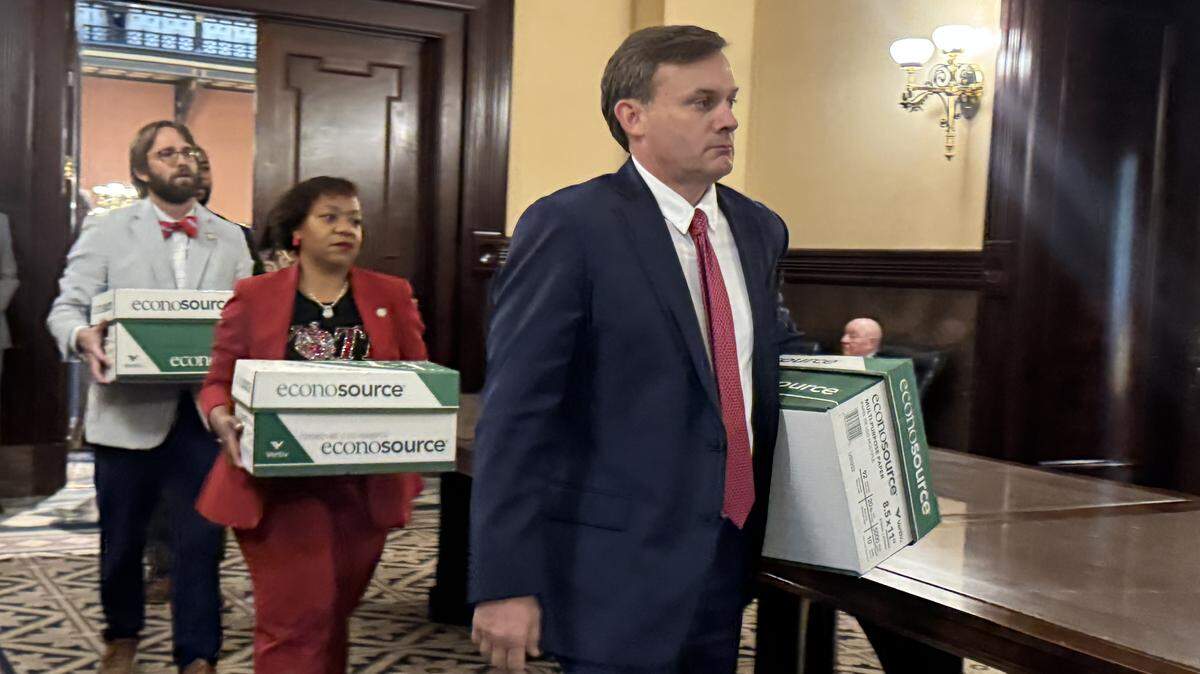
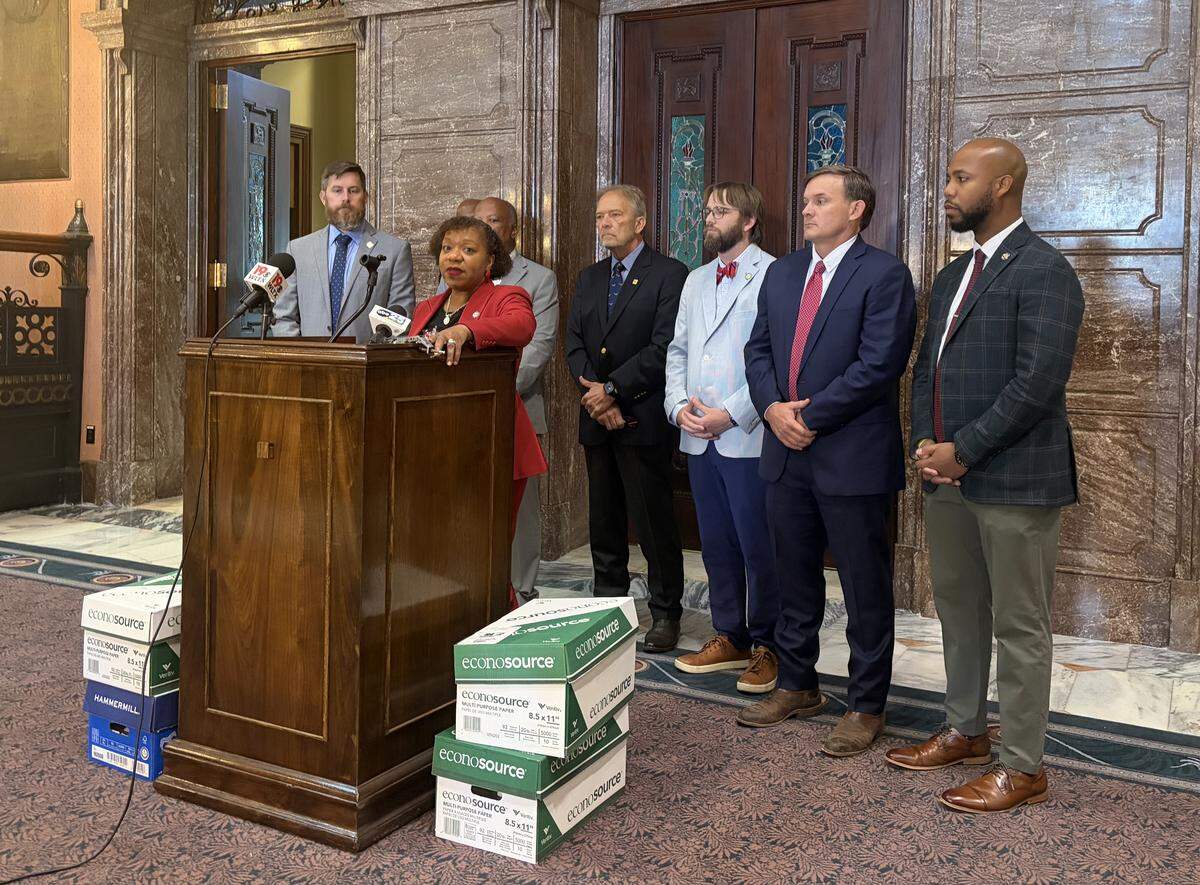
Democrats entered Thursday ready for a long battle to resist the middecade redistricting. After speaking with reporters, Democrats hauled four boxes of amendments to the chamber.
“These are serious amendments,” Hutto said. “These are not dilatory amendments.”
State Sen. Jeffrey Graham, D-Kershaw, said Democrats plan to propose an amendment to help counties cover the all costs of running a possible August primary. Running an extra primary in August for congressional elections, as the current redistricting bill prescribes, will also costly for the state and counties.
An additional primary would cost about $5.3 million to $6 million when including some reimbursement to counties, according to the state Election Commission. Without the amendment, counties could spend hundreds of thousands of dollars on an extra election this summer. Richland County expects to spend about $800,000 on the August election, $452,000 of which would come out of their own budget.
With the state Senate’s reputation of having long debates and discussions, members have been advised they may work on Saturday and Memorial Day.
“We expect a robust debate. I couldn’t be prouder to stand here with these guys giving up our Memorial Day weekend,” Hutto said.
Lawmakers question rushed process
South Carolina began the map redrawing process less than two weeks ago, when the House first took testimony from the public.
The last time the state undertook redistricting, it heard months of testimony around the state before being debated on the floor.
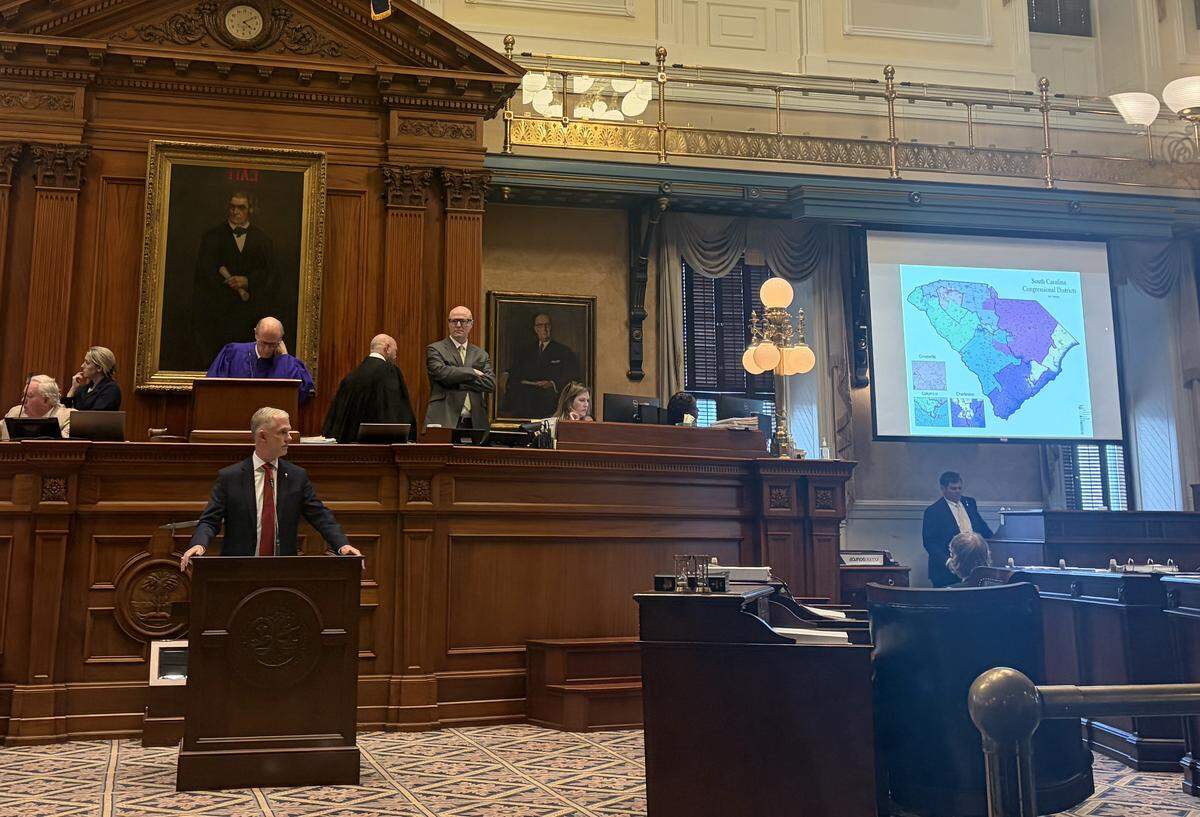
State Sen. Tom Davis, R-Beaufort, questioned Senate Judiciary Chairman Luke Rankin, R-Horry, about the regular congressional redraw process that occurred in 2021 and early 2022, after the census. Rankin chaired the Senate panel responsible for the redistricting process in both 2021 and 2026.
Davis was one of five Republicans who opposed taking up redistricting after the legislative deadline last Thursday.
Redrawing South Carolina’s congressional districts after the 2020 census took years, and litigation didn’t end until the U.S. Supreme Court upheld the map in 2024 as a partisan gerrymander.
Senators held 10 public hearings around South Carolina, eight subcommittee meetings and passed amendments before the proposed map ever hit the full Senate floor during the 2021 and 2022 procedures, Rankin and Davis agreed.
Members of the public had many opportunities to speak on the maps in 2021, Davis said. Proposed maps and guidelines for mapmaking were passed out to the public, so they were able to make educated statements in 2021, senators said. That contrasts with the single full committee meeting held by the Senate on Wednesday, where educational materials were not distributed. Senate guidelines weren’t adopted until after testimony.
For that hearing, which included more than six hours of testimony, 76 people signed up to speak, 54 people gave testimony to lawmakers and hundreds of written remarks were submitted.
“That is a shortcoming, and I will apologize for that to the 72 people who signed up [to speak] because it is not the norm,” Rankin said.
Democrats also said they opposed the accelerated timeframe.
“We have not had an opportunity to ask questions of the person who actually drew these maps, and yesterday to the Judiciary, it was acknowledged that no one, hear me, no one in South Carolina drew these maps,” said state Sen. Tameika Isaac Devine, D-Richland. “No one knows if the person who drew the maps had data, had guidelines, had input from South Carolina.”
The record of the legislative redistricting process, which can be used to defend the state’s maps in court, is “not as robust” this year as it was after the regular redraw, Rankin said. “The word of 2020 would be robust,” Rankin said. “The word of 2026 would be what one hopes to achieve after a long prescription use of Ozempic: slight, light and not as robust.”
Johnson works with White House on alternate map
Senators considered a proposed change by state Sen. Michael Johnson, R-York. Johnson said he consulted with the White House while drawing his map and had its support. The map was withdrawn for consideration by Johnson after he answered questions.
State Sen. Darrell Jackson, D-Richland, questioned whether the White House approving proposed maps was an overreach from the federal government.
“We have wars all over the world,” Jackson said. “We have American troops on foreign territory today, not knowing when they may get the signal to go and engage in warfare. You’re telling me all the things that the White House has to do, and it has time to consult with you on an amendment to a reapportionment district, that by the way, at best, will add only one seat to Congress?”
Johnson said he would have proposed the map, with or without support from the White House.
“No one in the White House is forcing me to be here,” Johnson said. “I’d be here no matter what, trying to make sure more of my district and the people who live in my community were in the 5th district.”
On the withdrawn map, which the GOP caucus discussed privately for more than an hour and a half, Johnson included Fort Mill in the 5th district with the rest of York County, a priority for him.
He also drew U.S. Rep. Jim Clyburn into a new 6th district that covers the Pee Dee region. It also would keep Clyburn in a district separate from U.S. Rep. Joe Wilson.
This story was originally published May 21, 2026 at 8:32 PM with the headline "SC Senate wants redistricting debate finished before early polls open."