
SC wants teens off their screens. Ban on autoplay videos in new social media law
Young teenagers in South Carolina will no longer be able to see like counts, stay up late watching autoplay videos or receive notifications for new posts on social media under a law signed by Gov. Henry McMaster.
The law requires large social media companies to estimate users’ age and receive parental permission when the platform is confident an account holder is under 16.
It also cuts off “addictive features,” like autoplay videos and content metrics, to kids. Parents can monitor and cap the amount of time kids spend on social media platforms. Targeted advertising to children and younger teens is also banned under the new law.
The intent is to protect children’s mental health by severing their access to addictive features online and allowing parents to monitor screen time.
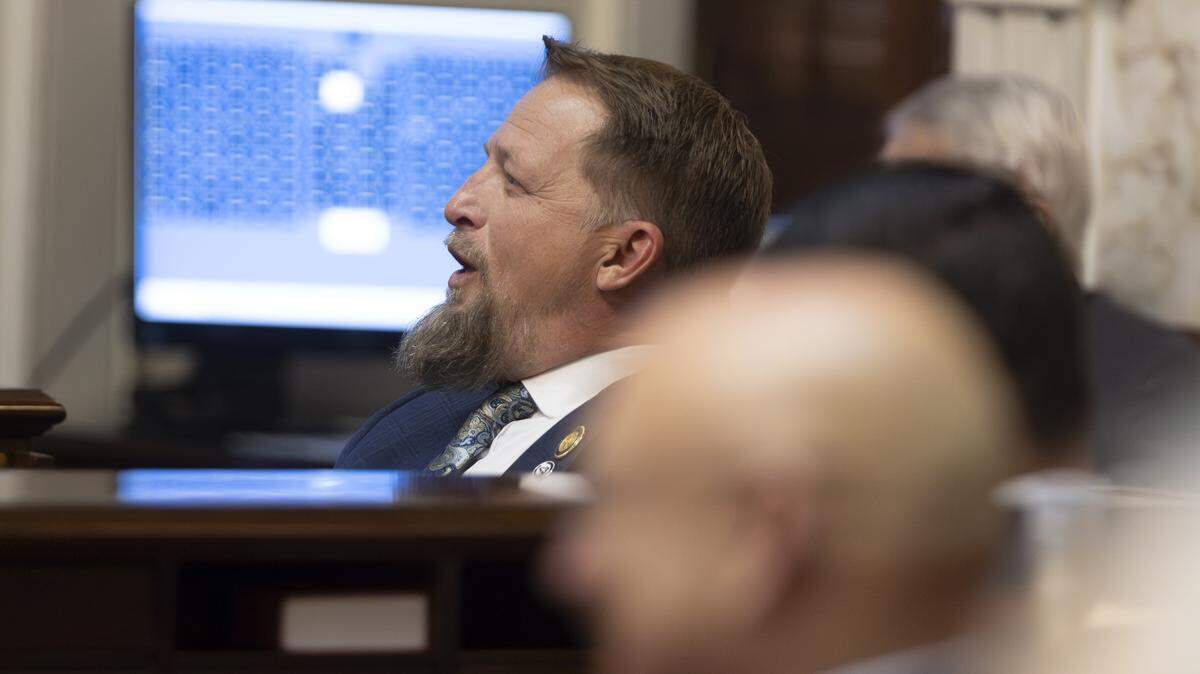
“The kids are dubbed the anxious generation,” said state Rep. Brandon Guffey, R-York. “This is something to protect the kids. We’ve already had our guinea pig generation to see the harms of it.”
Guffey has pushed for legislation intended to protect kids online and said he also hopes to tackle AI chatbots next year. Guffey lost his teenage son to suicide after an online sextortion scam.
“[Social media companies] are the big tobacco of this generation,” Guffey said.
Balancing free speech rights and protecting children online has been a challenge. Many states’ efforts regulating social media companies have been challenged in court.
By regulating content and not requiring users to upload IDs, supporters say it has a better shot at standing up against lawsuits. Guffey said he hopes the new law could serve as a model for other social media regulations.
“I think that this could be national model policy,” Guffey said. “It does not require any age verification, uses age estimation, and it’s something to protect our kids.”
Amy Bos, the vice president of public affairs at NetChoice, told state senators in early May the bill wouldn’t actually protect children because it could get struck down in court for violating free speech protections. NetChoice is a trade association with membership consisting of several large technology companies, including Meta, Google, TikTok and Youtube.
“An unconstitutional law doesn’t protect kids,” Bos said May 7.
State Sen. Michael Johnson, R-York, said it would be worth the risk.
“All it really costs us is that social media companies are going to sue us and try to find these things unconstitutional,” Johnson said May 7. “Man, I wish we lined one of these up every week. I mean let’s get sued. That’s worth being sued over if we’re trying to protect kids.”
State Sen. Russell Ott, D-Calhoun said parents shouldn’t see the new law as a miracle solution to unhealthy social media use during floor debate. He added protecting kids was important to him as the father of two boys.
“It’s very important sometimes that we don’t get carried away, we don’t lose sight of some things that I think are very important,” Ott said. “And that is we all have responsibility, not just elected officials, but parents.”
How SC’s new law for kids’ social media works
The new law, called “Stop Harm from Addictive Social Media,” aims to keep kids from endlessly scrolling by estimating their age, rather than requiring verification.
“Essentially it is a social media ban for anyone under the age of 16, unless a parent consents,” Guffey said. “And then if the parent consents, it still stops the addictive features, such as infinite scrolling. It stops the marketing and algorithms being used on those children.”
Large social media companies making at least $1 billion from advertising annually will be required to estimate the age of its South Carolina users. While some social media regulations require users to submit identification verifying their age, including South Carolina’s own prohibition on minors accessing pornography websites, this law forces companies to ask for a birthdate and then estimate age based on activity on the platform.
After someone uses a social media account for a certain amount of time, the social media company will be required to estimate their age with a specific degree of confidence. The data used to guess a person’s age should be the typical information the platform collects, under the new law.
The rules for estimating age are:
- After 25 hours in six months: The social media company determines whether someone is 16 or older with 80% confidence
- After 50 hours in six months: The social media company determines whether someone is 16 or older with 90% confidence
- Every 100 hours: The social media company updates its age estimation
Individuals who have had an account for seven or more years will not be swept up in age estimation.
If the social media company is confident the account is held by someone under 16, the user will need permission from a parent to use the platform. Without parental consent, an account deemed for a child must be closed, under the new law. Parents will also be able to track screen time.
Regardless of parental permission, some addictive features of the platform and targeted advertising will also be prohibited for the child. “Addictive features” include continuously loading content, push notifications for new content, autoplay videos, content metrics.
Trade group challenges other SC law in court
Another new South Carolina law passed early this year intending to keep minors off social media was challenged in federal court by trade group NetChoice within days of McMaster signing it.
The law, dubbed the “Age Appropriate Code Design,” required online platforms to take “reasonable care” when using minor’s data to prevent compulsive use, psychological harm or emotional distress. McMaster signed the bill Feb. 5 and a lawsuit was filed Feb. 9.
The pending lawsuit argues the South Carolina law curbs free speech by controlling how platforms present information and how users interact with content.
“Like many States before it, South Carolina enacted its Act presumably under the auspices of protecting minors,” the lawsuit reads. “But in fact it is a misguided attempt to regulate the speech minors engage with.”
While the newest law hasn’t been challenged yet, Bos, of NetChoice, told lawmakers keeping children off the Internet also violated free speech protections.
“You can call it age verification, age estimation,” Bos said. “It’s age-gating the Internet. It’s creating a barrier to constitutional speech, which the courts have found problematic.”
But Guffey says the law is “content neutral,” which could prevail against some free speech challenges. Only children under 16 are covered, another provision supporters said would make it more likely to survive in court, Guffey said.
“I am one that is constantly fighting to protect children online,” Guffey said during a Senate hearing. “My values of trying to ensure that we are not overstepping on individual rights always remains important. But this will regulate platform conduct and not speech, so we’re confident that it would uphold the First Amendment.”
This story was originally published June 1, 2026 at 5:00 AM with the headline "SC wants teens off their screens. Ban on autoplay videos in new social media law."