
North Carolina jail deaths reach a record-high in 2021. Why are so many inmates dying?
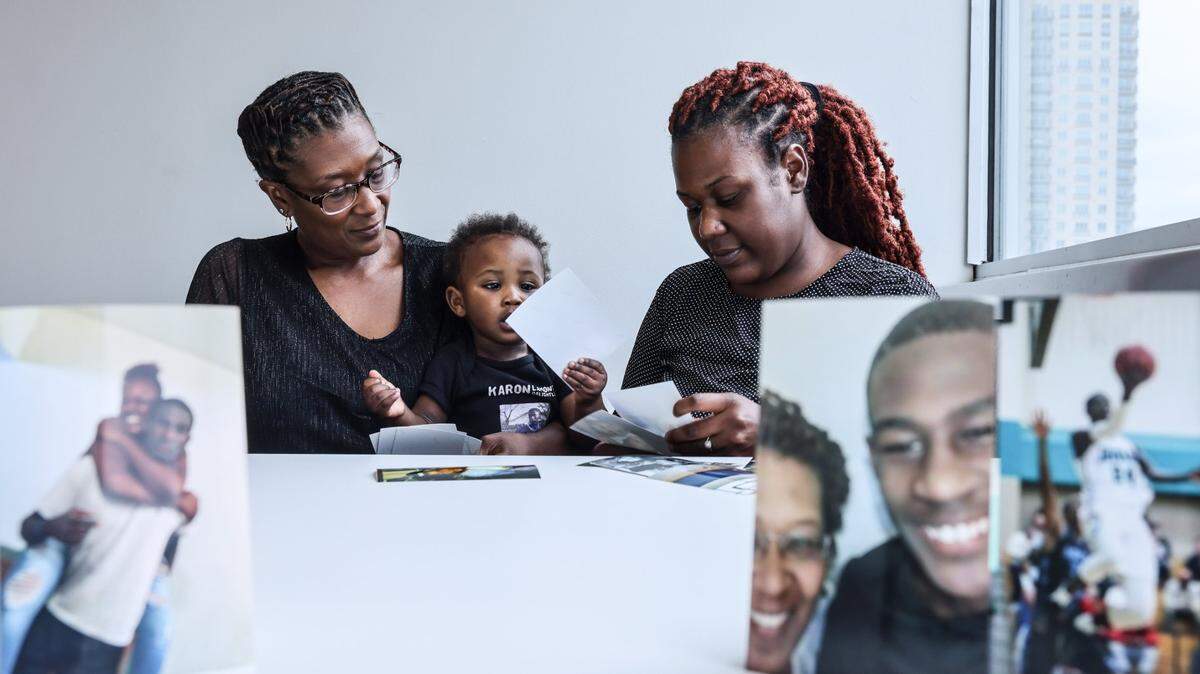
In the space of five months, four inmates died at the Rockingham County jail in Reidsville last year. Three died by suicide in February, while the fourth succumbed to a bleeding ulcer in his small intestine.
It was the first time in six years that the jail in a rural county north of Greensboro had any inmate deaths, state records show. But when state regulators began looking at the deaths, they found a systemic problem that has plagued jails across the state over the past decade.
Three of those deaths, including two of the suicides, showed detention officers were not checking on the inmates at least twice an hour as required. In both suicides, a state jail inspector found several hour-long periods that lacked a check, while others only showed one check during the hour. Experts say repeated checks are an important tool in suicide prevention, and also can save other inmates in physical distress.
The four Rockingham inmates were among a record 67 deaths at county jails in North Carolina last year – a 40% increase from 2020 when 48 inmates died. That’s also nearly double the number of deaths from four years earlier.
“It’s astoundingly high,” said Luke Woollard, an attorney with Disability Rights North Carolina, a nonprofit that has been tracking jail deaths for several years.
In more than half of those cases — 35 deaths — state jail inspectors found detention officers did not check on inmates as often as they should. Those deaths include a Guilford County inmate who died in his cell from blunt force trauma to his torso, an autopsy found. The medical examiner speculated Tyquan Easton, 29, had taken a spill in his cell and struck a bed or shelf.
The News & Observer has been tracking jail deaths since 2017. DHHS records over the years have shown that supervision failures that also include broken intercoms or surveillance cameras were involved in roughly a third of all jail deaths. The state’s chief jail inspector told lawmakers after an N&O series on jail deaths that the supervision failures are a systemic problem, but the legislature has done little to correct it.
Rockingham jail deaths
Ashley Eggleston, 24, a former waitress from Martinsville who struggled with drug addiction, was the first to die in the Rockingham jail on Feb. 6, 2021. Left in a single cell as part of a COVID-19 quarantine, Eggleston was pounding on the door and screaming at 7:45 that morning, a state inspector’s notes show.
“Nurse discussed with officer about (seeing) the inmate even though she had refused medical treatment earlier,” said the notes Disability Rights NC had obtained.
Less than two hours later, a jailer found her hanged by a bedsheet. She died at a hospital. She was 11 weeks pregnant.
On Feb. 12, 2021, Seth King, 25 and suffering from pneumonia (an autopsy reported that he had tested positive for COVID-19), had hanged himself in his cell at the Rockingham jail. Again, the investigation found several hour-long periods that lacked checks.
Jailers checked more frequently when Frank Kirk, 54, died from a perforated duodenal ulcer in his cell on July 2, but still not as often as state regulations require. He had been complaining of abdominal pain in the hours before his death.
Woollard and Susan Pollitt, a supervising attorney with Disability Rights NC, said the evidence also suggests the inmates should have been seen sooner by medical professionals.
“We have seen this in a lot of cases,” Woollard said. “There are a lot of lawsuits because of deaths due to lack of medical care.”
Rockingham County Sheriff Sam Page said in an interview that there were staffing problems at the jail during the deaths, though he did not provide specific numbers. Staffing has been a problem for many jails during the pandemic, though some jails with the help of the courts have reduced jail populations to limit COVID’s spread.
Page said the jail has since upgraded its monitoring to include electronic reminders to detention officers and supervisors so that checks aren’t overlooked. He also said the jail now has two clinicians and a nurse working full time to identify and respond to physical and mental health needs and drug addiction.
He said he couldn’t comment on the specific medical care the three inmates received. But he said he and his staff take inmate safety seriously.
“One death in your jail, that’s one too many,” he said. “Everyone you have in a facility is someone’s loved one.”
Jail officials in other counties also pointed DHHS jail inspectors to staffing problems when inmates died.
Overdoses in the jail
Mental illness and drug addiction continue to be big drivers in jail deaths. Jails often become the shelters of last resort when treatment centers are full. Medical examiner reports show fentanyl and methamphetamine overdoses led to nine deaths last year; in two of those cases, inmates had been behind bars for months. Several of the 17 inmates who died by suicide last year had histories of drug abuse.
COVID-19 claimed at least two inmates, medical examiner reports show.
Rockingham and eight other counties had at least two inmate deaths involving supervision failures. The others are Alamance, Davidson, Forsyth, Guilford, Lee, Mecklenburg (a case The Charlotte Observer previously reported), Robeson and Vance.
In Davidson County, one of those inmates, Christopher Miller, 36, died by suicide in view of a surveillance camera. Detention officers didn’t go to his cell until 14 minutes later, a medical examiner’s report said. A state jail inspector found gaps as long as 68 minutes between checks.
In Robeson County, video showed detention officers walked by Stephen Hunt’s cell four times over a nearly four-hour period on March 10, 2021, without looking in, a state jail inspector reported. When they finally did, they found him dead. An autopsy said Hunt, 29, who had a history of suicide attempts and hadn’t eaten in days, died from fentanyl toxicity.
One of the Mecklenburg deaths – John Haley, 41 – was by suicide. The other, Karon Golightly, 20, who was found unresponsive in another cell, still lacks a known cause. The autopsy said that Golightly had gone to the cell and may have been “tweaking and hallucinating” with two other inmates after smoking an unknown substance. But the autopsy found no drugs in his system other than prescribed medications and found no signs of physical trauma.
Wake’s jail was cited in the death of Aakim Franklin, 53, who died from hypertensive cardiovascular disease on Sept. 12. Franklin was on a heightened watch, which meant he was supposed to be checked at least four times an hour at roughly 15-minute intervals. The state investigation found jailers weren’t making the checks properly, often scanning an electronic checkpoint within a couple of minutes.
A medical examiner’s report said Franklin told a jailer he was short of breath and sweating. He collapsed as the jailer took him from his cell to the medical unit and never recovered.
“The officers that are assigned have been instructed to scan the readers and complete a thorough supervisory round verifying each inmate is alive and well,” said John Jackson, the jail’s director of detention services in a written response to DHHS. “This round is to occur every 15 minutes and the staff is NOT allowed to double scan the readers which means to scan twice and count that as 2 rounds.”
Eric Curry, a Wake sheriff’s spokesperson, said in an email Wednesday that the checks were made, but weren’t properly logged electronically.
Calls for reforms
Pollitt said the rising number of deaths and the continued cases of repeat supervision failures in some jails show the current system isn’t working. More emphasis needs to be put on reducing jail populations and holding jails accountable when they fail to provide proper oversight.
She said that when serious violations occur in hospitals, regulators don’t leave the facilities until the problems are corrected. The hospitals can also face fines.
That’s not the case with jails. The DHHS secretary can order one closed over dangerous conditions, but that’s yet to happen.
Eddie Caldwell, executive vice president and general counsel for the North Carolina Sheriffs’ Association, said there isn’t enough known about the rise in jail deaths to determine a need for more oversight or penalties. He said he was unaware of last year’s increase, but it still reflects an “infinitesimally small” number of inmates compared to the many who enter jails each year.
Before the pandemic, the total monthly population in the county jails exceeded 20,000, according to the UNC-Chapel Hill School of Government. That number dropped down to roughly 15,000 a month in the depths of the pandemic.
New rules took effect in 2020 to increase inmate supervision and screening for mental health and drug abuse, but those rules did not include penalties. Still, the sheriffs opposed some of them, and they were unsuccessful in getting the legislature to overturn them.
But this year, state lawmakers passed legislation in the state budget that would give sheriffs an avenue to fight the state’s biannual jail inspections. The legislation allows sheriffs to appeal inspection deficiencies to the state administrative court.
The budget provided no extra staffing or resources to a DHHS department that has three staff to inspect more than 100 jails. Legislation filed last year by Rep. Carla Cunningham, a Charlotte Democrat, to add more staff and require jails to also document suicide attempts never made it out of a legislative committee.
DHHS opposed the budget provision.
“The proposed provision creates a new category of litigation that will require significant staff time preparing for litigation and going to court and will result in staff not being able to conduct semi-annual inspections of 109 jails, compliance reviews following in-custody deaths, and investigating complaints,” DHHS spokeswoman Catie Armstrong said in an email.
Her boss, Gov. Roy Cooper, later approved the budget.
Editor’s note: This story was updated to include a statement from the Wake County sheriff about a jail death. Also updated is the number of people who died while in custody of North Carolina jails and information about cases involving supervision failures. DHHS provided more information after the story was first published.
This story was originally published July 11, 2022 at 1:20 PM with the headline "North Carolina jail deaths reach a record-high in 2021. Why are so many inmates dying?."