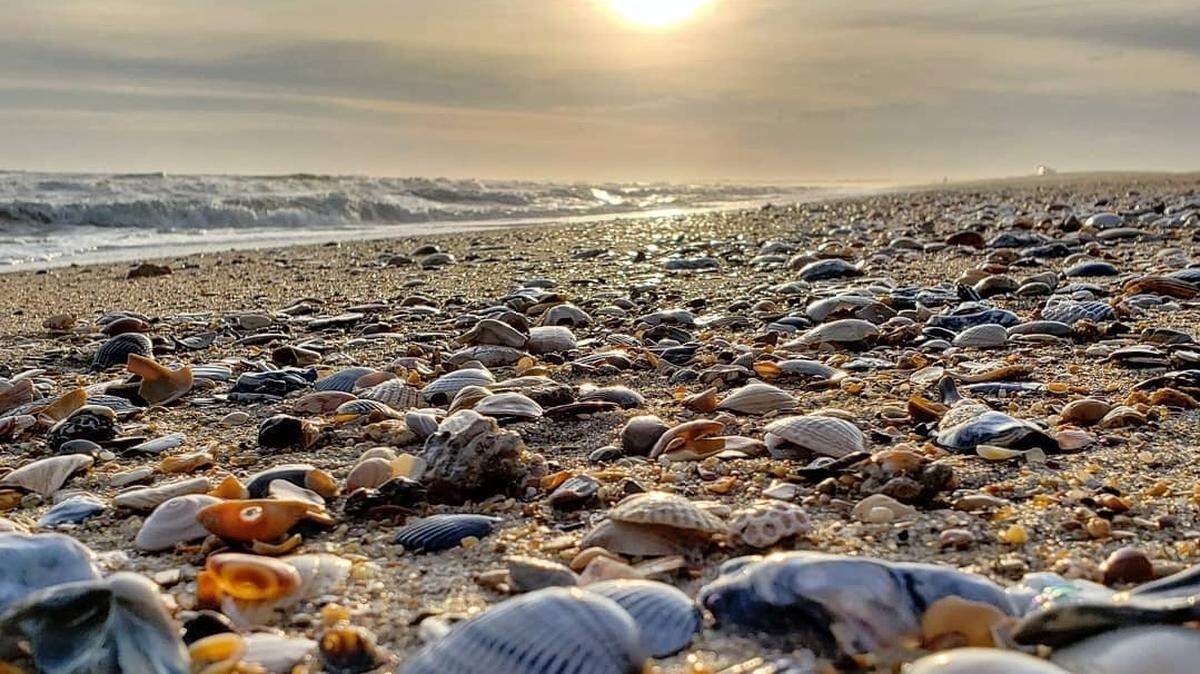
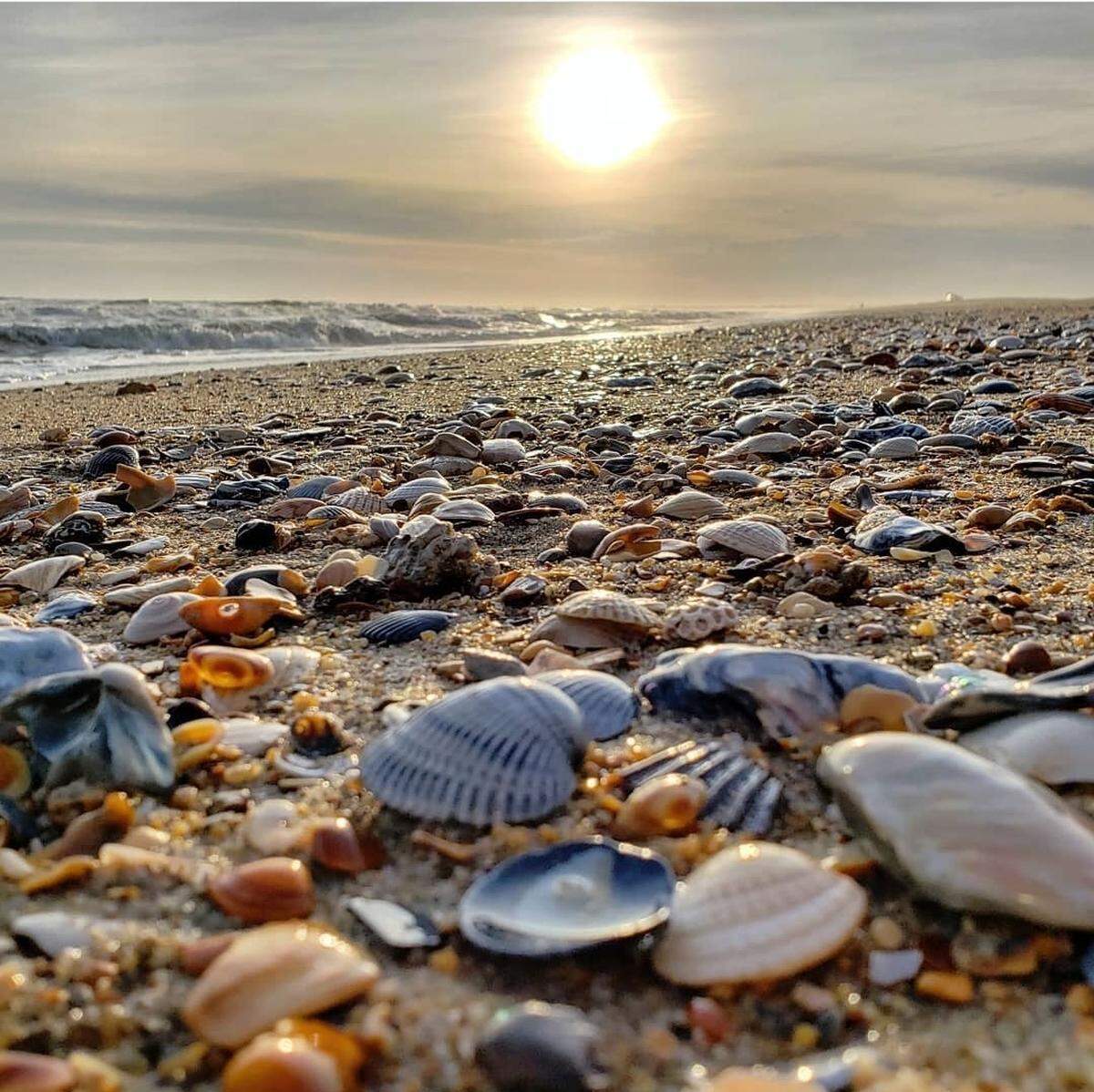
Shells on the beach at Cape Hatteras National Seashore last September. A series of storms last winter deposited millions of seashells along the N.C. coast.
National Park Service
Walking along the ocean is for many its own reward, but if you happen to visit when waves have deposited — or dug up — a bit of bounty on a North Carolina beach, is it your treasure to claim?
As beach season begins, here’s a roundup of the rules.
Can you keep what you find on NC beaches?
That depends on whether it’s managed by the federal or state government or a local municipality.
All 320 miles of N.C. coastline are owned by the public but managed by different entities with different regulations.
Within their boundaries, the same rules apply as those in all other national parks:
Except for shells and driftwood, which are legal to collect, anything found on the beach is protected by law and may not be removed because it might be a historical artifact.
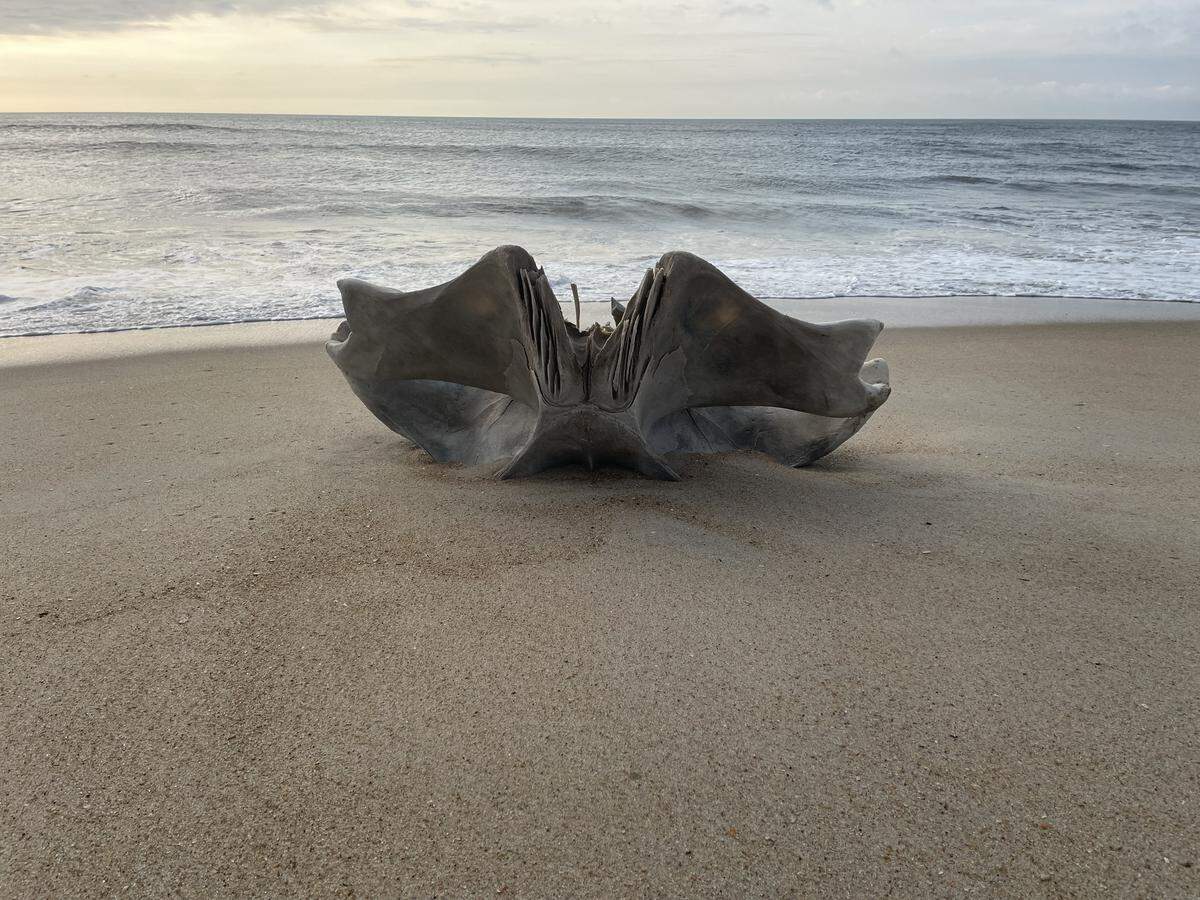
This large skull washed ashore on Hatteras island and the National Park Service has identified it as a humpback whale skull. NPS photo/E. Dlutkowski
A septic tank wouldn’t make much of a souvenir, but plenty of people on social media wondered last week how hard it would be to load a chunk of whale skull into a pickup truck to carry home and turn into yard art.
Neither is legal to take.
The same goes for the remains of shipwrecks that lie under the sand on various beaches until they get uncovered by storms. Take pictures, but nothing else. The waves and wind will bury and expose the old bones again and again for others to see.
Technically, it’s illegal to take any resource from any N.C. state park, but rangers generally will allow visitors to collect a few shells. Don’t haul off the driftwood.
Note: The ferry is not presently running to Bear Island, part of Hammocks Beach State Park near Swansboro, and the island’s facilities, including the bath house, concession stand and all campsites, are closed while the state rebuilds the water and sewer systems. It’s OK to visit if you can kayak to the island or arrange for a private boat. The mainland section of the park remains open.
▪ Beaches managed by North Carolina towns have their own rules. All allow visitors to collect a few shells. But while it may seem obvious, it’s worth stating that they don’t allow the wholesale removal of sand. Some property owners tried this several years ago when they needed to fill sandbags in the hours before a hurricane was due to arrive.
Shells on the beach at Cape Hatteras National Seashore last September. A series of storms last winter deposited millions of seashells along the N.C. coast. National Park Service
Are metal detectors allowed on NC beaches?
▪ Metal detecting is specifically prohibited in national and North Carolina state parks, including Cape Hatteras National Seashore and Cape Lookout National Seashore, as well as Fort Macon, Fort Fisher and Hammocks Beach state parks.
The one exception is that if someone loses something such as a piece of jewelry within a state park, someone with a metal detector can get a special permit from the superintendent’s office to search for the itemin the area where it went missing.
▪ Beach municipalities generally do allow metal detectors, as long as you stay on the beach and out of the dunes. Also, be courteous; if you dig a hole because the metal detector pinged, fill the hole when you’re done. In fact, many beach communities can now fine people for leaving unfilled any hole dug deeper than 12 inches.
Steven Ray of Newport has been summoned to N.C. beaches countless times over the years through The Ringfinders network, and has hunted down tens of thousands of dollars’ worth of rings, watches and other items. The quicker he or someone else gets the call, he said, the more likely it is the item will be returned to the original owner and not discovered years later by someone else (who, by the way, can legally keep it — or they could take it to the police department or town hall).
Ray said he also has found buttons from Civil War-era military uniforms and bits of 50-caliber bullets from World War II — all on municipal beaches and all of which were OK for him to add to his collection.
Once, Ray said, a woman called him to search for her engagement ring at Atlantic Beach. She had been on the sand somewhere over here, she told him, but she had thrown the ring somewhere over there.
“She had gotten into an argument with her fiance,” Ray recalled. “There was alcohol involved.”
As far as he knows, it’s still out there, waiting to be found.