Downed trees from Hurricane Helene are now a fire risk for NC mountains, foresters say
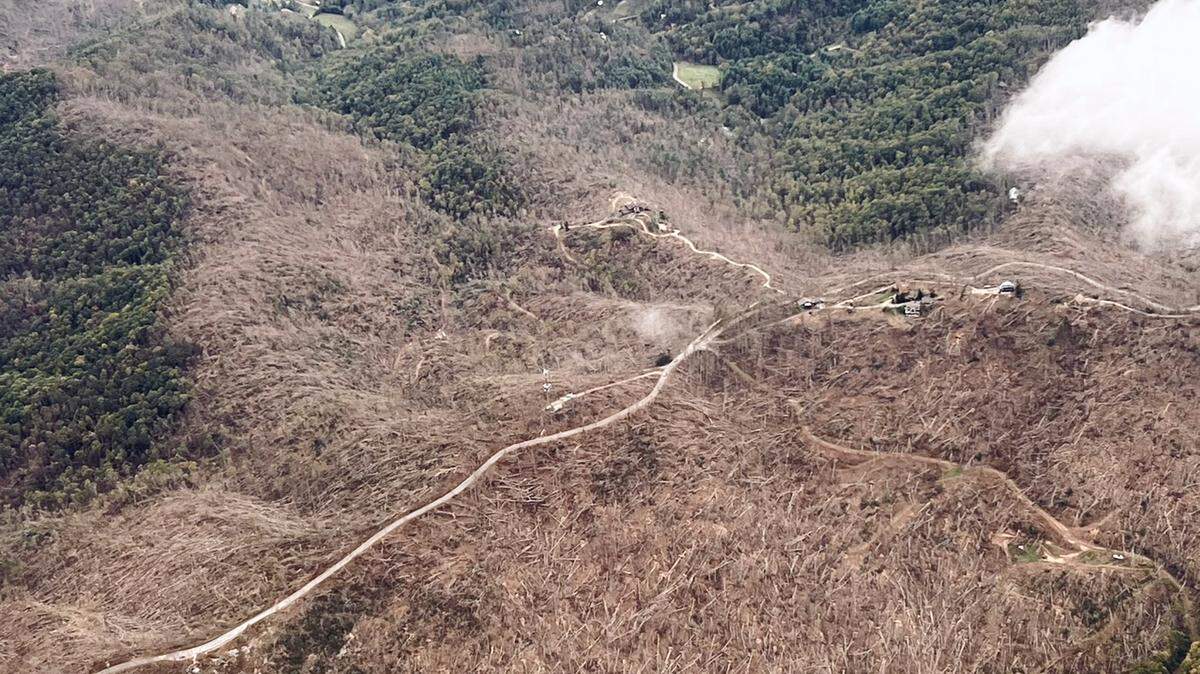
Helene’s winds damaged 822,000 acres of woodlands in Western North Carolina, leaving behind what could now become fuel for major wildfires, state and federal foresters say.
The N.C. Forest Service conducted an aerial assessment of the region affected by the storm and said last week that in the 18 counties most affected, Helene caused about $214 million in timber damage.
The survey found the worst damage was in Buncombe and McDowell counties, followed by Avery, Mitchell, Henderson and Yancey counties. Foresters said their assessment showed evidence of 80- to 100-mph winds in places, some of them occurring as the result of downdrafts or micro-bursts.
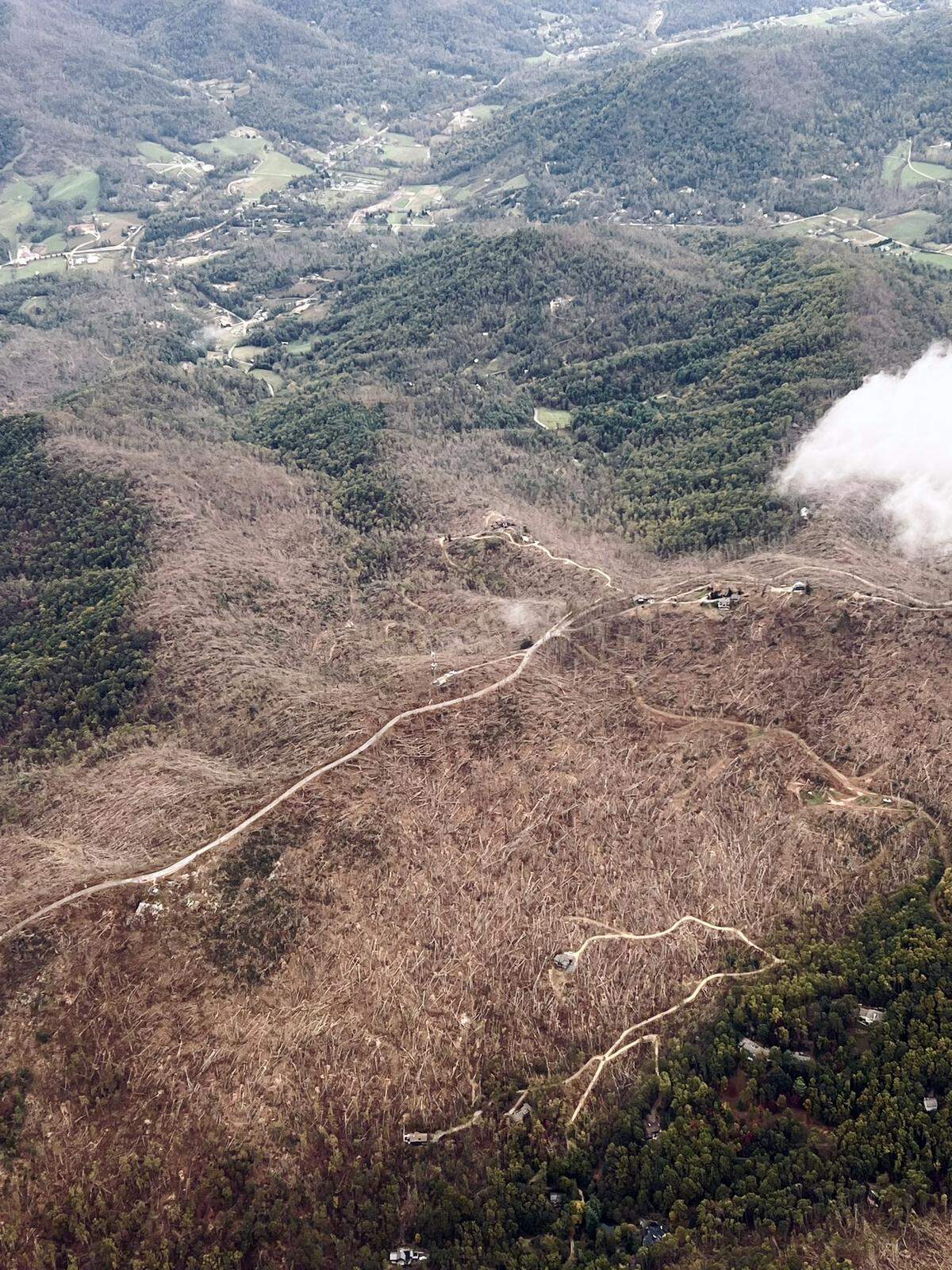
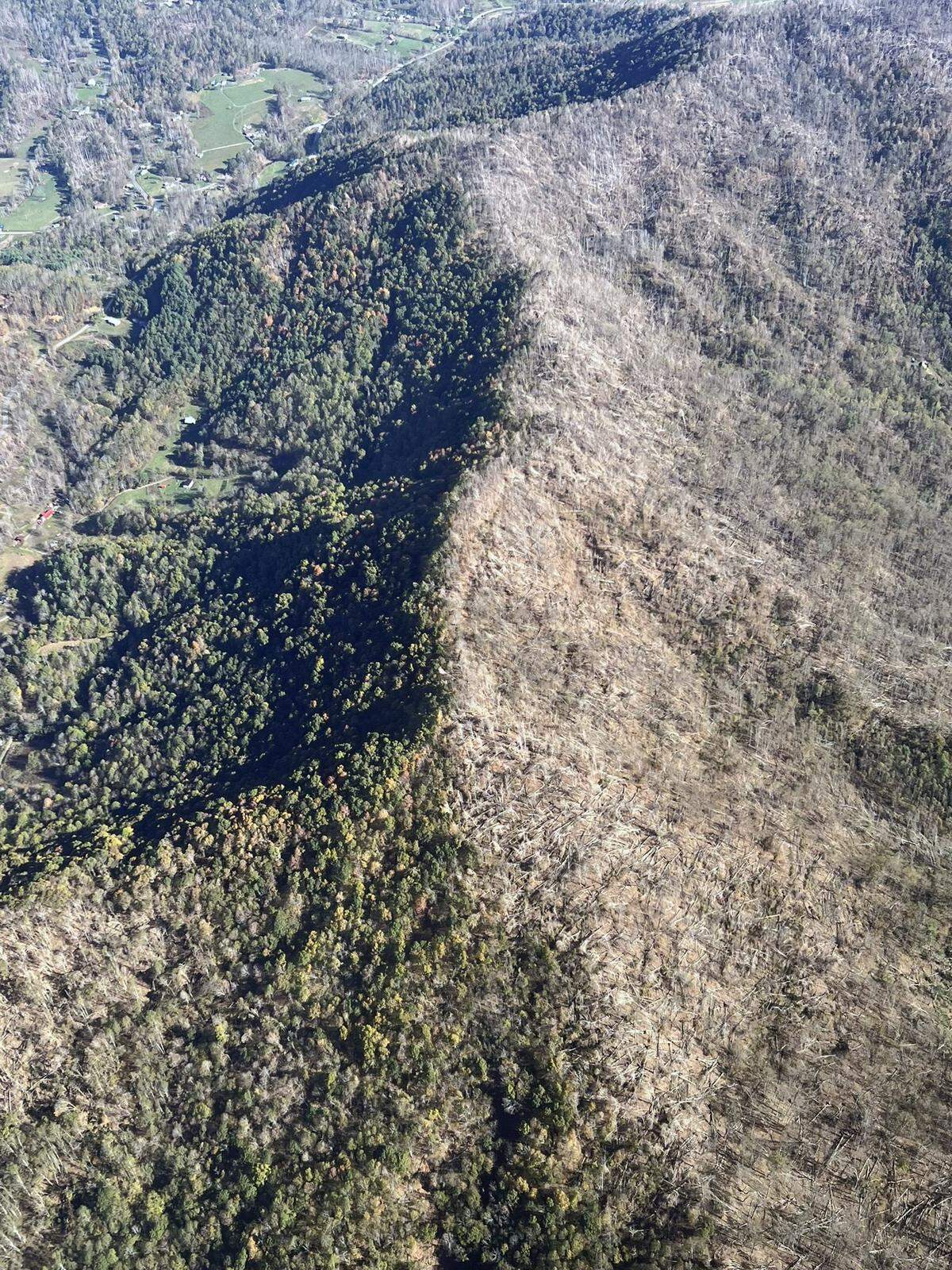
In some places, the survey found — especially on south-facing slopes that were beaten by Helene’s strongest winds — there was near-total destruction of the standing timber, while adjacent stands received little to no damage.
The storm was especially destructive to hardwoods, foresters said, and damage tended to involve whole trees being downed rather than just the tops being broken out.
Did Helene damage private or public timber land?
Both. According to the Forest Service, the breakdown in ownership of affected woodlands is:
▪ 78% private ownership by individuals, corporations and others
▪ 21% public ownership, including the U.S. Forest Service and other entities
▪ 1% reserves, such as public parks
On federal lands, the USDA Forest Service said the storm caused “moderate to catastrophic damage” to more than 187,000 acres in the Nantahala and Pisgah national forests. The bulk of the damage, the USDA said, was in the Pisgah National Forest, particularly within Yancey, Mitchell, McDowell and Avery counties, where several communities neighboring the forests also were devastated by the storm.
Two of the three districts of the Pisgah — the Grandfather and Appalachian ranger districts — remain closed because of the damage.
Such widespread damage can result in loss of wildlife habitat, watershed impacts and greater potential for invasive species to thrive, foresters say.
In addition to the ecological destruction in the two national forests, the USDA said nearly 900 miles of Forest Service-managed roads and some 800 miles of trails were damaged, with several completely washed away or blocked by debris.
The next worry: wildfires caused by debris-burning
Spring is the busiest season for forest fires in North Carolina, but fall is close behind. Last year, the N.C. Forest Service responded to nearly 2,000 wildfires from October to early December, with more than 1,200 of those occurring in November.
While much of the state is now abnormally dry, the counties most affected by Helene’s torrential rains are not. However, the Forest Service says that in Helene’s aftermath, smaller-diameter trees and leaf litter will dry out quickly, creating fuel for fires.
Damaged roads, unstable ground and downed trees will make it more difficult for firefighters to reach wildfires that do occur, the Forest Service said in a Facebook post.
Those conditions increase the potential for larger wildfires in the most heavily impacted areas, the agency said.
“With debris burning expected to increase, human-caused ignitions will likely increase,” the post warned.
In October, the Office of State Budget and Management estimated the N.C. Forest Service would need an extra $19 million to cover overtime, contract work and equipment repairs as a result of increased wildfires due to Helene.
Is Western NC under an outdoor burning ban?
No.
Under the Disaster Recovery Act of 2024, open burning rules have been expanded to allow for the burning of storm-related debris that originates from areas affected by Helene. That includes solid and engineered wood products, vegetative land-clearing debris and other items from landscaping maintenance. The rule change will be in effect through March 31, 2025.
Burning types of debris not allowed under the law could jeopardize FEMA reimbursement. Refer to the N.C. Department of Environmental Quality’s storm debris burning guidance to make sure you’re following the law.
In addition, under the temporary rules, the requirement for open burning permits is waived in Alexander, Alleghany, Ashe, Avery, Buncombe, Burke, Caldwell, Catawba, Cleveland, Haywood, Henderson, Jackson, Madison, McDowell, Mitchell, Polk, Rutherford, Transylvania, Watauga, Wilkes and Yancey counties until further notice.
How to burn debris safely
The Forest Service says careless debris burning is the leading cause of wildfires in the state, so it’s important to follow best practices when burning:
▪ Never burn on dry, windy days or leave your fire unattended.
▪ Have a valid burn permit. While open burning permits have been temporarily waived in 21 Western counties, permits still are required in areas not affected by Hurricane Helene. Refer to the N.C. Forest Service’s open burning permit application to determine if permits have been waived for your county.
▪ Keep a water source, shovel, rake and a phone nearby.
▪ Keep your burn pile small, not tall.
▪ When in doubt, contact your N.C. Forest Service county ranger.
This story was originally published November 6, 2024 at 2:47 PM with the headline "Downed trees from Hurricane Helene are now a fire risk for NC mountains, foresters say."