
‘Richest Black man in 1900’ built and ran nation’s first Black-owned textile mill in NC

EDITOR’S NOTE: In honor of Black History Month, The Charlotte Observer is highlighting the lives and accomplishments of nine people whose contributions might not be as well known as others, local “hidden figures” as it were.
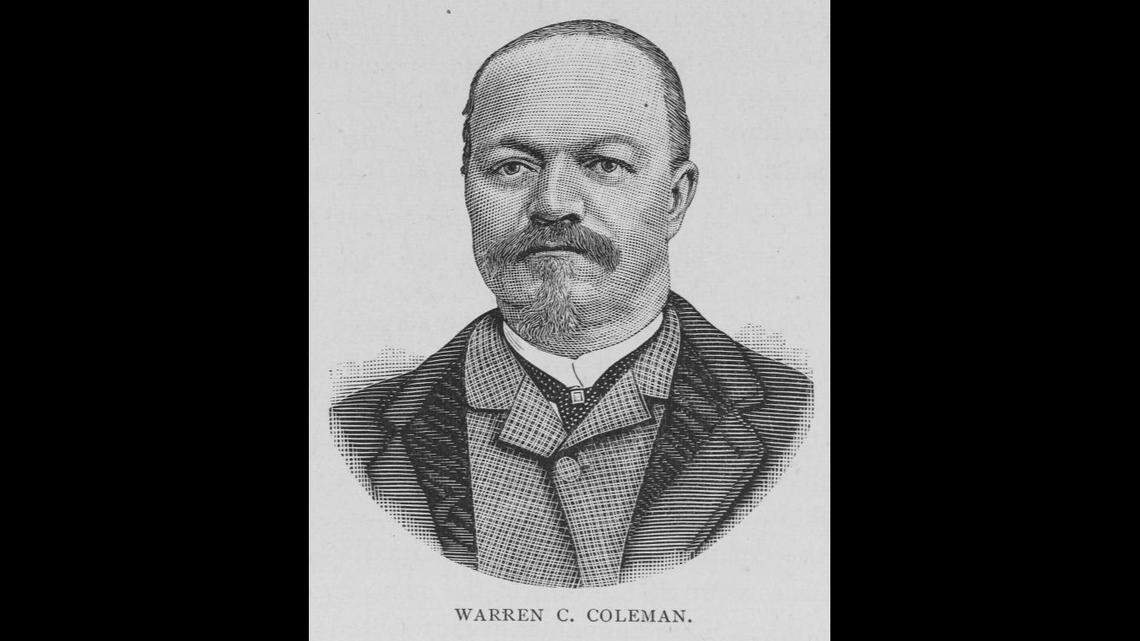
Born into slavery in 1849, Warren Clay Coleman had an entrepreneurial spirit that led him to found the nation’s first Black-owned and -operated textile factory.
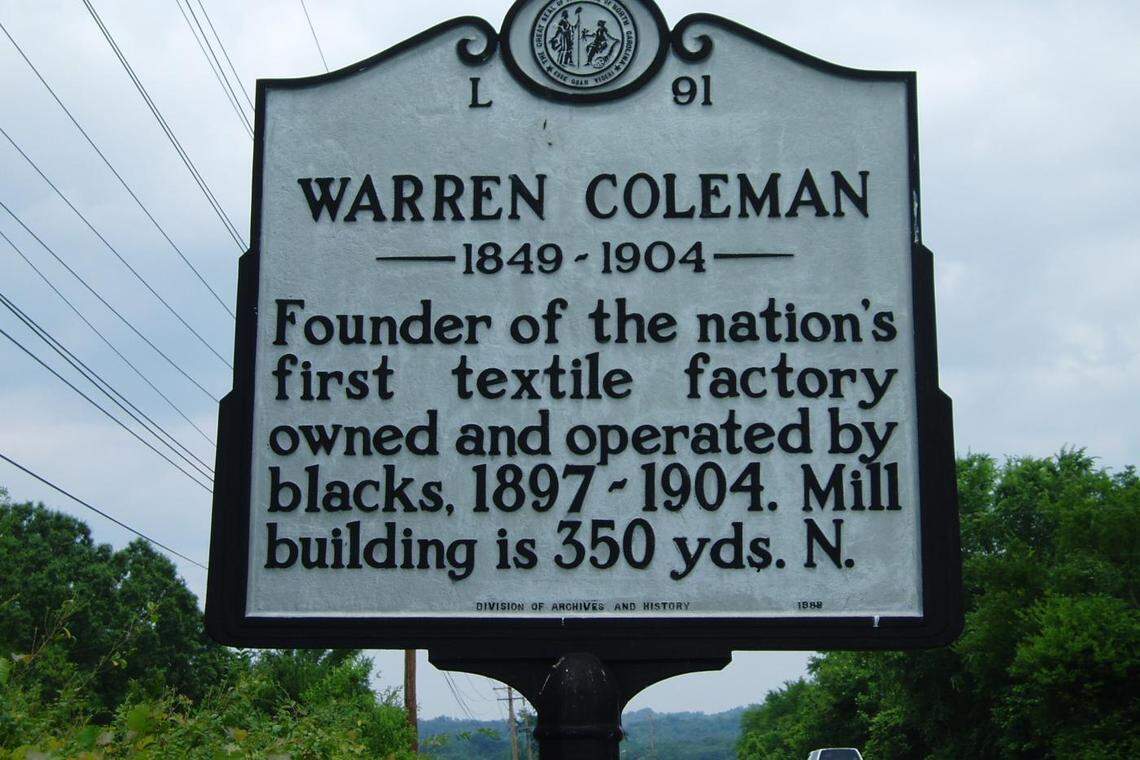
The former mill is at Main Street and Highway 601 South in Concord in what became Fieldcrest Cannon Plant No. 9. Coleman opened the mill in 1897.
Coleman “was able to rise up and become the richest man, the richest Black man, in America as of 1900,” Concord author Norman McCullough Sr. said in a 2022 video on the city’s Facebook page. In the title of his 2019 book about Coleman, McCullough called the industrialist “a clear unsung example of Black enterprise/capitalism after the Civil War.”
Coleman built Price Temple church for his 300 workers, now Price Memorial A.M.E Zion. He opened a 17-acre cemetery and built about 100 homes for employees at his 196,000-square-foot mill, McCullough said.
The mill and homes were built in the present-day Logan neighborhood, a historically Black community.
In the 1890s, Black people were barred from working at mills owned by John Odell, James Cannon and other white men “except for very menial labor,” McCullough said.
Built by former slaves, the mill was so famous that W.E.B. DuBois, the Black sociologist, historian and civil rights activist, included pictures of the building in an exhibit at the Paris Exposition of 1900, The Charlotte Observer reported in 2011. He did so to highlight progress by Black people across the country.
But a few years after the mill opened, high cotton prices caused financial difficulties for Coleman’s mill and many others.
In 1903, he turned over management to a white cotton merchant who hired white workers. Coleman died in 1904 at age 55. Washington Duke, a white industrialist and philanthropist, bought the mill for $10,000 at a sheriff’s sale.
Over a century later in 2022, the Concord City Council agreed to extend sewer lines to Winston-Salem-based developer Sari and Company’s planned $28-million Coleman Mill Apartments affordable-housing project in the building. One end of the building appeared to be undergoing renovations when the Observer visited the site on Sunday, Feb. 2, 2025.
The 10-acre complex is such a landmark that visitors get their pictures taken in front of the plaque honoring Coleman in the main building. Former U.S. Rep. Larry Kissell, D-N.C., even filmed a campaign ad outside the building’s front entrance in 2010.
“We, as African Americans, have a lot to be proud of,” McCullough said, citing Coleman. Blacks have played “a major role” in Southern society, “as well as America in general.”
This story was originally published February 19, 2025 at 6:00 AM with the headline "‘Richest Black man in 1900’ built and ran nation’s first Black-owned textile mill in NC."