Who should get the measles vaccine in NC? What to know as US cases are on the rise
Note: Find updated information on measles cases in North Carolina here.
Measles cases are on the rise in the U.S. — and signs indicate that more outbreaks are possible.
As of Feb. 20, there were a total of 93 measles cases reported in eight states: Alaska, California, Georgia, New Jersey, New Mexico, New York, Rhode Island and Texas, according to the Centers for Disease Control and Prevention. For comparison, 285 cases were reported in the U.S. in 2024.
Though there haven’t been any cases reported in North Carolina this year, a child in Mecklenburg County was diagnosed with measles in September, making it the state’s first confirmed case since 2018, The Charlotte Observer reported.
The recent uptick in measles cases is primarily due to a rise in vaccine hesitancy, Dr. David Weber, an infectious disease specialist at the UNC School of Medicine, told The Observer.
Vaccine hesitancy increased during the COVID-19 pandemic, but it’s also due, in part, to the common misconception that vaccines cause autism, Weber said.
“If you look number of kindergartners who have now been immunized against measles, it’s below 95% in most of the country, but not all of the country,” Weber said. “It’s actually less than 95% in North Carolina.”
Here’s what to know about measles, including how it spreads, common symptoms and whether you should get the vaccine.
How does measles spread?
Measles can spread through contact with an infected person or with contaminated air droplets, and the virus can live in an airspace for up to two hours after an infected person leaves an area, according to the CDC.
“Measles is the most infectious disease we have since we eradicated smallpox,” Weber said. “If I had measles and I was in a group of everyone who is susceptible, I would transmit it, on average, to 14 to 18 people.”
What are the symptoms of measles?
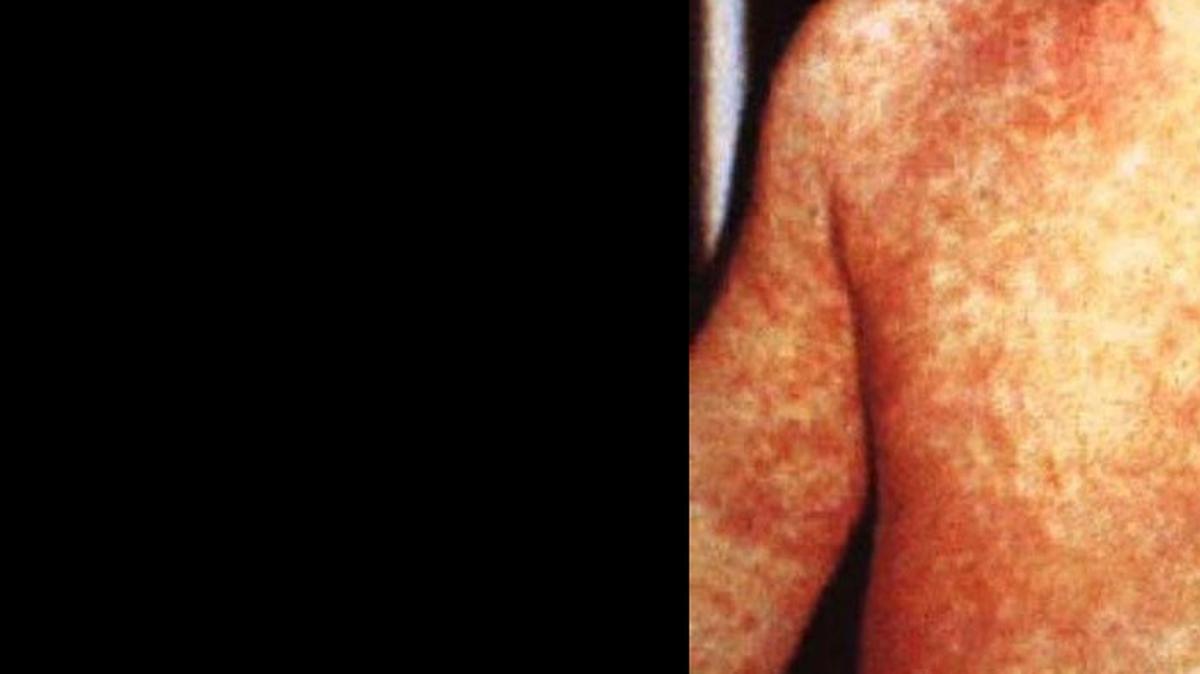
Measles infects the respiratory tract and then spreads throughout the body, which, according to the World Health Organization, can lead to symptoms like:
- high fever
- cough
- runny nose
- rash covering the body
Symptoms typically appear seven to 14 days after contact with the virus.
Though a rash is the most common symptom associated with measles, it takes three to five days from the time a person contracts the virus for rashes to appear, Weber said, noting that the virus can also lead to more severe symptoms, such as encephalitis (inflammation of the brain) and pneumonia.
“Measles is not a benign disease,” said Weber. “Something like one to three out of every 1000 people who get measles die.”
Who should get the measles vaccine?
Nearly everyone should get the Measles, Mumps and Rubella (MMR) vaccine, Weber said, adding that it’s the most effective protection against the virus.
Public health experts say adults who were born after 1957 and were vaccinated before 1968 should consider getting vaccinated again, NPR reported.
People who are “highly immunocompromised,” such as a child with leukemia, may not be eligible for the vaccine, since it contains the live virus, Weber said.
Most children receive two doses of the MMR vaccine — one at age 12 months through 15 months and another at age 4 to 6, according to the CDC.
Where to get the measles vaccine in NC
You can visit any of the following places for MMR vaccines in NC:
▪ Pharmacies: Walk in or schedule appointments at pharmacies like CVS and Walgreens. You can also inquire with local neighborhood pharmacies.
▪ Grocery and big box stores with pharmacies: Walk in or schedule appointments at stores like Walmart, Target, Harris Teeter and Publix.
▪ Your healthcare provider: Of course, you can contact your doctor for an appointment.
How to protect yourself from measles
Aside from the vaccine, masking can help prevent the spread of measles, but it’s not 100% effective, Weber said.
“Very few people wear a mask 100% of the time out of their house,” he added. “So by far, the best way to protect yourself is to get the vaccine.
Avoiding people with measles is also unproductive, Weber said, since people with measles become infectious before symptoms begin, meaning people could be unaware they have the virus.
This story was originally published February 24, 2025 at 2:19 PM with the headline "Who should get the measles vaccine in NC? What to know as US cases are on the rise."