Squishy hazards wash up along NC coast. How to avoid getting stung at the beach
Sunbathers aren’t the only ones lying belly-up on North Carolina beaches as Memorial Day kicks off the 2025 summer travel season.
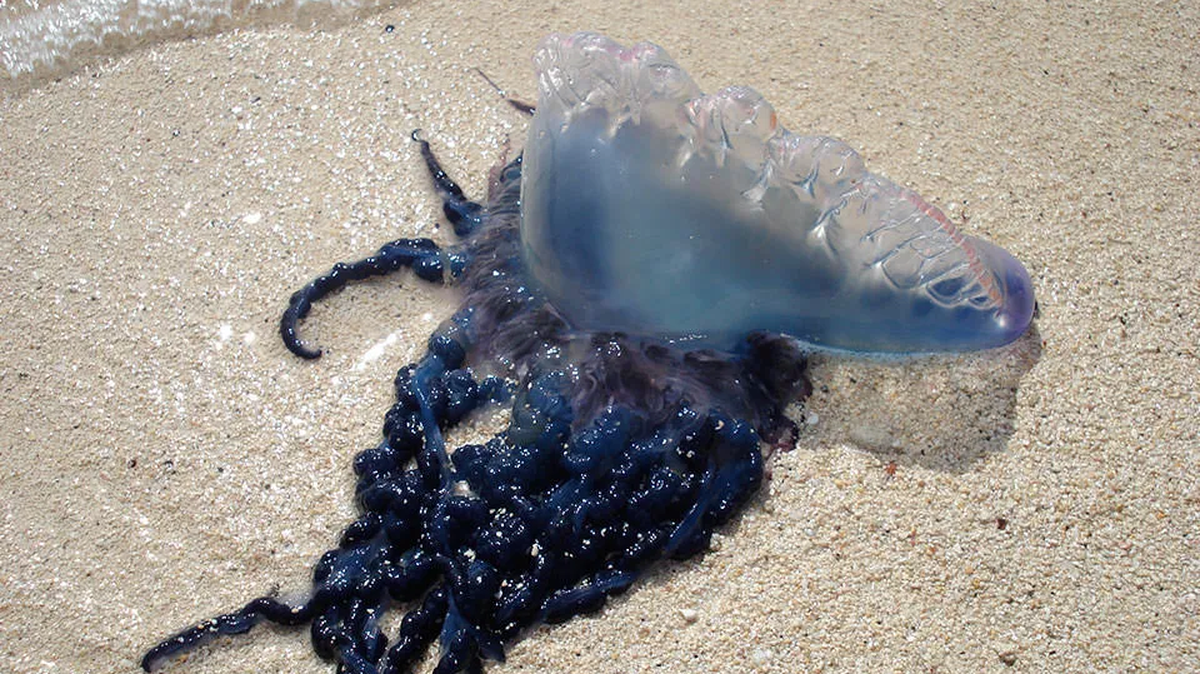
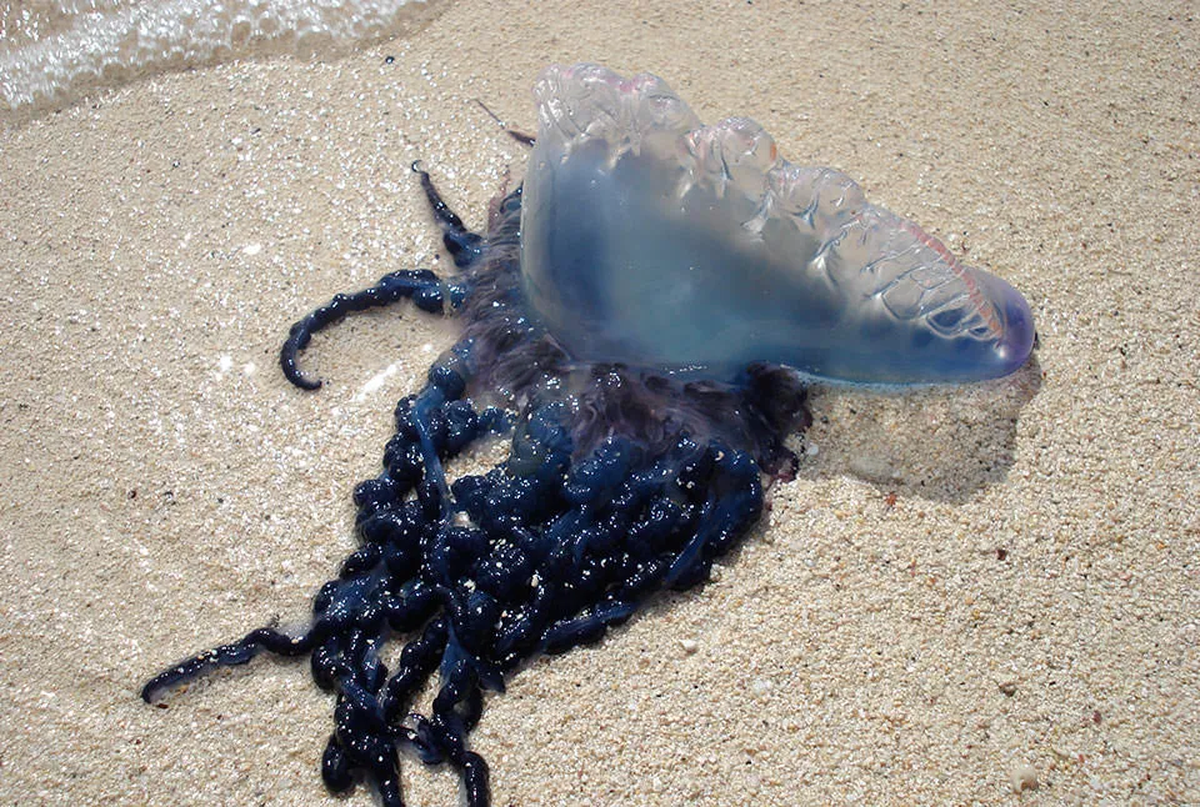
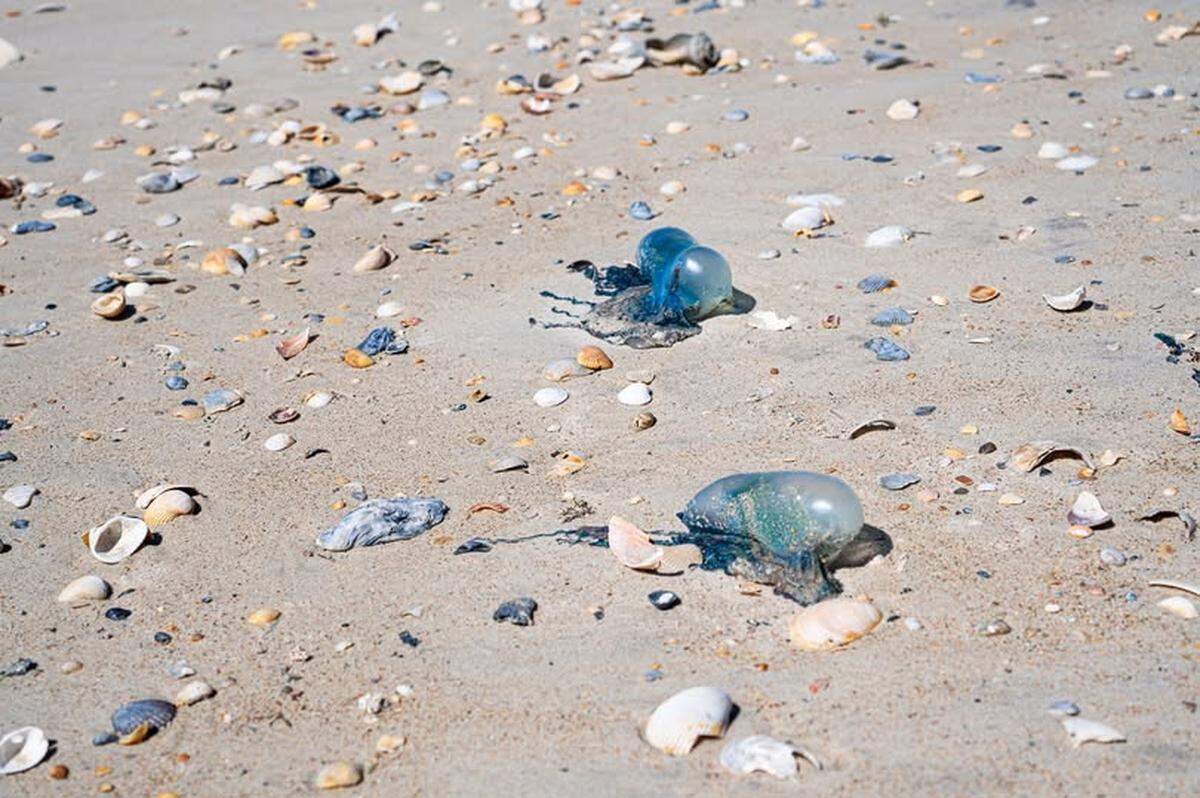
That beautiful indigo-tinted squish monster, the poisonous Portuguese man-of-war, has been flopping onto the sand in several N.C. coastal communities recently.
Other hazards loom as well, including dangerous rip currents and — on an island that’s part of Marine Corps Base Camp Lejeune in Onslow County — live military ordnance.
Here’s how to stay safe.
Bulbous man-of-wars aren’t jellyfish
The body of a man-of-war — or man-o’-war — looks like a jellyfish, but this creature is one of a group of animals called siphonophores.
The National Oceanic and Atmospheric Administration says they get their name from their resemblance to 18th-century Portugese warships under full sail. The balloon-like float can be blue, violet or even pink and bob around up to six inches above the waterline. Below the surface, strands of tentacles can stretch from 30 to 100 feet long.
And there is the danger: In the tentacles the man-of-war has stinging nematocysts, microscopic capsules loaded with coiled, barbed tubes used to deliver venom.
The venom is designed to paralyze and kill small fish and crustaceans, but a swimmer who bumps into a man-of-war in the surf or touches one that has washed up on the beach gets the same treatment, and the sting is said to be excruciatingly painful.
NOAA says that a man-of-war’s tentacles can still sting weeks after the creature has died and washed onshore, and nematocysts can fire even if the tentacles get separated from the body.
Recently, beachgoers have spotted man-of-wars on the beaches at Emerald Isle, Sunset Beach, Oak Island and Hatteras Island, likely the result of prevailing winds blowing them toward shore.
If you spot one, don’t touch.
What if you’re stung by a man-of-war?
Researchers who tested commonly recommended methods of treating man-of-war stings in a 2017 study found that most of those tactics actually made the injuries worse.
The best treatment, they said in an article published in Toxins magazine, is to rinse the sting site with undiluted vinegar and then immerse it for at least 45 minutes in water that’s at least 113 degrees Fahrenheit. That technique deactivates and rinses away the tiny harpoons that contain the venom.
Sting No More, developed by the U.S. military for its divers, also works, researchers say. It’s available online and in some dive shops.
How do you know if there are man-of-wars around?
North Carolina beach towns use the colored-flag system to alert beachgoers to hazards.
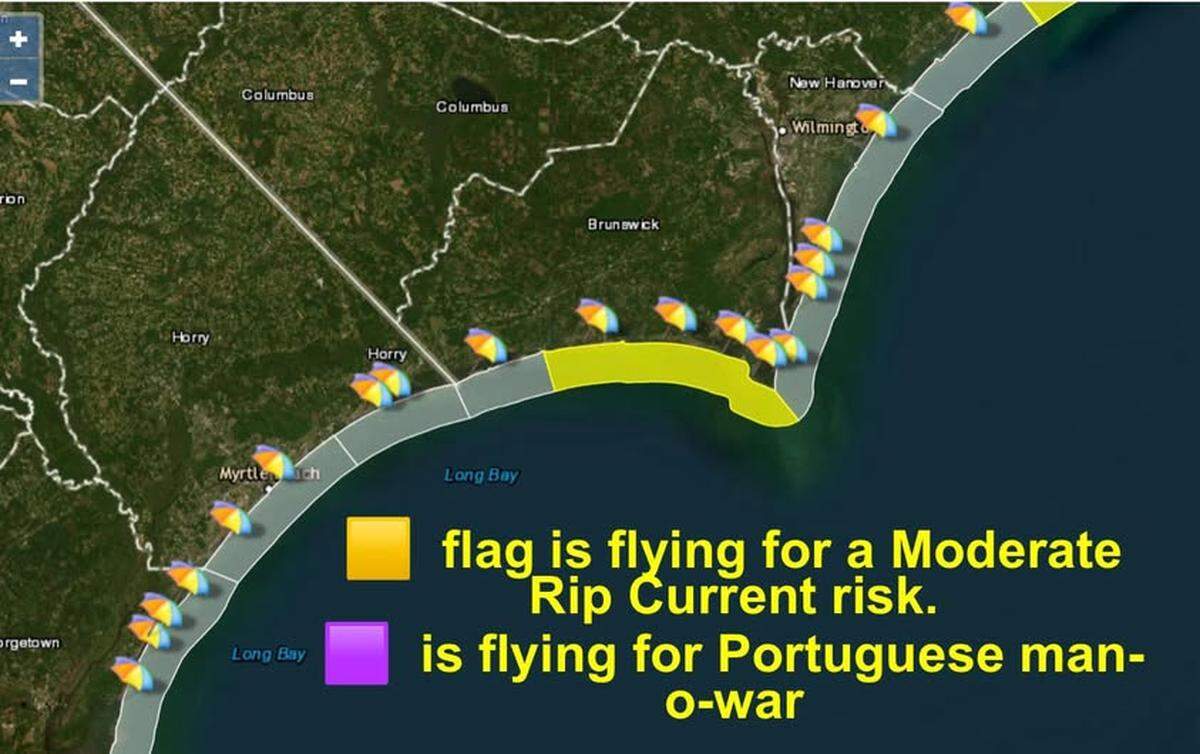
Zoological threats are noted by purple flags, which may be mounted to lifeguard stands, piers and other structures where they can be easily seen by the public.
What does a red flag mean at the beach?
Recent weather and oceanic conditions have prompted local officials to post red flags at North Carolina beaches from Onslow County to the Virginia line. National Weather Service maps show the conditions along the coast.
▪ A red flag at the beach means that life-threatening rip currents are likely and the surf zone is dangerous for all levels of swimmers. Under a red flag, it’s best to stay out of the water, or wade in ankle-deep only.
▪ A double-red flag means that conditions are so dangerous, local police can arrest and fine people who go into the ocean.
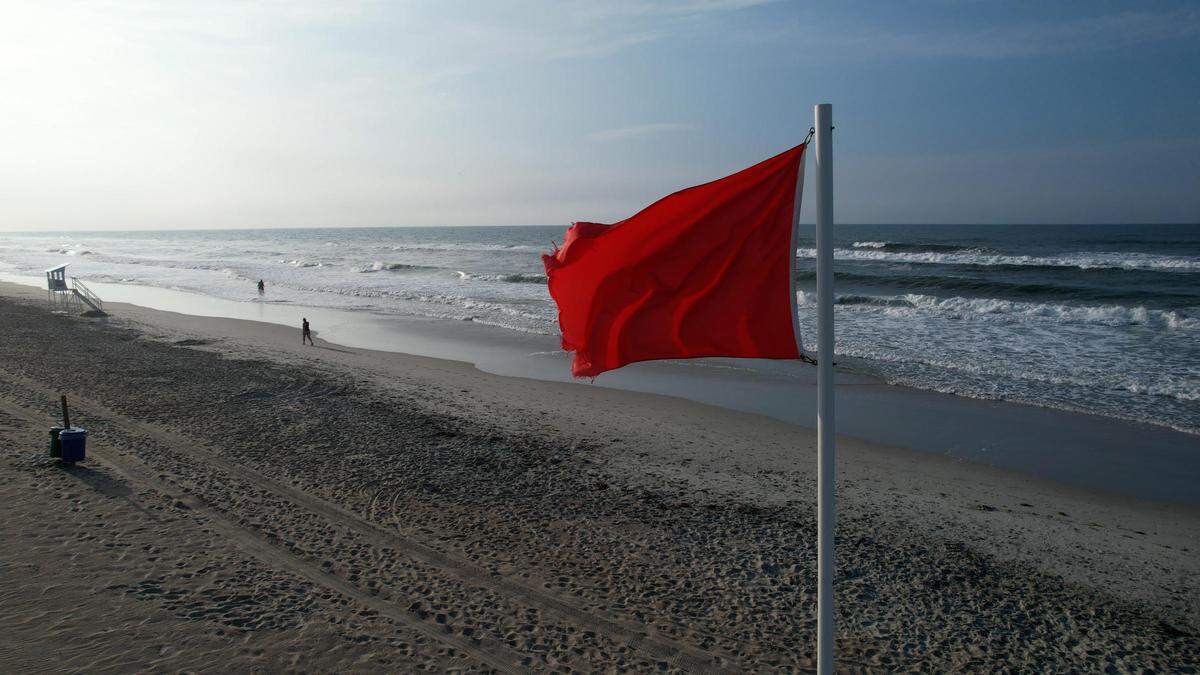
As of Friday, May 23, a red flag could be seen flying at the Bogue Inlet Pier on Emerald Isle in the pier’s popular live cam.
Things that go boom besides the crashing waves
Marine Corps Base Camp Lejune uses the Memorial Day weekend to remind visitors that Browns Island and the waters around it are off-limits because of the potential of unexploded bombs and frequent live-fire training exercises.
Nearly every year, it seems, military police are summoned to remove explorers, partyers and relic-hunters who venture onto or near Browns Island out of ignorance or because they’re intrigued by its history as a military bombing range since the 1940s.
“Regardless of posted warnings and federal regulations, we continue to see individuals putting themselves at serious risk by entering restricted waters near Browns Island,” said Sam Mortimer, range safety officer for Camp Lejeune, said in a press release on Friday. “Unexploded ordnance is unpredictable and extremely dangerous.”
Base personnel regularly sweep the area, in Onslow County south of Hammocks Beach State Park, for unexploded ordnance “as often as possible,” Mortimer said, but the risk remains.
This story was originally published May 23, 2025 at 5:22 PM with the headline "Squishy hazards wash up along NC coast. How to avoid getting stung at the beach."