If you want to avoid a shark bite while swimming in NC, an expert says to do this
AI-generated summary reviewed by our newsroom.
- North Carolina recorded 31 shark bites from 2012 to 2021, none fatal
- Sharks may bite due to mistaken identity, often detecting swimmers by sound
- Avoid swimmers near fishing piers and stay underwater to reduce shark risk
There are many reasons one might avoid getting in the water at the beach, but among the most common is the fear of sharks.
One of the most recent shark-related incidents in North Carolina happened when fire officials responded to a reports of a shark bite on a swimmer at Sunset Beach on Wednesday, May 28, WSOC reported.
“Marine life, including sharks, are natural inhabitants of these waters, and it’s crucial to take precautions to minimize potential risks,” the Sunset Beach Fire Department later said in a statement.
There are a handful of shark species in North Carolina’s oceans, such as the blacknose shark, tiger shark and great white shark, according to the N.C. Sea Grant, an NC State-based conservation organization.
But how likely are they to bite?
The Charlotte Observer spoke to Larry Cahoon, a marine biology professor at the University of North Carolina at Wilmington, to find out how common shark attacks are in the state — and how you can avoid them.
How common are shark attacks in NC?
Not very common, Cahoon said.
“They’re pretty rare,” said Cahoon. “We had a spate of them in 2015 when there were about eight of them in the span of three weeks, but that was very unusual.”
According to the Florida Museum, there were just 31 shark bites in North Carolina between 2012-2021, and none of them were fatal.
Cahoon said he’s only aware of one “alleged” fatality due to a shark in North Carolina waters, but that report hasn’t been verified since it wasn’t documented properly.
While shark attacks are few and far between, Cahoon warned that some species can be more confrontational than others.
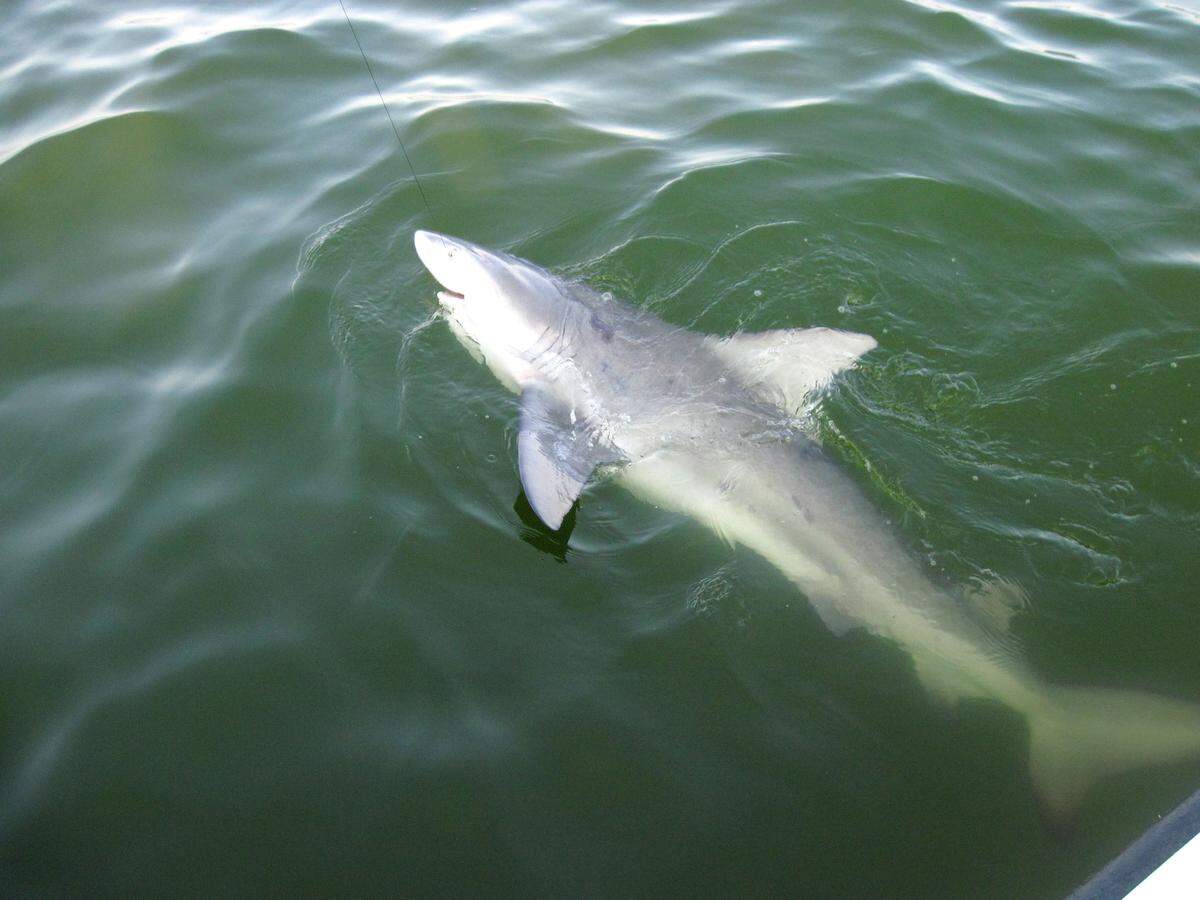
“The sharks that we worry about the most actually are called bull sharks,” Cahoon explained. “They’re cousins of great whites, but they’re nowhere near as big.
“Bull sharks can occur in fresh water, and they can swim up rivers. They’re known to be very aggressive sharks for their size. The biggest ones are about 10 feet long.”
Where do most shark attacks occur?
Most shark attacks occur at the beach, often in very shallow water, Cahoon said.
“People wading in the water often get bitten on the leg,” he added.
Why do sharks bite?
Most of the time, sharks bite due to a case of “mistaken identity,” Cahoon said.
He explained that sharks have an organ called the lateral line, which is a series of pressure transducers that essentially function as “tiny ears running from the snout all the way back along the sides to the tail.”
“Those pressure transducers, they function like an ear, except in water, and they’re sensitive to pressure waves,” Cahoon said. “And that’s what sound in the water is. It’s a series of pressure waves. And because the lateral line is so long, as the shark gets bigger, they can detect very low frequency sounds. They can hear you swimming. They can hear you wading in the water.”
But when it comes to seeing underwater, their vision is just about as good as ours, Cahoon said.
“They’re not geniuses,” Cahoon said, adding that sharks may mistake humans for smaller organisms because they can only hear the sounds you produce underwater. “Often they’ll take a bite and realize, ‘Oh, that’s not what I thought it was,’ then take off.”
“Most of them are not big enough to really hurt you very badly,” he added. “Being bitten still isn’t fun, but we’re not talking about chopping you in half.”
Does blood really attract sharks?
It’s likely, Cahoon said, since sharks have a strong sense of smell.
“People don’t bleed in the water, that’s pretty rare,” said Cahoon. “Most people who are bleeding aren’t going in the water.”
However, there’s something else that is more likely to attract sharks, Cahoon said: fish.
“We think some of the earlier of the 2015 attacks had something to do with being near a fishing pier,” he said. “When people are catching fish, the fish are struggling to get loose, and that sound in the water really draws sharks. They know that sound very well.”
How can you avoid a shark attack?
▪ One of the best ways swimmers can avoid sharks is by staying away from anglers, Cahoon said.
“Again, sharks are not terribly bright,” he said. “If they’re hungry, they’re going to be less selective about what they try to eat…so it’s a good idea to try and separate people from fishing activity.”
▪ Cahoon also said sharks are less likely to approach you if you sound big, meaning those who swim completely underwater have less of a chance of getting bitten by a shark versus those who swim on top of it.
“The thrashing and smashing around stuff may, may, to a slight degree, tend to draw them in, but I wouldn’t be terribly worried about that, especially if there’s a lot of people in the water.”
▪ Swimming alone at night can also present a prime opportunity for sharks to strike, Cahoon said, since they’re more likely to attack when they won’t be seen.
While swimmers always run the risk of shark attacks, there’s good news for scuba divers.
▪ “Sharks almost never bother scuba divers, because scuba divers, number one, go down in pairs,” Cahoon said. “And they’re big, they make a lot of racket and they tend to go during the day, when visibility is better.”
This story was originally published May 29, 2025 at 7:00 AM with the headline "If you want to avoid a shark bite while swimming in NC, an expert says to do this."