Tracking parasites in farm animals is tricky. AI microscope developed in NC may help
AI-generated summary reviewed by our newsroom.
- App State researchers received $2.3M to commercialize an AI-driven microscope.
- The microscope automates fecal egg counting to identify livestock parasites faster.
- Tool aims to reduce disease, cut testing costs and support North Carolina agriculture.
Artificial intelligence is being integrated into phones, search engines, and recently, microscopes.
At Appalachian State University, researchers were awarded a $2.3 million NCInnovation grant to bring their AI microscope to market and someday save North Carolina farmers time and money.
Grant recipient Zach Russell, a self-described “Boonerang,” grew up in Apex but spent many childhood summers in Boone. He earned a degree in applied physics from App State and another in electrical and computer engineering at Duke University, before returning to the mountain town.
Today an assistant professor of physics and astronomy, Russell has 10 years of experience in microscopy, instrument design and AI, using applied physics concepts to improve software and hardware. He is now applying that expertise to fecal egg counting.
Fecal egg counting identifies parasites that can live in farm animals’ intestines. Eggs laid by adult parasites end up in the animal’s manure. Veterinarians count the number of eggs per gram of manure to gauge parasites in a herd. High levels can sicken animals and cause death if left untreated.
Russell spoke with The News & Observer about how his group’s AI microscope project could make it easier to identify fecal eggs, benefiting North Carolina’ billion dollar agricultural industry.
Money for NCInnovation grants, which support commercializing research discoveries, are at risk as bills in the N.C. General Assembly seek to “claw back” funding or change the program’s endowment model.
What is an AI-driven robotic microscope?
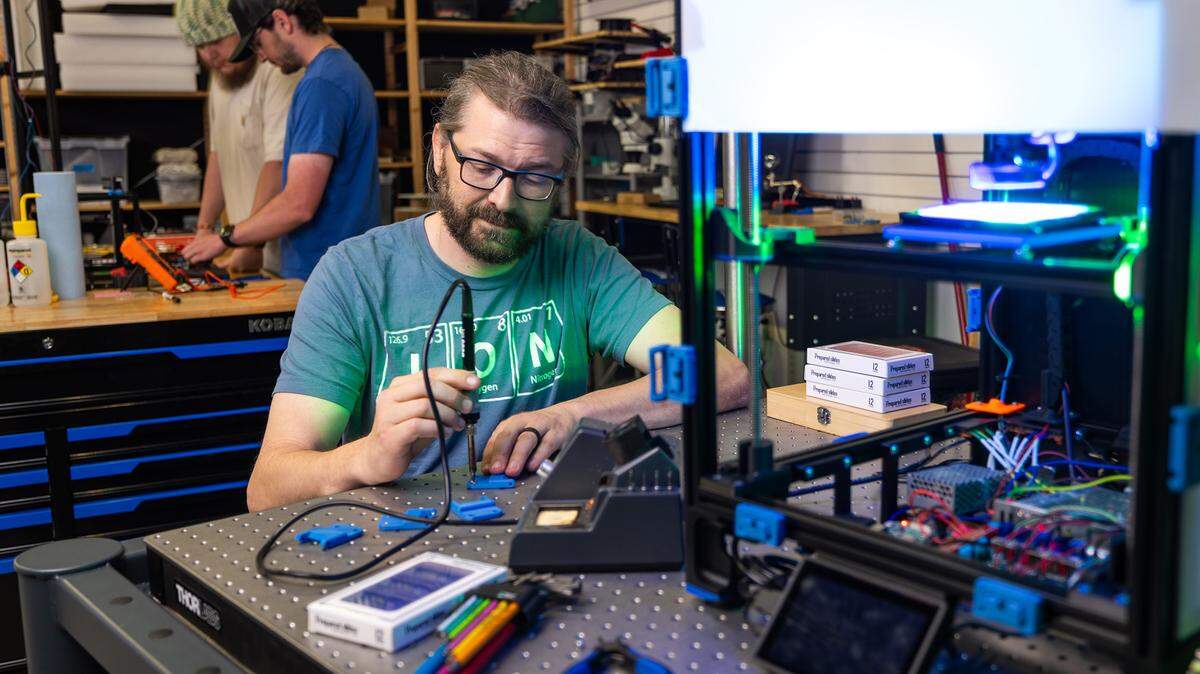
Russell: A microscope generates images ... the robotics is automation. We used robotics to move around a [fecal] sample and generate lots of different images. That creates a lot of data. The AI comes in and helps us segment the data into interesting regions and then classify those regions as being thing 1 or thing 2.
What is the purpose of your group’s AI microscope?
Russell: We’re making a microscope that will automate a really tedious job: fecal egg counting in a parasitology experiment. When people are doing a really tedious process, their accuracy will tend to drop off near the end of it.
Somebody might be looking through a microscope for tens of minutes, or even hours, counting hundreds or more of very small cells. It’s like looking for a needle in a hay stack. Instead, we will automate that process by moving around and identifying the fecal cells automatically, removing that tedium and bias.
Note: Russell said the next question is outside of this expertise, but answered it to the best of his knowledge.
This project focuses on identifying fecal parasites in livestock. How could this impact North Carolina?
Russell: The motivation for this collaboration came from looking at what problems needed to be solved in our area ... seeing what we could do with the technology that we were using in the university setting to have a more regional and local impact.
Livestock is a big business in North Carolina. Cattle, poultry and small ruminants like goats and sheep are all dramatically impacted by fecal parasites.
The animals can die if the parasites are not treated and there are costs associated with treatment. If left untreated, the parasites could spread to other animals, meaning more animals would need to be tested and treated.
If we reduce time and costs associated with fecal testing while increasing accuracy, people can test more often. This could reduce bigger outbreaks, potentially leading to less losses. It could also avoid unnecessary treatment that builds up resistances and makes parasites harder to treat in the future.
What stage of development are you in?
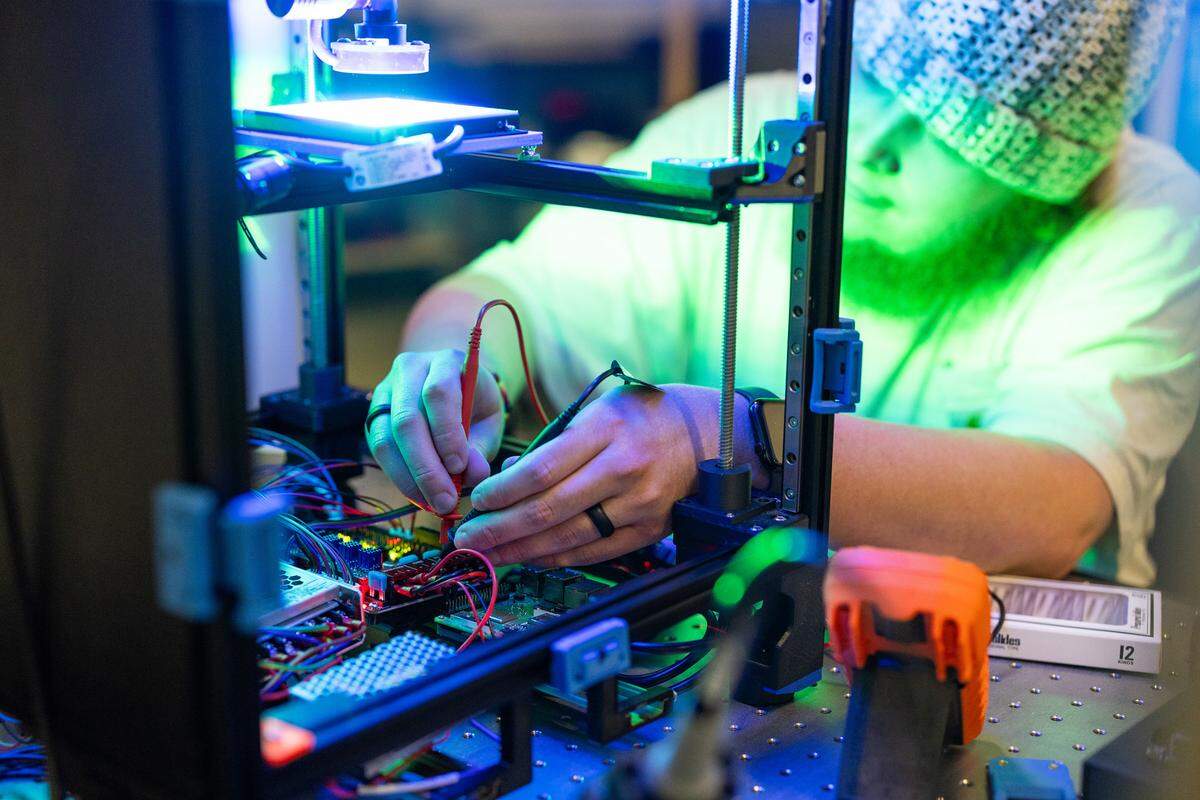
Russell: We’re in Tech Readiness Level 3. That means we’ve got examples of all the key systems of technology validated as separate components.
Through NCInnovation funding, over the next two years, we expect to advance through TLRs 4 and 5. In TLR4, we’re going to integrate [the components] into one cohesive system.
Then in TLR5, we will be taking [the technology] out and doing field studies. In this case, it would be tested at a Cooperative Extension or local veterinarian, providing feedback.
After, we plan to work with the N.C. Department of Agriculture to certify these tools so they can have quality assurance and be confidently used by veterinarians.
Who is your target audience?
Russell: Initially places like the Cooperative Extension offices and the NCDA’s veterinary labs. Then veterinarians. We’re trying to get these into the hands of the experts, supplementing their expertise.
This story was originally published July 1, 2025 at 7:00 AM with the headline "Tracking parasites in farm animals is tricky. AI microscope developed in NC may help."