New 60-mile NC state trail will connect SC line to Catawba County foothills
Just outside of small town Belmont, yellow wildflowers line the entrance of a path where chestnut oak trees shade wild turkeys, blooming snowbell bushes and lake shorelines.
The Duke Kimbrell Trail is part of a network of hiking routes, greenways and blueways that make up the Carolina Thread Trail. And it’s a short stroll away from a new trail created by House Bill 23, which Gov. Josh Stein signed Monday. The project will be a collaboration between the Carolina Thread Trail, the Catawba Riverkeeper, Daniel Stowe Conservancy and Catawba Lands Conservancy.
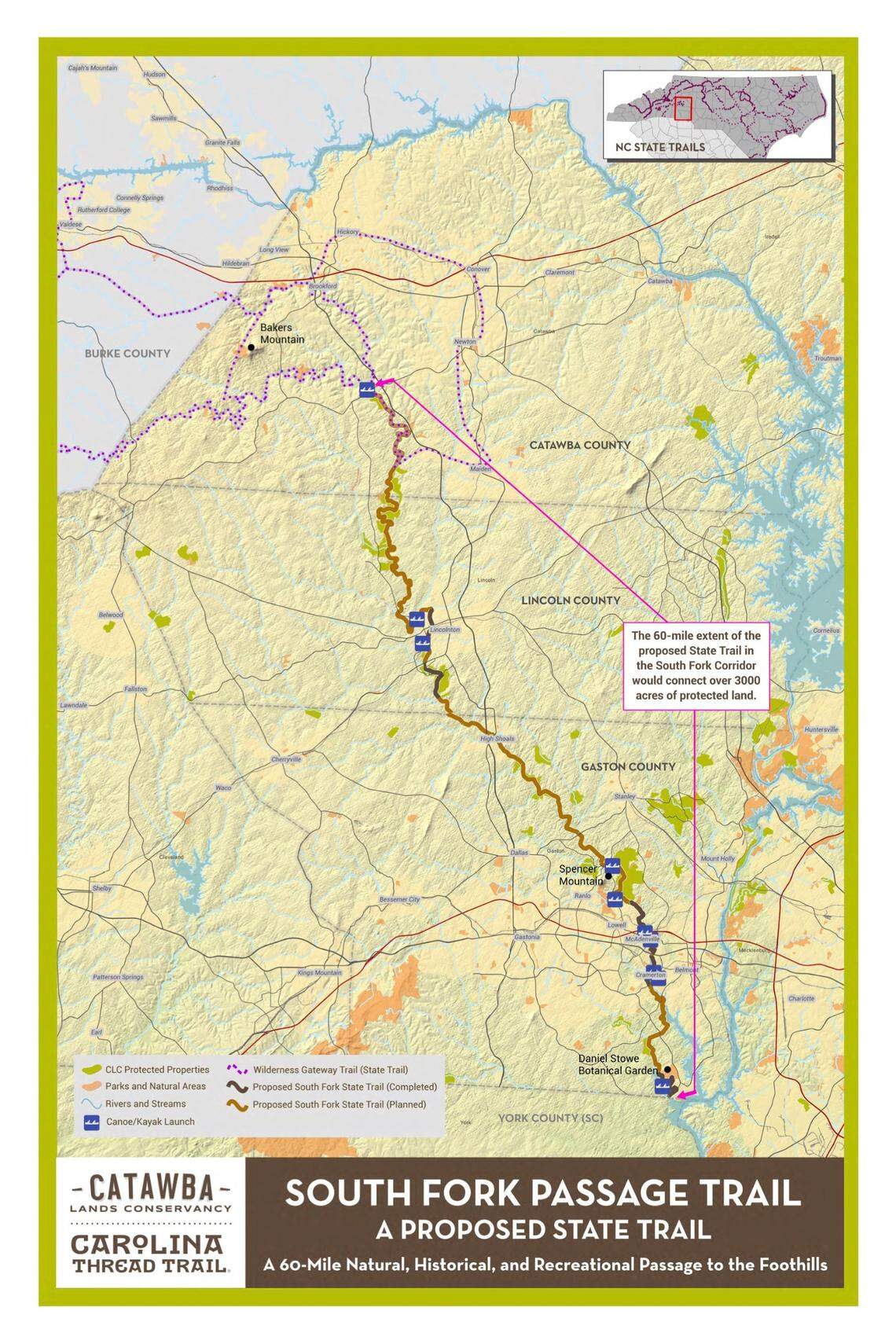
The measure establishes NC’s third hybrid land and water state trail — the South Fork Passage Trail — 60 miles of trail for hiking, paddling and cycling through Catawba, Lincoln and Gaston counties. The trail’s path will roughly follow the South Fork Catawba River, a tributary that meets the larger Catawba River near the state line.
People of any outdoor recreation skill level will be able to use the trail, said Michael Applegate, director of Gaston County’s department of parks, recreation and tourism.
The exact cost and opening date of the trail have yet to be determined.
“It’s a real safe space to explore,” he said.
From blueprint to bill

Ideas to develop the proposed South Fork Passage originated a couple years ago. Community members’ support of the trails and participation in outdoor activities confirmed interest, said Carolina Thread Trail director Bret Baronak.
“There’s this big void in the Charlotte region,” he said. “And here we are as the largest region in North Carolina, as far as population — we don’t have a state-designated trail.”
Baronak said “momentum” in Gaston County made the South Fork passage a “natural fit” for a new state trail. The path — the state’s third hybrid land and water trail — will connect the Daniel Stowe Botanical Garden in Gaston County to Beatty G. Ross Park in Lincoln County and Jacob Fork Park in Catawba County.
Sen. Brad Overcash, a Republican from Gaston County, said he introduced an initial bill to boost the project that was later incorporated into House Bill 23.
Though Overcash and his colleagues often have “vigorous arguments on policy”, he said this bill was “not one of those” as he enjoyed the general assembly’s unanimous support.
“It’s a bipartisan bill, so the outdoor economy and recreation industry as a whole are widely accepted and passionately loved by both sides of the aisle — Democrats and Republicans,” said Ashton Lamb, trail development manager for Carolina Thread Trail.
The bill grants the route a state trail designation, unlocking new funding opportunities and demonstrating the state’s commitment to working closely with core conservation planners and the public to bring the trail to fruition, he added.
Though the bill states the trail can’t go anywhere outside of the South Fork area, it designates specifics of the path. How the trail will weave around the South Fork River and build upon approximately 20 miles of already-existing trail is still unclear.
Impact and collaboration
Conservation agencies will have to work with local governments and volunteer groups to plan details of the trail, particularly ownership, Baronak said.
“This is all going to be done in partnership,” he also said. Baronak emphasized that all land participation is strictly voluntary and the trail will not be forced onto any properties or farmlands.
Businesses and developers will benefit from the trail development, he said. Baronak also called the project’s collaboration of public and private entities a “mixed formula.”
“We think that this designation, and at some point in the future, the actual implementation of trail can really serve to be an economic boost and actually help business and development,” he said.
But some Gaston County residents and users of Carolina Threads trails are hesitant about the uptick in tourists the new trail might bring in.
Karen Ziggerman, a frequent visitor to the Daniel Stowe Conservancy from Cramerton, said the region needs more land preservation efforts like the trail, but she’s worried more tourism will increase housing developments and population.
“I think the big thing for a lot of people that are Belmont residents or Cramerton residents is if you’re going to have growth like that, then you’re going to take that small town charm away,” Chad Angelo, owner of the Belmont sports bar The Bearded Buffalo, said.
From a business perspective, Angelo said attracting new customers is always a positive — but his business is “only so big.” The challenge, he added, is that while efforts to draw more visitors are growing, local municipalities “haven’t expanded infrastructure,” leading to traffic “nightmares.”
What to expect
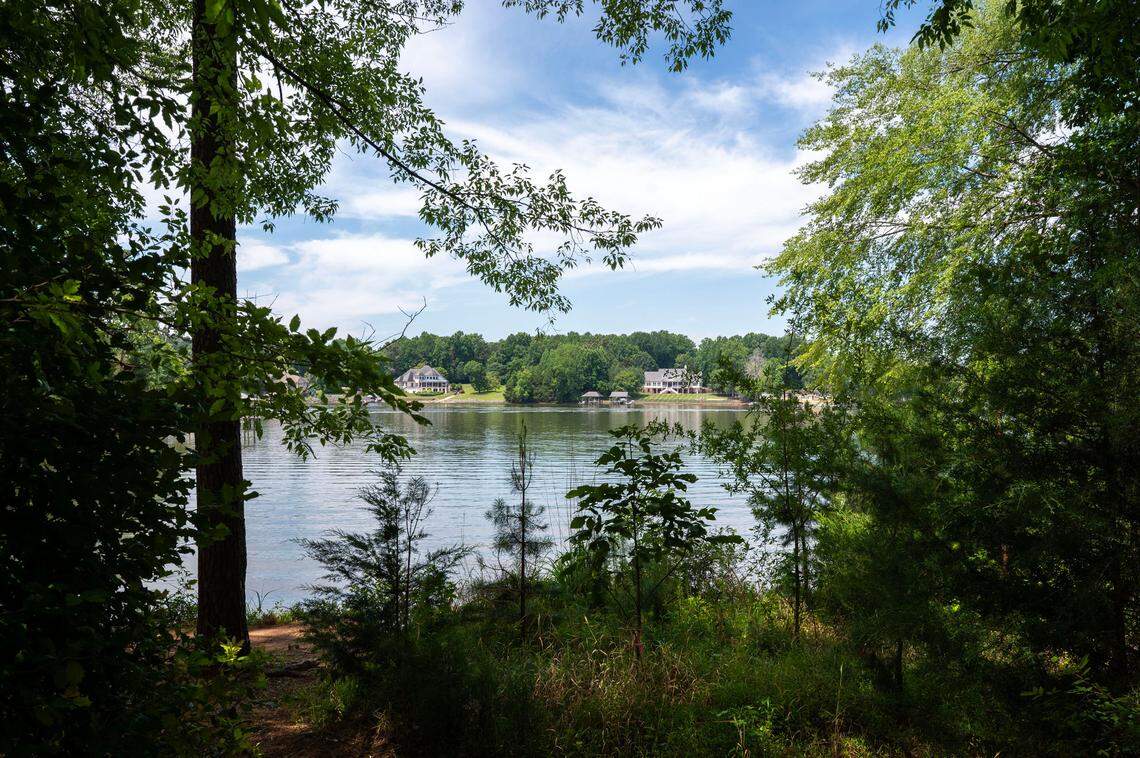
Baronak said the 60-mile corridor will take “several years” to fully execute and “progress is taking place in various phases.”
Once routes and ownership are planned, trail builders will design the actual paths.
“Trails are actually kind of like an artwork,” Lamb said.
The route will weave through urban, suburban and rural parts of the corridor while designating paddling points along the South Fork River.
“It has natural and cultural value,” Baronak said. The land has historic ties to the Catawba and Cherokee Nations and was once a hub of textile mills.
“There’s going to be really a lot of great opportunities up along this corridor to do interpretive signage and storytelling for people that are new to the area, or maybe who’ve been here for a while and want to dive into a topic,” Lamb said.
Carolina Thread Trail is currently working on 10 to 15 interpretive panels covering geological formation of the land, Native American connection, textile industry history and Civil War battles.
Apart from conserving land and providing recreational opportunities, Baronak said he hopes the trail can help “tell the story of what has taken place over generations.”
This story was originally published July 8, 2025 at 7:34 AM with the headline "New 60-mile NC state trail will connect SC line to Catawba County foothills."