Tropical Storm Jerry has formed. Here’s what it could mean for NC
AI-generated summary reviewed by our newsroom.
- Tropical Storm Jerry formed Oct. 7 and is expected to strengthen into a hurricane.
- Forecast track keeps Jerry offshore, with the system likely to curve east of the U.S. coast.
- Swells, king tides and a nor’easter risk could increase coastal flooding, erosion and dangerous surf.
The 10th named cyclone of the 2025 Atlantic hurricane season has formed.
Jerry developed into a tropical storm Tuesday, Oct. 7, according to the National Hurricane Center.
As of 5 p.m. Tuesday, Jerry was about 1,190 miles east-southeast of the northern Leeward Islands, with maximum sustained winds of 50 mph. It was moving west at 23 mph.
The National Hurricane Center expects that Jerry will strengthen into a hurricane within a day or two. A hurricane has maximum sustained winds of at least 74 mph.
Tropical Storm Jerry forecast
Tropical Storm Jerry is expected to be near the northern Leeward Islands late Thursday, Oct. 9 and Friday, Oct. 10.
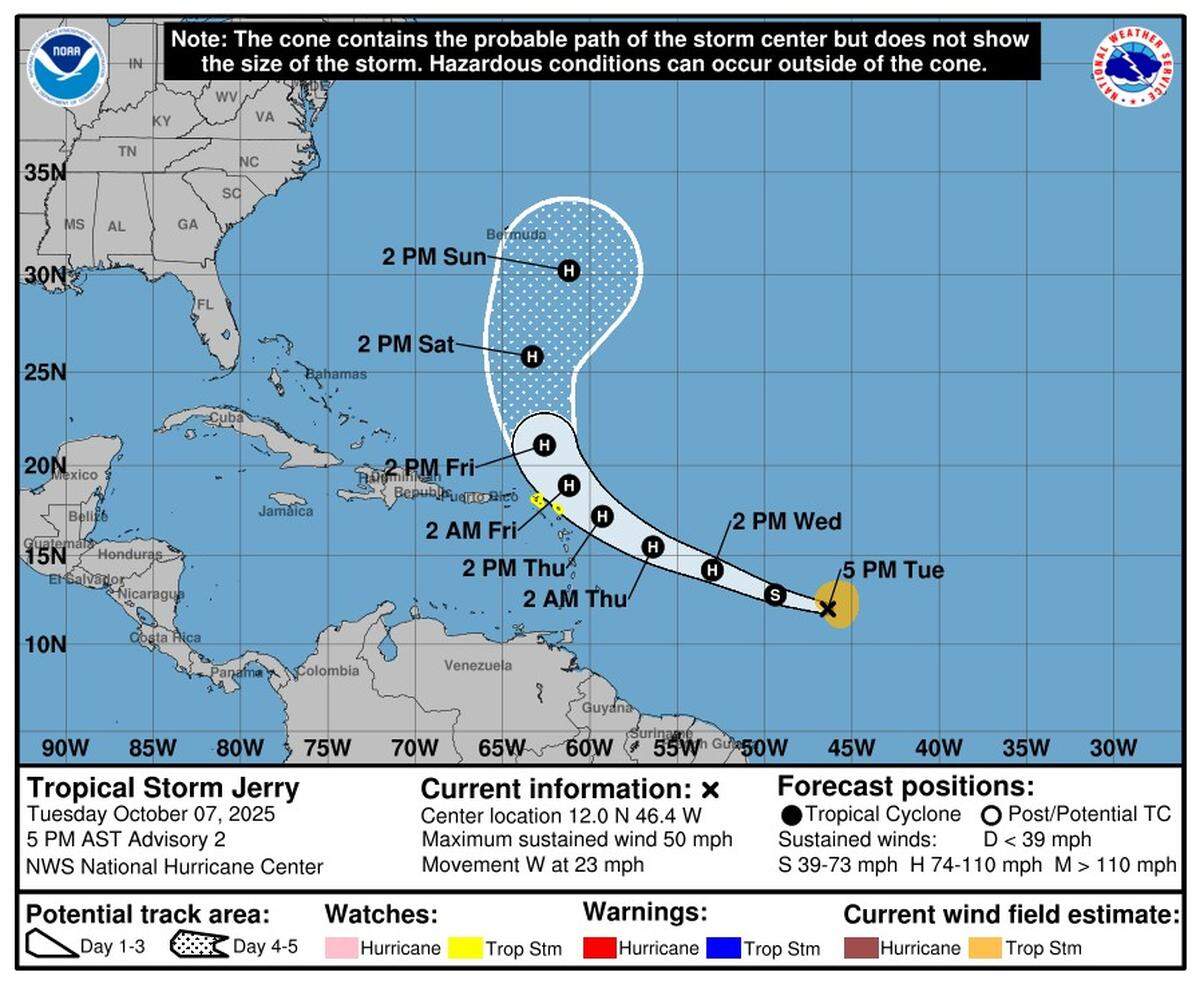
Swells from the storm could reach the Leeward Islands on Thursday, according to the National Hurricane Center, causing life-threatening surf and rip currents.
The five-day forecast released Tuesday has the center of the storm remaining offshore, turning before it reaches the East Coast of the United States.
Based on the current forecast track, the storm is not likely to directly impact the U.S., and will curve out to sea well east of the United States, Michael Strickler, a meteorologist at the National Weather Service Forecast Office in Raleigh, told The News & Observer on Tuesday.
The storm’s swells could add to coastal impacts caused by other conditions, including especially high tides — known as king tides — and a likely nor’easter forecasted to move up the coast in coming days, Strickler said.
Rainstorm could affect NC
Apart from Jerry, AccuWeather is warning of a potential wind and rainstorm that could soak parts of the East Coast, including North Carolina, later this week and into the weekend.
Rough surf, rip currents, coastal flooding and beach erosion could impact beaches starting Friday, according to AccuWeather.
While no storm has made direct landfall in North Carolina this season, storms have affected the state’s beaches. Nine homes in Buxton and Rodanthe have collapsed recently, resulting from erosion and rising sea levels.
After Hurricane Erin, which developed in August, inspectors tagged 34 homes in Buxton as uninhabitable, Dare County Planning Director Noah Gilliam said. Another group of homes in Rodanthe, about 25 miles north of Buxton on Hatteras Island, were also imperiled, The News & Observer previously reported.
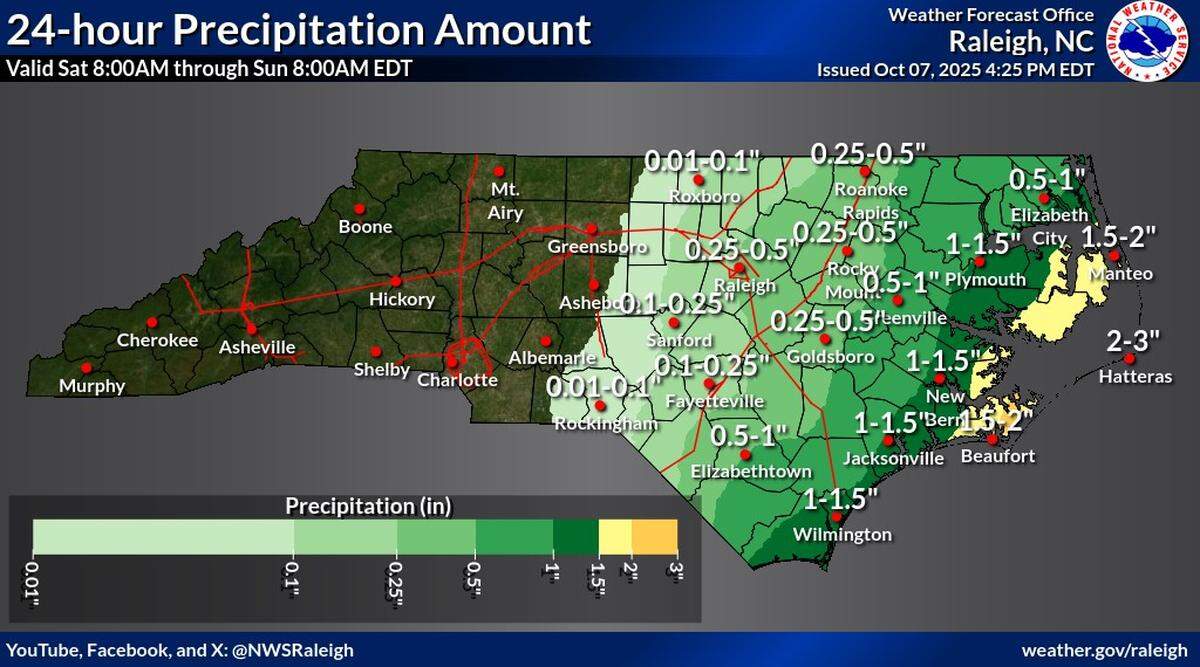
Portions of the Outer Banks could receive several inches of rainfall this weekend, according to the National Weather Service. From Saturday morning, Oct. 11 through Sunday morning, Oct. 12, Hatteras could get 2-3 inches of rain.
Hurricane season 2025
Atlantic hurricane season continues through Nov. 30.
Forecasters have predicted an above-normal season, with the National Oceanic and Atmospheric Administration expecting between 13 and 18 named storms, with up to nine hurricanes, including between two and five major hurricanes.
Colorado State University forecasters expect 16 named storms, including eight hurricanes and three major hurricanes.
So far, there have been four hurricanes: Erin, Gabrielle, Humberto and Imelda. The next named storm would be Karen.
This story was originally published October 7, 2025 at 5:52 PM with the headline "Tropical Storm Jerry has formed. Here’s what it could mean for NC."