As nor’easter nears, at-risk homes on Buxton beachfront are like terminal patients
In a place as small as Buxton village, the end of life is likely to be met with a parade of earnest visitors, each stopping in for a few minutes to say goodbye.
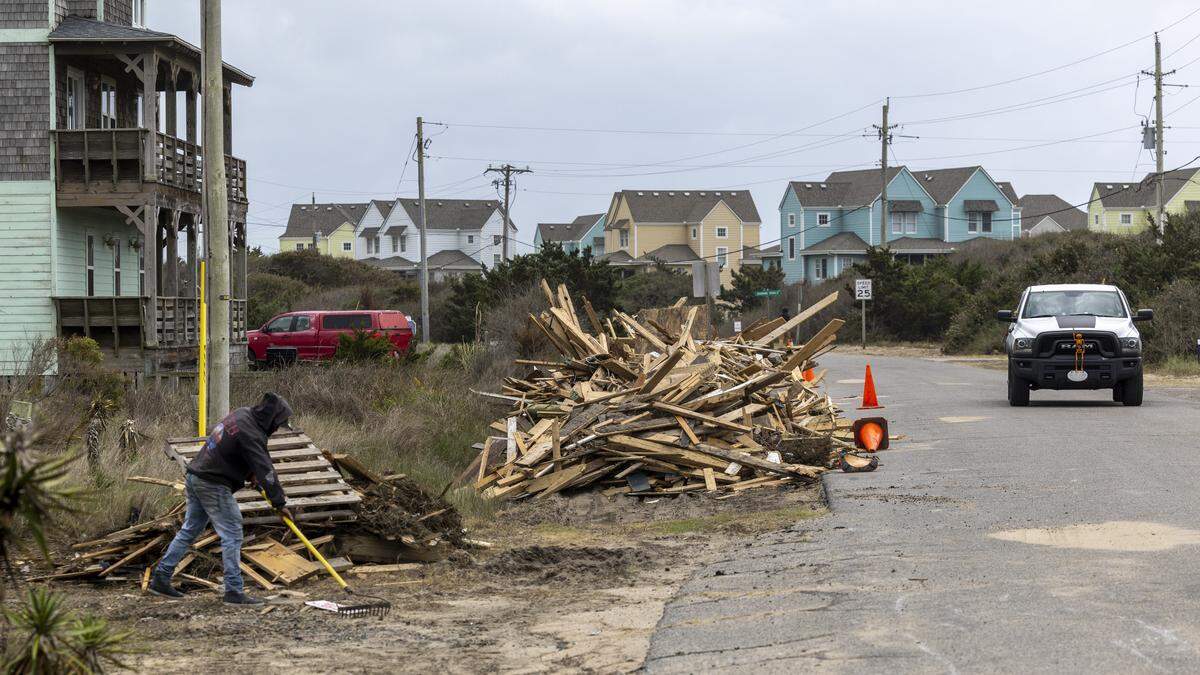
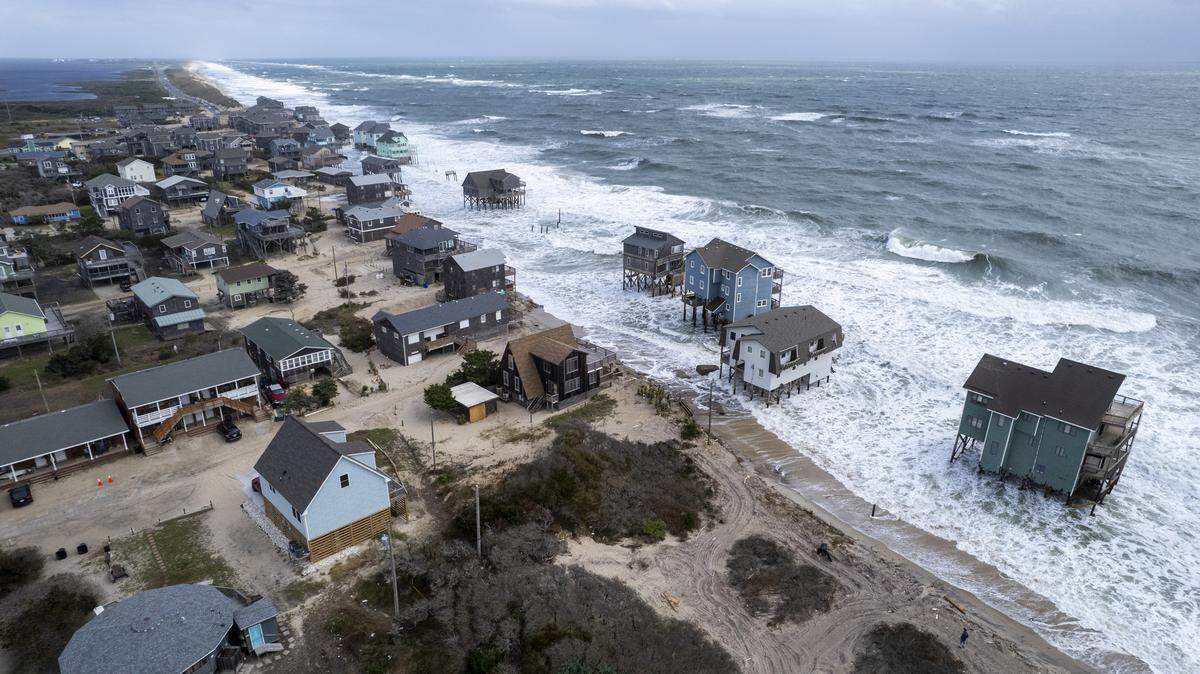
It’s been that way this week along Buxton’s beachfront, a stretch of sand two-thirds of a mile long where nine houses have fallen into the sea since mid-September and another two dozen now stand at least partially in the surf at high tide with a powerful nor’easter approaching.
“It’s like having a terminally ill family member,” said Tom Carter, whose family began making annual autumn treks to Hatteras Island in the late 1960s. ”You know it’s going to happen, but it’s sad when it does.”
For about 20 of those years, Carter’s family stayed at the same Buxton beachfront home, called Harper House, and his brother had reserved it again for this October.
But after a series of hurricanes passed off the North Carolina coast beginning in August, each one causing major beach erosion and ocean flooding along the neighborhood off Old Lighthouse Road just north of Cape Hatteras, Harper House and its neighbors were deemed uninhabitable.
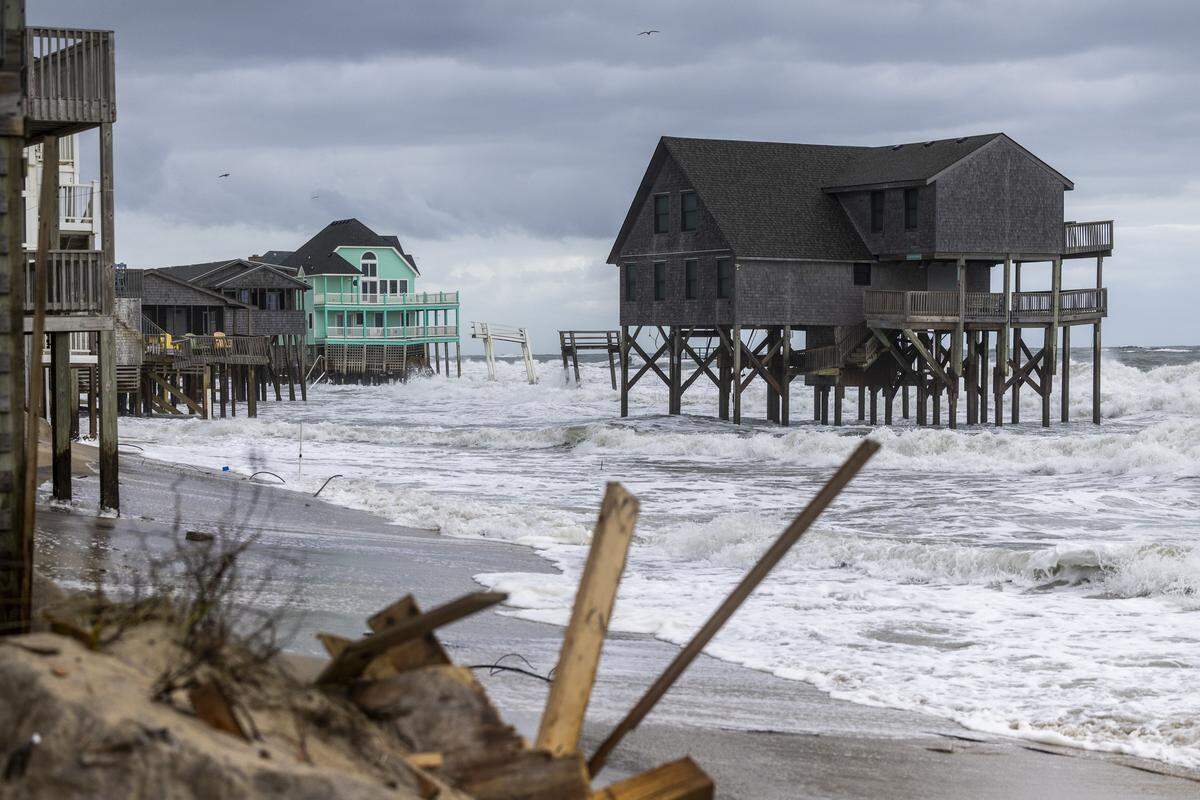
Electricity has been disconnected from the homes. Their structural supports have been undermined or broken, their accoutrements — steps, porches, decks, pools, firepits — plucked off by the sea and scattered down the beach.
The National Weather Service has been issuing alerts for nearly a week that a low-pressure system could form and track north along the coast, bringing wind gusts of nearly 40 mph to the N.C. Outer Banks. Such storms are common in the fall and winter, but this one, expected to do its worst on Saturday and Sunday, comes after Hurricanes Erin, Humberto and Imelda passed off the coast, none making landfall but each taking a ravenous swipe at the shoreline and the houses that admire it.
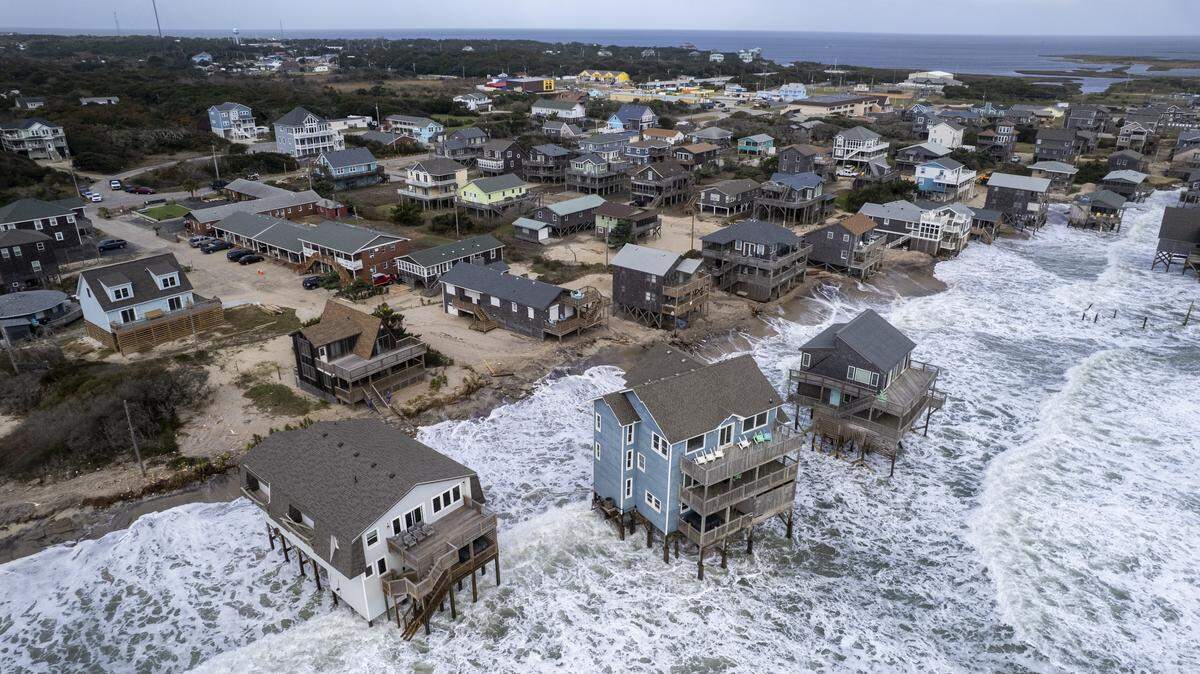
Climate change, caused in part by the burning of fossil fuels, is blamed for rising sea levels and more frequent and intense storms, which contribute to coastal erosion. The EPA says that beaches along the North Carolina Outer Banks have been eroding at some of the fastest rates anywhere along the East Coast, because of the low elevation and constant shifting of barrier islands.
Oceanfront homes in Rodanthe, 20-some miles north of Buxton, also are in trouble.
As forecasts solidified, some hopeful homeowners came to their houses this week or sent contractors with truckloads of 2-by-10-inch planks and nailed them to support pilings, a little extra bracing.
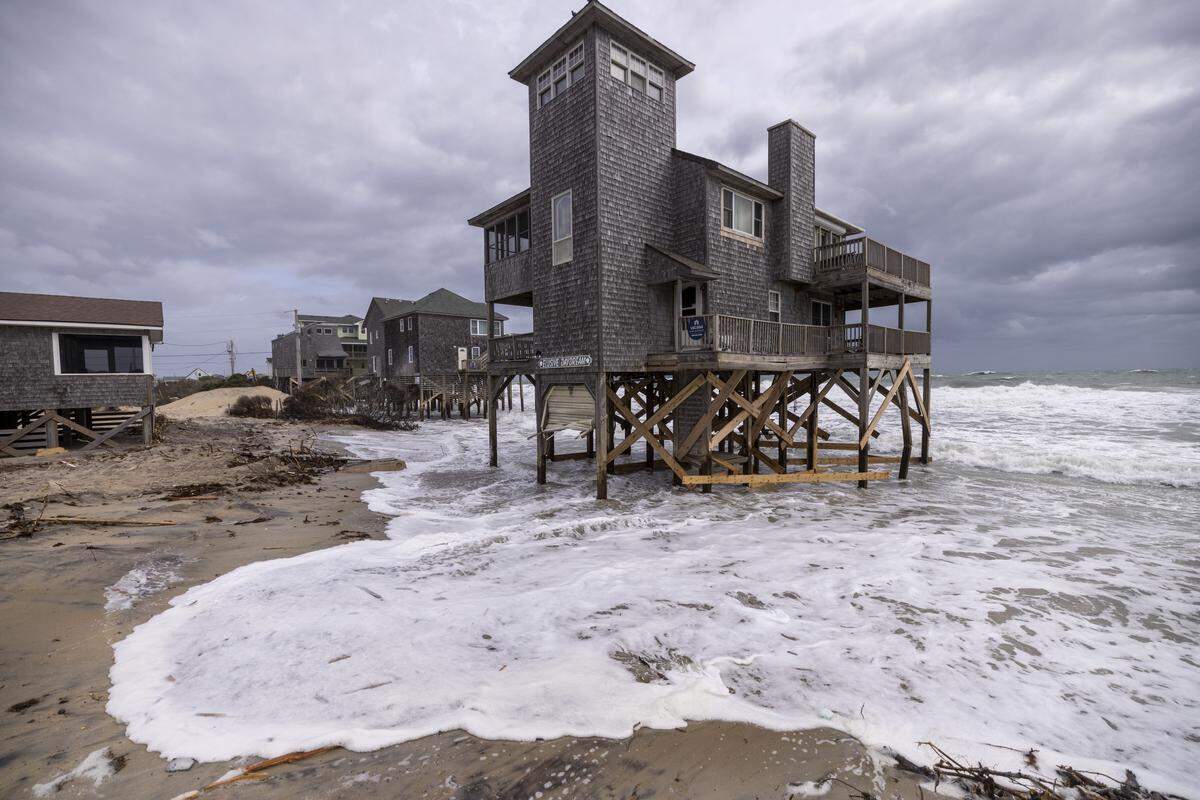
Others hired workers to pile sandbags or bulldoze sand the ocean had deposited behind their homes back toward the beach to try to buffer incoming waves.
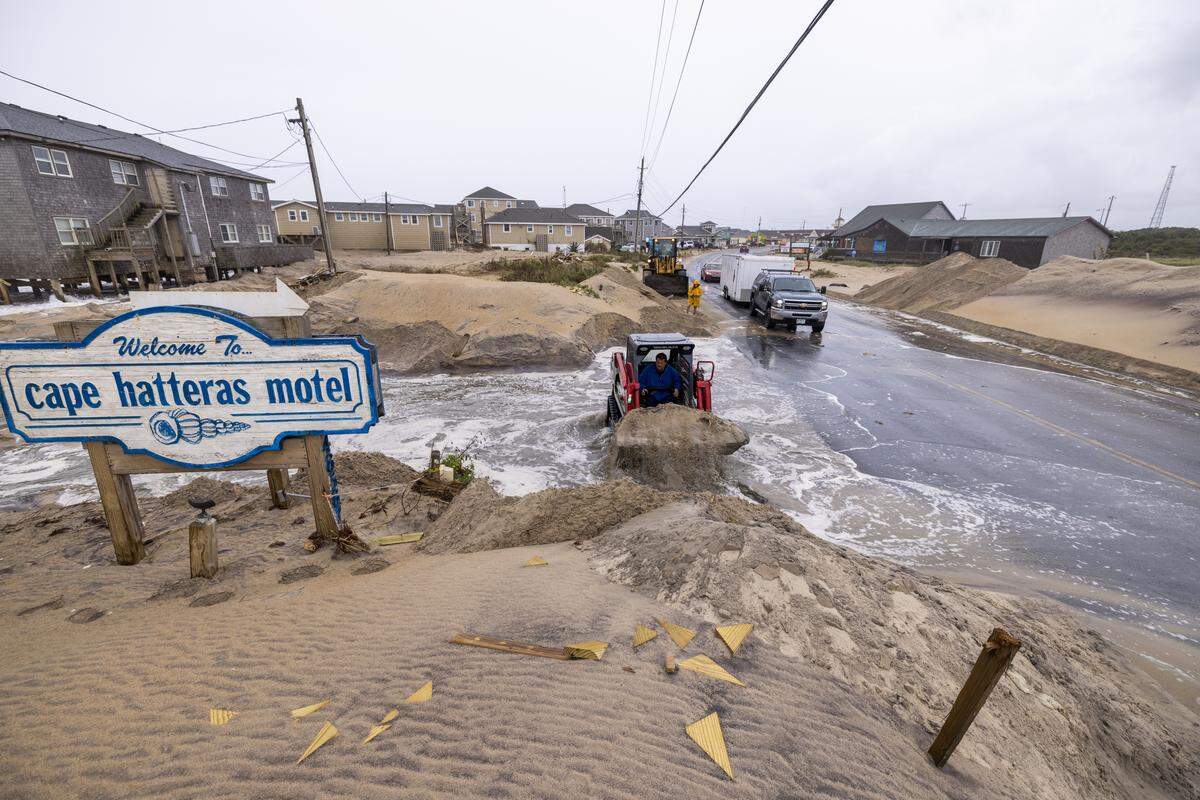
From Saturday to Monday the forecast for the Outer Banks calls for 2 to 4 inches of rain and 2 to 4 feet of tidal flooding in low-lying areas. The flooding is expected to be made worse by the storm’s coinciding with a “king tide,” which happens when the earth, moon and sun align.
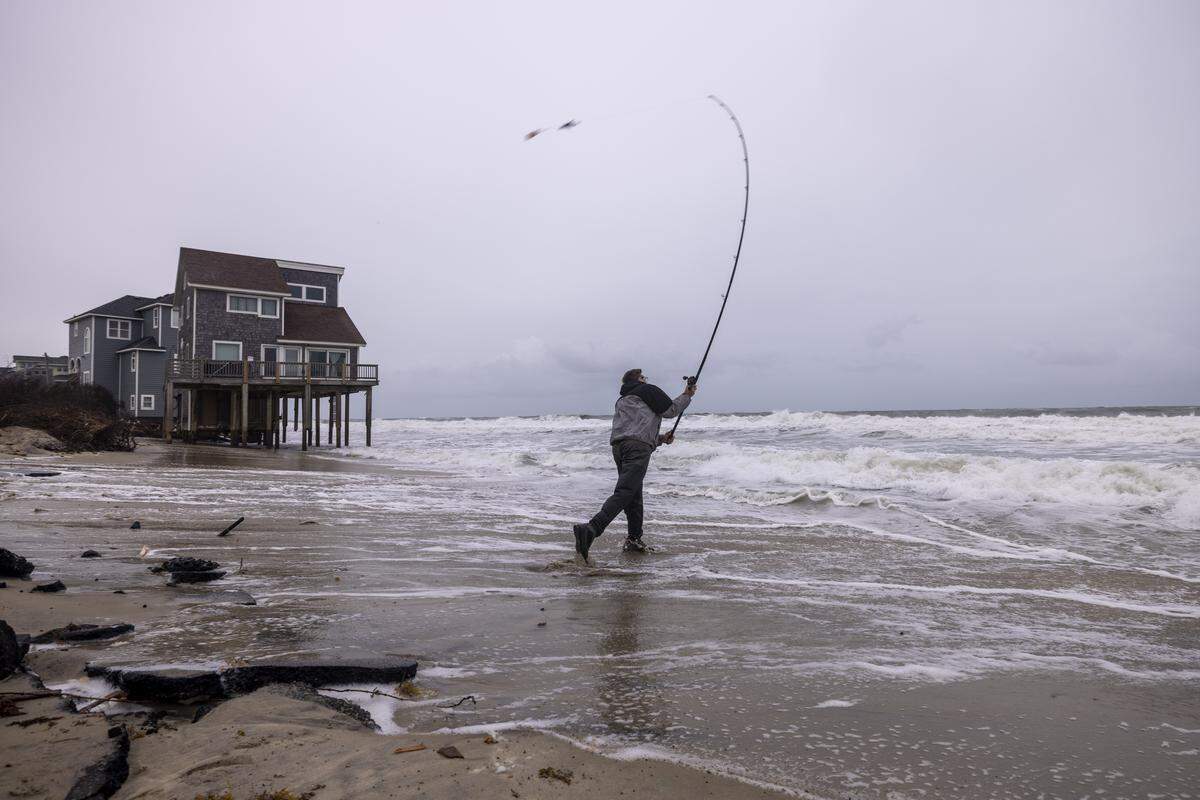
Samantha Stevens and Glen Hancock used a ladder Thursday to get into “On the Rocks,” the oceanfront home of one of their mutual friends, and a rope to lower down high-end Adirondack-style deck chairs. They saved the chairs for their friend, but it may be too late for the house.
According to online listings, the three-bedroom home was built in 1991 and last sold in 2022 for more than $970,000. Stevens and Hancock said the owner lives on the island and rents the home out.
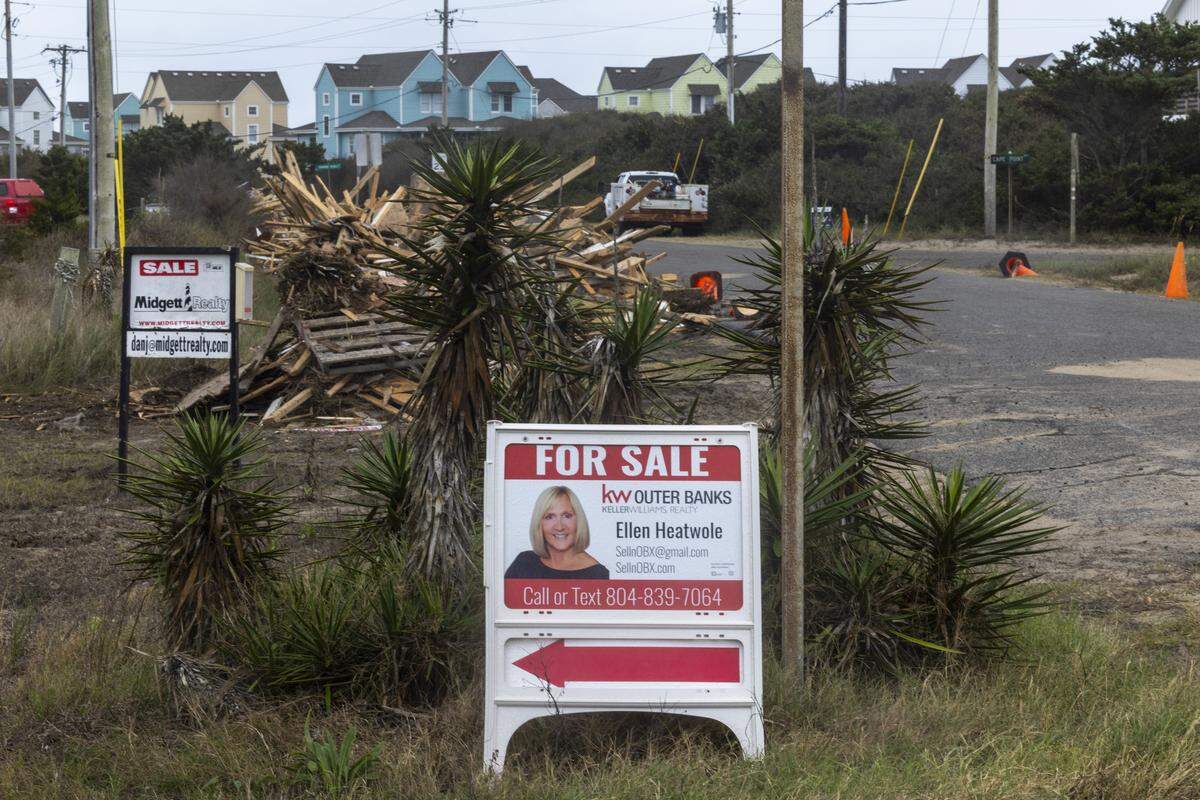
Buxton village, home to just over 1,400 full-time residents, is a cluster of houses, motels and rental cottages, restaurants, gift stores and ice cream shops. It clings to Hatteras Island because tourists and residents want it to be here. Visitors come for the sun in the summer and the fish in the fall, spending money that keeps homeowners, real estate companies, house cleaners and all the other businesses afloat.
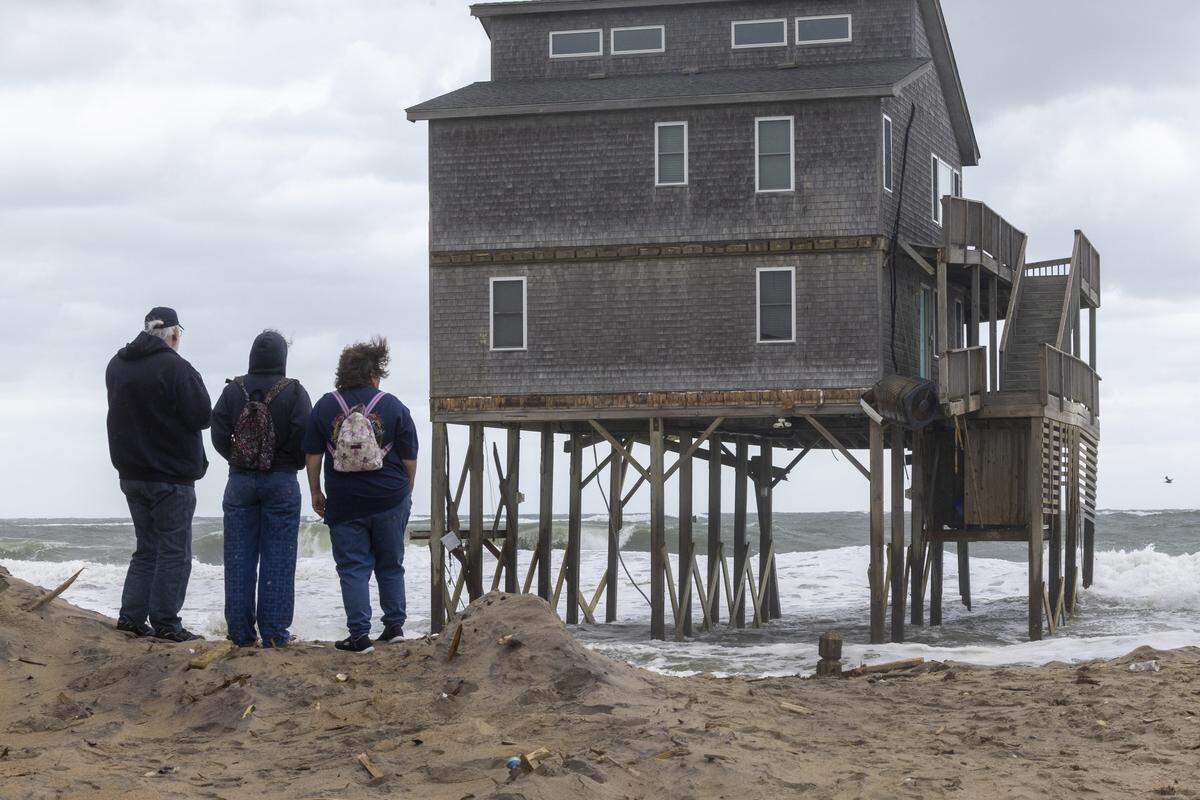
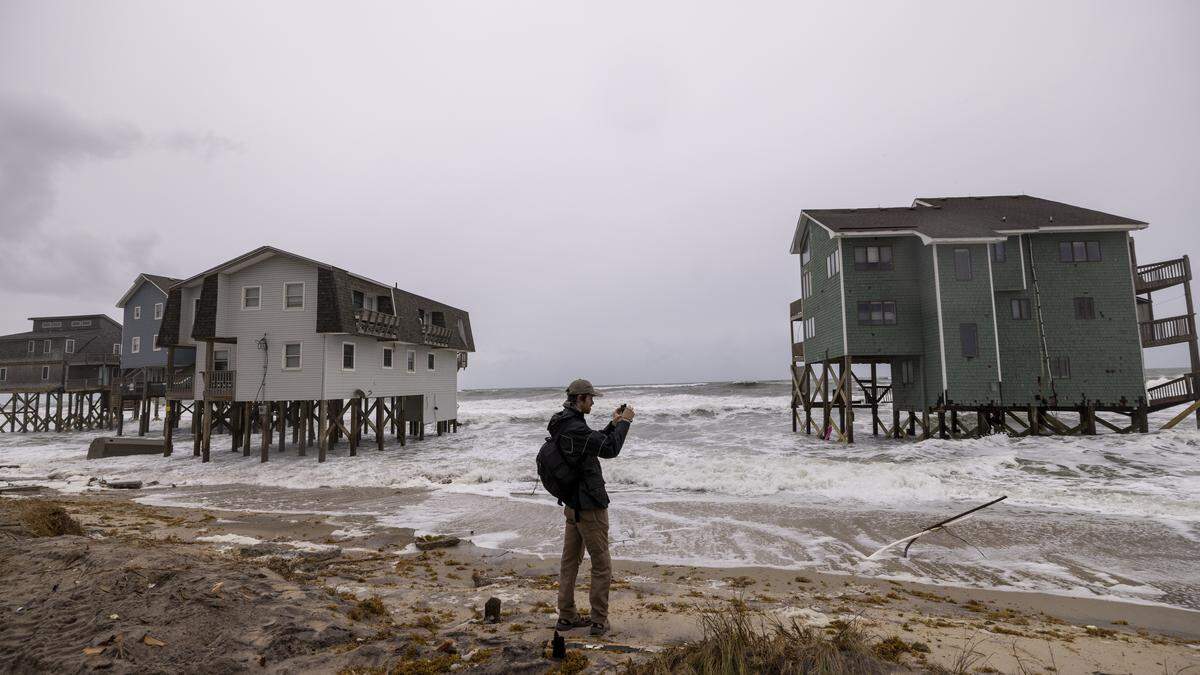
But this week, the imperiled houses have been the biggest draw, with some regulars predicting among themselves which structures — if any — will go down as the nor’easter moves in. Some are known by their rental cottage calling cards, such as Elusive Daydream; by color, “the green one”; or by location, “the brown one standing out there by itself.”
Don Bowers, who’s been on the island since the 1960s, came out Friday at high tide to see how things looked along Old Lighthouse Road. The weather was beginning to move in, with a 24-mph wind blowing and a rain shower forcing Bowers to tuck the camera he uses as a freelance photographer under his sweatshirt.
Bowers had his own notion of why visitors want to see the destruction in person, stepping over the piles of debris from houses that have already fallen and splintered apart to gaze at the ones now teetering.
“People love to see wrecks,” Bowers said. “It’s why they go to car races.”
This story was produced with financial support from the Hartfield Foundation and Green South Foundation, in partnership with Journalism Funding Partners, as part of an independent journalism fellowship program. The N&O maintains full editorial control of the work. If you would like to help support local journalism, please consider signing up for a digital subscription, which you can do here.
This story was originally published October 11, 2025 at 6:30 AM with the headline "As nor’easter nears, at-risk homes on Buxton beachfront are like terminal patients."