
Vanishing ‘flat tops’ of NC’s Outer Banks finally get their due: historic status
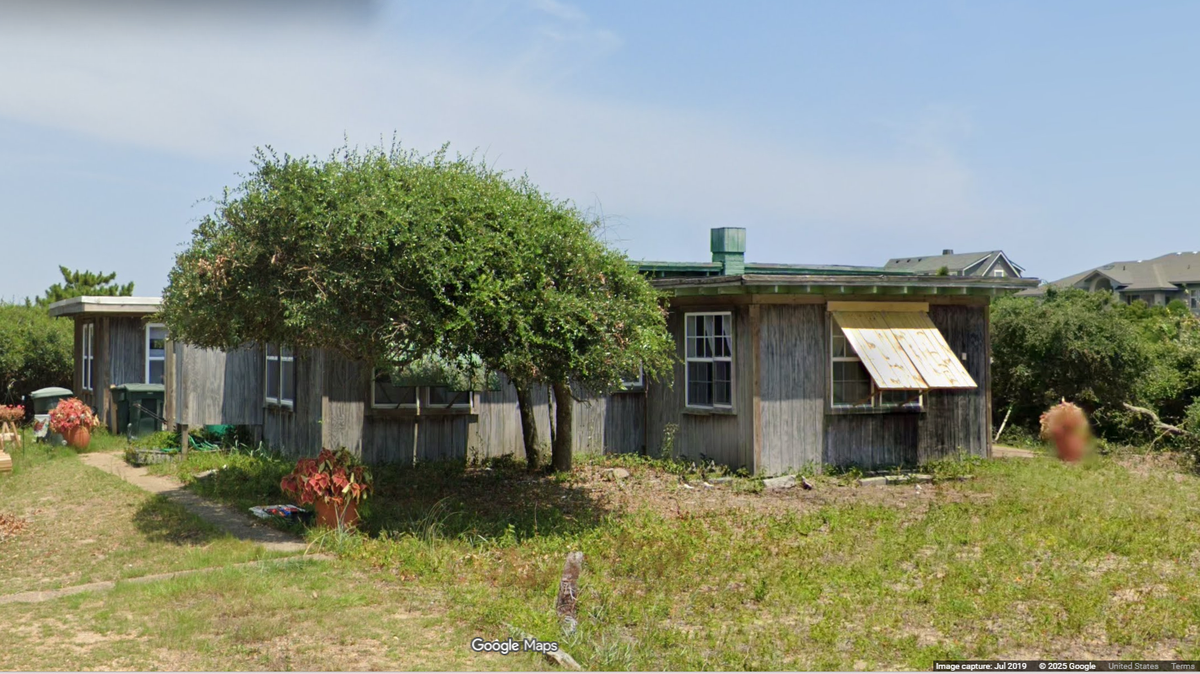
The Outer Banks of North Carolina are notorious for chewing up island homes and spitting them out in pieces, so it’s a feat when one stands long enough to be deemed historic.
That happened on Oct. 7, when the Southern Shores Town Council declared 39 Ocean Blvd. a landmark.
However, this is not a case of a stately 18th-century mansion finally getting its due.
This is all about the “flat tops,” a mid-century style of coastal cottage that has all but vanished as more ornate and expensive vacation manors have swarmed Outer Banks towns.
“Flat tops” are very much the opposite, resembling boxes with doors.
The modest design was popularized by Frank Stick, the man who once owned what is today the town of Southern Shores, according to the 2000 book “Outer Banks Architecture “by Marimar McNaughton.
“After World War II, Frank Stick acquired an option on a 2,800-acre tract north of Kitty Hawk for $30,000. In the process of Mr. Stick building his own home, he creates a new vernacular architectural form: the Flat Top,” the town’s historical designation proposal reports.
“At one time, there were around 100 Flat Tops in the Town of Southern Shores and only around 20 remain today.”
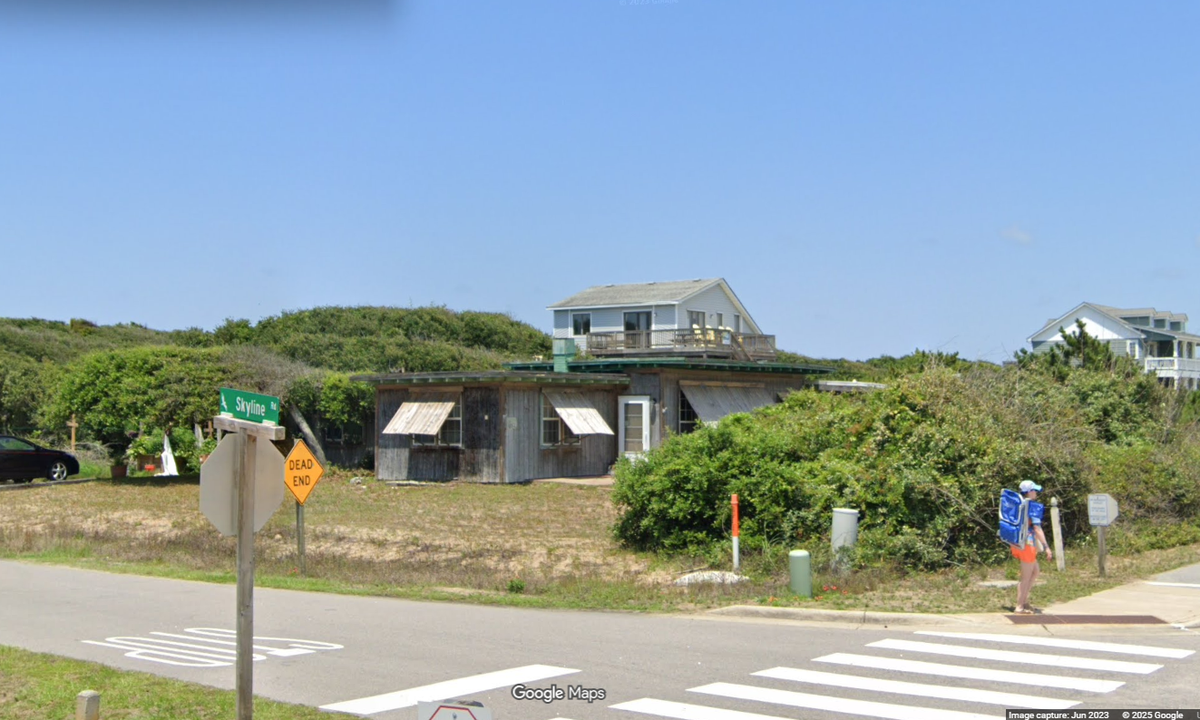
What is a flat top?
Southern Shores is a young town, incorporated in 1979, and rapid growth prompted it to create a program to protect the remaining “flat tops.”
At least seven such homes have been granted historic status since 2017, four on Ocean Boulevard, the town reports.
The benefits of joining the program include a 50% reduction in property taxes – as long as the owner protects the home’s historical integrity and unique appearance.
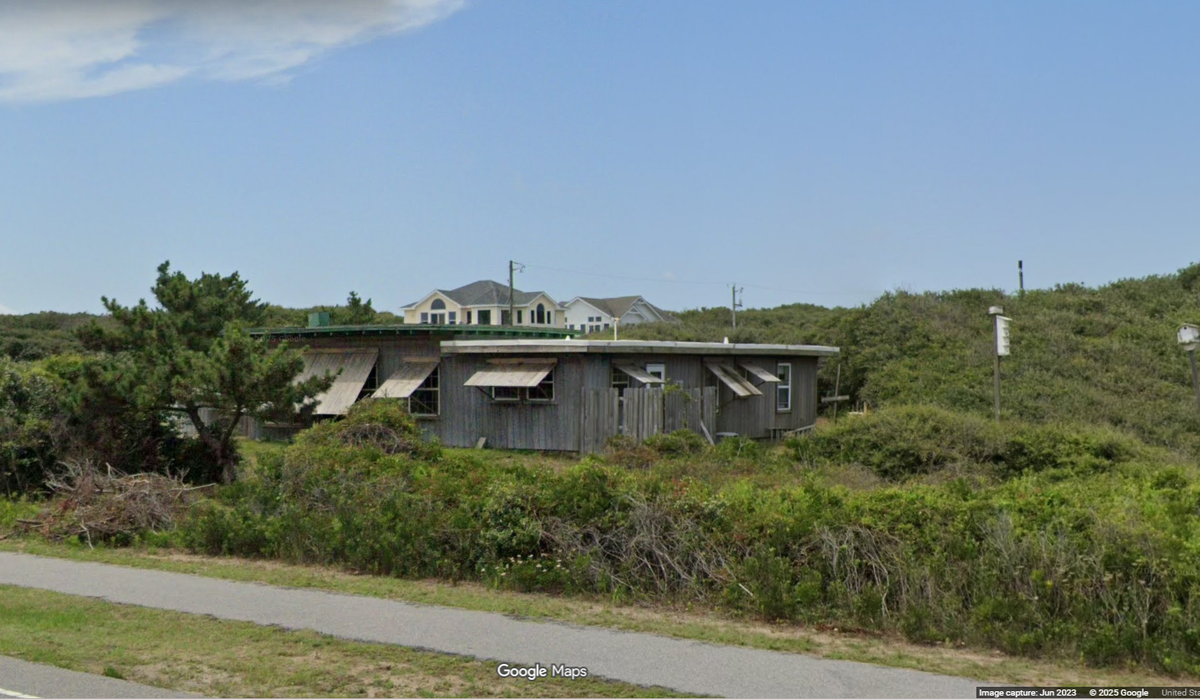
“The flat top was adapted for its barrier island setting from the single-story, flat-roofed block houses of Florida,” Southern Shores officials noted in the historic status proposal for 39 Ocean Boulevard.
“To those design elements, Frank Stick added an extended overhang and a bright, whitewashed exterior. These features alone deflect the sun and intense heat, which makes these homes a cool relief during the hot and humid summer months. The exposed soffits and storm shutters were painted in brilliant shades of crimson, jade, emerald, and sapphire, introducing color to an otherwise monochromatic Outer Banks landscape.”
Stick died in 1966 and by then, “flat tops” were the predominate style of home in the area, historians say.
The home at 39 Ocean Blvd. was built in 1952 and is a classic example of the signature design. It’s just over 1,500 square feet of sharp corners, sheer walls and unpainted wood.
Known by the name “Drop Anchor,” the home was purchased soon after construction by James T. Wilkinson, Sr. for a vacation home, and has remained in the family for more than 70 years.
The home has a tax value of about $97,000, while the 20,000-square-foot parcel is worth nearly $600,000. That, in a nutshell, is why many “flat tops” have been lost in recent years, experts say.
“My grandfather bought the cottage 3 months after it was built. It passed to my father in ‘74 and then to me in 2017 upon his death,” current owner Perrin Gardner told McClatchy News in an email.
“I had been thinking about doing the historical thing for a while. I turned 66 in May and decided it was now or never on the idea. ... To me it is preserving a time gone by. Where people think bigger is better now, that (was) not always the case. In Southern Shores, Frank Stick wanted this area for single-family homes, and in some ways it is not that anymore. The original flat tops are what remains of his dream.”
She has been living full time at the home since 2020, and notes the benefits include being able to hear the relaxing patter of rain on the roof during storms.
Southern Shores has a population of about 3,100 people and is about a 210-mile drive northeast from Raleigh.
This story was originally published October 16, 2025 at 8:48 AM with the headline "Vanishing ‘flat tops’ of NC’s Outer Banks finally get their due: historic status."