Judge accuses feds of violating rights of asylum seeker in Charlotte
Mostafa Said did “everything he was supposed to do” after he fled Egypt and tried to seek asylum in Charlotte, a federal judge said in court this week. Still, he was detained when the U.S. Border Patrol rolled into the city last month.
After he was taken, Said’s lawyer filed a petition asking a court to order federal authorities to bring him in front of a judge, where they would have to justify his detainment and give an opportunity for a bond hearing.
Secretary of Homeland Security Kristi Noem, U.S. Attorney General Pamela Bondi and Immigration and Customs Enforcement Director Todd Lyons argued against that in court filings. When they changed their stories on why Said was detained, U.S. District Court Judge Max Cogurn Jr. ordered a hearing on “factual and legal discrepancies.”
In that fiery hearing Wednesday, Cogburn criticized federal officers for trying to hold Said without due process — which he said the asylum seeker has a right to.
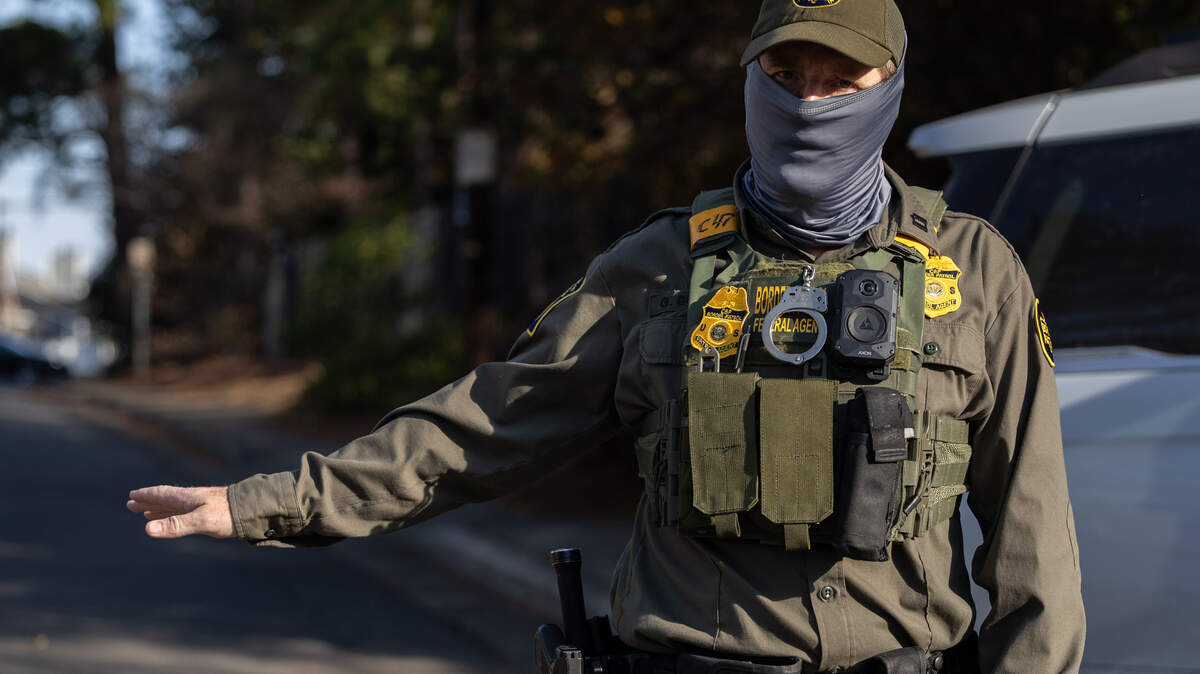
He ordered ICE to bring him in front of an immigration judge in Charlotte within 48 hours and barred agents from deporting Said before then. He also criticized the Trump administration’s enforcement tactics — at one point comparing agents wearing masks to the masked suspect in the fatal Brown University shooting.
Egyptian immigrant ‘disappeared’ in Charlotte
Said was originally detained by ICE agents in September 2024 on the day he crossed the Mexico-California border. Agents first planned to remove him, but they released him on parole in November 2024 under a law that allows ICE to release people for “urgent humanitarian reasons.”
Said told them he was fleeing Egypt due to persecution and said he was seeking asylum. Not much else is known about his case. His lawyer, Amro Elsayed, said details have remained under seal in court because, if revealed, they could put his life in danger.
After being released, Said moved his case to Charlotte, as permitted by a California immigration judge, and has complied with all ICE requirements since, according to court documents. For his asylum case, he was given a court date in 2027. In May, he was authorized to work in the country through 2030.
Said was continuing his compliance streak when he went to the Department of Homeland Security office in Charlotte on Nov. 21 to renew his parole. That was Border Patrol’s last day in the city as a part of their “Charlotte’s Web” operation under the Trump administration.
At the office, agents took him. For two days, he “disappeared,” Cogburn said.
Elsayed immediately filed a petition for a writ of habeas corpus asking Cogburn to order agents to bring him into court.
After he filed that petition, Said was found — seven hours and 400 miles away — in a Georgia detention center.
Government attorney walks back story
In court filings, Noem, Bondi and Lyons first said Said was detained for violating conditions of his parole.
Cogburn pointed out in an order that, if that were true, officials violated federal law by revoking his parole without any written notice.
Then, the officials changed their story. They said Said’s parole — originally issued on Nov. 6, 2024 — automatically expired after one year. That’s why he was arrested, assistant U.S. Attorney Gill Beck Sr. said in court Wednesday.
Cogburn called for a hearing on the changing facts, where Beck argued ICE does not have to give Said a bond hearing. He said Said was arrested in November under the same federal law that allowed agents to first detain him in California — when he crossed the border more than a year ago.
The law saws applicants for admission to the country can be detained and “removed without further hearing or review” if they don’t have valid documentation. That same law says applicants must be interviewed if they say they want to claim asylum. From there, they can continue to be detained or be paroled on a case-by-case basis, as Said was.
Beck argued Said was recently detained on the first prong of the law and said agents could remove him without a hearing.
Cogburn said the government cannot walk back the case a year and “retroactively recharacterize” Said as an “arriving alien.” Said had been granted parole, given a court case and permitted to live and work here. And he was abiding perfectly to the process, Cogburn said.
“The guy was here for a year and does everything he was supposed to do,” he said. The government “can’t slam the door on him until they can get a plane.”
Cogburn said there could be irreparable harm to Said if he is removed before he is able to go through immigration proceedings and obtain asylum.
“If the United States isn’t doing things right, we have a problem,” Cogburn said. “The government can’t get to do exactly what they want to do and avoid due process.”
Judge’s comments on asylum arrest
Cogburn made news last year by rescinding his plan to retire after President Donald Trump won the 2024 election. His retirement would have created a vacancy on the federal bench for the U.S. District Court for the Western District of North Carolina, and Trump would have been able to nominate his replacement.
On Wednesday, he several times said he was “for strong border patrol,” tight borders and immigration enforcement. At one point, he said he thought “too many people were let in.”
But he criticized law enforcement officers “hiding behind masks” and said they “look like the person who shot at the people at Brown.”
Cogburn was referring to a photo released Wednesday of the suspect in the Brown University shooting, who hid much of his appearance with a black beanie and mask.
He said he thought law enforcement should be proud of the responsibility they have, show their faces and wear badge numbers.
“I have no problem with the roundup of criminals,” Cogburn said. “But [Said’s] case involves someone who can’t even get bond after showing up where he should’ve. The court cannot allow that.”
He ordered that the government must bring him in front of a Charlotte immigration judge by Friday, and issued a temporary restraining order barring the government from removing Said from the continental U.S. or altering his legal status until then.
If they violate those terms, the government, Noem, Bondi, and Lyons, could be held in contempt of court, Cogburn ordered.
Elsayed, Said’s lawyer, said Cogburn’s ruling brought a tear to his eye.
“It made me believe that the law still matters,” he told The Charlotte Observer.
Beck shook Elsayed’s hand following the hearing and said: “You have an important job to do.”
This story was originally published December 20, 2025 at 5:00 AM with the headline "Judge accuses feds of violating rights of asylum seeker in Charlotte."