
SC senator proposes laws for ‘puppy mills’
For most of Valor’s life, his view of the world was obscured by matted fur.
That veil was lifted this month after animal control officers seized the 2-year-old shih tzu from an Horry County puppy mill. The dog was bathed, shaved and, for the first time in who knows how long, able to see clearly.
“Everything to him is new,” said Valor’s owner Sue Kohl. “Now when he sees things, he’s just in shock.”
Kohl also found herself stunned when she recently moved from Connecticut to Myrtle Beach. She was horrified when she read news reports about the nearly 200 dogs that police seized from two local homes in early March.
“I was appalled,” she said. “I can’t believe that this is happening down here.”
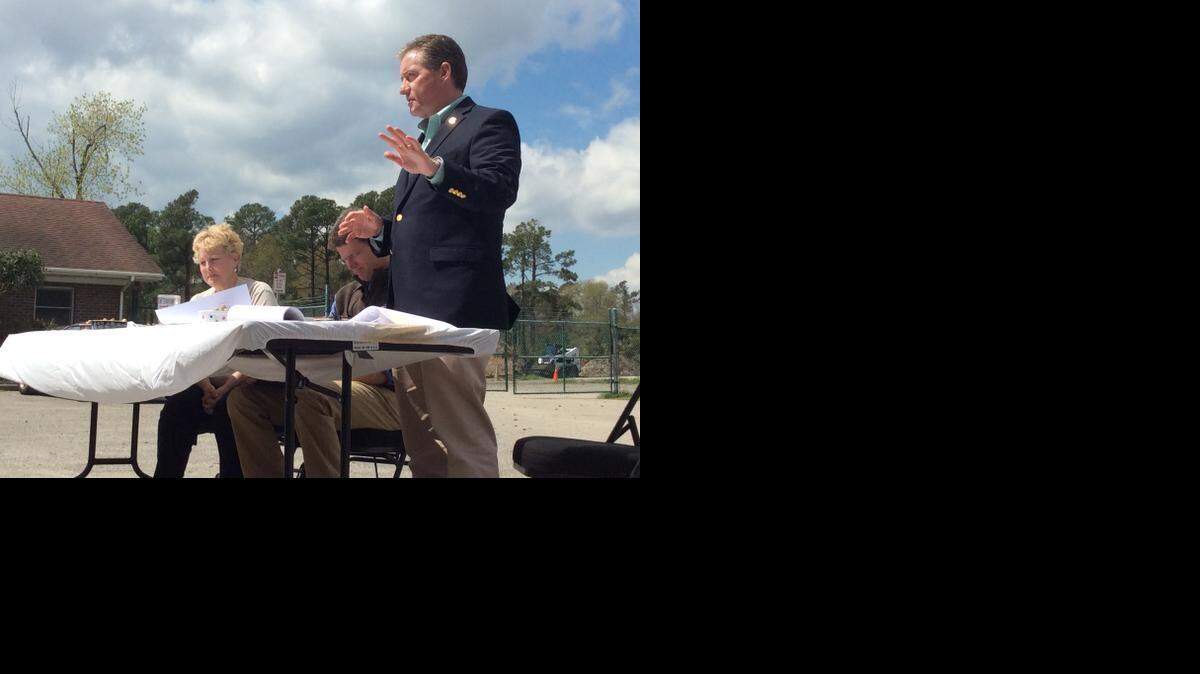
So Kohl started calling state lawmakers about the need for tougher regulations. And on Saturday afternoon – Humane Lobby Day – she joined more than 60 animal advocates outside the Grand Strand Humane Society to hear from Sens. Luke Rankin, R-Myrtle Beach, and Greg Hembree, R-North Myrtle Beach, about legislators’ plans for new animal protection policies.
The bad news, Hembree said, is that South Carolina lags behind other states in adopting tougher animal welfare laws. The good news? Lawmakers are finally trying to do that.
“There is genuine interest by a lot of members of the General Assembly,” he said. “They recognize that we’re behind the curve on this issue and we’ve got to tackle this thing and spend some time and energy on it.”
Specifically, Hembree said he is crafting a bill that, if approved, would create regulations aimed at preventing puppy mills.
Although the proposal is still being drafted, Hembree envisions a policy that would require pet owners with a specified number of female dogs to register as breeders. They would also be required to obtain a commercial license and be subject to oversight from the state Department of Health and Environmental Control, which already regulates veterinarians.
Hembree added that other lawmakers are also working on bills that focus on puppy mills.
“It may not be the magic one,” he said of his proposal. “It’s just one of many. We’re very early on.”
In recent years, lawmakers have strengthened some animal policies. For example, they increased penalties for animal cruelty convictions.
“That was a great step,” Rankin said. “That took a lot of effort, though.”
Another bill that’s been introduced would outlaw the use of gas chambers for animal euthanasia.
Hembree said he isn’t aware of any facilities in the state that still use gas chambers, but he noted that North Carolina recently banned them and he doesn’t want to see that technology migrate south.
“The fear is that those devices need some place to go and we’re afraid that they’ll just dump them in South Carolina because it’s not illegal,” he said. “We’re trying to get ahead of the curve.”
Rankin told attendees that their best hope for getting new legislation passed is focusing on a set of specific issues and campaigning with a unified front.
“We, through this process, have got to develop consensus,” he said. “Any legislation that you think is just as clear as night and day won’t be to somebody else.”
Rankin cautioned that any proposals must be fair to all stakeholders.
“There’s got to be a sensible, wise thing to do that meets the needs of hunters and meets the needs of those in the industry that show animals,” he said. “That’s our purpose here.”
Many of those in attendance agreed that more breeder regulations are needed.
“There has to be something,” said Teresa Kunkle of Surfside Beach.
Kunkle wants to see state policies that address licensing, require inspections and enforce quality control standards for dog breeders.
“If they have a permit to sell animals, then they should have a licensed facility that is subject to being inspected,” she said. “Most places are subject to being inspected.”
Jen Seay, a Myrtle Beach area art teacher, told Rankin and Hembree that stricter requirements for spaying and neutering would address many of the advocates’ concerns.
“The spay and neuter [policy] is the key,” she said. “That would solve the puppy mill issue. That would solve the euthanasia and the gas chambers issue. That would just solve so much.”
Stiff fines for violators are also important, Seay said.
“If you make it hurt, people are not going to do it,” she said.
Hembree said he heard similar concerns from other activists across the state during a series of discussions about animal welfare laws.
“That was the message loud and clear,” he said. “Every part of the state, no matter if it was rich, poor or in between, that was the consistent message that was heard. …. That seems to be probably the cornerstone of solving the whole issue.”
Both Rankin and Hembree cautioned that any policy changes would take time, probably more time than the group would like. But they insisted that discussions are taking place in Columbia.
Saturday’s attendees made it clear that they want to be part of that conversation.
Kohl plans to continue contacting lawmakers and speaking up for dogs like Valor, who still battles seizures, walks on shaky bowed legs and tries to understand the place his eyes were shielded from for so long.
Kohl said the shih tzu earned his moniker.
“He deserved that name,” Kohl said. “Look how far he made it.”
Contact CHARLES D. PERRY at 626-0218.
This story was originally published March 29, 2015 at 12:46 AM with the headline "SC senator proposes laws for ‘puppy mills’."