
SC law enforcement chief Keel remembers his rural roots
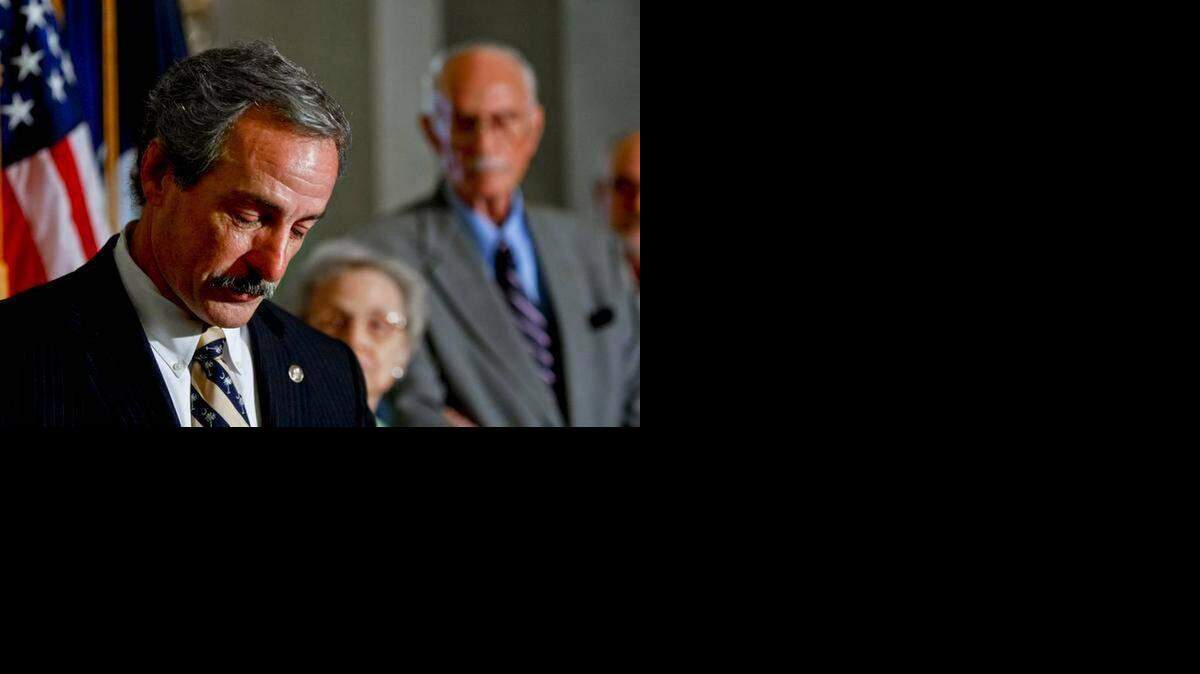
He came from a small town, but Mark Keel had big changes in mind when he came to be chief of the State Law Enforcement Division in 2011.
“We didn’t have the personnel to do the job,” Keel said during an interview with the Aiken Standard. “We were hurting. We tried to rebuild the agency. We tried to rebuild the relationships with our local law enforcement.”
Since Keel took over as chief, the budget has increased, the agency is nearing its highest employment ever, technology has been upgraded and relationships with local law enforcement agencies have been rekindled – or in some cases, born.
A native of Barnwell, Keel spent some of his teenage years as a volunteer firefighter with the Barnwell Fire Department and a member of the volunteer rescue squad. He chuckled about his brief foray into the newspaper business before that, delivering the Aiken Standard on bicycle at age 12.
“They were trying to get their coverage into the Barnwell area at that time,” he said. “We were delivering them to households, trying to get people to see the paper and subscribe to it.”
He got his start in law enforcement with the Orangeburg County Sheriff’s Office. One of his first assignments was to go undercover as a student at a local high school.
“They had a drug problem,” he said. “I was trying to find out what I could about the drug problem at the high school.”
Keel also worked weekends with the Barnwell Police Department before going to Georgia Southern University to get his criminal justice degree. His first job after graduating in 1979 was with the Denmark Police Department.
Keel’s father, who is a State Farm insurance representative in Barnwell, was friends with a State Farm representative in Denmark who also sat on the City Council and arranged for Keel to speak with the chief.
“He said he was gonna hire me,” Keel said of his conversation with the chief, who told him not to worry about a uniform but asked if he had a gun. “He said, ‘Bring your gun and come on over tonight. You start at 6 o’clock this evening.’ ”
Later that year, Keel accepted a position at SLED, ascending the ranks to chief of staff, which he left in 2008 to serve as director of the South Carolina Department of Public Safety. He earned a law degree from the University of South Carolina while at SLED.
Former U.S. Attorney Reggie Lloyd was selected over Keel by then-Gov. Mark Sanford to lead SLED. But Sanford did appoint Keel to lead the Department of Public Safety, which was reeling from instances of misconduct by state troopers.
SLED’s budget was hacked from $36 million in 2008 to $23.7 million when he became chief in 2011, Keel recalled. The Associated Press noted that the number of agents also dropped from 340 to 220 during the same time.
Keel knew the agency was hurting, and this bled through to its relationships with smaller law enforcement agencies, who had begun seeking help elsewhere. He credited the state Legislature for helping get the agency back to its roots by restoring its funding.
“They basically gave me every dime I asked for in the year,” he said. “SLED’s role is to be an assisting agency. Our goal is to provide manpower and technical expertise for those agencies that can’t afford it.”
Keel noted that 70 percent of the police agencies in South Carolina have less than 25 officers.
“Those are the agencies that call on us every day,” he said. “Whether it’s Allendale, Barnwell, Richland or Greenville, everybody should have an equal level of law enforcement service.”
Keel is most proud of the rehabilitation of SLED’s image as he approaches his fourth year as chief. This includes their relationships with smaller agencies.
“Agencies know now, when they call us, we’re gonna respond,” he said.
The agency has made great strides, but Keel said there’s more work to be done – particularly with drugs, violent crime in some parts of the state and cybercrime.
“We’re never where we want to be,” he said. “We want to stay ahead of the game. We don’t want to get behind.”
Also on Keel’s radar are events involving law enforcement around the country, including relations between law enforcement and the communities.
“We have to be out front on things,” he said. “When you have a crisis in the community, it’s too late to create that relationship then. You need to try to have that relationship built ahead of time.”
Keel knows firsthand the benefits of establishing and maintaining a relationship. Years ago as a hostage negotiator, he forged a bond with an 18-year-old man who was holed up in a Saluda County home with a sick infant after shooting two SLED agents. Keel talked with the suspect for hours, trying to get him to surrender peacefully.
“Because it was hot and the child had not had the proper hydration, they were really concerned this child could end up having a real medical issue,” he recalled. “We made the determination that we were going in that morning, just before daylight.”
As agents prepared to storm the home, the suspect made contact with Keel: He was coming out. Even more surprising to Keel was what the suspect did after handing the baby over.
“He grabbed me and hugged me, and thanked me for what I’d done,” he said, adding that even after the suspect was arrested, he wouldn’t talk with anyone except Keel.
“I talked to him and he gave a full confession. We had developed that trust on the telephone,” he said. “ … We all get into this business with the idea that we’re gonna make life better and we’re gonna change the world. We get very frustrated sometimes when we continue to see the amount of crime we see every day. But we all get into it, thinking we can save somebody’s life. And I guess that was the one time in my career that I felt like I really made a difference. It was the one time I look to that I can say I really did save a life that morning, just by being able to talk to somebody.”
This story was originally published March 29, 2015 at 12:48 AM with the headline "SC law enforcement chief Keel remembers his rural roots."