
Gov. Cooper: NC has not gotten all the coronavirus testing supplies it needs from CDC
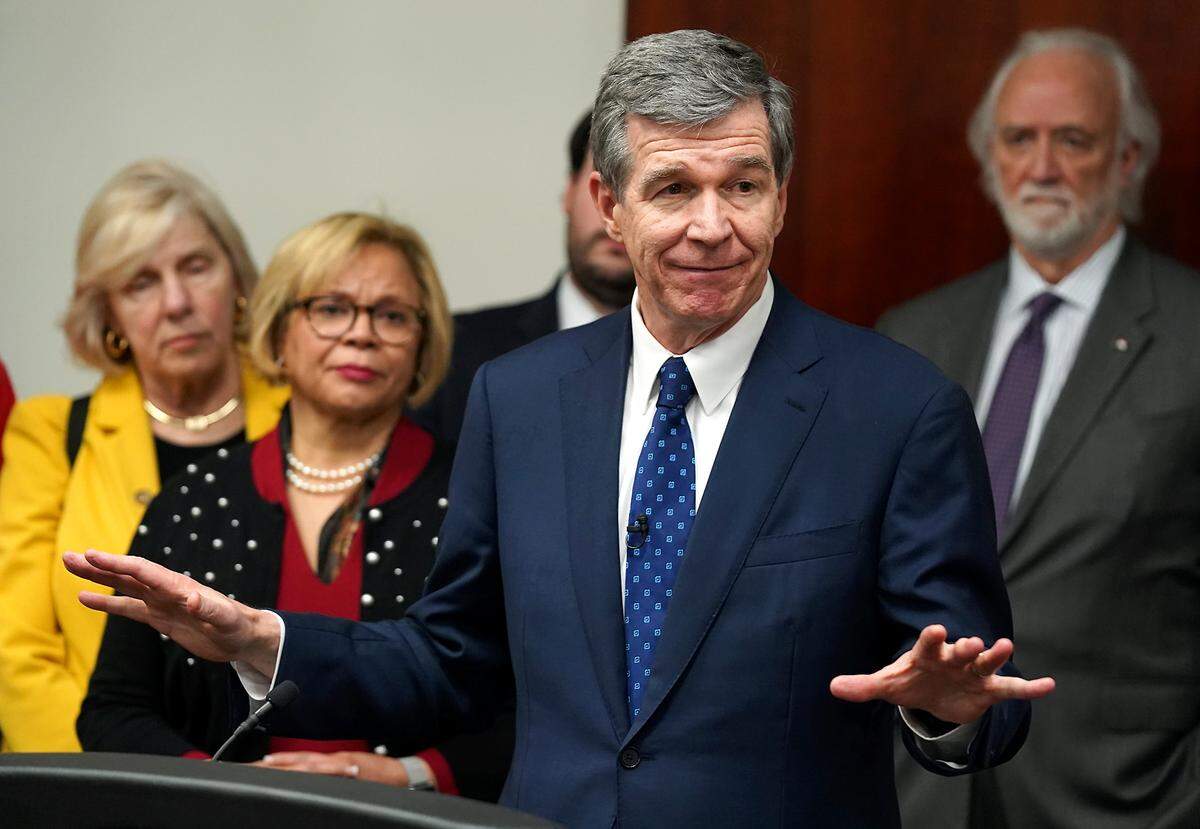
North Carolina has not yet received all of the novel coronavirus testing supplies it needs from the CDC to continue testing in the way it wants, Gov. Roy Cooper said Wednesday.
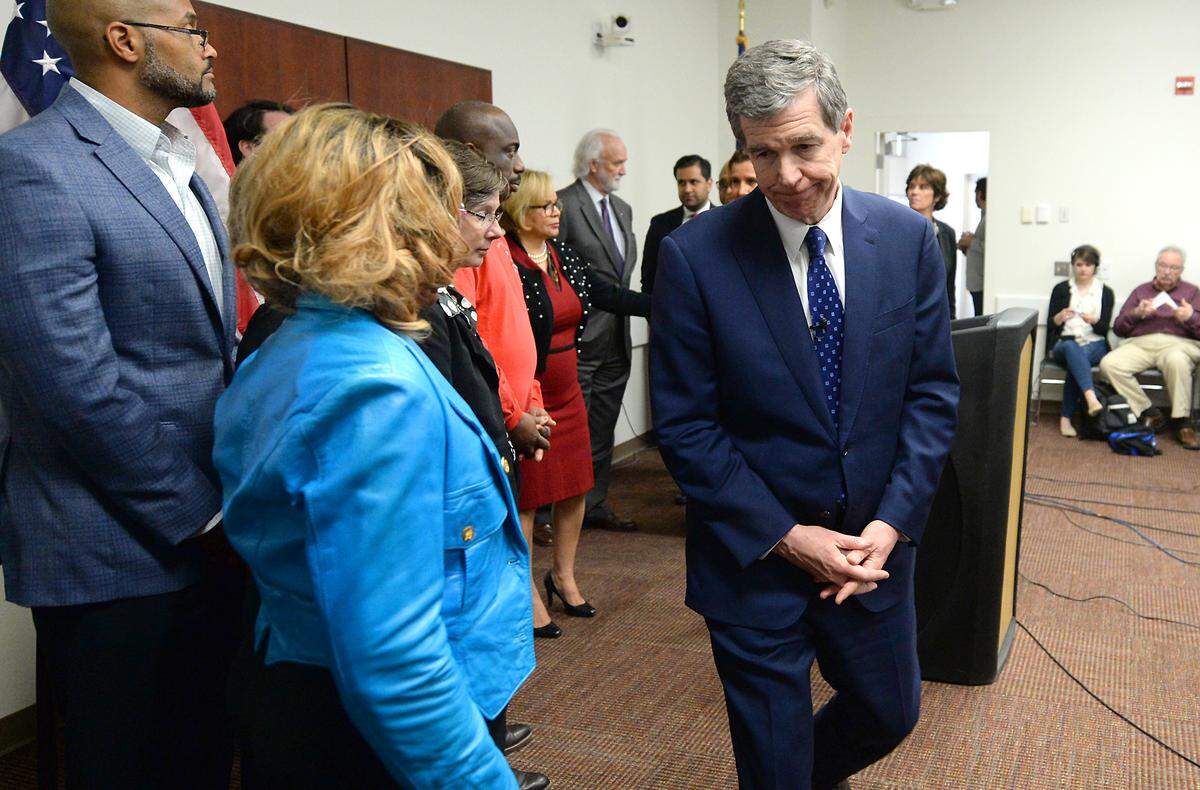
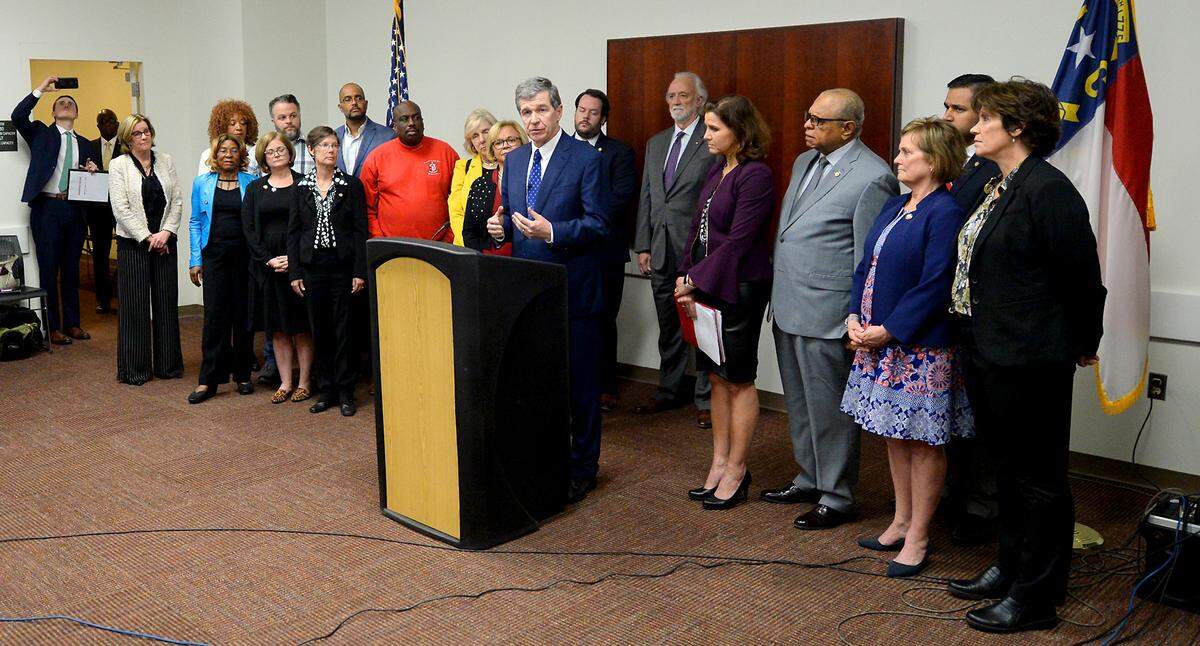
Cooper spoke in Charlotte after meeting with business and health care leaders one day after declaring a state of emergency in North Carolina over the new coronavirus.
Officials continue to deal with the spread of COVID-19, the disease caused by the new strain of coronavirus.
“All of our lives are going to change in some way” because of the virus, Cooper said. “This is a fluid and evolving situation.”
Mecklenburg County has not confirmed any cases of COVID-19, or coronavirus disease 2019, in the Charlotte area, officials said. To date, North Carolina has reported seven cases of residents diagnosed with the virus, primarily concentrated in Wake County.
The state lab currently has the capacity to test 250 people for the new coronavirus strain, State Health Director Elizabeth Tilson said Wednesday. She was with Cooper in Charlotte.
LabCorp, a private North Carolina-based health care diagnostic company, has additional tests, but Tilson did not have that number. A message left with LabCorp was not immediately returned.
State officials did not offer a timeline for when they might be able to test as many people as they would like.
“The more people that we can get tested, the more we will know. That has been a priority for us,” Cooper said. “The scramble now is to get people tested… We have to know what we are dealing with.”
The full effects of the virus on North Carolina aren’t clear yet, he said.
“There will be inconvenience, there will be loss of income, there will be disappointment,” Cooper said. “But we’ve got to make sure that we protect the health and safety of North Carolinians. And that has to be our primary objective.”
Last week, Congress approved and President Donald Trump signed an $8.3 billion supplemental spending package to help fight the coronavirus. North Carolina will receive more than $13.8 million from the CDC to support its response to virus.
Congressional concerns
There was also bipartisan concern in North Carolina’s Congressional delegation over the lack of CDC tests.
In a Wednesday letter to Vice President Mike Pence, Sen. Thom Tillis and Reps. David Price and Richard Hudson said that “North Carolina’s Department of Health and Human Services has made us aware that supplies for test kits are not yet adequate for the expected demand.”
And despite assurances that the CDC has distributed more tests and ramped up production, they continued, “North Carolina has not yet received additional test kits, which the CDC had indicated would be delivered this week at the latest.”
Tillis and Hudson are Republicans. Price is a Democrat.
Pence is leading the federal government’s response to the coronavirus outbreak, which the World Health Organization said Wednesday is now a pandemic.
There are 1,050 cases in the United States, including 29 deaths, according to Johns Hopkins.
“We are concerned that we’re probably not hitting as many people as we want to,” Tillis told The News & Observer on Tuesday, about the lack of tests. “...You’ve got to manufacture them before you can make them available. So we’ve asked questions about if they’re available, are they where they’re supposed to be?”
Public events
State officials recommended that people at higher risk — those 65 and older, with underlying health conditions or weakened immune systems — avoid large gatherings, cruises and non-essential air travel.
Tilson said state officials are paying special attention to nursing homes, detention facilities and other locations where people are in close quarters and susceptible to transmission.
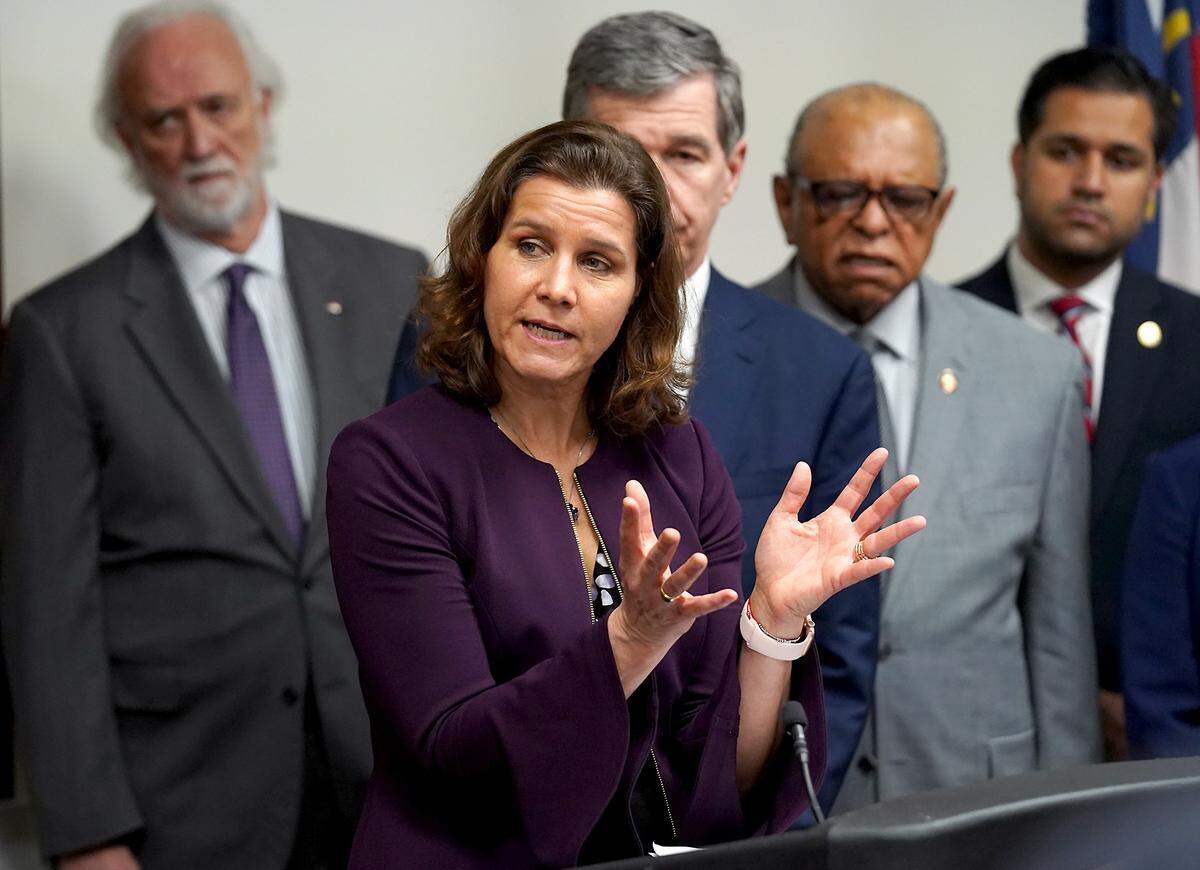
Nursing homes in the state should limit visitors, particularly those with respiratory illness or who have potential exposure to the virus, officials said.
Tilson asked businesses and other event organizers to adopt “lenient refund policies,” and asked people at high risk not to attend large gatherings. She also said business should urge sick employees to stay home.
There also are enhanced recommendations in the Triangle, where all of the state’s cases have been so far.
‘Work together’
Charlotte Mayor Vi Lyles said the city will continue to work with local, state and federal officials to monitor the spread of the virus.
“In our community, we are going to do what we do best: work together,” she said Wednesday.
Tilson said if there is a mass gathering primarily targeted at people at high risk, organizers should consider canceling. That means gatherings that market to older people or people with underlying conditions.
Officials have not yet called for widespread event cancellations, but Cooper said they are continuously speaking with health experts about recommendations.
Meanwhile, the high-profile ACC Tournament, which is currently underway, will continue. But people with health concerns should not attend, officials say.
The cases so far
The first North Carolina case was announced March 3.
A Wake County man tested positive after traveling to a long-term care facility in the state of Washington before returning to N.C.
Three days later, state officials announced North Carolina’s second case, when a Chatham County man who had traveled to northern Italy tested presumptively positive.
The most recent North Carolina cases were announced Monday, after five people tested positive for COVID-19 in the wake of attending a Biogen biotech corporate conference in Boston last month, the (Raleigh) News & Observer reported.
The five began showing symptoms between Feb. 29 and March 3. Those first seven patients were put in isolation while officials identify close contacts.
Officials remain wary of “community spread” of the virus, meaning, according to the Centers for Disease Control and Prevention, officials are unable to identify the source of a person’s exposure.
Symptoms of coronavirus disease 2019 are fever, cough and shortness of breath, according to the CDC. The symptoms can appear two to 14 days after exposure.
Mecklenburg County has set up a public health hotline at 980-314-9400 for people with symptoms or questions about the illness.
Michael Wilner and Brian Murphy of McClatchy’s Washington Bureau contributed to this report.
This story was originally published March 11, 2020 at 3:01 PM with the headline "Gov. Cooper: NC has not gotten all the coronavirus testing supplies it needs from CDC."
.jpg)