
Inside Belk’s bankruptcy: How the NC department store icon wound up in Chapter 11
Belk’s bankruptcy was years in the making.
Bit-by-bit, new and old woes weighed down the 133-year-old department store. A debt-laden buyout, a $135 million payout to its private-equity owner, fickle consumers and a dying business model all hung around the institution’s neck. And then the pandemic sent the whole thing tumbling.
Now, we know precisely how sharp that fall was, thanks to documents distributed to the owners of Belk’s debt in January ahead of its pending bankruptcy filing this month.
The bankruptcy is slated to get Belk some new capital and cut some of its nearly $2 billion of debt, but the future of the iconic department store is still in doubt.
The bankruptcy documents give the most public detail to date into the finances of the company under the ownership of private equity firm Sycamore Partners. Combined with other financial records, they show that while the pandemic was a devastating blow, Belk was faltering even before COVID-19.
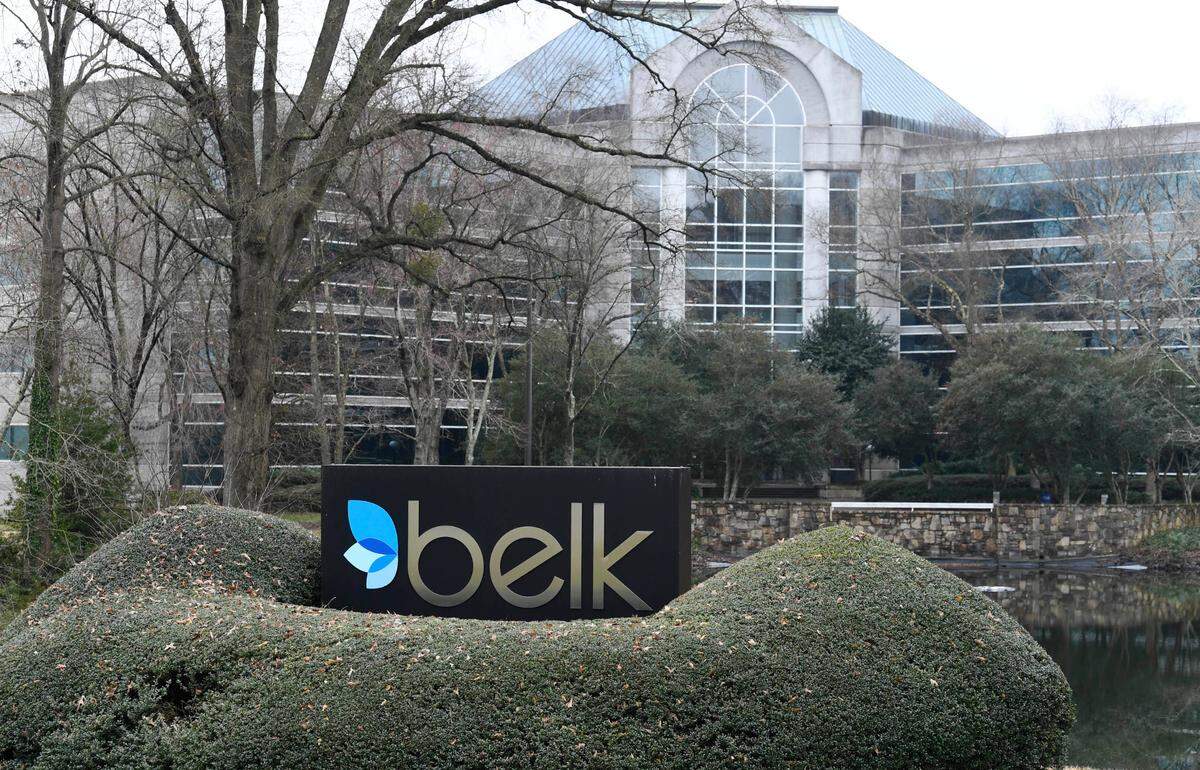
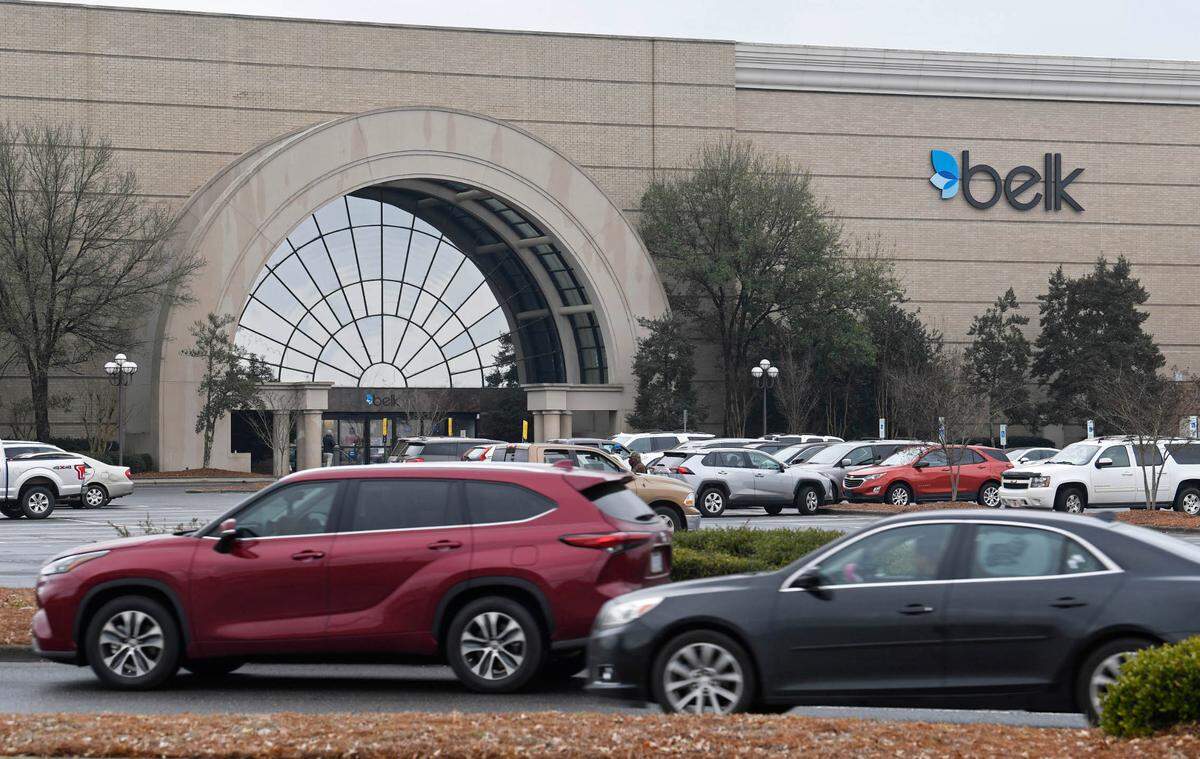
While Belk said it would not close stores or have layoffs as a part of the bankruptcy, the disclosures hint both could happen in the next few years. With its headquarters on Tyvola Road in Charlotte, Belk has 291 department stores across the South and 17,000 employees.
‘Shoppers were going elsewhere’
Belk was founded in 1888. The chain’s current predicament started in 2015, when the Belk family sold the business to New York-based Sycamore for about $3 billion. The sale filled the Belk family coffers, but Sycamore financed the transaction with over $2 billion in debt in Belk’s name, a move known as a leveraged buy-out.
The debt was not a death sentence, but it made success harder. No one knew it at the time in 2015, but department store sales, already on the decline, were going to drop off even faster. Thousands of stores would close in the final half of the decade as the so-called “retail apocalypse” entered full swing.
“Before COVID, the shoppers were going elsewhere. They were going to Amazon or going online, but it’s not just that,” said Barbara Kahn, marketing professor at the University of Pennsylvania’s Wharton School. “It was also that they were going to the T.J. Maxxes of the world.”
Department stores weren’t innovating their shopping experience, Kahn said. Lululemon and Sephora, offering similar products to a department store, were. And, malls weren’t drawing people in as they once did.
Belk revenue peaked in 2016 at $4.2 billion, according to Moody’s. It has fallen every year since.
Paying the boss
The debt that Sycamore loaded up Belk with severely limited the chain’s free cash flow.
Interest and principal payments meant less to spend on store upgrades or digital modernization. Sycamore only made that harder when, according to its bankruptcy disclosure to lenders, it paid itself a $135 million dividend from Belk’s balance sheet in September 2016.
While it had been known that Sycamore paid itself a dividend, the size of it was not widely known until the January disclosure. The move took even more money off the table to invest in the company, which experts say was needed. At the time, Belk was losing ground to its peers on both its online presence and in its stores.
In its disclosure, Belk said it hired a “nationally recognized financial advisory firm” to conduct an analysis on how a dividend would affect its ability to stay solvent prior to issuing itself the money. A spokesman for Sycamore declined to comment when asked what was in the analysis.
A fragmented store
Debt, a dividend, a late digital push, a retail apocalypse — all of this hurt Belk. Consumer tastes changed, too. Trends like active wear exploded in the last decade and department stores had a hard time adapting, according to Dick Seesel from the consulting firm Retailing In Focus.
The growing middle-class of the South buying mid-priced clothing was what helped grow Belk, but the modern retail environment doesn’t reward the middle ground anymore, according to Katrijn Gielens, a marketing professor at UNC Chapel Hill.
“The way it came across is that there was too much stuck in the middle,” in terms of what Belk was selling, Gielens said.
Retail has been dividing itself in two recently. In one direction, there are more high-end stores with a diverse selection, and in the other direction, simple, no-fuss discount stores. Belk was stuck in the middle, a no man’s land.
And then the pandemic struck.
From March 17 to May 1, all Belk stores were closed. For the rest of the year, re-openings rolled out gradually. And many consumers shied away from in-person shopping altogether.
The effects were devastating. From the third week of March to the end of 2020, Belk’s sales were down 32% year-over-year, according to the filing. That put them among the worst retail performers in the pandemic, according to Neil Saunders, managing director at research agency GlobalData Retail.
In the pandemic, Belk just wasn’t as nimble as other stores, Saunders said.
Many department stores use a relatively similar amount of space for each store, while Belk has a much more varied set of floor-plans — some smaller, some much bigger. That goes back, in part, to Belk’s early days when each store had more individual autonomy. But this made pivoting during a pandemic much harder, Saunders said.
“Belk is a very fragmented brand,” Saunders said. “My sense of Belk is that it just doesn’t have that unified approach. The big problem with Belk is that it has 300 stores, but not 300 unified stores.”
Flat-footed, overleveraged and in a struggling industry, the Belk situation was impossible. Digital sales did help a bit during the pandemic, but it was too late. In November, Sycamore started talking with lenders about a restructuring. On Jan. 26, Belk announced it would file Chapter 11 bankruptcy the next month.
The announcement added another name to the list of retail bankruptcies during the pandemic, which already included JCPenney and Neiman Marcus. Like Belk, they each had billions in debt.
While the pandemic was the catalyst for the bankruptcy, even Belk’s own filings admit that debt was a key factor. The filing it distributed to lenders cited as one of its top pressures “online retailers and established brick-and-mortar retailers that have less leveraged capital structures and greater economies of scale.”
What bankruptcy does for Belk
The bankruptcy will help fix Belk’s most-pressing issue: cash.
The chain will get $225 million in new capital as a part of a deal with a group of its lenders. In exchange, the lenders agreed to a $450 million reduction of Belk’s debt, which currently stands at $1.9 billion. A consortium of its lenders will get a chunk of the equity of the company as a part of the deal.
The bankruptcy will take place in Houston, where Belk has no stores, on Feb. 24. Sycamore, which will maintain control of Belk, hopes to complete the bankruptcy process in one day.
CEO Lisa Harper said when the deal was announced that the restructuring and bankruptcy put Belk on the right long-term path.
She’s also making product decisions for the long term as well, even as the department store business model becomes less certain. In a private call with lenders, Harper said Belk would push home goods, outdoor apparel and activewear going forward, according to the bankruptcy publication Reorg Research.
Stores and employees
Belk said it would have no store closures or layoffs as a part of the bankruptcy. But analysts say it’s unlikely all of its 291 stores are profitable, or will be profitable when the pandemic subsides.
Bankruptcy makes it far easier to get out of leases, so why won’t Belk?
“If you were doing a proper restructuring, you would absolutely be looking at laying off staff, getting out of leases and looking at the store base,” said Saunders, the consultant.
“The fact that that’s not happening suggests that there’s no real future,” Saunders said. “This isn’t about retail anymore, this is about financial transactions and getting the most return out of the assets of business.”
And while the bankruptcy process itself will likely not have any closures or layoffs, notes in the disclosure form Belk sent to lenders suggest that cuts are likely coming.
In a general comment on business operations, the disclosure said that “Belk will consider replacing stores in markets where more attractive locations become available or closing stores where Belk does not believe there is potential for long-term success.”
And later on in the disclosure, in a footnote to a table of financial projections, cost cuts appear to be coming. Costs, as a percent of revenue, are projected to decline over the next four years due to “strategic right-sizing of components of the fixed cost structure,” among other reasons, the footnote read.
“Right-sizing” is corporate jargon for cuts, and “fixed cost structure” refers to regular payments, like salaries, leases, insurance or taxes. A Sycamore spokesperson declined to comment when asked what specific costs would be “right-sized”.
“A company like Belk may be able to come out of this bankruptcy cleaner in terms of debt load but that doesn’t mean the underlying business model is healthier than before,” Seesel, the retail consultant, said.
COVID-19 to Chapter 11
March 2020: Retail stores, like Belk, across the country close due to the coronavirus. Workers furloughed.
April 2020: Sycamore and Belk hire Alvarez and Marsal as restructuring advisor.
May 2020: Belk begins phases approached to reopening with curbside pick-up, reduced hours. Some furloughed employees return.
June 2020: Belk lays off an undisclosed number of corporate office and store employees.
November 2020: Restructuring discussions begin with Belk’s lenders.
December 2020: Sycamore and Belk hire Kirkland & Ellis as restructuring counsel and Lazard as investment banker.
January 2021: Belk announces it will file Chapter 11 bankruptcy in February. Sycamore will maintain majority control, with lenders getting a chunk of the company.
Belk by the numbers
▪ Belk has 291 stores located in 16 mostly Southern states. The company has 17,000 store employees of which about 8,000 are full time.
▪ Belk owns 64 retail stores, has 76 ground leases. Belk leases all other retail stores and office space.
▪ Belk has three distribution facilities, one each in Blythewood and Jonesville, S.C., and Jackson, Mississippi.
Belk history in brief
▪ In 1888, William Henry Belk opened a small bargain store called The New York Racket in Monroe. Three years later, John Belk became a partner and renamed the store Belk Brothers Company and expanded.
▪ By 1923, the Belk brothers and their partners operated 20 stores that generated $10 million in annual sales.
▪ In 1955, William Henry Belk’s sons transformed Belk from downtown bargain stores to modern fashion destinations in shopping centers and malls throughout the South.
▪ In 1998, a new generation of Belk kids merges all 112 stores into one company – Belk Inc.
▪ In 2015, Sycamore Partners acquired Belk for about $3 billion.
This story was originally published February 9, 2021 at 6:30 AM with the headline "Inside Belk’s bankruptcy: How the NC department store icon wound up in Chapter 11."