Predator lizard could hurt SC environment, and it’s popping up more in Columbia
More than a dozen sightings of an invasive lizard species have been reported in South Carolina over the past year, with most reported in the Columbia area, the state’s Department of Natural Resources said Tuesday.
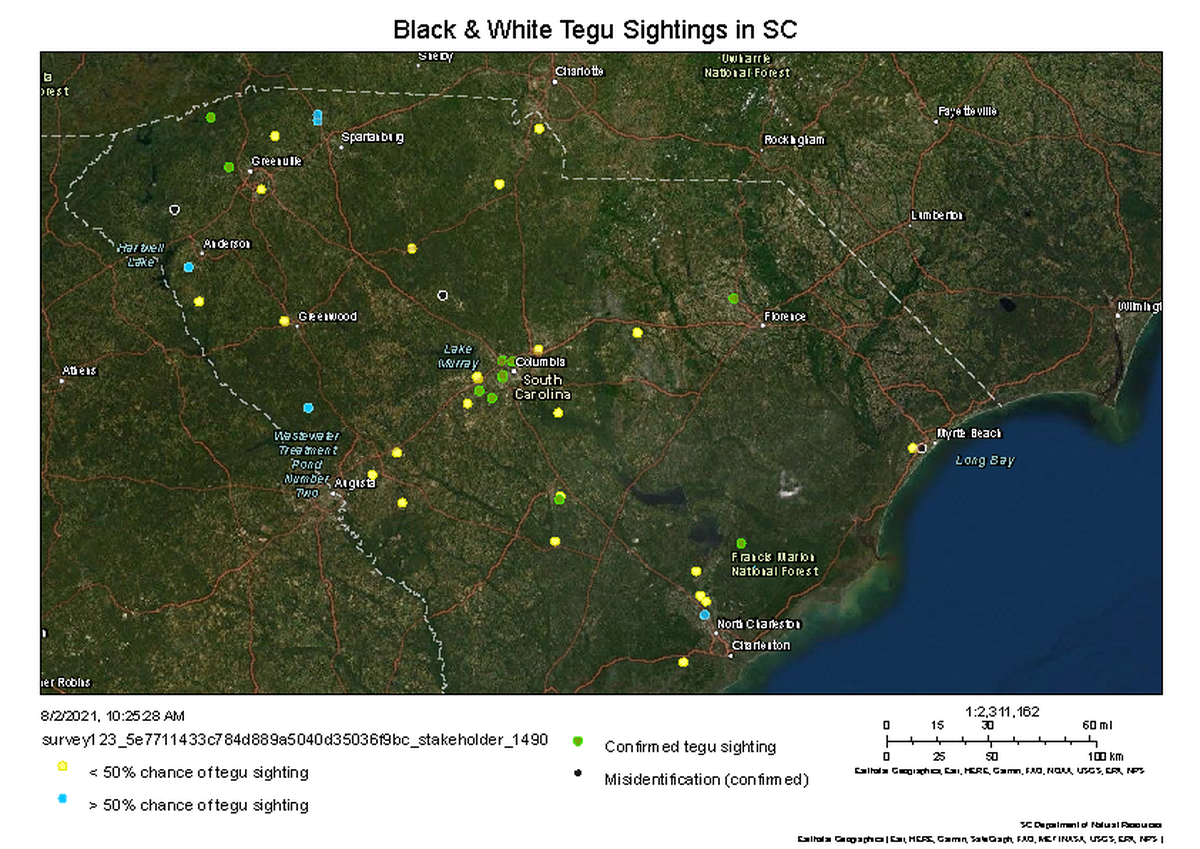
Since August 2020, South Carolina DNR has confirmed 13 sightings of wild and free-ranging non-native black and white tegus. More than half of these sightings have come from the Midlands, DNR said in a news release.
Last week, two tegus were reported in Lexington and Richland counties, according to the release.
Including those two, nine tegus have been successfully removed from the wild, DNR said.
In addition to the Midlands, tegus have been spotted across the state with confirmed sightings in Greenville, Pickens, Darlington, Orangeburg, and Berkeley counties, according to the release.
.jpg "unnamed (2).jpg")
“It is important that this species does not establish in our state,” state herpetologist Andrew Grosse said in September 2020.
Already established in Georgia and Florida, the tegus could have an effect in South Carolina on native ground-nesting birds like turkey and quail, as well as other species like the state-endangered gopher tortoise, given the lizards’ preference for eggs, DNR said.
Black and white tegu lizards are native to South America and are thought to have arrived in the southeastern U.S. via wildlife trading. The tegus are predators and can rapidly multiply — laying 35 eggs per year, according to the Georgia Department of Natural Resources.
Black and white tegus, which are the largest tegu species, can grow up to 4 feet long and weigh up to 10 pounds and have a life span of about 20 years, according wildlife officials. They are omnivores and eat plants as well as various types of eggs, pet food, small mammals, insects, reptiles, amphibians and birds, DNR said.
“The introduction of any non-native species can have serious negative impacts on native wildlife. Black and white tegus are no exception,” Grosse previously said. “Tegus mature and reproduce quickly.”
On May 28, black and white tegus and their hybrids were added to the list of “Restricted Non-native Wildlife,” DNR said. That will make it illegal in the future to possess, sell, import and breed the tegu lizard.
These regulations also require current owners to register all black and white tegus and hybrids with DNR by Sept. 25. After this date, no unregistered black and white tegu may be possessed, and no tegu may be bought, sold or transferred in the state, according to the release.
As adults, tegus have gray, black and white coloring on their scales, while young tegus have a bright green color on their upper torsos and heads. Because they are an invasive species, tegus are not protected by South Carolina wildlife laws or regulations and “should be removed from the wild,” DNR said.
“Although not considered aggressive toward people, tegus will defend themselves if threatened. They can react fast and lash with their tails. They have sharp teeth and claws and strong jaws,” says the Georgia DNR website dedicated to tegus.
.jpg "unnamed (1).jpg")
After the first confirmed tegu sighting in Lexington County, an adult female that was about 2.5 feet long, more than 80 reports of the lizards in South Carolina were sent to DNR.
Prior to the first confirmed sighting, DNR said it received reports of the lizards being spotted in Lexington and Aiken counties for months.
Tegu sightings should be reported to DNR at grossea@dnr.sc.gov. If possible, DNR asks that reports include a photo, location, and time and date the lizard was seen.
BEHIND THE STORY
MOREThis is a breaking news story
In a breaking news situation, facts can be unclear and the situation may still be developing. The State is trying to get important information to the public as quickly and accurately as possible. This story will be updated as more information becomes available, and some information in this story may change as the facts become clearer. Refresh this page later for more updated information.
This story was originally published August 11, 2021 at 8:19 AM with the headline "Predator lizard could hurt SC environment, and it’s popping up more in Columbia."