Cancer-causing waste found at troubled paper mill on SC river. How did it get there?
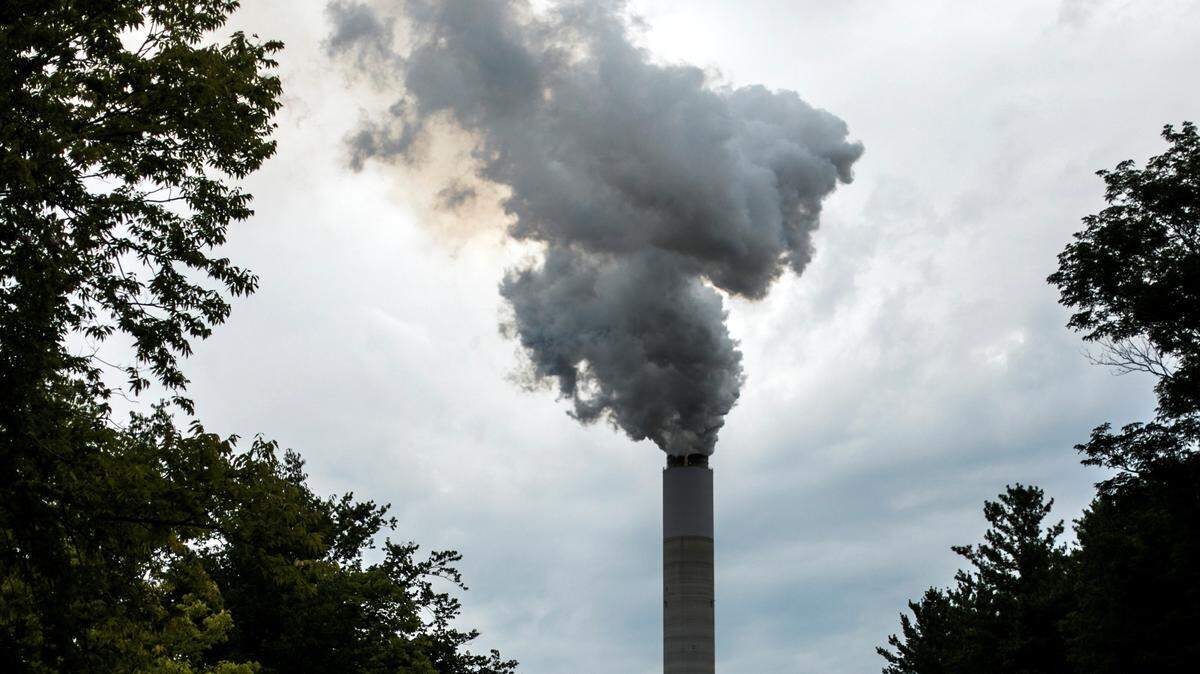
As Carolinas residents complained last year about nauseating fumes from a York County paper mill, a less visible threat lurked in some of the mill’s aging waste lagoons along the Catawba River.
The threat is dioxin, an industrial waste generated for decades by paper and pulp mills as they produced white paper for sale in many widely used products.
Known as one of the world’s most toxic chemicals, dioxin has been tied to the deaths of domestic animals and illnesses in children who came in contact with the material. It is known to cause cancer and is of particular concern because dioxin can linger in the environment for decades. Even microscopic amounts can be a danger to people and wildlife.
The S.C. Department of Health and Environmental Control recently confirmed that dioxin has been identified in waste sludge in four lagoons at the New Indy LLC container board plant south of Charlotte. The lagoons hold about 6.5 million cubic yards of sludge, the agency said.
It is unclear how much dioxin is in the sludge and who is responsible for the contamination because various companies have owned the paper mill since it was built in the late 1950s. New Indy says it didn’t release dioxin.
But two things are certain: New Indy’s waste lagoons are getting old and state regulators have noticed erosion on earthen walls that hold back wastewater. If a lagoon wall breaks or leaks, nasty contaminants, including dioxin, could be swept into the big river that cuts through South Carolina between Charlotte and Columbia.
The Catawba River is a drinking water source for a handful of communities downstream, and it is popular with recreational and subsistence anglers, who depend on river fish for food. Like some other toxic compounds, dioxin can build up in fish people eat.
In addition to contaminated sludge, groundwater on the New Indy site is polluted with dioxin. The contamination has been detected in four monitoring wells, according to DHEC.
The polluted groundwater is near the plant manufacturing area, uphill from the waste lagoons and about a half-mile from the Catawba River, the agency said in a recent email. Tests show the dioxin levels do not exceed safe-drinking water standards and there are no drinking water wells in the path of the polluted groundwater.
DHEC also had not detected dioxin contamination in groundwater between the waste lagoons and the Catawba River, DHEC spokeswoman Cristi Moore said in an email.
Still, the author of a book about the environmental impacts of paper mills in the South said something needs to be done to make sure the property is safe and secure. The contaminated sludge might need to be dug up and removed from the lagoon, said William Boyd, a UCLA law professor.
“I don’t think you just want to leave it there and cap it,’’ Boyd said. “That doesn’t make a lot of sense, especially if it is out there in these ponds.’’
Dioxin compounds have in the past been discharged from paper mills and built up in fish in the southern United States.
Much of the regional pollution occurred before federal rules tightened and paper companies began using different processes to manufacture their products. But because dioxin takes decades to break down in the environment, its effects are still around.
Companies that own property with dioxin face legal liability and a responsibility to clean up the mess, regardless of whether they caused the contamination, Boyd said.
“They can’t just say ‘Well, that was (former owner) Bowater back in the 1950s that did all that, and this was not us,’ ‘’ said Boyd, who is from Columbia. “That’s too bad. You own the site now.”
New Indy, which operates the mill once run by Bowater, says it is working on plans to deal with the tainted sludge on the site, while it also works to resolve separate problems that generated thousands of odor complaints in the Charlotte-Rock Hill area last year.
Law firms that are suing New Indy because of the plant’s odors said dioxin on the property is a worry.
“With numerous toxic contaminants such as hydrogen sulfide and methyl mercaptan being regularly released into the environment by New-Indy, it is no surprise that its property is also home to dioxins, an extremely dangerous class of chemical,’’ an attorneys group said in an email.
The attorneys group includes representatives of the Harpootlian and Motley Rice law firms of South Carolina, the Baird, Mandalas Brockstedt firm of Delaware and the Schochor, Federico & Staton firm of Maryland.
Last month, the U.S. Environmental Protection Agency fined New Indy more than $1 million because of the plant’s odors and told the company to make improvements, following investigations by state and federal environmental regulators.
Dioxin, however, has drawn less attention. A television report from WCNC in Charlotte last year mentioned that sludge from the New Indy operation had been contaminated with dioxin. But much of the public focus has been on odors, said state Sen. Mike Fanning, a Democrat whose district includes parts of York, Chester and Fairfield counties.
Fanning and Chester Metropolitan District water system officials said they were not aware dioxin had been identified at New Indy, upstream from Chester’s Catawba River water intake., until they were told by The State. The Chester water intake is about 12 miles below the New Indy site.
“It certainly concerns me,’’ Fanning said. “That is something we had not gotten any reports back about from either the EPA or DHEC. But in fairness, what we had asked them to investigate was not related to that.’’
“I certainly will look into it. It is something we would care about. That affects the river and the river affects tons of people downstream, all of whom I represent,’’ Fanning said.
New Indy said dioxin is relatively insoluble in water so it does not “readily contaminate” the water. But Fred Castles, director of the Chester Metropolitan District, said he planned to have a staff member test Chester’s water to see if any dioxin shows up. The water system, like most others, doesn’t typically check for the presence of dioxin.
“I’m not aware of dioxin, and if DHEC felt like that has occurred, I should have been notified,’’ Castles said. “That’s brand new to me.’’
Originating in the mountains of western North Carolina, the Catawba River extends about 225 miles before emptying into Lake Wateree north and east of Columbia. It then becomes the Wateree River, flowing to the Santee Cooper lakes in South Carolina’s inner coastal plain. The city of Camden withdraws drinking water from Lake Wateree.
Dam safety questions
The condition of dams and earthen walls that contain sludge at New Indy has drawn attention in recent years, including one basin closest to the Catawba River.
Records obtained by The State show that water has been trickling from a basin known as Sludge Lagoon 4, a structure built more than 40 years ago.
“Local seepage and erosion’’ was found on an embankment, according to a July 2020 report by consultant S&ME Inc., obtained by The State from DHEC. The problems were found during a rainy period in March of that year, the consulting firm said.
The S&ME report said that, overall, the pond met industry safety standards, while a 2017 DHEC dam inspection report did not cite any violations, giving Sludge Lagoon 4 a fair rating.
But the S&ME study said repairs were needed. The 2020 S&ME report suggested collecting the seepage to reduce the potential for bank erosion and conducting more study.
Sludge Lagoon 4 “should be addressed for long-term embankment stability and safety concerns,’’ the study said.
Another lagoon nearby received a poor rating after inspectors found trees growing from an embankment. Trees can weaken dams and pond walls.

All told, DHEC noted five violations over its inability to access parts of the site. The agency ordered the removal of trees and brush from the embankment, according to a 2017 dam inspection report.
A third lagoon received a fair rating, but inspectors still noted four violations, one following the discovery of erosion on an embankment slope. The lagoons were built in the 1960s, DHEC says.
New Indy, in an emailed statement, said it did not know of any dam safety deficiencies or violations for the latter two basins. It said DHEC’s concerns about vegetation and erosion maintenance have been addressed.
A smaller fourth basin has not historically been regulated by DHEC so the department does not have a formal inspection report, the department said in an email.
A consultant for attorneys suing New Indy over the odor problems says dioxin has been measured in not only sludge, but also in soil and foam from various lagoons.
Testing found toxins in the ground below the bottom of the 36-foot deep Sludge Lagoon 4, according to a Sept. 21, 2021, report from Kenneth Norcross to the Baird, Mandalas and Brockstedt law firm, one of the legal teams suing New Indy.
The letter said one set of tests documented toxic material 80 feet deep. DHEC told The State that soil beneath the waste lagoons has not been tested.
Norcross, a wastewater treatment expert who has worked with governments and paper mills across the country, said it’s important to learn whether Sludge Lagoon 4 is leaking.
“This is especially critical with the presence of dioxins, furans and other toxic chemicals likely present in the sludge,’’ his report to the law firm said, noting that the “entire lagoon should be assessed and made leak-proof.’’
The report said a groundwater barrier would help protect the Catawba River. But the Norcross report said New Indy has been “lax’’ in closing the sludge lagoon.
Officials with DHEC and New Indy did not express concern about the stability of the waste lagoons when asked by The State, but Moore said the department launched an investigation of New Indy in 2020 that includes a look at the stability of the waste lagoons. New Indy said it has performed “numerous studies of the dike walls’’ and continues to monitor their condition.
“DHEC has enhanced its oversight of the dams and will continue to inspect and evaluate the embankments and berms,’’ Moore said.
Dead horses and polluted fish
Dioxin, sometimes referred to in the plural as dioxins, is part of a group of chemical compounds, some of which are more toxic than others.
But the most toxic forms of dioxin have typically been those generated at paper mills that use chlorine to bleach products, said Nick Bennett, an environmentalist who has tracked the paper industry in Maine for the past 25 years.
What is widely considered the most dangerous form of dioxin — a compound called 2378 TCDD — was found in sludge in the New Indy waste basins, according to DHEC and the EPA. Two other types of dioxin-related material — 2378 TCDD TEQ and HXCDD — also were identified, DHEC’s Moore said in an email.
Those contaminants exceeded what is known as a federal screening level, a measure that says whether more study is needed. Contaminants that exceed screening levels indicate the need to evaluate potential risks by pollution on a site, according to the EPA.
Dioxin is a byproduct of some industrial processes, including waste incineration, coal burning and chlorine bleaching of paper, according to the EPA. Paper mills once widely created dioxin, but the industry has in recent years moved away from using materials that produce dioxin.
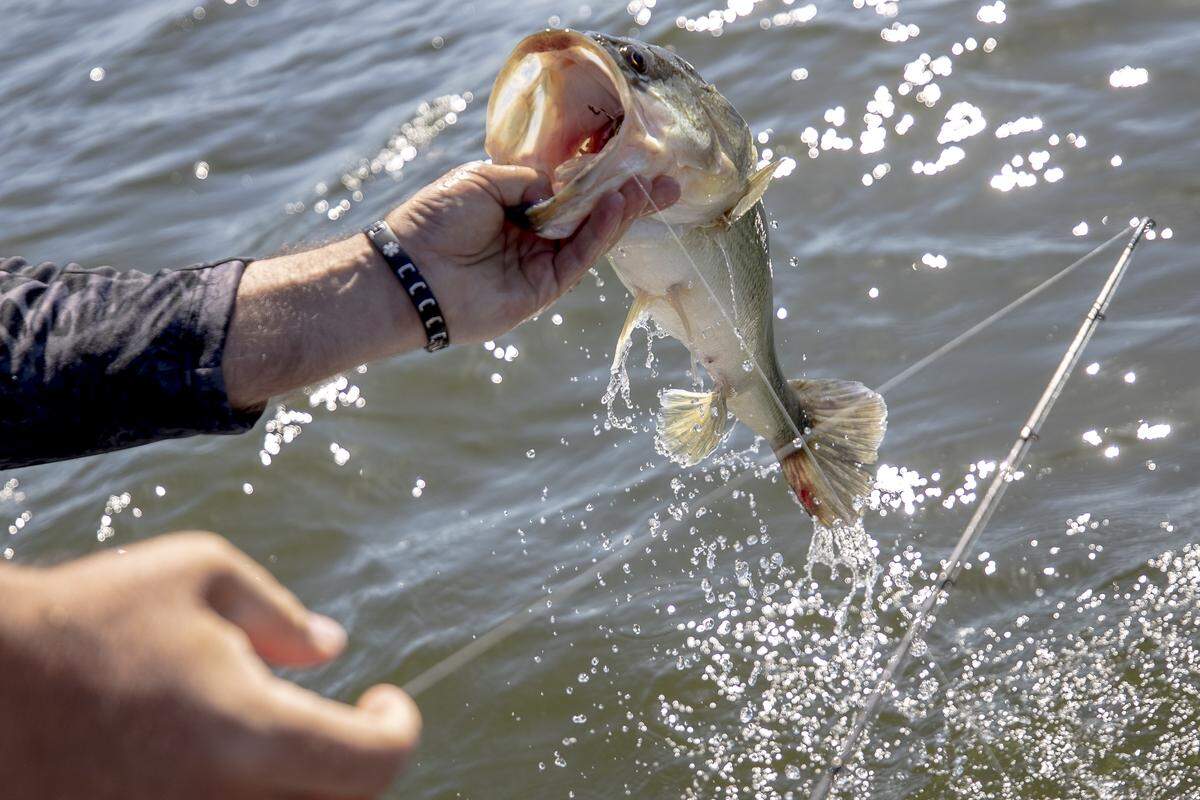
Cancer, reproductive problems and damage to the immune system can affect people who are exposed to certain forms of dioxin, the agency says. People can be exposed by eating or drinking material contaminated with dioxin, such as fish caught in tainted waters
.
In response to questions from The State, New Indy said dioxin has not been produced at the mill in about 20 years, when the previous mill owners quit the paper bleaching process
But the company said the dioxin remains in waste pond sludge. The company’s statement indicated that dioxin problems result from the paper industry’s historic practice of using chlorine to bleach paper fibers.
New Indy and DHEC also noted dioxin found in groundwater does not exceed safe drinking water limits.
New Indy has hired experts to recommend how to best deal with the sludge to prevent exposure to areas around the paper mill, the company said.
“New-Indy Catawba has invested considerable time, money and effort to do that and is in the process of preparing its recommendations to (the) South Carolina Department of Health and Environmental Control,’’ the company’s statement said. “Once those recommendations are accepted by DHEC, New-Indy Catawba will implement them and reduce or eliminate the risk of exposure.’”
The company, partially owned by New England Patriots owner Robert Kraft, acquired the York County mill about four years ago. The company has since switched from making bleached pulp for paper to making unbleached pulp for linerboard, a New Indy cleanup plan says. Cutting out the bleaching process limits chances of creating dioxin, but the switch apparently triggered odor problems that have upset neighbors.
Dioxin at the New Indy paper mill is no surprise to people like Boyd, who has followed paper mill pollution since he was in law school at Stanford University more than 20 years ago.
Federal research in the late 1980s and early 1990s found dioxin in wastewater discharged to rivers at many of the nation’s paper mills. International Paper’s mill in Georgetown had the nation’s highest concentration of dioxin in wastewater, one EPA study said. People eating fish from the river below the Georgetown mill had the highest cancer risk in the country, EPA research found.
Such concerns prompted warnings by DHEC against eating more than small amounts of certain fish from the Sampit River, downstream from International Paper Co. The issue was particularly serious because the Sampit provides fish that many people would catch for meals.
The risks were lower at the site of the New Indy plant, then operated by Bowater, but still were worth noting, according to a 1989 news story in The State..
Dioxin, however, has been a problem outside the South.
One of the most famous — and hazardous — dioxin problems occurred in Missouri. Dioxin-laden waste oil was sprayed on dirt roads and on horse trails to keep dust from kicking up.
Between 1972 and 1976, a contractor sprayed the oil on the streets of a town called Times Beach, according to “Dioxins: An Overview and History,’’ a 2011 article published in Environmental Science and Technology.
The contamination was so bad the town disbanded and virtually everyone who lived there moved away, the report said.
All told, some three dozen sites in Missouri were contaminated with the polluted spray, according to the 2011 story by Ronald Hites, a researcher at the University of Indiana. At one stable, 75 horses died or had to be euthanized after exposure to dioxin, the story said.
In another instance, the death of millions of chickens in the late 1950s was traced to fatty acids in chicken feed, which later was determined to contain dioxin.
Other high-profile dioxin cases have been reported in an Italian town where children had to be hospitalized because of skin reactions in the 1970s; on an island in Lake Superior from the 1930s to 1970 in the northern United States; and in the jungles of Vietnam.
In the latter case, Agent Orange, a toxic chemical used to clear brush during the Vietnam War, also contained dioxin that veterans were exposed to, Hites’ report said. Many veterans have since become ill because of exposure to Agent Orange.
This story was originally published January 11, 2022 at 12:02 PM with the headline "Cancer-causing waste found at troubled paper mill on SC river. How did it get there?."