
Effort to keep homeschoolers out of voucher program stalls in SC committee
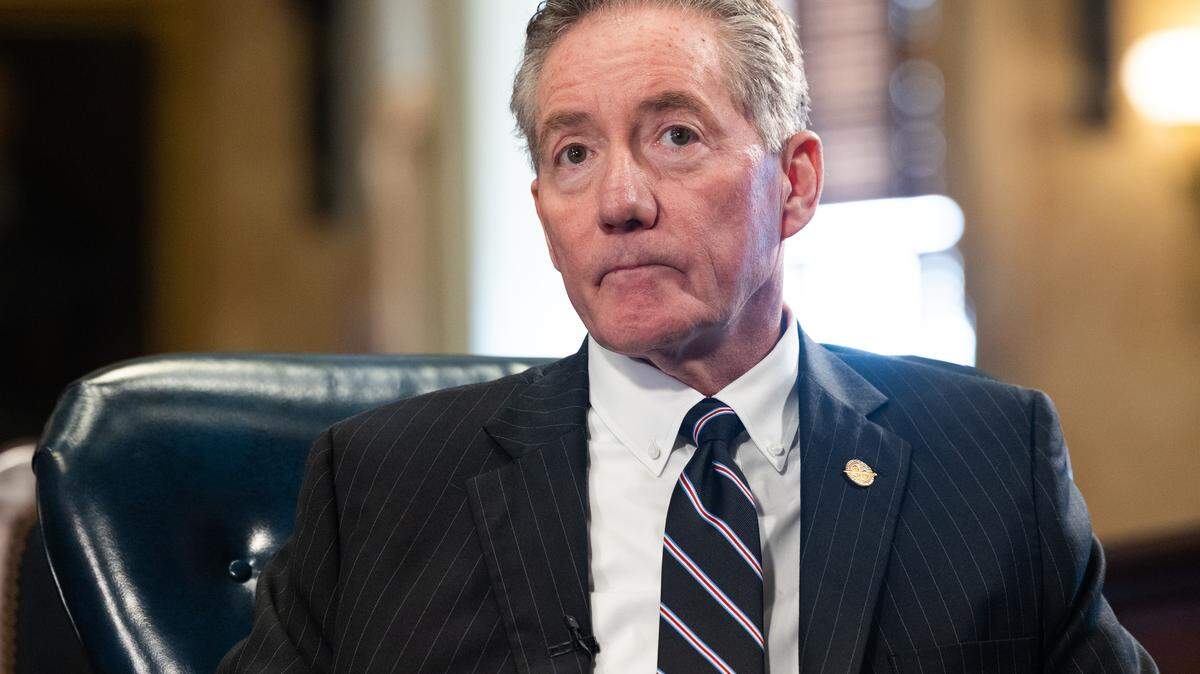
A South Carolina Senate bill that seeks to prohibit students educated at home from participating in the state’s school voucher program is stalled, and likely dead, after hitting a roadblock in committee.
The Senate Education Committee debated the bill Wednesday, but did not have enough members present to take action on it. The panel’s roughly 30-minute discussion made clear, however, that advancing the bill could prove to be a tall order.
While the bill’s sponsor, Senate Education Committee Chairman Greg Hembree, wouldn’t rule out the possibility of additional committee discussions on the proposal, he said he’s shifting focus to an alternate measure that would temporarily accomplish his goal of stemming the flow of home-educated students into the state’s school voucher program.
“I think the right way to do this is to offer a temporary pause, in some form, and look for a temporary solution for this moment,” the Horry County Republican said. “And then a more permanent solution down the road.”
Hembree introduced the bill earlier this year after learning the Department of Education had been awarding $7,500 taxpayer-funded scholarships to home-educated students through what he described as a loophole in the law.
While the voucher law explicitly excludes recipients from participating in any of the three statutorily-defined home instruction options, its language inadvertently opened the door for parents to educate their children at home through a novel fourth option.
The Department of Education, which administers the voucher program, has sanctioned and encouraged the participation of these homeschoolers, whom it calls “unbundlers.”
“The department would submit that it has not created a new category of homeschooling,” state Superintendent Ellen Weaver told a Senate panel last month. “We have administered the program within the parameters established in the language of the enacted statute.”
Nearly 1,200 of the 10,000 students enrolled in the program this year are being educated at home as unbundlers, and more than 2,600 of the 15,000 awarded scholarships for next year plan to do the same, a department spokeswoman said.
Hembree and other senators have criticized the department’s implementation of the law, arguing it has created a host of problems and runs contrary to the General Assembly’s clearly stated intentions. Last week, Hembree and four other senators asked an independent state watchdog agency to probe the department’s handling of the Education Scholarship Trust Fund, with a specific focus on unbundlers.
Unlike other homeschool options, which are defined in law and have clear parameters, unbundling lacks any statutory definition or guidelines.
As long as the parents of unbundlers attest that their children are being provided instruction in several core subjects and taking certain assessments, they meet the state’s compulsory attendance requirement and are eligible for taxpayer-funded scholarships, according to the Department of Education.
“The real effect of the department’s interpretation,” Senate Majority Leader Shane Massey, R-Edgefield, said Wednesday, “is scholarship recipients don’t have to go to school. They don’t have to.”
The creation of a new class of home-educated students without any accompanying legal framework has also raised questions about unbundlers’ participation in high school athletics and their receipt of diplomas and education lottery scholarships for college.
Senators on Wednesday acknowledged the need to flesh out the unbundling option, but appeared resistant to any suggestions that would remove voucher recipients from the program or permanently bar unbundlers.
“I’m going to have trouble voting for anything that reduces the program,” state Sen. Jason Elliott, R-Greenville, said Wednesday. “The idea that we’re going to take this opportunity away from the roughly 1,000 students whose parents have decided that this is the best educational environment for their kids, I hope we don’t do that.”
State Sen. Larry Grooms, R-Berkeley, agreed that current scholarship students should not be punished, but expressed support for pausing the admission of unbundlers until the General Assembly had established a clearer plan for dealing with them.
“It would be my hope that we don’t do anything in permanent law,” he said, “but we do things in temporary law, through proviso, to basically hold things in place until we can have the debates that (Senate Majority Leader Massey) suggested that we have.”
In the coming weeks, Hembree said he plans to offer a proviso, or one-year law, to address the unbundler situation, but has yet to settle on specific language. Once introduced, the proviso will proceed through the normal committee process and, if advanced, could ultimately end up attached to the state budget, giving it a better chance of passage.
Finding a permanent solution to the unbundling question will have to wait until next year, Hembree said.
The Department of Education did not respond to a request for comment Wednesday on whether it would support a proviso that prevented it from distributing voucher money to first-time unbundlers who had already been awarded scholarships for next year.
In a statement released earlier this month, however, a department spokeswoman said that attempts to alter the voucher program would “upend the educational plans of thousands of students and their families.”
“Those families,” the statement said, “are clear and immediate losers if the rules are changed midstream.”
This story was originally published March 12, 2026 at 9:36 AM with the headline "Effort to keep homeschoolers out of voucher program stalls in SC committee."