
See horseshoe crabs gathering along SC beaches? It’s not a party. What’s happening
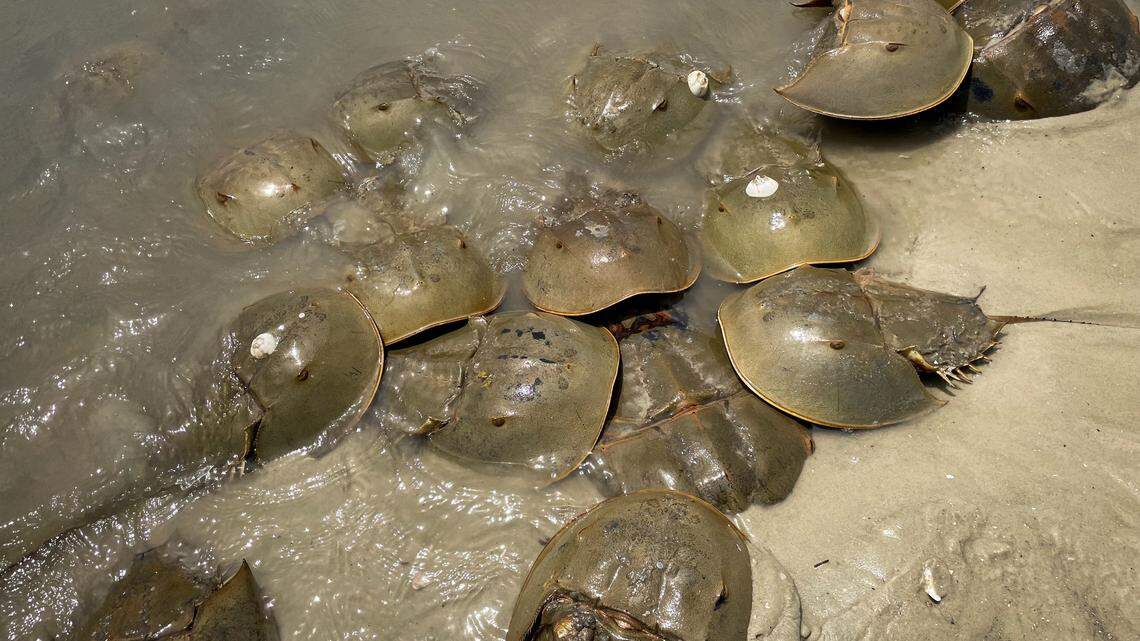
Horseshoe crabs are commonly seen along South Carolina beaches and marshes, often flipped over from rough waves or remnant shells from molting. But if you spot them gathering in groups, they aren’t just hanging out.
From late March through June, beachgoers might see horseshoe crabs coming ashore during their spawning season.
Females typically burrow themselves in the sediment on sandy beaches and in salt marshes to lay several clutches of unfertilized eggs, and multiple males surround the females to fertilize the eggs externally.
There’s usually one male attached to her, but there can be multiple paternities, said South Carolina Department of Natural Resources Crustacean Manager Jeff Brunson.
Female horseshoe crabs typically lay 3,000 to 10,000 eggs during their trips to the shores, he said. According to SCDNR’s website, females return to the shore multiple times in one year until they lay all 80,000 to 100,000 of their eggs.
The eggs are especially important to various shorebirds that rely on them to replenish their fat after migrating. This does not affect horseshoe crab populations, as Brunson said they remain at a healthy level in the Southeast, but it could cause issues for the migrating shore birds if they weren’t able to feed on the available eggs.
Brunson said it’s less common to see horseshoe crabs along the Grand Strand beaches due to rougher waters from ocean facing beaches, but you may find them along the inlets. They are more commonly seen in the southern part of the state for its abundant marsh habitats where they are less likely to be flipped over and stranded.
SCDNR relies on sighting reports of spawning to identify which areas along the coast are hot spots for the year. If you see a stranded horseshoe crab, do not pick it up, as it is illegal without a permit and could harm the animal. Instead, Brunson said to use a foot to gently turn it over, and if it is healthy it will make its way back to the ocean.
What else makes horseshoe crabs unique?
Horseshoe crabs have existed for more than 400 million years, outliving dinosaurs.
They are actually not crustaceans, but are more closely related to scorpions and spiders.
Their blood is copper-based instead of iron, making it appear blue. Scientists from the 1950s discovered its medicinal value, Brunson said. Every year, scientists hand-pick horseshoe crabs for a blood donation-type process.
Their blood contains a blood-clotting agent, called Limulus Amoebocyte Lysate (LAL), and is used to detect endotoxins on intravenous (IV) fluids and injectable drugs. If the endotoxins end up in a person’s body, they can cause fevers and other harmful reactions, Brunson said.
“It’s really important for the protection of human health,” he said.
Only a portion of a horseshoe crab’s blood is drawn, and they are released back in the wild as required by law.
This story was originally published April 10, 2026 at 12:30 PM with the headline "See horseshoe crabs gathering along SC beaches? It’s not a party. What’s happening."