
Dead dolphin had something eerie stuck in its esophagus, SC experts discover
A seemingly healthy bottlenose dolphin was discovered dead on a South Carolina beach on Memorial Day, and closer inspection revealed something grim in its throat.
“The dolphin was in good body condition and had recently been feeding based on fish bones in its stomach,” the Lowcountry Marine Mammal Network wrote in a May 28 Facebook post.
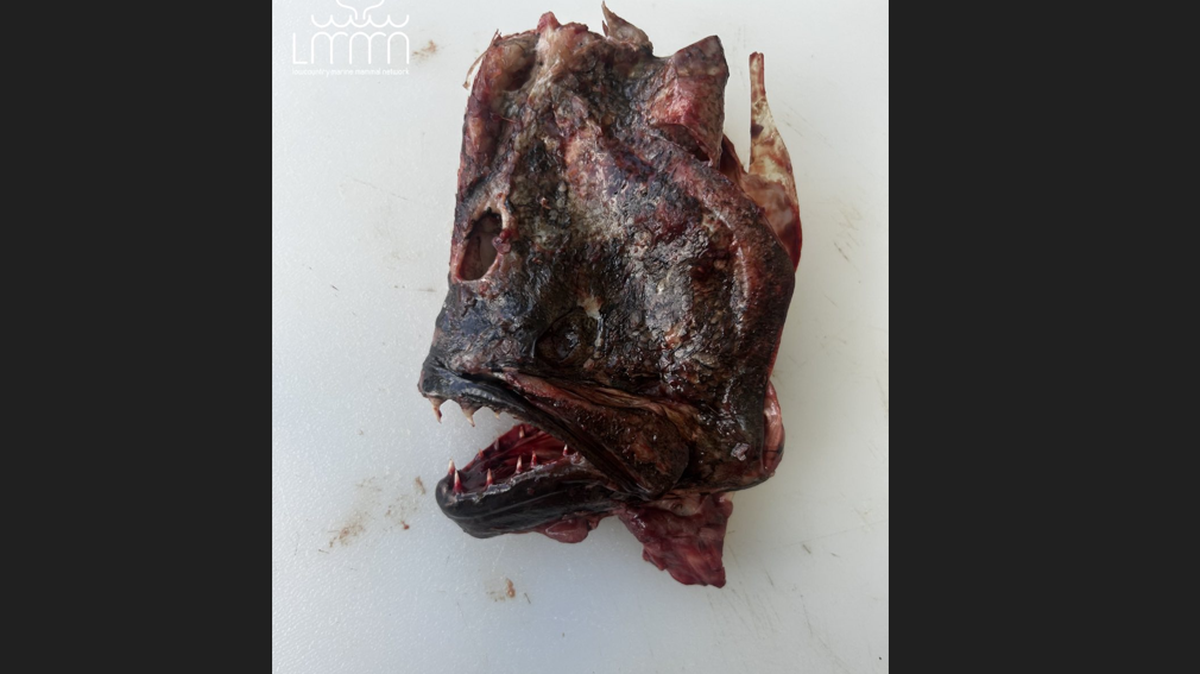
“We found a flounder head lodged in its esophagus. It’s unclear if it was stuck or regurgitated, but certainly interesting.”
A photo shared with the post shows the fish head was recovered with its mouth open, exposing rows of needle-like teeth.
As discomforting as that sounds, there is no proof the 7-foot, 9-inch dolphin choked to death, according to Lauren Rust, executive director of the Lowcountry Marine Mammal Network and South Carolina Marine Mammal Stranding Coordinator.
“We can’t confirm if the fish head killed the dolphin. It was lodged in a way that I suspected it (whether going in or out). The remaining fish body was missing, suggesting it may have eaten it and this came back up,” Rust told The Charlotte Observer.
“The animal also had a diseased liver and several areas of bruising along its left side. The animal presented with some type of infection.”
The Lowcountry Marine Mammal Network is a nonprofit focused on protecting marine mammals, including dolphins, whales and seals in South Carolina waters. The staff responds to between 50 and 70 strandings annually, and the typical cause of death is pneumonia, Rust says.
Bottlenose dolphins are a beloved coastal species, and a tourist attraction known for a dramatic “strand feeding” technique that causes them to slide onto beaches.
“Our local beaches and muddy banks provide the ideal surface for dolphins to slide up onto, creating a powerful wave that pushes fish out of the water onto the bank with them. Dolphins can grab a meal of fish and then slide safely back into the water,” the South Carolina Aquarium says.
“Initial observers thought these dolphins were in trouble when they first witnessed them out of the water on the bank. We now know that our resident dolphins practice this type of feeding year round.”
Bottlenose dolphins are protected species under the Marine Mammal Protection Act, according to NOAA Fisheries. They can reach 13 feet in length and live up to 60 years, NOAA reports.
This story was originally published May 29, 2026 at 11:39 AM with the headline "Dead dolphin had something eerie stuck in its esophagus, SC experts discover."