Traffic at one major Indian Land intersection could look much different, per new plan
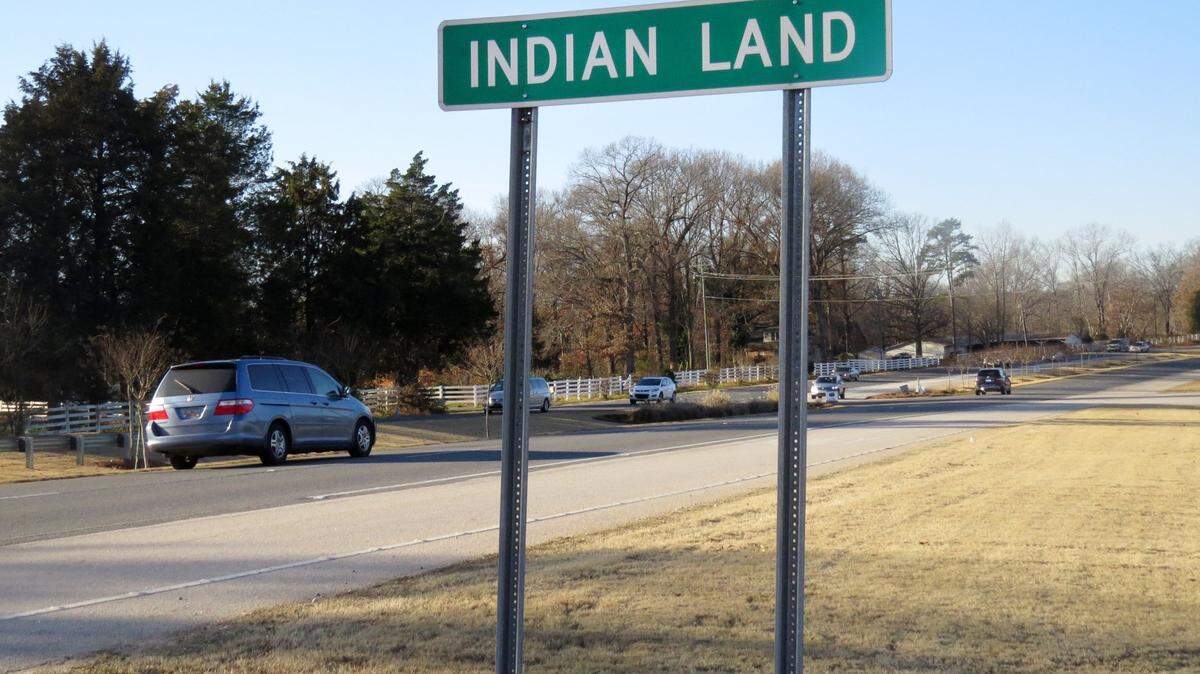
Road experts say a fix for the U.S. 521 and S.C. 160 intersection in Indian Land could take a design they haven’t seen anything quite like in this region.
One option under discussion would allow only right or left turns off of S.C. 160. Any traffic heading straight across S.C. 160, or turning left in either direction off of U.S. 521, would have to drive north or south along U.S. 521 past the intersection and make a U-turn to get to their destination.
David Hooper, administrator with the Rock Hill-Fort Mill Area Transportation Study, said the proposal is one piece of a larger puzzle along U.S. 521, or Charlotte Highway, where growth continues to bring more and more traffic.
“We’re having to get more innovative here to make all the movements work the way they should,” Hooper said.
Charlotte Highway study
Bradley Reynolds with engineering company WSP updated the RFATS policy committee in late February on a months-long corridor study for U.S. 521. It runs almost nine miles from the North Carolina line to Waxhaw Highway. The study includes upgrade recommendations for intersections at S.C. 160, Marvin Road, Jim Wilson Road and Dobys Bridge Road. Some side roads heading into the highway could be widened too.
All options studied involve widening Charlotte Highway to six lanes.
A traditional widening would keep signalized intersections largely as they are.
A superstreet option would have traffic take right turns onto the main highway and drive a distance before U-turning to create what ordinarily would be a straight or left turn movement. It’s similar to Fort Mill Parkway recently had installed at the new Elizabeth subdivision. A third option would be a hybrid of the other two.
Traditional widening for the full corridor would cost an estimated $102.7 million. Widening with superstreets would cost $142.6 million. A hybrid option would cost $114.6 million.
Hooper said those costs are high, but compared them to comparable projects like the I-77 and Carowinds Boulevard interchange upgrades. The Lancaster County panhandle has had a 90% growth rate two decades in a row, Hooper said, and in recent years has grown at unprecedented rates within the region.
“This area, this panhandle, is the single fastest growing area from here to Hickory,” Hooper said.
The corridor study is an attempt to help with growing traffic concerns in the panhandle. More work is needed to nail down exactly what will be done and how it will be funded. The new study began as a search for what road planneers can do, and how much it might cost.
“We wanted to be able to answer those first two questions first,” Hooper said.
Hybrid intersections
Intersections off Charlotte Highway aren’t all the same. Some are largely developed with businesses. Some have more room north or south on the main highway than others. So, the same improvements don’t fit each intersection.
A superstreet concept wouldn’t fit at 521 and Dobys Bridge Road. Instead, traditional widening is proposed there and at nearby Collins and River roads. It’s the same at Jim Wilson Road. At Marvin Road, the superstreet concept seems to make the most sense.
It’s at S.C. 160 where neither works as well. Superstreets tend to work well when a smaller, neighborhood road feeds onto a much larger one. The way homes from Elizabeth in Fort Mill will feed onto Fort Mill Parkway. But S.C. 160 is no small road.
“You have two major corridors here,” said Brian Carnes, who represents Indian Land on Lancaster County Council.
Reynolds said there are a few examples of four-lane highways with designs like the one proposed at 521 and 160. Reynolds isn’t aware of a six-lane version. A proposal shows two lanes each turning right and left onto 521 from Fort Mill to the west. Coming from the east there’s one lane each for right and left turns. Both directions have two lanes of traffic coming off 521 and onto 160.
Charlotte Highway would be three lanes each way, with one more turn lane onto S.C. 160 in each direction.
Traffic counts, other options
The new study looks at bicycle or multipurpose lanes. It looks at intersection design options. It doesn’t detail options for roundabouts.
“It would be a challenging proposition,” Reynolds said.
Roundabouts got a preliminary look, Hooper said, but the volume of traffic on U.S. 521 and six lanes planned there quickly steered the study elsewhere.
“On a high-demand corridor,” Hooper said of roundabouts, “it could have a destructive effect.”
The study looked at traffic conditions out to 2045. Improvements could increase traffic counts in some areas, up to 40% between S.C. 160 and Jim Wilson Road and 25% from Jim Wilson to Rehobeth Road. Other areas would see reduced traffic counts, between 10% and 20% at Marvin, Shelley Mullis and Henry Harris roads.
There isn’t always a straight line, though, between road improvements and decreased drive times.
“If we widen the road, more traffic is there,” Reynolds said. “The opportunity for more traffic is there.”
The study found the average speed difference is almost negligible between doing nothing and any of the three improvement options. The superstreet concept actually adds total and vehicle stop delays compared to doing nothing. The difference is, the improvement models all funnel considerably more traffic through the system.
Without any upgrades, the system would see an estimated 40,900 to 53,600 vehicles per day by 2045. Upgrades like those in the study would increase those daily counts to 45,800 to 67,200 vehicles.