In Charlotte, Laveranues Coles shares story of being abused — and starting over
Content warning: This story contains descriptions of sexual abuse.
There’s a man who saved the life of Laveranues Coles.
And Coles will testify to that.
He just doesn’t know the man’s name.
“I’ve battled with this over the last month,” Coles told The Charlotte Observer on Thursday morning. He was set to speak in about an hour to the Hood Hargett Breakfast Club, a membership organization that hosts monthly meetings in Charlotte and brings in keynote speakers. But before then, Coles was outside the ballroom of the Hyatt Central in South Park, drinking an orange juice, wondering about one of the men who got him here.
“I still see his face,” Coles continued. “I never found out his name. Never reached back to figure out who it was. Now my curiosity has gotten the best of me.”
The man who saved Coles’ life was a police officer. And that life-saving instance happened when Coles was in middle school, after he got into a fight with one of his friends at the time, Coles remembered. The officer who came to his school sat him down and asked him what made him so mad. Coles said what had happened — that his friend had called him “gay” in a pejorative sense, and that angered him. The officer didn’t buy it. He thought there was more.
“I remember seeing his face and the way he looked at me,” Coles said. “Like, ‘Kid, quit lying to me.’ I can see it. ‘I know that there’s something else here other than being upset that somebody said you’re gay.’”
And there was. The officer, Coles said, was able to “see that and drag it out of me.” That day — in middle school, after a fight — was the first day he’d admitted to anyone that he was being sexually abused by his stepfather.
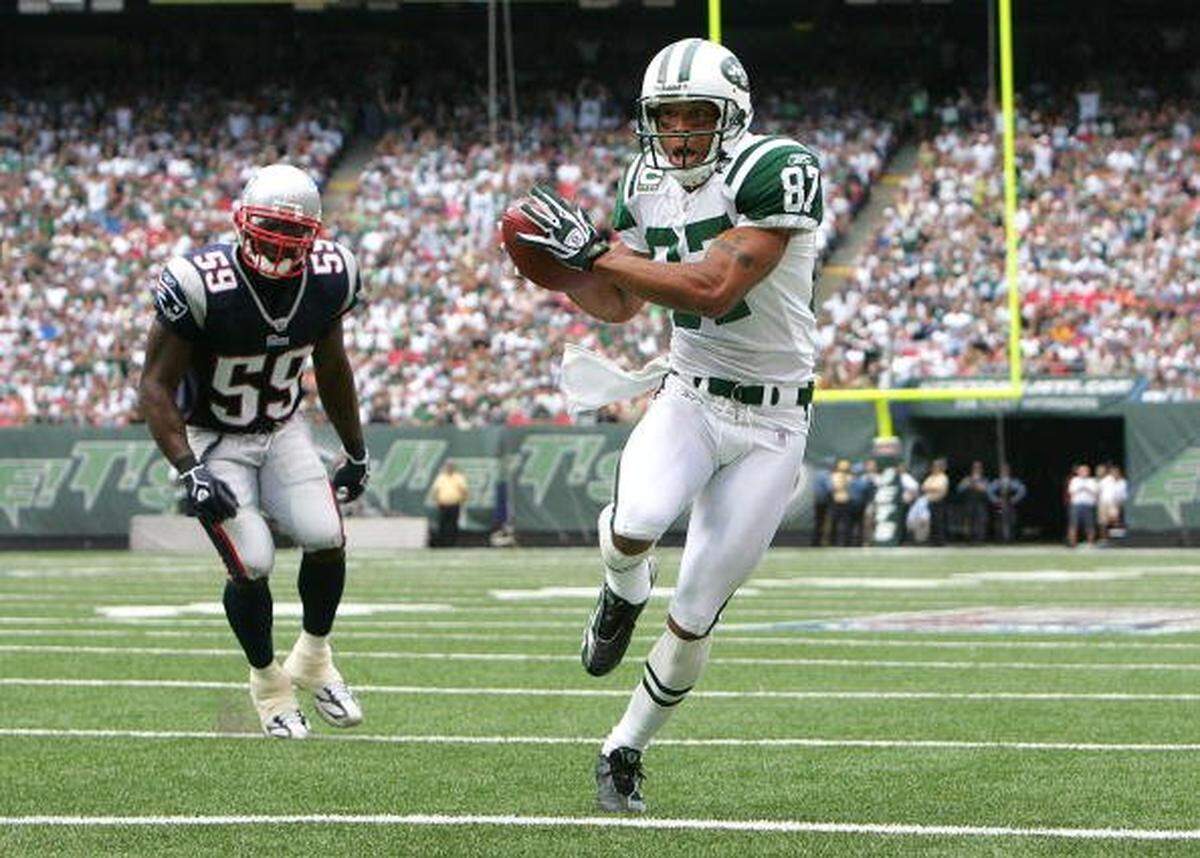
That day would change everything in Coles’ life. It eventually led to the arrest of his stepfather. It eventually helped pave a way for a new life, one that involved football. The Jacksonville, Fla., native was eventually recruited to play wide receiver at Florida State, where he got attention for his talent but also because of his run-ins with the law. He was thrown off the Florida State football team in the middle of the 1999 season and wore his nickname — “Trouble” — into the 2000 NFL Draft.
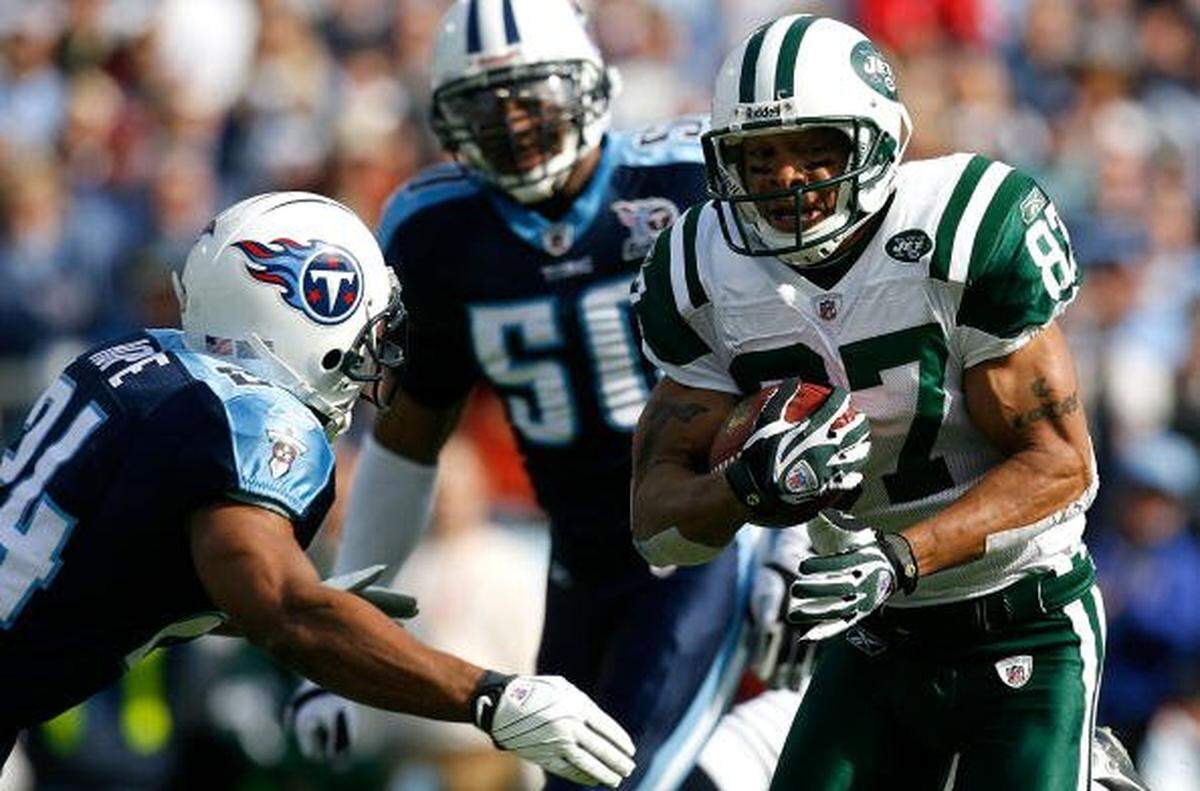
You might know Coles’ story from there. He was drafted by the New York Jets. The Pro Bowl wideout spent the next 10 seasons in the NFL. After football, he explored different ventures: running bars and restaurants, spinning records as a DJ. And then, in 2025, he joined the academy at the sheriff’s department; it was a way to give back to his Jacksonville hometown, a way to give back to the kids who are from where he’s from — who might one day need him.
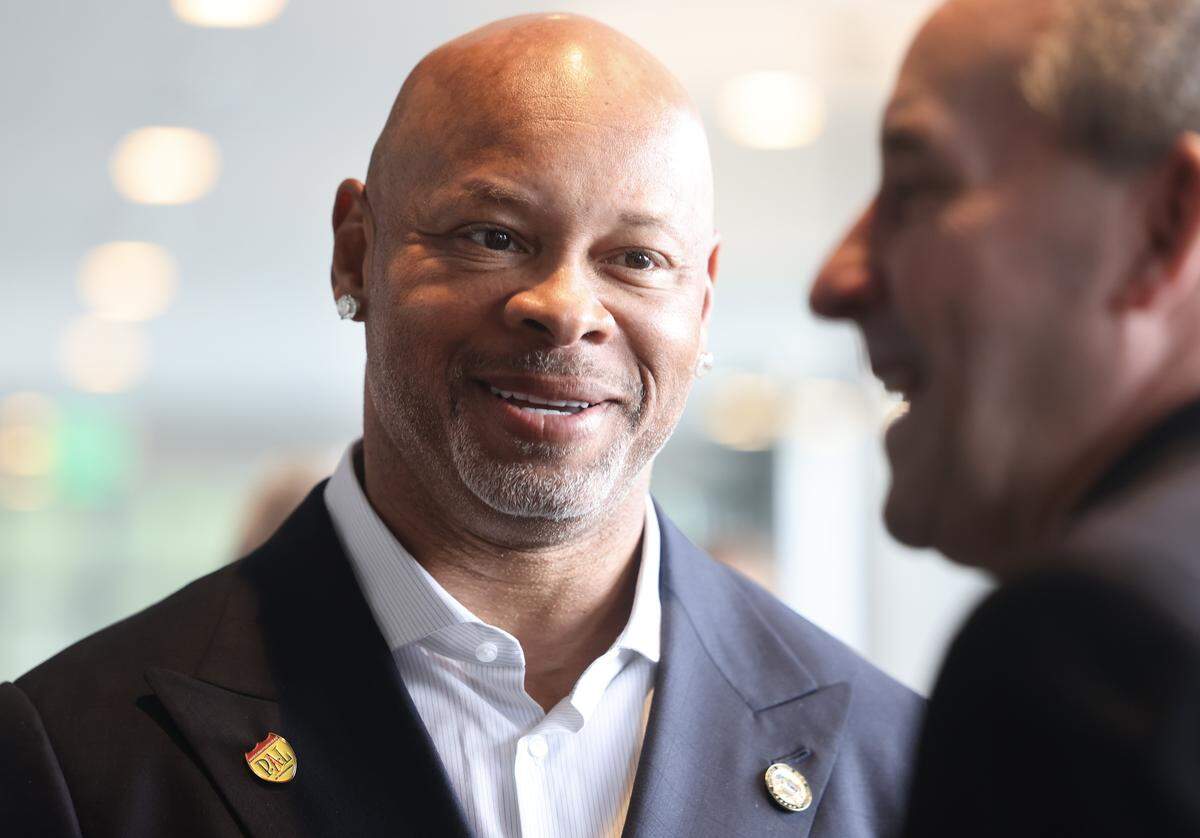
That brought us to Thursday, to that previous conversation, with the 48-year-old Coles set to address a crowd. He’d spoken publicly about his abuse before — all the way in 2005, when newspapers like The New York Times wrote about it and Oprah interviewed him about it. He’s gone into juvenile detention centers to help explain his story to kids who might be going through something unimaginable in their own lives.
But he’d never told his story like this, he said. Not in front of a crowd of strangers.
Before heading into the event, he was asked if such a moment made him nervous. He smiled: “Of course.”
Some of that is natural, he admitted.
But there’s a deeper reason, too.
“The thing is, I never want what I’m doing — and the fact that I’m standing in front of people — (to make) the message get lost and it being about me. And it’s not about me. It’s truly about the people I’m here to talk to. And to impact their lives. That’s what it is for me.”
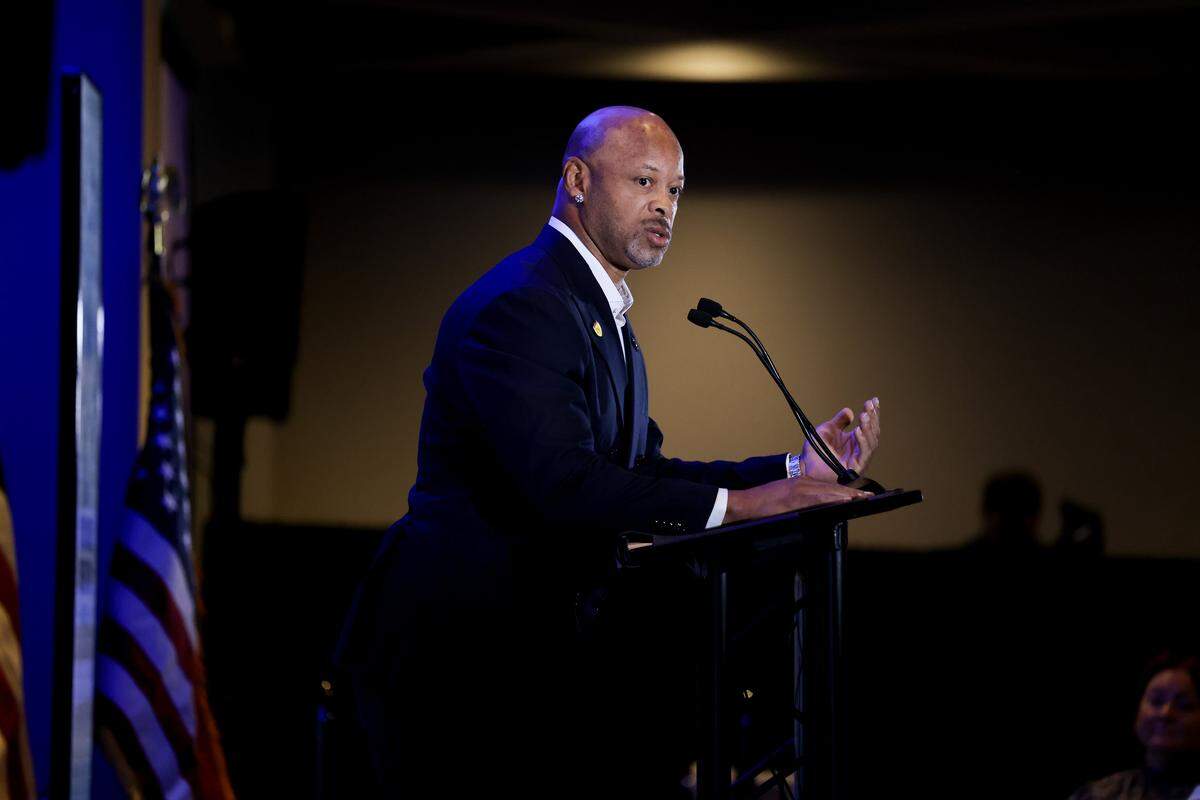
What Laveranues Coles told Charlotte
There’s an empowering ending to the story Coles was telling, Coles insisted. But it started in a dark place. Coles detailed his life growing up in Jacksonville.
His mother, Sirretta, had him when she was 16. She did the best she could but was more like a sister than a mother to him, Coles said. His father, Laveranues Sr., was absent. His grandmother worked late-night shifts at the nearby hospital. And his grandfather was a truck driver who was away from home often as well — and was an alcoholic who was occasionally violent, too, he said.
In Laveranues Sr.’s absence, Coles mother met and married his stepfather, Coles told the crowd in Charlotte. Coles said his abuse started in the sixth grade, when he was about 11 years old. He said that his stepfather threatened him with a gun during the instances of abuse. He said his stepfather threatened to “kill” his mother and sister if Coles ever told anyone. Coles said he “wasn’t the only child” his stepfather “did this to.”
Once Coles confided in that aforementioned police officer in the eighth grade, the stepfather was arrested. Coles did not go into specifics of his stepfather’s whereabouts on Thursday beyond the fact that “I don’t think he served enough time.” A New York Times report from 2005 wrote that Coles’s stepfather was sentenced to nine years in prison after pleading guilty to lewd and lascivious behavior with a minor; the stepfather only served three and a half years, though, and was later convicted of an unrelated felony that imprisoned him again in 2001.
And the horrors, Coles said, didn’t go away even when his stepfather did. They lingered with him, in the decisions he made that got him arrested twice, that got him kicked off Florida State’s football team. They’re still with him to this day, in fact, he said.
“I had basically detached myself from reality,” Coles said. “I didn’t trust people. I didn’t want to be around people. High anxiety. ... I have it now as I’m standing in front of you.”
How people reacted to his story once it was publicized in 2005 still sticks with him, too. He heard unimaginable insults, those of the same ilk that his old middle school friend used years prior, he said.
“When it came out, I got mixed reviews, I’ll be honest,” Coles said. “The guys in the locker room didn’t like it. The guys on the field didn’t like it. They did not take to it very well. It was like, ‘How could you do some eff-stuff like that?’”
He replaced “eff stuff” with a homophobic slur in his speech.
“It was rough,” he continued. “I remember, I think I was playing against Buffalo, and I had a linebacker walk behind me while I was on the field during a TV timeout and elbow me in the back. He said, ‘That (stuff) you did on Oprah was some eff-stuff.’”
Over the years, Coles has been applauded for his bravery of speaking his unimaginable horror. But again, he’s not doing it for himself, he said.
“I don’t know why we don’t have the courage and come out and speak of it,” he said. “I’m a victim of it, and I didn’t have the courage to speak up. But what I want to do is give these kids a voice now, to give the courage I did not have.”
It’s never ‘too late in the game’
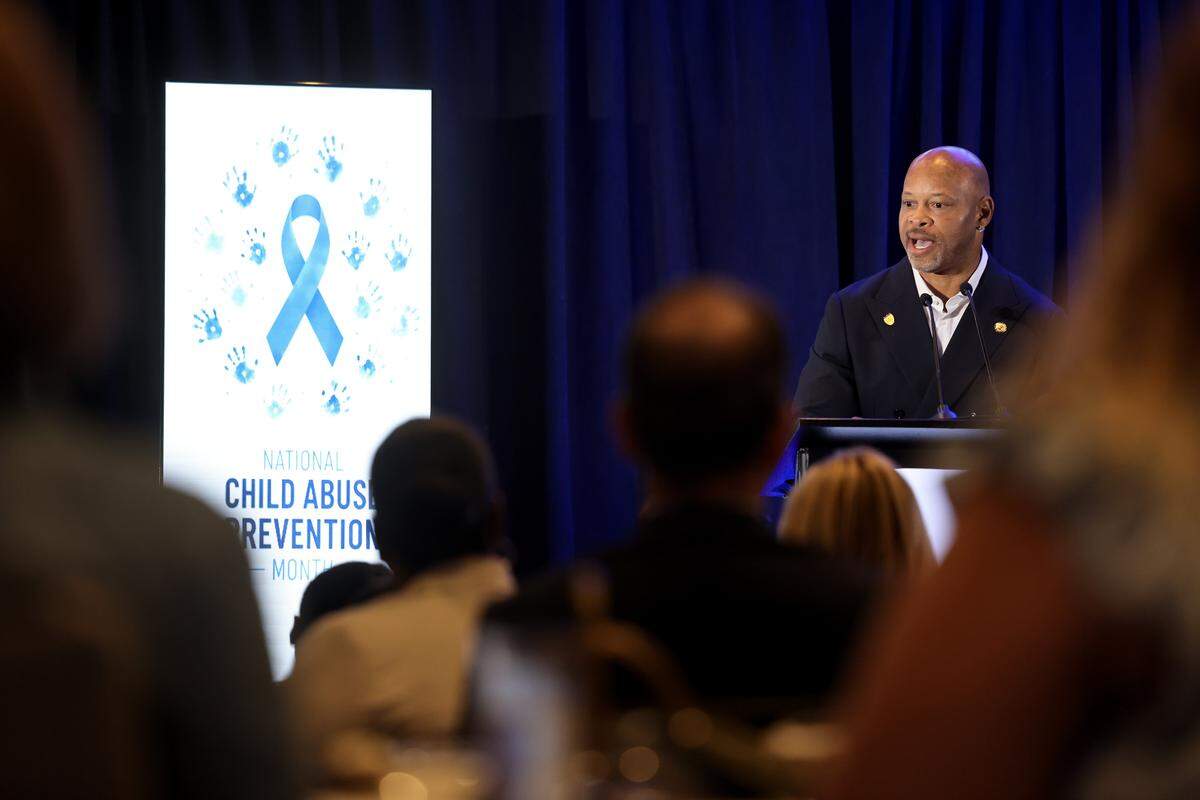
Throughout his 19-minute speech, Coles occasionally took pauses to speak directly to the kids sitting in the front row of the crowd. They are part of the Charlotte-Mecklenburg Police Activities League (PAL). And before Coles took the stage, other leaders did, too — including the chief of the Charlotte-Mecklenburg Police Department, Estella Patterson, and Order of the Long Leaf Pine recipient and deputy chief, Jacquelyn Hulsey.
Statistics were shared, too. Too many stuck out.
As of 2024, one in four girls and one in 13 boys are estimated to experience child sex abuse, according to the National Children’s Alliance website. Survivors of child abuse fail to complete education at higher rates; they struggle to maintain employment; they struggle with social skills and the ability to form healthy relationships. The list is unending.
“Those statistics you spoke about earlier, Ms. Jacquelyn, it says everything about me,” Coles said. “Because of the love, and the people that were in the community, like the people that are in this room, I am able to stand in front of you today and tell God, ‘Thank you,’ and tell you, ‘Thank you.’”
%20(1).JPG "JSO Police Officer L. Coles (1) (1).JPG")
Toward the end of his time on stage — there’s always a Q&A portion at these events — Coles was greeted less by questions and more by words of encouragement, of people being moved, of some survivors in the crowd feeling seen.
One of the people who spoke up was Leonard Wheeler, a former Carolina Panther who now works for the NFL. Through tears, Wheeler said he was sorry that Coles was treated in such a way in locker rooms and on the field — that he couldn’t believe that could happen.
That disbelief has been with Coles all his life. Even on Thursday. Before walking up on stage, he told The Observer that “a lot of these questions that are coming up have never been asked” of him.
“It starts having me ask myself why I never sought the answers to some of these questions,” Coles said. He added, “I ain’t going to say it’s too late in the game. But it is late in the game to be trying to figure this out.”
But it’s never too late to find out. To speak up.
Coles is a walking example of just that.
Community resources for sexual abuse
Resources are available in Charlotte that support families and address the safety and wellbeing of children. See a list of them on the webpage of MeckBetter Together, an official campaign of Mecklenburg County.
This story was originally published May 1, 2026 at 5:30 AM with the headline "In Charlotte, Laveranues Coles shares story of being abused — and starting over."