
Clinton College, a Rock Hill haven for hoop dreams, is in midst of special season
Pistol slip! Pistol slip!
Dee Frazier can enliven a gym with his voice, one that booms and cuts like only a New York native’s can. And he’s doing it now. It’s a Wednesday afternoon in January, a few hours before Clinton College’s first game in over a month, and the team is running through plays it’ll use later that night.
He and his players are at a “shootaround,” Frazier insists, knocking the rust off after a perfect storm of COVID-related postponements and holiday breaks and inclement weather have kept them off the court.
But it’s not going at the pace of a shootaround. Players have built up a thick sweat. So has Frazier.
“Let’s go,” the coach says, his hands on his knees and a practice plan flopping out of his waistband. “Run it!”
So Frazier’s players do, transfixed. Basketball doesn’t rise to religion here. But the game, for all of these guys in the gym on this day, represents the sort of hope and purpose many find in a sanctuary.
On one particular run-through, guard Jaycee McCorn floats a pass to 6-foot-8 Malik Hudges for an alley-oop, and the dunk is met with a whole bunch of smiles and scowls and yells echoing off the empty gym’s walls. Each play feels like a sermon, with its own calls and responses. And each player in this gym seems to have his own prayers, working tirelessly to get them answered.
“It’s really Last Chance U,” Frazier later tells The Herald. He shrugs. “Like, this is your last chance.”
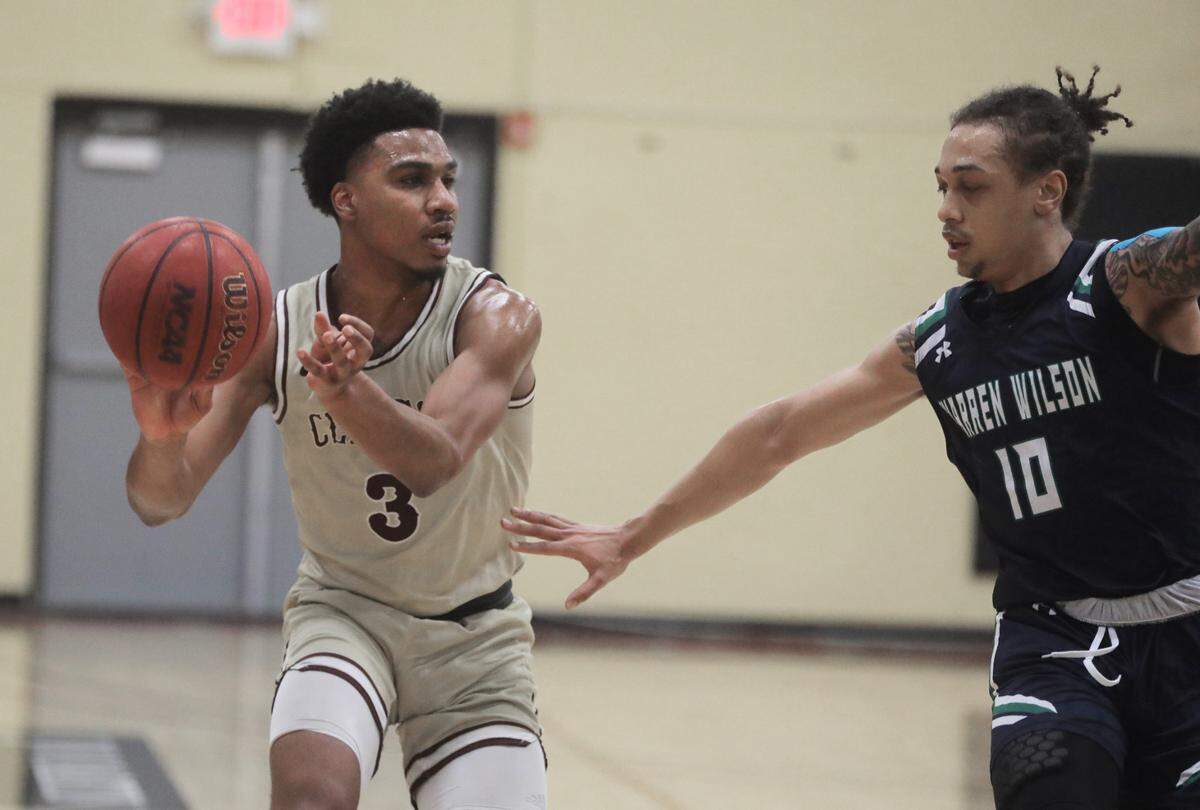
Clinton College is the smallest Historically Black College/University in South Carolina. The school’s enrollment is just over 300 students. Its entire campus, encased in black steel fencing, can be traversed in a two-minute walk.
The four-year private college was founded in 1894 by the African Methodist Episcopal Zion Church after the Reconstruction Era following the Civil War. It sits a short walk down Crawford Road away from the Emmett Scott Recreation Center, once the site of the only high school Black students in the area could attend during segregation. In this way and others, it occupies a profound place in Rock Hill’s past.
It’s a place built on hope, on giving people deserved chances.
And, at present, it’s a place of good basketball.
As of Saturday afternoon, the Clinton College Bears — coached by Frazier, a Clinton College alum — are the No. 2 team in the United States Collegiate Athletic Association, the governing body for 77 small colleges and community/junior colleges across the country. The team has the fourth-leading scorer in the nation — senior guard Devin Campbell averages 21.4 points a game — and also boasts a 15-4 record. And that record is a particularly good achievement given the team’s tough schedule. Take its 74-65 loss to Division II Edward Waters in the Rock Hill Sports and Event Center. (“If there was a point-spread in this thing,” Frazier told The Herald after that game, “it would’ve had us losing by 20.”)
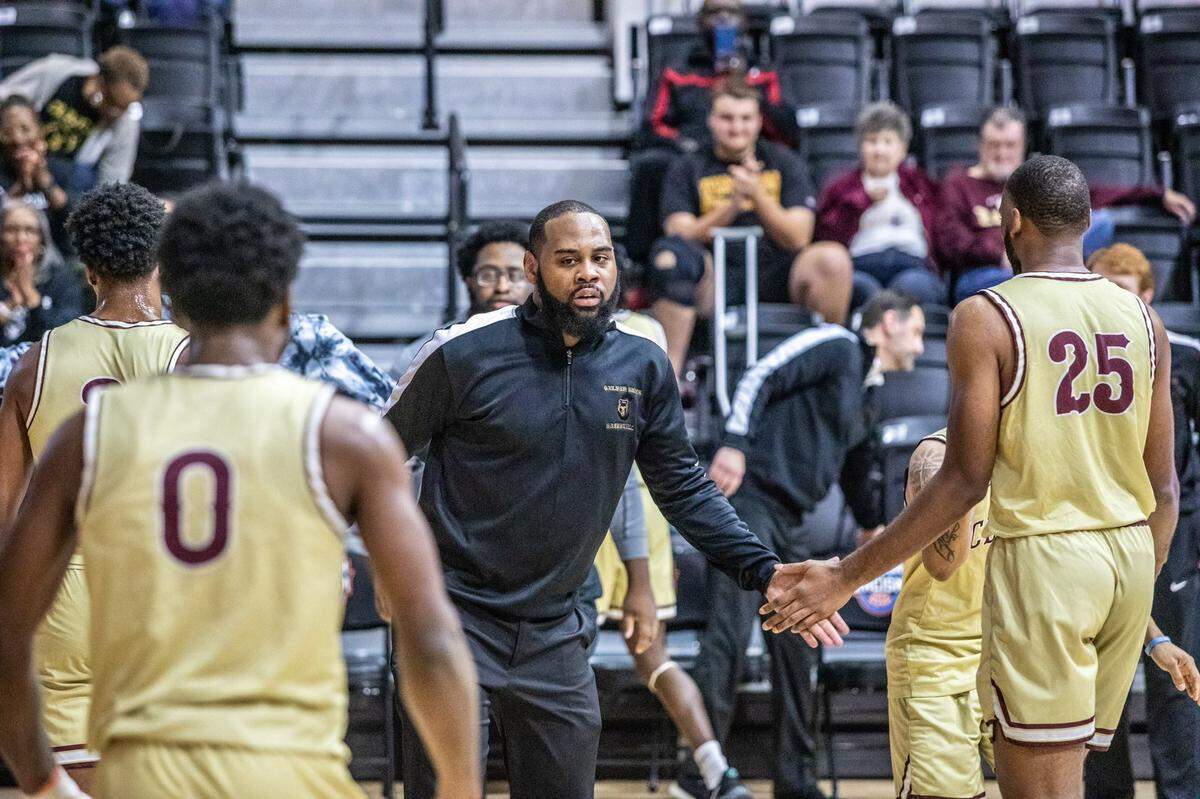
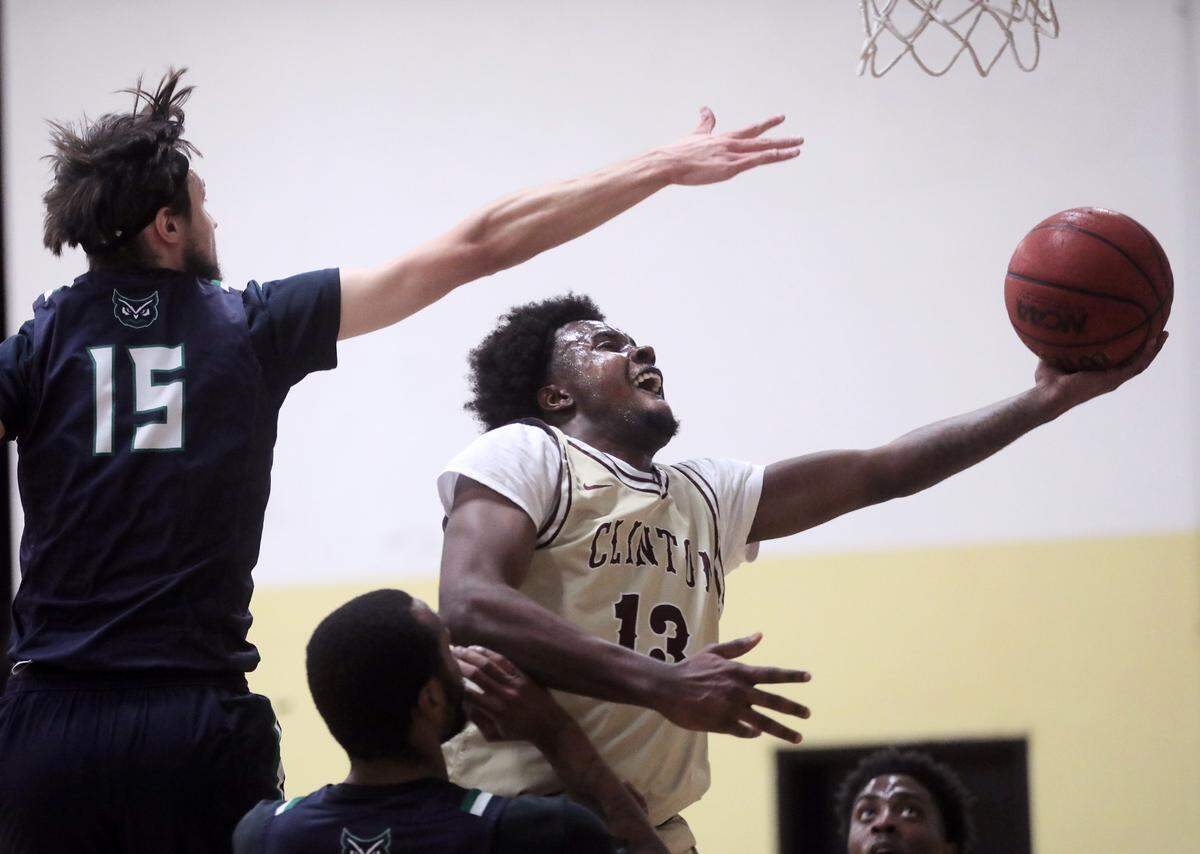
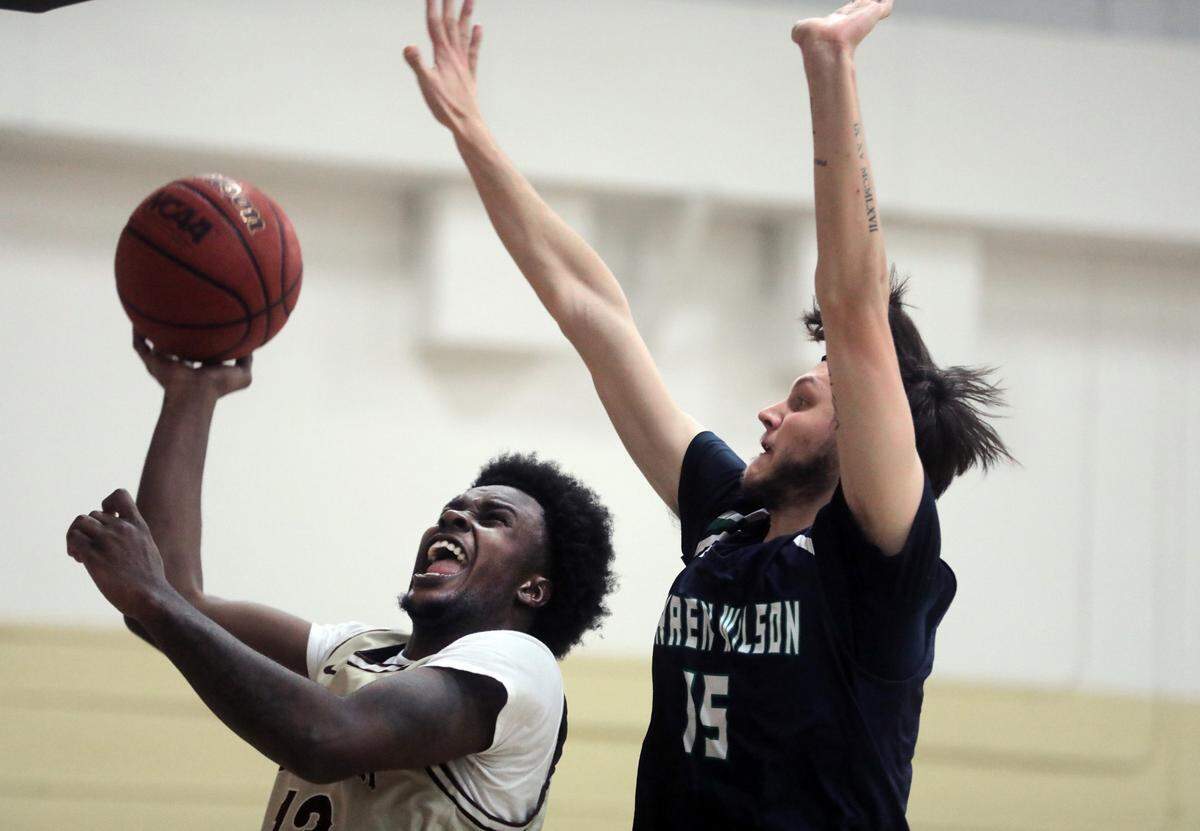
The Bears held their senior night on Wednesday and notched a 91-88 win over Warren Wilson at home. They begin their march for a second-straight Eastern Metro Athletic Conference championship on Tuesday, Feb. 22 at Mid-Atlantic Christian.
“My goal here is to win games and produce great citizens in the community,” Frazier said. “I want to graduate my guys. I want to win games here. I’m also the AD here, so I want to add more sports.” (The athletic department has a men’s basketball team, a women’s basketball team and a cheerleading team.)
“I just want to see Clinton be as big as I thought it could be when I was a student,” Frazier said.
At Clinton College, to its coaches and players and everyone else, basketball represents possibility.
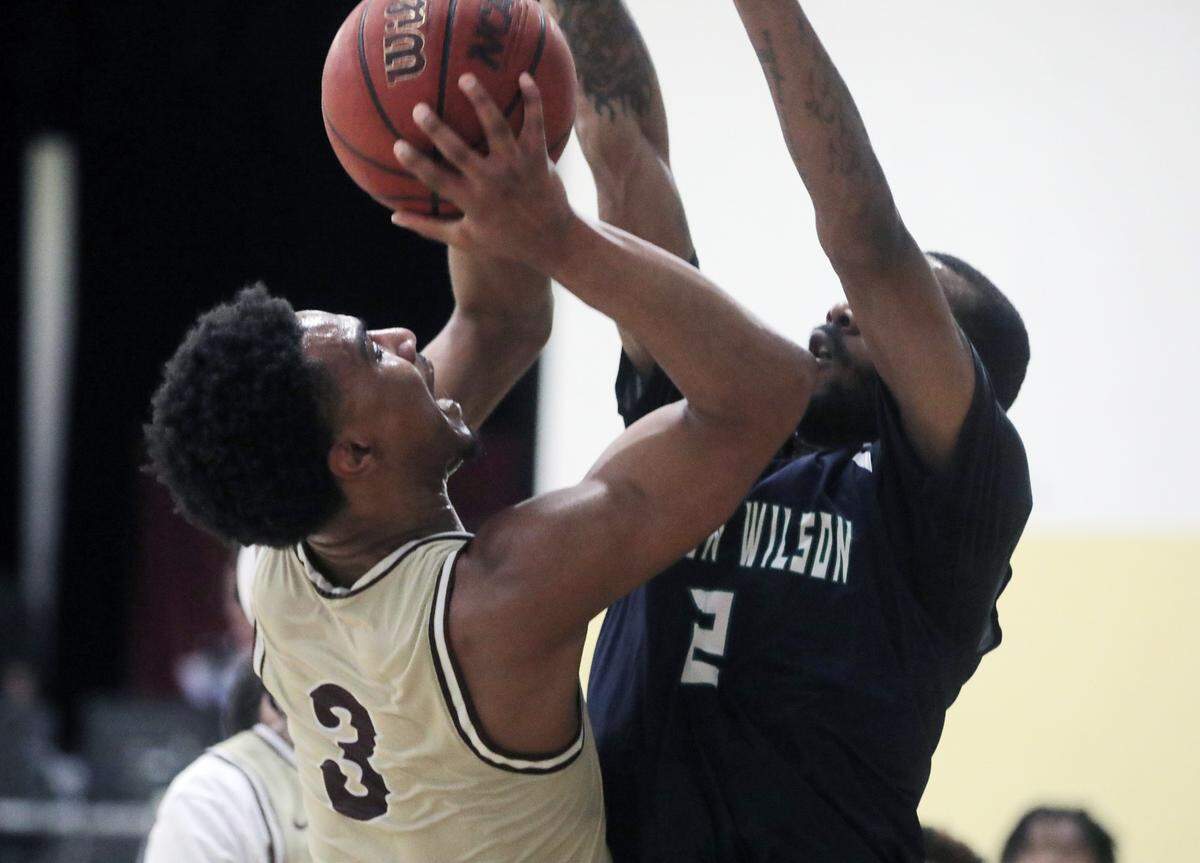
Frazier’s vision for Clinton College
There’s a story of how Frazier found Clinton. In it, you can see what he thinks the school can become. It goes something like this:
Frazier grew up in Brooklyn, New York City, the kind of place where basketball is equal parts currency and cultural phenomenon. He, like most of his friends, played ball growing up and was good enough to start on his high school team and get looks from a few small colleges near his hometown.
Frazier was done playing, though. For two years after graduating from high school in 2011, he was “working, chilling, embracing New York City as an adult.” He was admittedly lost.
That fall in 2013, after hearing about Clinton College from a friend, he bought a one-way plane ticket and set his way down to Rock Hill. His parents, admittedly a bit confused where this jolt of initiative came from, were supportive.
Clinton was an open-enrollment school. It provided on-campus housing. It was also close to Charlotte, the home at the time of the Central Intercollegiate Athletic Association’s end-of-year basketball tournament — a show of 12 NCAA Division II HBCU teams that spans a weekend in March. And that was a compelling pitch: “Get an off-campus apartment,” Frazier recalled hearing from some of his friends back home, “and we’ll come crash at your place every March.”
So Frazier went. He didn’t give Clinton a phone call, no heads up of his arrival, before buying a plane ticket without any plans beyond a vision he hadn’t shared with anyone else. And yet, duffel bag in hand, he was enrolled into classes the day he arrived.
“Like I tell everybody, this institution pretty much saved my life,” Frazier said. He said this leaning back in his office chair, where he rarely works in this pandemic-ruled, work-from-where-you-sleep world. But he looked like he was at home nonetheless. “I came here when I didn’t really have anything. And just like how I came here and didn’t have nothing, my guys are the same way. A lot of these guys didn’t have nothing, and they ended up here.”
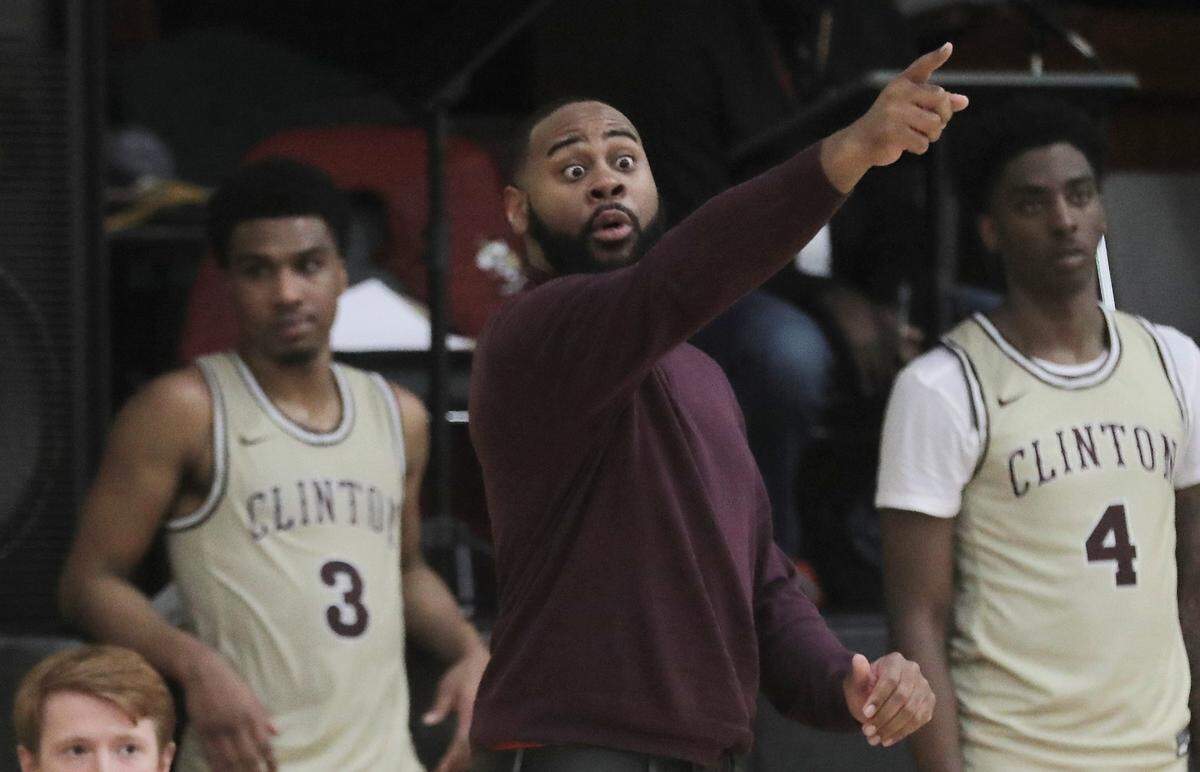
Clinton College players share Frazier’s vision
Frazier’s story to Clinton as a student is unique. And yet it resembles the stories of how a lot of other students find the small college.
When Frazier earned the head coaching job at Clinton in 2020 — which, to its credit, is another long story of serendipity, one that saw him go from Clinton as a regular student, to Valdosta State as a student assistant coach, to Clark Atlanta and then Little Rock as a full-time assistant — it was clear he could connect with the players like others before him couldn’t.
He was, in other words, an extension of his players. He was an extension of their dreams. Clinton gave him a chance, just like the school was giving his players one. Ask the players about how they got to Rock Hill’s HBCU, and without fail, they smile and sigh: “It’s a long story …”
“It’s keeping my dream alive,” said Cameron Shannon, a sophomore guard from York.
Shannon sees a bit of himself and his own story in Frazier, he said. Once a standout at York Comprehensive High School, Shannon arrived at Clinton as a regular student, a bit frustrated that his basketball career didn’t land him at a Division I school. But a year into college, he realized he wasn’t ready to give up on his hoop dreams.
Now, Shannon is an important contributor for the Bears. He’s shooting over 41% from 3-point range and is averaging 21.4 points a game. (That’s the same as Campbell, one of the nation’s leading scorers. But Shannon isn’t eligible for the USCAA scoring title because he missed a chunk of the regular season due to an injury, Frazier said.)
Shannon hopes to one day play professionally somewhere.
“This is everything to me,” Shannon said. “I take this very personally. All I want to do is win and also do something good for my family.”
Not all the players have their sights set on continuing to play basketball. Others want to start their own businesses or are otherwise ready for a career outside of basketball.
It’s not lost on the players that for all that Clinton provides them, they can also provide for Clinton, too.
“I got back on my feet here,” sophomore guard Jimmy Brooks said. “This is the place where you get back on your feet and do what you gotta do. But honestly, I think it will grow. Because we’re going to win more and more. We got some coaches here who’ll continue to bring talent here. And the coaches we have, they know nothing but success, so that’s all we know, too.”
The same belief is shared by JC McCorn, a starting guard on the team.
“I believe that we can be a high-level D2,” McCorn said. He moved to Rock Hill as a senior in high school and graduated from South Pointe High School in 2018. Out of high school, he went to Livingstone College, a Division II school in Salisbury, North Carolina, before transferring a year later to Clinton in 2019.
His father, Lester A. McCorn, is the school’s president.
“I take pride in that,” McCorn said. “When I decided to transfer, (my father) wanted me to come here. So I take on the responsibility of me being his son. I take the responsibility of being a leader, but also sharing his vision and trying to share his vision with the other students. And getting them to buy in. And it starts with basketball.”
Frazier’s final vision
Ask Frazier of Clinton’s plans for the future, and he can give you a list. Some things have already been checked off: newly padded chairs, new bleachers, new uniforms for the men’s and women’s basketball teams and more. Some of the loftiest ones could be achieved this year — like winning a USCAA national championship.
But other goals are years away.
Frazier said the school is in the midst of applying to move up to the National Christian College Athletic Association (NCCAA). Once that happens, the school might one day be able to move up to the National Association of Intercollegiate Athletics (NAIA) — a league widely known to be comparable to the NCAA’s Division II. Its national tournament is on ESPN every year.
The growth of the basketball program aligns with the future goals of the school.
“It shows the trajectory of the college,” Lester McCorn, Clinton’s president, told The Herald.
For decades, including when Frazier was a student, Clinton College was a two-year institution. In 2018, Clinton became a four-year institution, joining more than 100 four-year HBCUs in the country and signaling that it was ready to ascend.
A few months ago, Lester McCorn said, school leaders had a retreat, “and we talked about how every facet of the school helps grow the school. It helps attract students. Attract money. And sports help.”
“You know, right now, all we have is basketball,” McCorn continued. “So that’s why this is so important. Because the players and the program become ambassadors for the college.”
Frazier, one day, says he wants Clinton to “be put on the same pedestal as Winthrop is in the city of Rock Hill.”
This past week, Clinton honored its seniors in its final home regular-season game before playing the game and winning by three. Their long-term goals can’t be reached without nights like these. They can’t be reached, either, without days like those intense January practices, incrementally moving the needle, of practicing alley-oop dunks and shooting free throws and everything else.
On one of these plays on that January “shootaround,” Shannon caught a pass, pump-faked from the corner, took a dribble in and fired up a left-handed jump shot. When he let the ball go, the gym went quiet, and you could see him focusing on the rim.
It felt as if it was a real game, score tied, clock winding down, as if that shot could be his last.
This story was originally published February 20, 2022 at 5:00 AM.
.jpeg)