
Northwestern High School’s first state title in the spotlight on its 50th anniversary
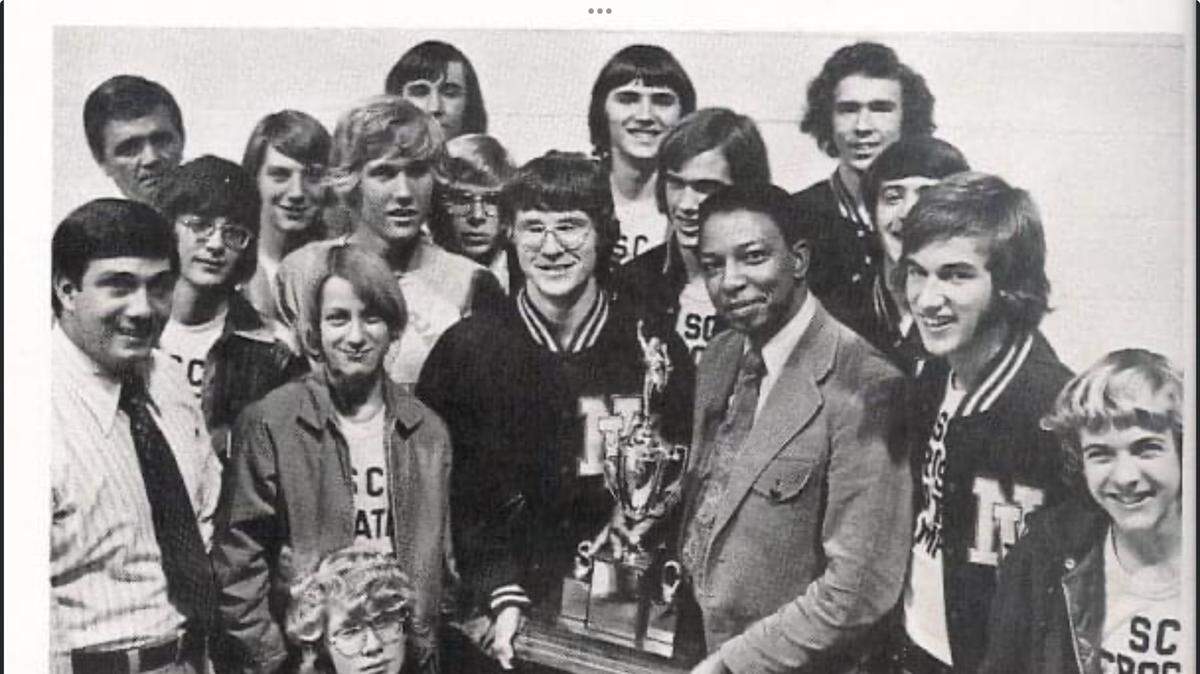
Robert Beaty laughs at the memory.
It was a frigid December Saturday in 1973 — cold and rainy with temperatures barely creeping above freezing — at the South Carolina cross country championships in Sumter.
“The area our team had been assigned was in a low spot in that field, and I looked down, and I had standing water up to my ankles,” Beaty, a 1974 Northwestern High School grad, said. “At that point, as soon as you take your sweats off, it’s over. Your sweats were soaked.”
Northwestern’s boys’ cross country team arrived knowing it was the best team in the state. After losing its season-opening meet against Irmo, the team didn’t lose again that year.
Even against defending-state champion Brookland-Cayce on its home course, the Trojans beat the Bearcats two weeks prior to the state meet.
“(Brookland-Cayce’s home course) turned out to be a four-mile course,” Beaty said. “It was basically nothing but hills and was in that deep sand of the Midland region where it was a dirt road that had two tire tracks on it and everything else was soft sand. And we were just wondering, ‘What in the world good could come out of this?’
“But as it turned out, we beat them handily that day. I’ve always thought that they might have designed that course with the idea that we might be overwhelmed or taken aback or something like that, and it would give them a mental advantage going into the state meet. I have no proof of any of that, but that’s in fact what it did. When we beat them handily there, that certainly set the tone and showed that we were legitimate, and we were ready to challenge them for state.”
Ten days later, Northwestern won the 1973 state meet handily with 70 points, beating runner-up Brookland-Cayce by 29.
Northwestern’s top runner, John Schwartz, finished sixth. Beaty finished 12th.
One spot behind Beaty in 13th was Ronnie Covington.
It takes a team
Covington was typically a short-distance runner, participating in the hurdles and the 400-meter dash on a track.
But, he said, he got into cross country “because that’s where my buddies were.”
The Trojans shook off the conditions during the state meet, but once they crossed the finish line, the runners began to succumb to the near-freezing temperatures.
“Johnny Schwartz fell down at the finish line,” Covington said. “And he couldn’t talk. His tongue was frozen. I went to pick him up, and of course, I was weak and tired, and I fell on him. Robert was right there. Robert had the presence of mind, instead of trying to pick us up, to go get Coach (Bob) Jenkins to stand us back up. The course? It was horrible.”
Northwestern’s six runners all finished in the top 30 at the meet, with Jeff Mills finishing 18th and his younger brother Kevin 29th. Jack Landsford finished one spot back in 30th.
High-end coaching
It was a major achievement for Northwestern, then just 3 years old, to already put its first state trophy in the display case, and the team pointed to their head coach as the reason they got so far so quickly.
“(Jenkins) was supportive and encouraging and he believed in us, but he believed in everybody,” Covington said. “Even not in cross country, running high hurdles and all, he was supportive and gave you instruction, but he kind of pushed you on your own and said, ‘OK, now you take over.’
“He’d find what you needed, and he gave us that mindset that we could do whatever we put our mind to,” Convington said. “And I honestly believe that follows you for the rest of your life.”
Jenkins is one of the greatest high school cross country and track coaches in South Carolina history. After his final retirement in 2005, he had amassed a 1,021-185 record, with seven state championships.
Jenkins was hired as the head track and cross country coach at Northwestern when the school opened in 1971. He had previously worked at Rock Hill High School.
During his 24 years at Northwestern, Jenkins won 14 regional track and field Coach of the Year awards, 10 regional cross country Coach of the Year awards, six South Carolina Track Coach of the Year awards, and four South Carolina Cross Country Coach of the Year awards.
Jenkins is also a founding member of the South Carolina Track and Cross Country Association.
But before all of the accolades and achievements, Jenkins was known as someone who cared about his student athletes — and always pushed them for success.
“He devoted his attention to track and cross country,” said Doug Echols, who served as the athletic director at Northwestern from its opening to 1976. “He had a great love for that and was an outstanding track and cross country coach. He loves kids. He liked working with young people, and he devoted himself to it. It was fulfilling his passion for dealing with young people. And that’s one reason you end up with quality state championship programs like he was able to produce early on because he got those kids excited about running, and they follow through on that.”
Laying a solid foundation at Northwestern
It was an exciting time to be at Northwestern, Echols said.
Following the 1973 cross country state championship, the track and cross country teams won four more state championships over the next two seasons.
Echols said the stability and expertise that Jenkins brought, combined with winning its first state championship early, had a trickle-down effect that led to all sports at Northwestern carrying a standard of excellence that continues to resonate.
“I think winning lifts all boats,” Echols said. “I think it helped to create an attitude and atmosphere at the school. It helped create a culture. It didn’t matter which sport it happened in. It just happened to be track and cross country, attributable to Bob Jenkins, and good athletes. That carried over to other sports because everybody wanted to be successful, and I think it contributed to the whole attitude that the new high school had.”
Beaty, who now lives in Maryland, said that the members of Northwestern’s cross country team during that era still maintain contact with one another.
The group is planning a meet to celebrate the 50th anniversary of the state title sometime this winter.
“These are certainly friendships that have lasted a lifetime,” Beaty said. “I think having that experience early in your life where you set a goal, work really hard, pull together with people and achieve that goal. It certainly makes an impression and sets this tone that this can be done. Now it’s time to go out and do it again in some other aspects of your life. Other people have said this to me, too, that it certainly was a big experience to have both individually and collectively as a team.”
Jenkins died in 2013, and Schwartz in 2016, but, Beaty said, they’re still as much of a part of the group as if they had been alive.