When the next wave of new business hits the York County region, will we be ready?

What will the next wave of new jobs bring in York, Lancaster and Chester counties? Or, what will it take to go out and get them?
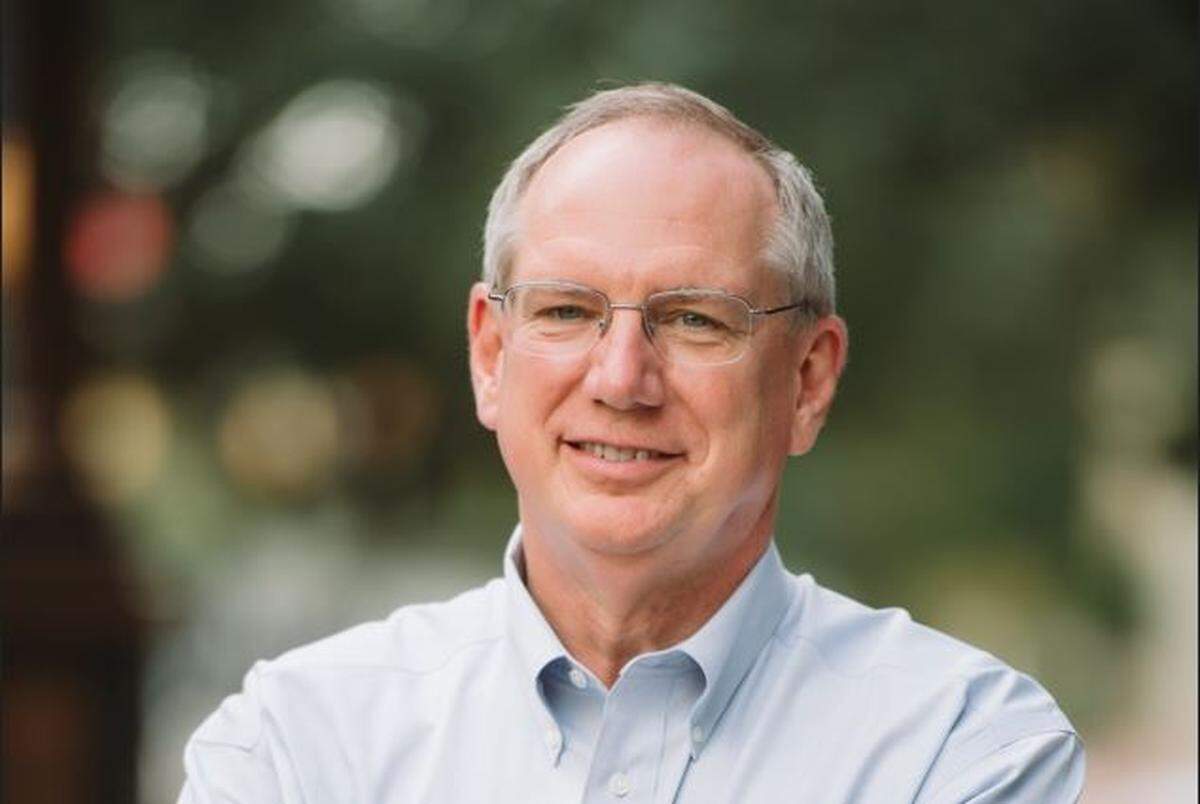
Mark Williams founded Strategic Development Group more than 20 years ago. He’s worked in the state commerce department and privately. He’s an expert on corporate site selection, having worked in 40 states last year. Strategic Development counts several nationally and regionally known companies among its clients in search of relocation or expansion opportunities.
Williams addressed the I-77 Alliance at its recent annual economic development summit. It’s an area Williams knows well, and one primed for continued economic growth.
“It’s about pumping wealth into the economy,” Williams said.
York, Lancaster, Chester appeal
The I-77 Alliance covers five counties. Growth since its 2013 formation now puts it in York, Lancaster, Chester, Fairfield and Richland counties. It’s the most recent of several in-state alliances that promote large scale new job growth, but Williams sees something immediately unique here. The I-77 Alliance is the only one in South Carolina connected to a global airport -- in Charlotte.
Location is a main reason why, under a previous state secretary, Williams worked on five potential mega site locations before settling on one in Fairfield County. That 2019 announcement came with expectations of spillover jobs in the tri-county area once a large manufacturer locates on 1,500 acres set aside for it.
“It’s between Columbia and Charlotte,” Williams said. “You can still put the land together and there’s great potential as the pinch comes from Charlotte.”
Properties along the interstate here range from corporate headquarters to rural manufacturing or distribution opportunities. Much of the area boasts productive job and population growth dating back a decade or more.
Since 2017, the Alliance area announced $2.8 billion of investment and 13,300 new jobs. Chester County has the most new business value at almost $700 million. York County has the most announced jobs at more than 4,600.
“There’s a lot of productivity here,” Williams said.
Williams worked to move Nutramax Laboratories from Maryland to Lancaster County, where the company has expanded multiple times. His company was a finalist for the E&J Gallo wine company project that later selected Chester County. In interviews, Williams touted the L&C Railroad as a highlight of this area.
Williams works in South Carolina now about 20% of the time, but began work in the state he sees as committed to new business growth from region to region, administration to administration.
“It’s that team that wins,” Williams said. “And South Carolina, and this area, has done better at that than most any other state in the country.”
Growth sectors
Williams said the best economic development is specific and targeted. An attractive area like this should recruit the kinds of business it wants. So, what’s poised to come?
“In 30 years, we’ve never been so busy,” Williams said. “The automotive sector is hot. The battery sector is hot. Somehow we got involved in semiconductors. It’s the busiest I’ve seen.”
Williams said by 2030 about 30% of the world’s automobiles will be electric.
“Gradually internal combustion engines are going to come down,” Williams said. “EVs are going to go up. I don’t think internal combustion engines are going to be completely replaced, but the trend is strong.”
The economic impact for new job recruiters is related.
“We’re seeing battery projects related to EV,” Williams said. “We’re seeing projects for components to batteries. This is a new frontier.”
About $70 billion of new semiconductor projects have been announced recently in this country, Williams said. There are more battery and battery component plants coming.
“In terms of a sector to be targeting,” Williams said, “I think that’s a pretty good one.”
There has been some public backlash to e-commerce facilities, but Williams still sees a compound annual growth rate of almost 28% there. The industry grew by almost 32% in 2020, when it did $760 billion in sales, Williams said.
Some communities around the country have said they don’t want more e-commerce distribution sites, while others may welcome them.
“I don’t know where the counties in the Alliance stand on this,” Williams said. “Maybe some of the property is appropriate for that, maybe not. From my perspective, for good advanced manufacturing projects, land is being cannibalized by these distribution projects.”
Another big industry is environmental. Williams said his company has about $2 billion in projects for companies that want to reduce carbon footprints.
“There is a massive recycling business going on around the country that’s got to be impacting this region,” Williams said.
Williams said so many companies are looking to grow, he doesn’t envision a slowdown even amid economic uncertainty.
“They’re out there,” Williams said. “They’re looking. They’re making decisions. My sense of our clients’ stance generally is, well there is a recession or there’s about to be a recession, but we’re just pushing through it. We’re going to get on the other side.”
Global recruiting challenge
Economic and political events challenge all areas when forecasting business. There’s war between Russia and Ukraine. There’s Taiwan. Williams said he’s been in Taiwan almost a dozen times, and see missiles launched above to send a message in the area contested by China.
“I just sense that this message today is a little firmer,” Williams said.
Williams points to 90% or more of the world’s high end semiconductors produced in Taiwan.
“The world would shut down if Taiwan shut down,” Williams said.
The promising electric vehicle and battery component markets come with the caveat that China controls more than three quarters of the global manufacturing capacity, including needed raw materials like manganese, cobalt, nickel and lithium.
“China controls this,” Williams said. “We control just a sliver of it.”
Then, there’s COVID-19.
There were 120 months of continuous growth in the U.S. economy before the pandemic, Williams said.
“All that time buildings and sites were being taken up and used, taken up and used,” Williams said.
During the pandemic there was a decline in inventory nationwide. Large-scale employers, like road planners the past two years, have to forecast which COVID changes may last. Recruiters have to create places for companies to look, Williams said, or risk missing the companies that may want to come.
“If there is no site or building — unless we just go 100% remote somehow, which I don’t think is going to happen — if the investment and time required to create sites is not there, there’s going to be an issue,” Williams said. “You’re not going to have prospects. They’re just not going to look.”
Domestic business recruiting
Other challenges are domestic. Natural gas prices are up three times what they were less than a year ago, something Williams said would heavily impact a steel mill.
“Workforce has been an issue, remains an issue, is becoming more intensified as an issue,” Williams said.
Employers need workers with higher and higher levels of sophistication to run machines, Williams said. Workforce is at the most critical level in his 30 years picking sites. Payroll and employment are back from the pandemic, Williams said. But while the number of job openings nationwide is high, the number of unemployed seeking work isn’t.
“There’s underemployment going on,” Williams said. “There’s people that aren’t working that might could be working. And it’s a real struggle. Our clients are having a real struggle.”
For all the client confidence amid recession, Williams notes with the past three recessions all the jobs didn’t come back once they ended. There will be pressure to mechanize and automate.
“They didn’t come back,” Williams said. “They were replaced by automation. That’s going to happen again this time.”
Then there are financial incentives, a key piece noted by several large employers who moved to the area in recent years. Typically tax incentives are tied to new jobs. With more automation, Williams wonders whether they may be tied to technology or capital investment. Financial incentives, as part of larger costs, are significant in the site selection process.
“That isn’t always the site that’s selected, but those numbers are always run,” Williams said. “Typically the most financially attractive site is going to be selected.”
Recruiters have to balance all those variables, knowing even one gaping hole -- from utility questions to financial support or incentive issues -- can tank a project quickly.
“We’re not going to go way down the line with our clients talking about something that may or may not happen,” Williams said. “We’re risk averse. That’s a great way to get fired. We want to talk about what works, what we know is going to work.”
What York, Lancaster, Chester need
Counties within the I-77 Alliance have their own economic development teams. Yet there’s value in thinking bigger, Williams said.
“Regional alliances are powerful things,” Williams said. “They’re powerfully positive.”
If they don’t overlap resources and can maximize strengths, economic developers can set this region up for 20 to 50 years of continued prosperity.
“Site development is No. 1,” Williams said. “You’ve got to have a pipeline. That pipeline has to match your targeted companies.”
An educated work force, and one knowledgeable about manufacturing, is important.
“It doesn’t just start at 18,” Williams said. “A lot of water under the bridge at 18.”
Utilities, banks and other parts of the private sector have to buy in with the vision of economic development. Sites are quickly dismissed if there are too many uncertainties.
“That’s how we cut sites,” Williams said, “when these parameters aren’t able to be met.”
Yet the payoff for economic development done well, Williams said, is worth it. Bringing in new, large business is like an iceberg. There are impacts in schools, social settings and communities well below the water line of jobs and economic investment.
“It’s about creating a fire,” Williams said. “It’s about math that says one plus one is three. That’s what our business is about.”
This story was originally published August 21, 2022 at 7:00 AM.