Fort Mill residents voice concerns over proposed plan to add 800 jobs to York County
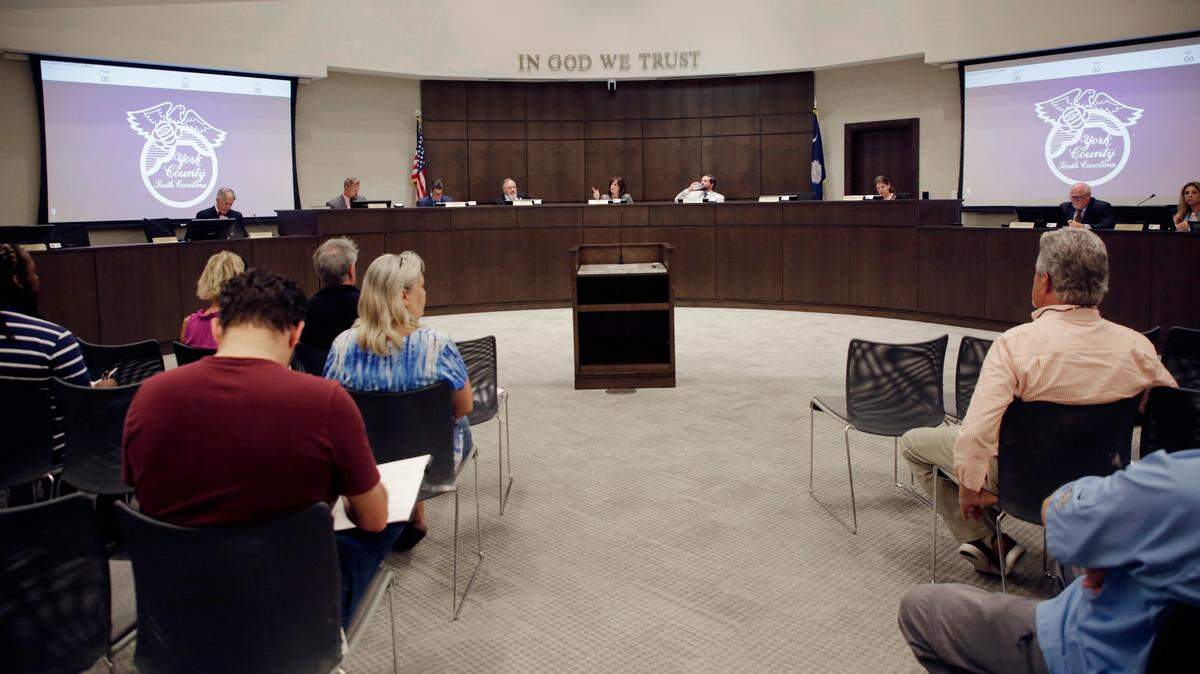
Fort Mill residents say it’s not just the promised jobs they’d expect a large solar manufacturer to bring. There also would be traffic -- residents say more than the area can handle.
“We can’t take that,” said Dee Hodnett, who lives near the proposed manufacturing site on Logistics Lane, off U.S. 21 not far from the Carowinds corridor. “It’s already busy with just us.”
York County has a proposed agreement that would create tax incentives for solar company Silfab. The company would bring a proposed 800 jobs and $150 million investment to 7149 Logistics Lane. York County Council passed the first of three votes needed to finalize the agreement on Monday night.
A stream of residents asked council either to not allow the new manufacturing operation or to wait until planned road widening on U.S. 21 is complete. Residents shared environmental concerns with planned school sites beside the property, and with solar panel manufacturing in general.
But their main concern was traffic.
“Those are small roads, and they’re already beat up,” said Bradford Smith, who called U.S. 21 a disaster now that will take years to widen.
Denise Bach has been a resident within a mile of the proposed site since 1984. Bach called the plant a terrible idea and said road widening is a need dating back decades.
“Commuting to Charlotte is a nightmare,” Bach said. “The longest part of the commute is just getting out of the neighborhood.”
Left turns off two-lane roads can back up traffic, something Tom Bach said the plant will only make worse given the trucking it will require.
“The trucks, it takes them a lot longer to turn,” Tom Bach said.
Brandon Whitley is a seven-year resident of Regent Park who has seen the golf course transition to new homes, condos and apartments.
“It’s been progressively picking up steam,” Whitley said of area development.
An Amazon distribution site across the state line isn’t far, which Whitley said adds traffic. U.S. 21 is a common route any time there’s a wreck or backup on I-77 almost parallel to it.
“Rush hours, it’s a parking lot,” Whitley said.
Environment, tax deal
Wally and Esther Buchanan have more concerns than just traffic. Wally said his family has been in that area since 1941. The tax incentive deal would allow the solar company to pay a lower rate than what his family has for some properties.
The deal allows a 4% tax rate for the company for 30 years. Typically, manufacturing pays a $10.5% rate.
“They should be paying 10% for the privilege of being in our area,” Wally Buchanan said. “We’re not selling something ugly.”
Esther Buchanan was concerned about the Fort Mill School District’s ongoing plans for a new elementary and middle school in the same area.
“Can you guarantee us safe air, safe soil, water?” Esther Buchanan said.
Several residents shared concerns about the pay at the new facility. The agreement lists many of the new jobs starting at $17 an hour. Fort Mill home prices have increased considerably in recent years. Regional real estate group Canopy Realtor Association lists the average sales price of a Fort Mill home in January at almost $547,000. A figure that’s up almost 18% in a year.
“I don’t think they’re going to be able to afford living in our neck of the woods, so that’s a concern,” said neighbor Dee Hodnett.
Karen Sweeney lives across the street from where the plant would go. Sweeney sees operations as a constant concern.
“You’re talking seven days a week, 24-7,” Sweeney said.
Will a deal happen?
The typical tax incentive deal for a large company coming to York County takes three votes. They’re often unanimous and take place with little, if any, debate apart from closed door executive sessions where council hears plans and legal advice.
The solar plan hasn’t followed that route. Last month council deferred the first vote until Monday night amid pay scale, traffic and other concerns.
On Monday, council members Debi Cloninger and Tom Audette voted against the first reading for the tax deal. Both members serve the Fort Mill area. Cloninger serves the area where the facility would go.
Even among somewhat controversial decisions or those that eventually fail, the first reading often passes unanimously to allow council, the community and developer time to iron out details.
Chairwoman Christi Cox stressed that Monday night’s first reading vote, which she supported, is a move toward gathering more information on the project.
“That’s what we need to do, in order to protect the citizens,” Cox said.
Council spent almost an hour in executive session before approving the first reading, 5-2. Even then, Cloninger told the remaining residents from her district in attendance that she was elected on a promise to serve their interests.
“I care for my community and I’m going to protect you with everything in me,” Cloninger said. “You can count on that.”
This story was originally published March 7, 2023 at 12:02 PM.