
Rock Hill cuts bus service. Will Fort Mill-Charlotte CATS route be next to go?
York County residents lost their most popular public transit option when Rock Hill discontinued its My Ride service this month. And the service cuts may not be finished.
Riders from across York County who use a different bus system to get to Charlotte for work now worry their route will be next to go.
It’s the one bus line that connects York County to uptown Charlotte, and passengers are scrambling to save it before Charlotte Area Transit System shuts that route down July 1.
Riders want to convince Fort Mill, Tega Cay and York County to pick up a tab Rock Hill traditionally paid for the CATS 82X route, a partnership with the Charlotte system.
Rock Hill decided this spring during city budgeting not to fund the bus route beginning this summer. The Charlotte transit system then announced on May 30 that the service would end. Rock Hill would help any other community step in to fund the bus route, Mayor John Gettys said, but won’t commit any more funding for it from the city.
The Charlotte system has a policy of splitting funding for bus routes that leave Mecklenburg County with the communities those buses serve, CATS spokesman Brett Baldeck told The Herald. There’s still a path to keep the route if Rock Hill can find funding partners prior to July 1. If that happens, the Charlotte transit system is open to continuing, Baldeck said.
“I know that conversation has taken place,” Baldeck said. “In the end, it’s really up to the city of Rock Hill to determine what they want to do.”
The public transit shifts come as York County is growing rapidly, particularly in the Fort Mill area where the town has one of the highest residential growth rates in the nation.
“We need to do more, not less,” said Fort Mill native and CATS 82X rider David Ward.
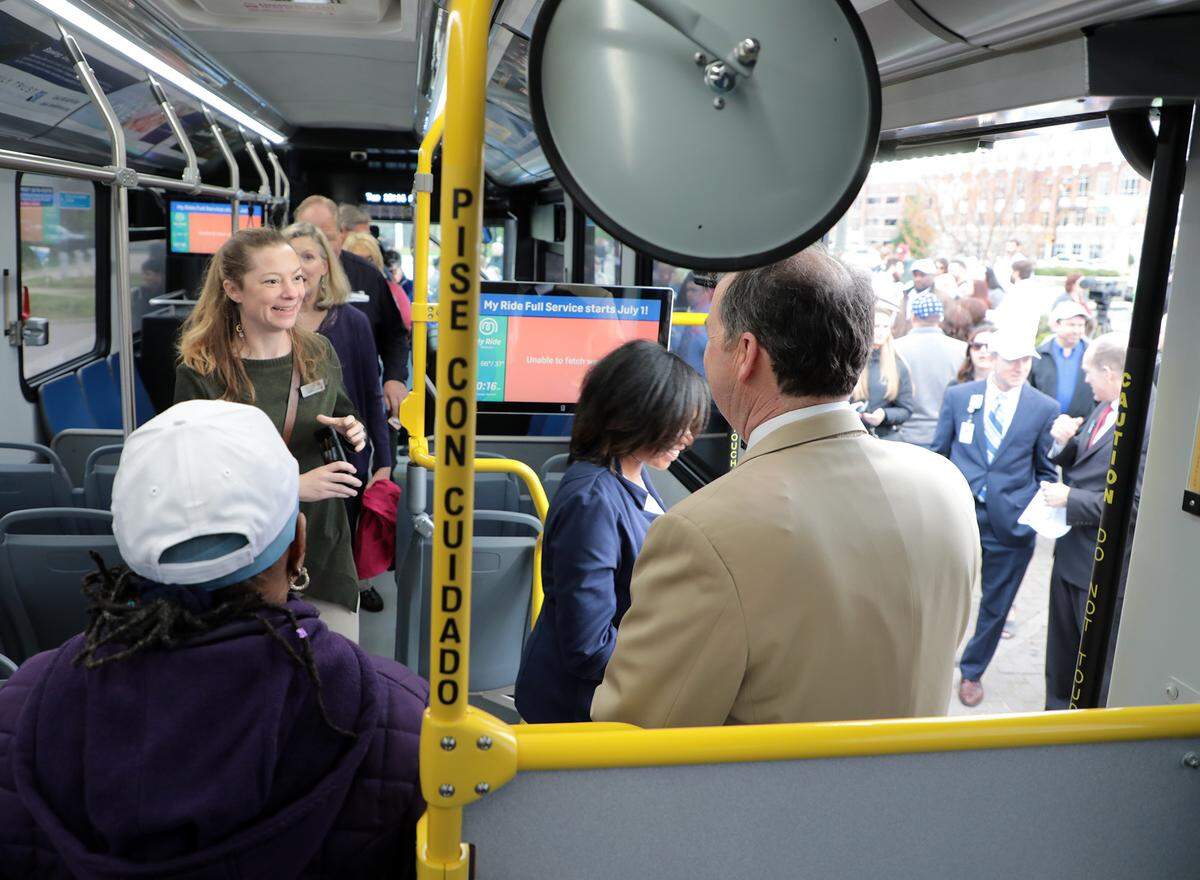
Public transit changes in Rock Hill
My Ride was promoted as the transit of the future when buses rolled into Rock Hill in 2019.
My Ride, a free electric bus service billed as a model for other communities when Rock Hill opened it seven years ago, ended its routes last week. The city directed riders to York County Access, a service where scheduled rides cost $2.50 each way.
Rock Hill ending bus service eliminated routes that took nearly 240,000 passengers to stops throughout the city last year. The city would run routes to spots like downtown, University Center and Riverwalk in energy efficient buses, at no charge. The city wasn’t aware of another community starting out with an all-electric fleet and free service when it began.
But bumps followed along the way.
The city rolled out the bus plan as Rock Hill officials signed on for a local site to be home to the Carolina Panthers headquarters, a project that later crumbled due to funding disagreements between the city and team.
The COVID pandemic hit only months after bus service began. More recently, bus and battery manufacturer Proterra filed for bankruptcy three years ago. Rock Hill relied on Proterra for buses, parts and maintenance to keep My Ride going.
Losing Proterra means the city wasn’t able to maintain its full bus fleet, leading to a reduction in routes before last week’s final change. In cutting four routes to two, the city prioritized stops like grocery stores, doctor’s offices and pharmacies.
“It created some bigger routes to make sure that we were hitting all the key essentials for members of the community,” Rock Hill Transit Administrator Lauren Harms told the Rock Hill-Fort Mill Area Transportation Study policy committee this month.
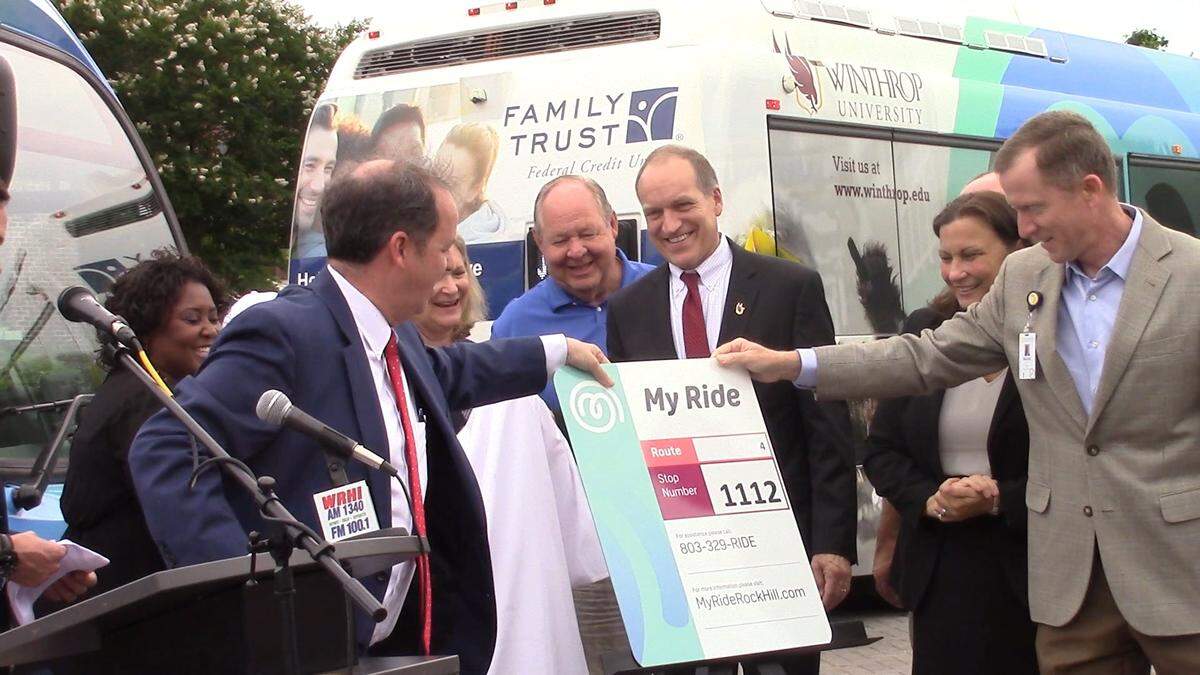
The fixed route My Ride service peaked at 292,237 passenger trips in the 2024 fiscal year. Last year, operating fewer but longer routes, it had 237,904 trips. The federal target for trips last year was 183,000.
The nearly 240,000 trips last year is an increase of 56.6% compared to 2021, when the area and traffic counts were still recovering from COVID.
The single-year drop from 2024 to last year coincided with an increase for My Ride Direct, a paratransit service allowing people to schedule rides.
It had 4,501 passenger trips last year, up 12.1% in a year. Both years well exceeded the federal target of 3,000 trips.
My Ride Direct trips increased 72.8% from 2021 to last year. Service peaked in 2023 with 5,209 trips.
York County Access and CATS 82X
York County Access and the CATS 82X bus are much smaller than My Ride.
Run by the York County Council on Aging, York County Access is a partnership between York County and Rock Hill. Passengers schedule routes at least 48 hours in advance. Even prior to My Ride stopping and directing riders there, York County Access exceeded its federal transit target of 14,000 trips per year.
Last year brought a record 14,795 trips. That’s an increase of 14.6% from 2024.
The CATS 82X bus is a partnership between the CATS system in Charlotte and Rock Hill. It has two stops in Rock Hill, one at Baxter and one near Carowinds.
Its federal target is 10,000 passenger trips per year. Last year it had 14,762 passengers, up 3.4% in a year and nearly 400% since 2021.
CATS 82X riders look to keep bus service
Federal worker Michael Plumley started riding the CATS 82X bus 19 years ago. He’d been in West Virginia where there wasn’t transit and Pittsburgh, Pennsylvania, where there was. Plumley could’ve moved anywhere in the Charlotte region but picked Tega Cay for two reasons.
“Good schools, and I wanted to not have to drive into Charlotte,” he said.
Ward, who works in uptown Charlotte for Duke Energy, began riding 14 years ago. He and Plumley sit each morning and afternoon among many professionals who would rather ride than drive to Charlotte.
Riders work in banks, hotels or construction jobs, they say. There’s also the occasional rider connecting to a Greyhound bus, or someone headed up for an event in Charlotte.
“It is a family,” Ward said. “You ride in the mornings. You ride in the evenings. You get to know a lot about the different people on there.”
Plumley began riding before light rail was an option, but he tried the train a few times. It’s no longer an option after he was mugged and shot at while waiting at the New Bern light rail station, he said. The bus is a safe option, he said, and reasonable at $4.20 each way.
While they could drive to Charlotte but choose the bus for convenience, not every rider has that option.
“There’s folks that I think won’t have a way to work,” Plumley said.
Rock Hill to support altered CATS 82X
Rock Hill pays $10,000 a month to keep the CATS route going. Transit routes are typically 50% local funding, 25% state mass transit funding, fare revenue and a remainder paid by communities that partner for it, said Transportation Study Administrator David Hooper.
If some combination of the county, Fort Mill, Tega Cay or another partner would make up the money Rock Hill has been paying, the route could continue, Hooper said. It’s feasible to have an altered route that cut out the two Rock Hill stops but kept service to Baxter and Carowinds.
“That is a workable option,” Hooper said.
Rock Hill accepts and helps distribute federal funding for the urbanized parts of York and Lancaster County, which is part of why the city historically paid for the bus route while other municipalities didn’t. Rock Hill would “absolutely sign off” on an agreement to redirect funds for the bus route on behalf of other communities if they choose to fund it, Gettys said.
CATS 82X riders don’t blame Rock Hill for the situation they’re in, and instead thank the city for keeping the bus going all these years. They’re hopeful other communities will see the value in continuing it.
“It’s really about whether the local jurisdictions feel that there is enough value to share that $10,000 cost,” Hooper said.
This story was originally published May 28, 2026 at 5:00 AM.