
How should US Capitol storming be taught in schools? 3 Rock Hill-area educators weigh in
Teachers across the country faced a unique challenge on Jan. 7, the day after rioters stormed the U.S. Capitol in Washington, D.C.
Those teachers still, in many ways, are working through that challenge as students of all ages continue to digest and learn about the chaos they saw on television screens and Twitter timelines.
The Herald spoke to three local educators — whose lives outside of teaching happen to intersect with local, state and federal politics. This was our question: How should teachers address this moment in history with their students?
Here are the summaries of the three conversations.
Middle school history teacher and the Socratic method
When CT Kirk walked into school on Jan. 7, he knew where his lesson plan was going to start. But he didn’t know where it would go.
Kirk is a history teacher at South Middle School in Lancaster. He uses the Socratic method, a teaching technique that is driven by students asking questions to draw out ideas and underlying beliefs. Each morning, he said, he begins his lesson with students watching CNN Student News, a 10-minute daily news show. And of course, Wednesday’s violence headlined the program.
Like he does many days of class, Kirk said he paused the video to hear student’s reactions. He said that wasn’t the first time his students were seeing the video. But it was, for some, the first time they were discussing their thoughts out loud and connecting what they’d previously been taught to what they saw in D.C.
For instance, the class connected Wednesday’s violence to the year of 1812, when the British set the White House ablaze as an act of war.
“(We also) went into 1963, when there was the March on Washington, showing what peaceful protest could look like, and how they went to show (President John) Kennedy a sign that people are connected, that people want change,” Kirk told The Herald. “And you can use opportunities like that to re-teach history and really get kids excited about, ‘OK, these things that we see may seem new to us, but this is how it played out throughout history.’”
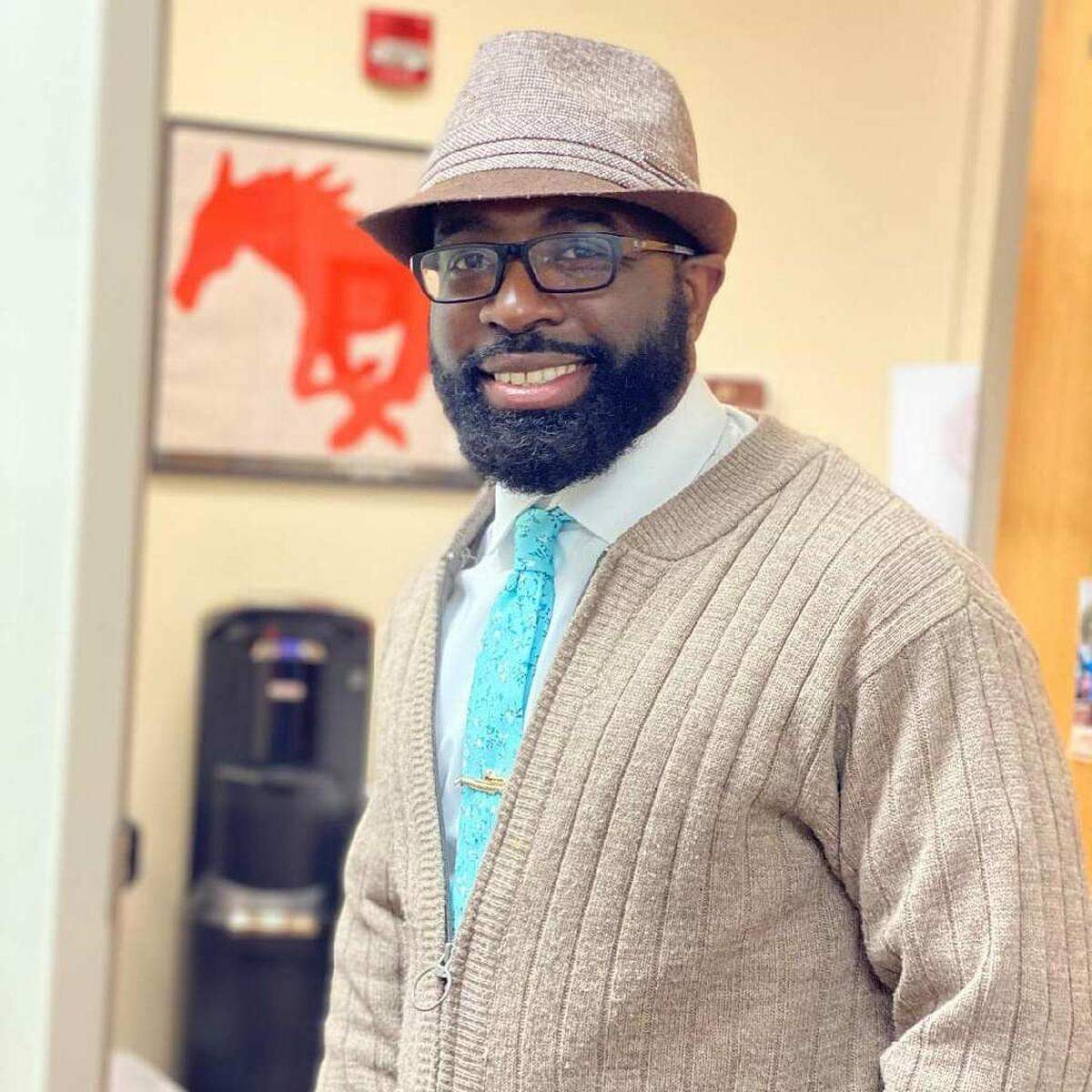
Kirk was a lead organizer of multiple rallies during May and June in Rock Hill in response to the brutal killing of George Floyd in Minneapolis. At the first march, one that drew more than 1,000 people to Fountain Park, Kirk told the crowd that the demonstration must be peaceful. He also, in a speech at the rally, referenced the work of the Friendship Nine — a group of eight students and a civil rights organizer who helped spark a national civil rights movement by peacefully sitting down at the McCrory’s lunch counter in Jan. 1961 in protest of segregation.
Back in July, community members helped paint the street mural in front of The Mercantile on White Street near downtown Rock Hill. Kirk saw it himself and told The Herald at the time that “Rock Hill should do a lot more paying attention to its history,” adding that “if it promoted its history like it does other things, there’s no reason people wouldn’t come down to see the museums to learn” more about it.
This is all to say that he often uses the past as a way of informing the present, much like he does in his middle school classroom — filled with students old enough to form cogent opinions but young enough to not be tied to the political leanings of their parents.
“They’re able to have a pretty open discussion, an opportunity to be able to express themselves without being guided by anybody’s hand or touch,” Kirk said. “And I think that’s important.”
Winthrop professor and the ‘balancing act’
Scott Huffmon called it “a very delicate balancing act.”
Huffmon is a political science professor at Winthrop who directs the Winthrop Poll, a long-term survey initiative designed used to capture a snapshot of public policy attitudes in South Carolina and the South. He’s adept at seeing political behaviors and explaining them to his students and the public.
But he admitted to The Herald that sometimes teachers, due simply to the nature of their jobs, can never do “absolutely everything right.”
“(Educators) have to help students interpret these events without trying to sway them one way or the other,” Huffmon said. “That said, you can’t ‘both-sides’ a situation where domestic terrorists storm the Capitol.”
He added: “Now how hard is that? That is a tightrope I hate walking, but I have to do it every day.”
Winthrop students returned for remote instruction on Monday. Huffmon said he planned to incorporate some new topics in his American Government lectures that are related to interests his students might have — including a section on the 25th Amendment of the Constitution.
He added that teachers have a duty to their students to not only drive their interest in learning, but to provide them with important context so they know they’re safe.
“We don’t teach in a vacuum,” Huffmon said. “The real world is happening all around us. And when kids get to a certain age, they see things happening and don’t have a context or experience to understand it. They may see their parents afraid or upset. The grade school kids and the early middle school kids after Sept. 11, you know, were worried: Are we going to be attacked again? Am I going to die if I go get the mail? Because of the anthrax attacks immediately after.
“So, you know, kids need somebody to guide them and help them make sense of something they have no experience with whatsoever. And that can be really tough.”
Former social studies teacher and today’s unique challenges
Mike Fanning pointed to the teaching opportunity Wednesday’s event posed.
“The hardest part of teaching government, civics, history is that it is seen as archeology by students,” Fanning told The Herald via phone interview last week. “It’s dead stuff that has no connection to their reality at all.”
Fanning is a former high school social studies teacher in South Carolina and the current Executive Director of the Olde English Consortium, an organization that works to help connect school districts in Chester, York, Fairfield and Lancaster counties.
He’s also a Democratic state senator representing District 17 and is the only current educator in the S.C. Senate.
In his 27 years as an educator, Fanning has joked that when students start schooling “they have a thousand questions,” but that the education system, over the next decade, “beats that love for learning out” of them. (Reforming S.C.’s education system is one reason he ran for the state senate, he said.)
But moments like Wednesday provide teachers with a unique opportunity to let students drive the conversation, control the lesson and ask questions, Fanning said.
“That’s what my students — who are now 45, 46, 47 years old — tell me they remember the most: They were in my class when Rodney King was pulled out of the truck and the riots occurred, and remember the discussions (that followed) about American justice as it’s applied equally or unequally to people...,” Fanning said. “That is not only the most rewarding for a teacher, but those are the lessons far easier remembered by the students than my teaching of, say, the War of 1812.”
Fanning did say, however, that teaching in a classroom today has unique challenges that weren’t necessarily present 10 or 20 years ago.
“I think that it is far more difficult (to teach this moment) today because folks are divided in a way that Americans have never been divided before,” he said. “The good news, though, is the answer begins with our children. Remember, the old folks are the ones divided. Six-year-olds aren’t divided from each other. Seven-year-olds aren’t divided from each other. Eight-year-olds aren’t divided. Now, we can debate which ages they finally start dividing, but you get my point. …
“Teaching is a way of maybe having some hope that the next generation won’t be as divided as we are. And it starts in the classroom — with a social studies teacher not teaching what we saw on the Capitol steps yesterday, but allowing students to have conversations about what they saw.”
This story was originally published January 13, 2021 at 10:04 AM.
.jpeg)