‘Talk about a lightning rod.’ Is a Rock Hill road improvement worth taking homes?
The price tag to fix Rock Hill’s top road needs are intimidating enough, with one project alone topping an estimated $84 million. Then there are the dozen or more homes, apartment and business sites York County would have to buy from their owners before pavement hits the dirt.
The citizen commission tasked with forming the Pennies 5 project list met Tuesday night in York. That list will go to York County voters in November, on whether to continue the Pennies for Progress 1-cent sales tax to fund road improvements.
Final cost estimates should be available in February for the commission to set its road list in March or early April.
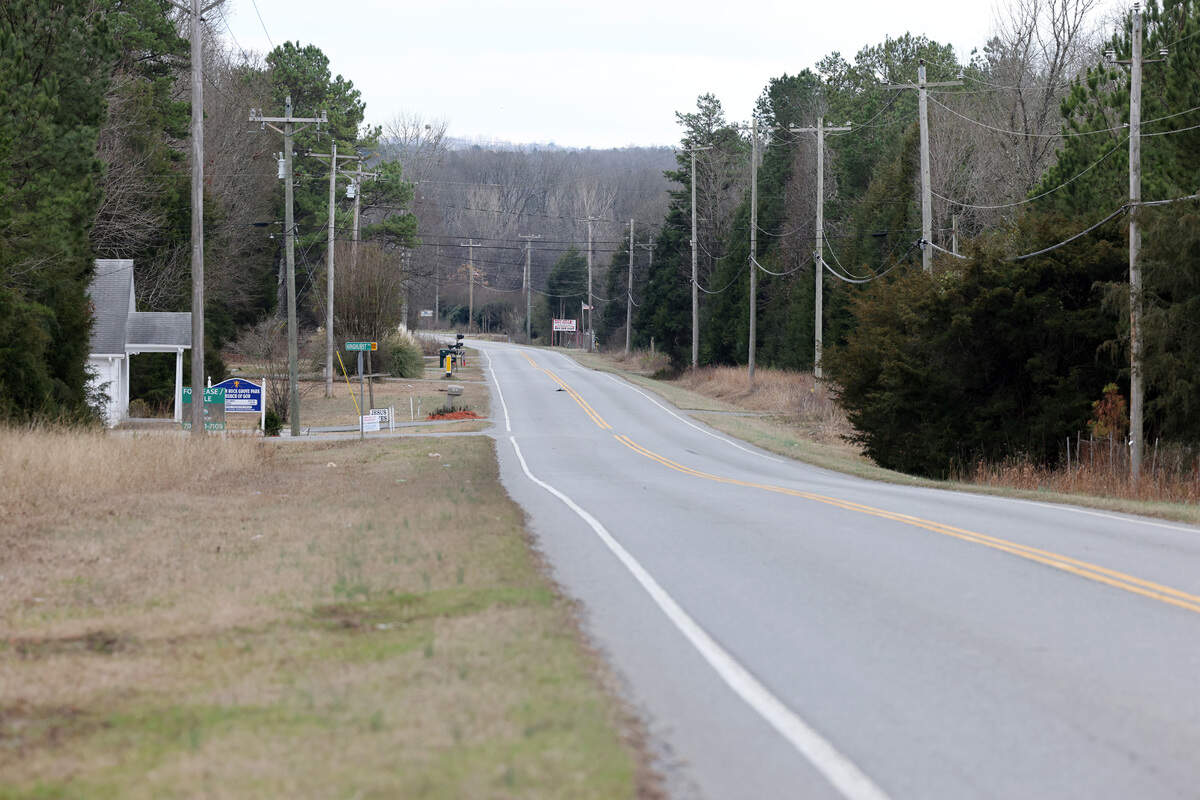
The largest municipality in York County is proving tricky for the group. Rock Hill’s top priority — each city or town, plus citizens, presented requests last year — is a five-lane widening of Porter Road from Firetower to Long Meadow roads. An Interstate 77 exit sits about halfway between those ends.
Preliminary estimates provided Tuesday show widening those three miles would cost $84 million. Just the portion from Firetower to the interstate would cost $52 million.
Porter Road also has older homes built close to it, and on both sides.
“We’re talking probably eight or 10, maybe more, homes that we’re going to have to buy” through eminent domain, said Pennies manager Patrick Hamilton.
Commission chairman and former York County Council member Britt Blackwell is from Rock Hill. He wonders whether people along the somewhat lightly traveled road would want widening even without the potential loss of homes.
“You talk about a lightning rod to kind of polarize people,” Blackwell said, restating his desire to avoid anything that would make Pennies 5 divisive for voters. “I got a feeling that would be a big one.”
There are economic reasons to consider Porter Road widening. The city has been working for several years on planning and zoning changes aimed at large-scale industrial recruitment in that area.
Rock Hill projects Porter Road will see 20,000 or more vehicle trips per day by 2035. State traffic counts show between 3,300 and 3,700 trips now.
Several commission members said there are significant challenges to putting Porter Road on the final list, but as Rock Hill’s top priority it can’t be dismissed too quickly.
“Everybody’s first request deserves full consideration,” said commission member and former York County Council member Chad Williams.
Shopping center could lose space at Cherry and Mt. Gallant
The top intersection priority in Rock Hill presents similar challenges to Porter Road.
Hamilton ran more than half a dozen traditional and innovative alternatives for how to ease congestion at Cherry and Mt. Gallant roads. He still isn’t sure if, or how, any of them might work.
“Part of the challenge is the lack of real estate out there,” Hamilton said.
Any fix would have to widen Mt. Gallant to two lanes in each direction. The road has to stay that wide for 1,000 feet beyond the intersection, in both directions. A city water filter plant on one side means there is only one way, west, to widen.
The county would have to buy a used car lot northwest of the intersection. A row of parking and some retail shops at Love’s Plaza would be impacted.
Love’s Plaza is home to Allison Love’s Fine Jewelry, run by York County Councilwoman Allison Love. Thatbusiness wouldn’t be in the needed right-of-way. There is an apartment building on the same side as the shopping center that would be impacted by widening.
On Tuesday, commission members talked about potential zoning or compliance issues widening might create at the shopping center if it takes a row of parking. Then there’s the preliminary price Hamilton provided. The $35 million tag is based on a typical widening, though the commission knows there’s nothing typical about the site.
“Anything above and beyond that from an innovative standpoint would only drive the cost up,” Hamilton said.
Top priority York County road jobs bring high costs
No project is confirmed, either on the list or off it. The commission did ask Hamilton to have county staff and consultants price about 30 projects in recent months. Hamilton presented figures Tuesday for the largest projects on that short list, or top priorities submitted by municipalities.
Atop the preliminary price list alongside the Porter Road job is Fort Mill Parkway. A 2-mile stretch widening two lanes to five would cost an estimated $85 million. That number is adjusted for the likelihood the project wouldn’t start for several years.
The job would connect Pennies 4 widening of the Parkway from a railroad bridge at U.S. Foods to Holbrook Road. It would involve two new bridges, replacing ones from prior Pennies work to create the town bypass parkway.
The other main project in Fort Mill also connects to Pennies work that likely will carry over to Pennies 5.
Voters already approved U.S. 21 widening from the Peach Stand and S.C. 160 to Springfield Parkway. A five-lane widening of the last stretch of U.S. 21, from Sutton Road to S.C. 160, would cost an estimated $42 million on Pennies 5. It would cover 2 miles.
Widening Dam Road from S.C. 160 to Gardendale Road in Tega Cay, with a roundabout, would cost $9 million. Just doing the roundabout would cost about $3 million.
A 1,200-foot stretch of S.C. 55 in Clover, from Jackson Terrace to Clinton Avenue, would cost about $6 million. York and Clover each have five intersection requests that could cost up to $5 million each.
Million-dollar miles to limit York repaving
Just repaving a road, without widening or rerouting it, can run about $800,000 a mile. But some of the road widening jobs on Pennies 5 wouldn’t start for several years. That time adds inflation and other costs.
“We’re probably going to be looking closer to $1 million per mile,” Hamilton said.
Pennies received more than 200 miles of requested resurfacing work. Pennies 4 committed to 80 miles, at about $50 million. Pennies 5 could double that price tag, as Hamilton looks to narrow a list to 80 or 100 miles of roadway.
How much would Pennies 5 spend on roads?
The first Pennies campaign in 1997 generated about $99 million. Voters approved Pennies 2 at $173 million in 2003 and Pennies 3 at $161 million in 2011. Pennies 4 in 2017 was the largest to date, at $278 million.
Budget figures on referendum ballots are estimates, and community growth with subsequent spending means collections can overshoot projections.
Pennies 2 brought in $186 million, or 7.5% more than projected. Pennies 3 came in 15.5% higher than projected, at $186 million. Pennies 4 runs through April 2025, but in early years tracked higher than its projection.
Even a conservative estimate for Pennies 5 would make it the largest program to date. “I think $400 million is a reasonable number,” assistant county manager Kevin Madden told the commission.
How much road work happens with that money is another question. Madden said some cost increases on recent jobs have been significant, sometimes at 50% over budget.
“The risk is on the projected expense of the project, more so than the revenue projections,” Madden said.
Hamilton cautioned the commission to expect some carryover projects on Pennies 5, as his staff is evaluating all current jobs to see if they have funding to complete them.
Carryover projects have been part of every Pennies referendum since the first one. Pennies 4 included $60 million — more than 20% of its total budget — for five jobs that still needed funding from Pennies 3.
The county doesn’t have a dollar figure yet for how much of Pennies 5 might need to cover past project approvals.
“It’s not going to be a small number,” Hamilton said. “It’s going to be significant.”