Why are the school buses running late in Indian Land area? Some cite the growth trends
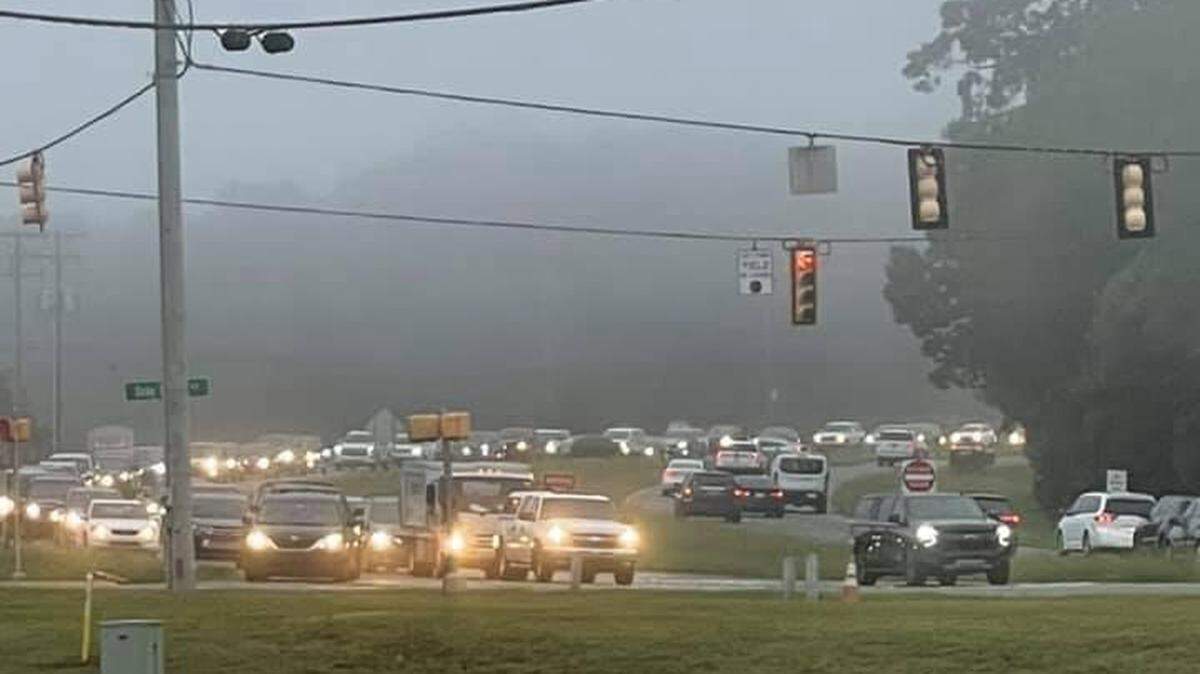
As schools in Indian Land returned to session Monday, traffic jams that stretched for miles had Lancaster County School District officials “fearful that (schools) would be cutoff in an emergency.”
It’s a real-life example of booming growth in Lancaster County and the unincorporated Indian Land area -- and a road system that might not be up to task.
Traffic around the Indian Land Complex, on River Road, was backed up for two to three miles, Bryan Vaughn, LCSD director of transportation said. It took school buses 45 minutes to travel one mile. Parents on social media reported waiting up to two and a half hours to pick up children in the afternoon. Vaughn said bus drivers drove up to 10 hours in “bumper to bumper traffic” throughout the day.
The Indian Land Complex houses Indian Land Elementary, Indian Land Middle School and Indian Land Intermediate School. Both the middle and intermediate schools were converted from high schools, bringing in thousands of new students this year.
This wasn’t a ‘first day of school’ issue, Vaughn said, but a situation that showed “the full weight of Indian Land’s population growth, a poor road system that is overburdened, and the reality of what it’s like to open two new schools with 2,700 kids combined.”
“What’s taking place is that you have so much growth in the Indian Land area from subdivision growth, and you couple that with commuter traffic,” Vaughn said. “Indian Land itself does not have much of a road system. It’s pretty much all subdivisions that feed off to (State Road) 521.”
With a large number of Lancaster County residents commuting to Charlotte, plus buses and parents dropping off students, the area “just shuts down,” he said. “The road system is not compatible with the needs of the region.”
The schools directed parents and buses according to a traffic plan created by an outside contractor, according to social media posts. But Monday was seen as a failure of that plan.
Tuesday, the district returned to the traffic patterns from previous years, which made a difference, Vaughn said.
Beginning Wednesday, the district posted on the it’s Safety & Transportation Facebook page that parents now will be permitted to drop their children off earlier at Indian Land Intermediate School and Elementary School. Doors will be open for elementary students to be dropped off beginning at 6:30 a.m, an hour before classes begin. Intermediate school students can arrive as early as 7:15 a.m., with classes beginning at 8:20
The district will continue to make changes to remedy the situation -- but Indian Land is only continuing to grow.
The school district’s enrollment jumped from 14,375 to 15,170 this year, Michelle Craig, LCSD public information officer said.
Indian Land home growth
As an unincorporated piece of Lancaster County, Indian Land can be difficult to pin down by population. Yet by any metric, that population is up.
U.S. Census Bureau data from the 2020 Census puts the Lancaster County population for residents north of S.C. 5 at more than 40,000. It doesn’t list Indian Land by name. Steve Willis, county administrator, pointed to other census data to suggest population figures from the 2020 count may be low. Annual estimates from the bureau put the county at more than 100,000 people earlier this year, while the official census released last week has the county at less than 97,000.
The upper portion of the Lancaster County panhandle falls in the 29707 Zip code. Census data, separate from the 2020 count, estimates more than 32,000 people living that area. That population is roughly double what it was as recently as 2012.
Homebuilding permits and similar growth indicators since 2019 show continued increases. Yet even at 32,000 people, Indian Land would be the second largest tri-county municipality behind Rock Hill, if incorporated.
The 29707 zip code doesn’t include the Van Wyck half of the Lancaster County panhandle. The 29720 zip code there has an estimated 48,000 people, though it also includes Lancaster and wide acreage in other parts of the county.
Recent census bureau estimates show almost all the residential growth in Lancaster County, and about 86% of the total population, comes from the unincorporated areas.
The census bureau also tracks county-to-county migration. The most recent data shows from 2014 to 2018 there were 678 more people who moved into Lancaster County each year, on average, than people who moved away.
This story was originally published August 18, 2021 at 4:38 PM.