Leaders hope to protect York School District by getting early grip on paying for growth
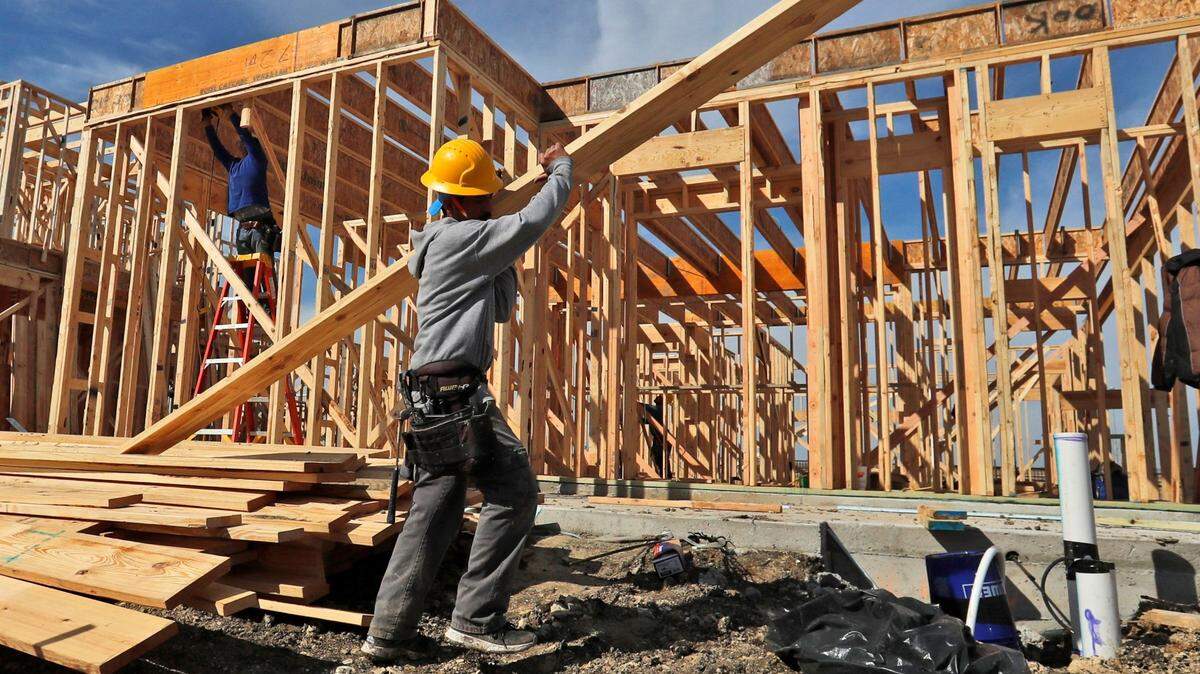
When all the new students arrive, York schools want to be ready. That means action now.
Superintendent Kelly Coxe is working toward a decade in the York School District, the past several years in its top appointed role. Coxe has other district officials who have been around even longer.
None have seen what the district has coming.
“Our enrollment has been relatively flat — 5,000 for as long as we can look back and trace it back,” Coxe said. “We just really don’t fluctuate.”
However, a late 2020 facility study led to new enrollment projections.
In January last year, projects in the city of York forecasted 1,448 new homes, in a city of about 8,000 residents. Included were six approved and five pending residential projects.
“This is a pretty significant increase,” Coxe said.
Projections continued to climb.
The projection rose to more than 1,800 homes and townhomes in York with eight approved and six pending projects. Outside the city limits, another nine projects totaled more than 250 additional homes.
York School District used the same consultant who predicted decades of growth in the nearby Fort Mill and Clover school districts. A review of births, building permits and other data projected the five district elementary schools will reach their combined capacity — two already are above capacity — by the 2023-24 school year.
While York Intermediate School won’t reach capacity in the coming decade, according to those projections, both the middle and high schools will. York Middle will reach capacity in 2026-27, per the projections, and York Comprehensive High School in 2028-29.
“We know that we need schools,” Coxe said, focusing now on the elementary schools now. “We have an issue with this many kids coming. And we know that we can’t afford to do what we need to do without the assistance of the impact fee.”
School impact fees
Impact fees are charges on new construction, where the money can be used for capital costs resulting from growth. For decades a grandfathered-in law allowed a $2,500 per new home or apartment charge in Fort Mill, but no other impact fees for area schools.
A state law change opened up the possibility for new school impact fees. York County upped the Fort Mill fee in 2018 to more than $18,000 per home and $12,000 per apartment. Those numbers were the most allowed by state law, according to the required study done by the district at the time.
In 2020 the county approved new impact fees for Clover schools. The approved fees of $4,000 per home, less than $2,000 per apartment and more than $2,600 per mobile home were a fraction of what that district’s study showed they could charge. County Council members at that time had concern with the higher costs for new homeowners.
York School District turned to the same consultant that Fort Mill and Clover schools used for its impact fee study, and the county used for a prior fee study of its own. The studies measure a variety of factors based on what a district already has, what it would cost to maintain service as more students arrive, and what percentage of that cost a new residence should absorb.
York only looked at fees related to elementary, intermediate and middle schools since those are the pressing needs. The study returned $12,469 as the maximum amount per new single-family home. An apartment could be charged up to $10,237 and a mobile home up to $11,165 according to the study.
“I had to learn quickly that it’s based on the student generation rate,” Coxe said. “It’s based on years of research that predict how many kids will come out of that style home.”
Because Fort Mill got its full possible amount and Clover about a third of what it could, Coxe doesn’t know what York should expect. Especially since the fees aren’t an option until the school district can get onto a county agenda to start the process, which can take anywhere from four months to a year, or longer.
“We don’t know where it will go with us,” Coxe said. “We’re just at the point right now of waiting to get on Council (agenda).”
York the city, and school district, getting notice
For a city that’s had relatively level population for some time, there are signs of change. Seth Duncan, city manager, said the city recently created a project list map and online listing of active, approved or pending projects to help residents keep track.
As of April 6, the city has 1,206 homes, townhomes or commercial properties (10) in active or approved subdivisions. Another 765 proposed or pending homes or townhomes have submitted plans to the city. There’s also an Arby’s restaurant, a new restaurant on Raile Street and a Take 5 car wash under construction or review.
Duncan sees several reasons for York’s recent attention.
“York is attracting residential development due to a number of factors including regionally affordable land, small town charm close to everything, and a great school district,” he said. “New residents have told us that they find York to be an easy commute to Spartanburg, Gastonia, Charlotte and, of course, Rock Hill.”
There has been an increase in telecommuters who live here but work for firms in New York City, Washington, D.C., or other places, Duncan said. Part of the growth equation is intentionality by the city.
“York City Council knows that with increased residential development we will be able to attract more commercial and retail opportunities that citizens are demanding and continue investing in our historic downtown,” Duncan said.
Coxe won’t speculate much on why all the growth is at hand, but said York offers a connected community feel that isn’t present everywhere. Schools are a major growth attraction in the region, in places like Fort Mill, Tega Cay, Lake Wylie and Indian Land. The challenge for Coxe is to keep York schools a selling point even as demand increases.
Bond referendum vs. impact fee
Because the York District doesn’t have decades of community growth similar to some areas to its east, there is both challenge and opportunity. The challenge comes in making the case for something like an impact fee without already-existing growth pressures on roads, infrastructure and school facilities.
Coxe said conversations within the community typically lead to more support for fees as people understand how they work. The district had a bond referendum for the high school back in 2007 and is still paying on the building. At some point another bond will follow. Impact fees won’t pay for all growth costs, but they can drop the share existing homeowners and businesses have to pay through bonds.
“We don’t want to crush anybody with a large bond referendum,” Coxe said.
Based on the homes coming and the amounts shown possible by the study, the district uses a figure of about $25 million collected through potential impact fees. For perspective, Fort Mill recently passed the $50 million mark in collections.
All the numbers are theoretical. County Council could choose lower amounts. Council could order a different study, or never take up impact fees at all for York.
But York School District might be able to do what in many cases other communities haven’t -- if they get ahead of a residential boom and make growth pay for growth.
“That’s our goal,” Coxe said. “For us, we feel like time is of the essence.”
Impact fees typically are charged when building permits are pulled for construction. As ground is broken routinely on York projects now, Coxe is hopeful her district and the county can get together quickly before the opportunity passes.
“As long as they’re just leveling ground, we’re good,” Coxe said. “But when that house starts popping up, that’s one we’ve missed. And we really want to capitalize on the ones where they’re just moving dirt right now.”
This story was originally published April 11, 2022 at 12:00 AM.