Winged creature with ‘enlarged’ earlobes discovered as new species in Papua New Guinea

A winged creature with “enlarged” earlobes flew across the landscape of Papua New Guinea — or tried to at least. But the hairy animal collided with a net and fell to the ground.
When scientists looked closely at their “opportunistic” catch, it turned out to be a new species.
Researchers visited Serki, a relatively remote village, in 2006 and set up a base camp nearby, according to a study published Aug. 6 in the peer-reviewed journal Zootaxa. Their goal was to survey the area’s wildlife.
“During an opportunistic survey,” researchers caught a bat in a mist net, the study said. They took a closer look at the animal and noticed it had some unique features.
Hoping to identify their catch, researchers began sifting through archives for similar-looking bats. The task wasn’t so straightforward. Records were scarce and preserved specimens were scattered throughout various collections.
Eventually, the team located eight similar-looking bat specimens captured between the 1960s and 1980s. The specimens shared the same distinctive features and DNA but had been misidentified as several different species.
Researchers soon realized they’d discovered a new species: Chalinolobus orarius, or the coastal lobe-lipped bat.
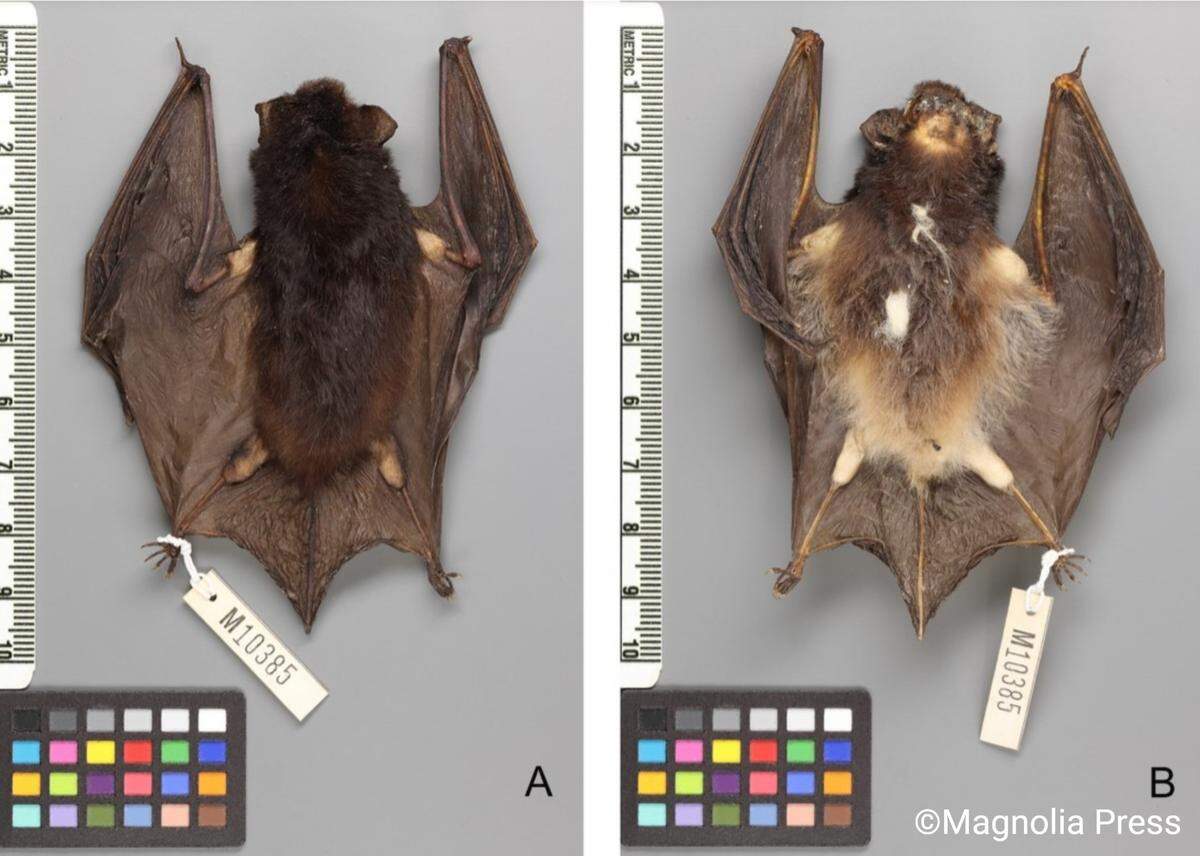
Coastal lobe-lipped bats are roughly 4 inches long and have hairy, dark brown bodies, photos show. The fur on their stomachs appears lighter colored, almost cream around the edges.
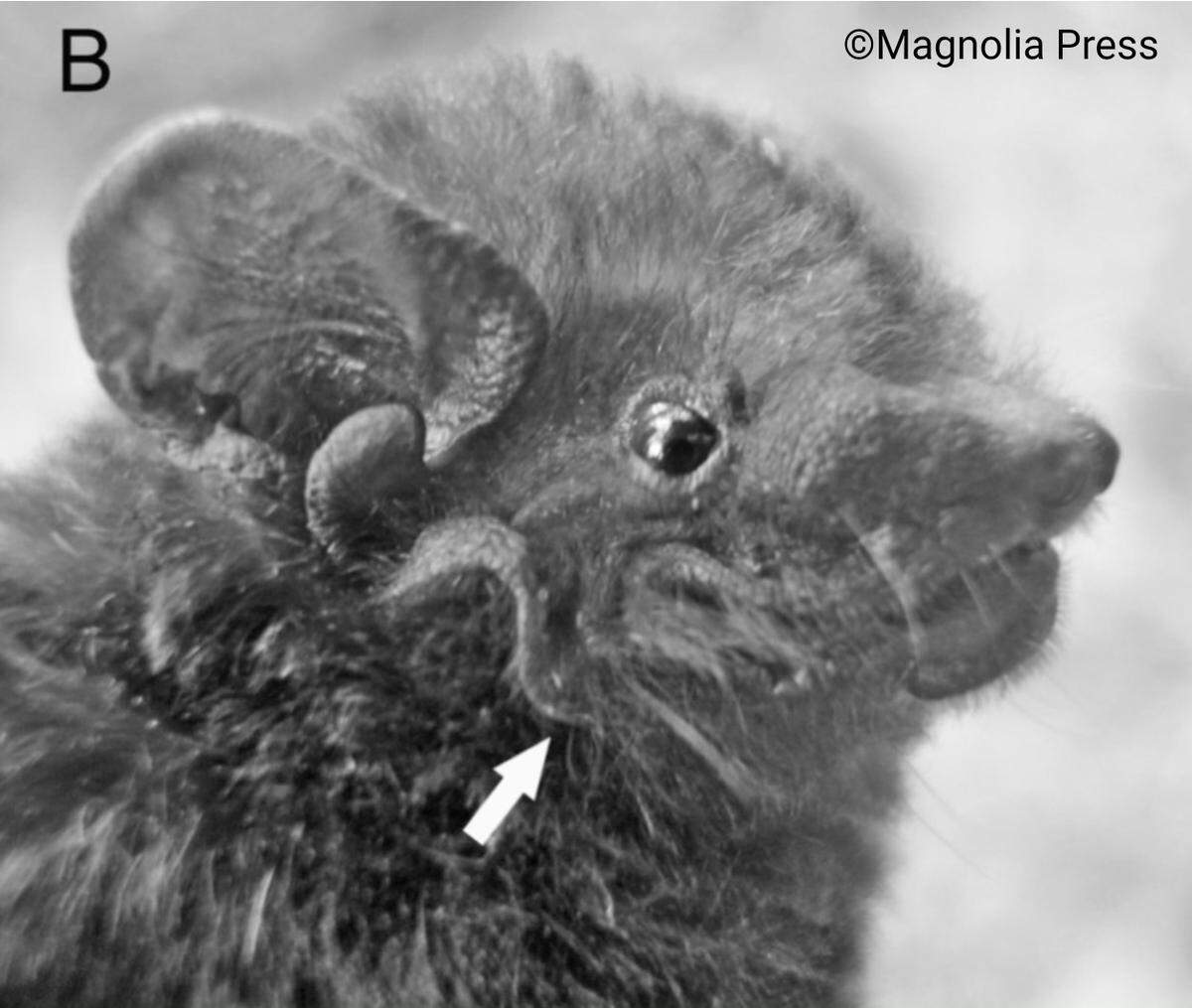
The new species has an “enlarged” earlobe running from the edge of its ear to its mouth, the study said. A close-up photo shows this feature.
Very little is known about the coastal lobe-lipped bat’s lifestyle. Based on the slim records, researchers believe the new species lives at lower elevations, prefers habitats “dominated by open vegetation” such as woodlands and roosts in trees or on buildings.
The bat’s population is “probably declining” because of the “declining habitat quality,” the study said. “To our knowledge the Serki specimen reported here is the only one collected this century.”
Researchers said they named the new species after the Greek word “oraria,” meaning “of the coast,” because of its distribution.
So far, the new species has been found at two sites in southern Papua New Guinea, the study said. The country shares an island with Indonesia and is just north of Australia.
The new species was identified by its ears, coloring, teeth, skull shape and DNA, the study said.
The research team included Harry Parnaby, Andrew King, Steve Hamilton and Mark Eldridge.
This story was originally published August 9, 2024 at 11:19 AM with the headline "Winged creature with ‘enlarged’ earlobes discovered as new species in Papua New Guinea."