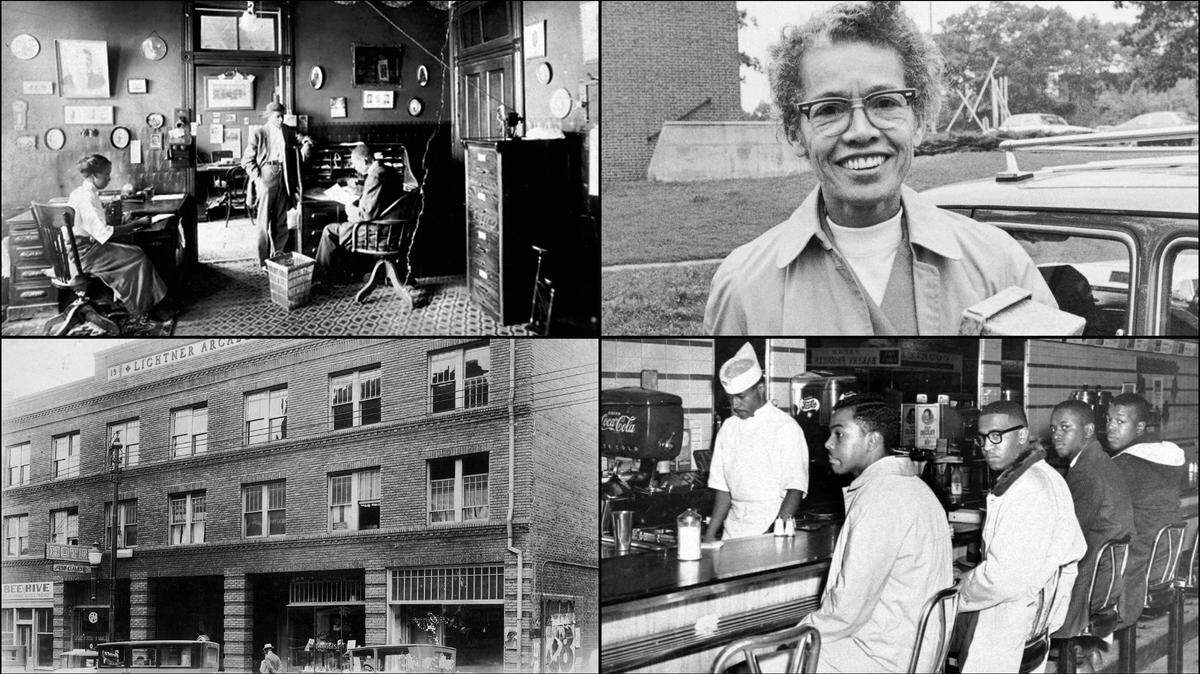
The story behind North Carolina’s Soul City, a dream of Black economic power
READ MORE
Black History Month
A selection of Black History Month stories from February 2021.
Expand All
This is an excerpt from “Soul City: Race, Equality, and the Lost Dream of an American Utopia.”
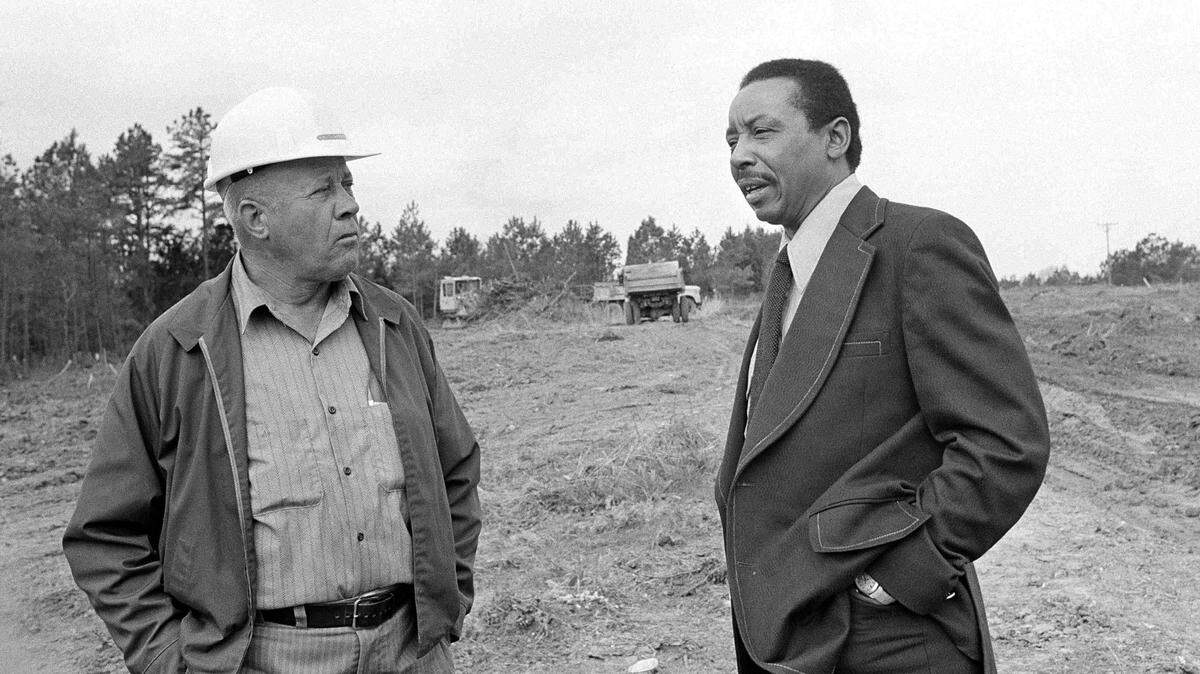
On a sweltering summer day in 1972, Floyd McKissick led a reporter for The New York Times across the green fields and red clay roads of an old plantation in his home state of North Carolina. Once a thriving tobacco farm worked by a hundred enslaved people, the estate had fallen on hard times in recent decades as tobacco prices sagged and the economy of the agrarian South collapsed. Tumbledown sheds and shacks now marred the landscape, while cattle from nearby ranches grazed the fallow pastures.
But there were still signs of earlier prosperity, including a white 18th-century mansion resting on a small hill among a stand of cedars. Strolling in the shade of these ancient trees, McKissick looked up at the house, then turned to his guest and laughed.
“I can just see ‘ole massa’ now,” he said. “Up there on the veranda, fanning himself and watching us Black folks slaving in the field—and I can’t help but wonder what he might say now.”
What “ole massa” might have said is anybody’s guess, but he would certainly have been stunned by the transformation taking place around him. Where Black men and women once toiled in bondage and despair, they were now engaged in an ambitious project to complete their emancipation: the building of a new city where Black people would have a majority share of power, capital, and opportunity.
Named Soul City, the project was designed to be a model of Black economic empowerment, bringing money and jobs to a region that had been left behind by industrialization and urbanization. In the process, its supporters hoped, it would reverse the exodus of poor Blacks from the rural South and ease the overcrowding of the northern slums.
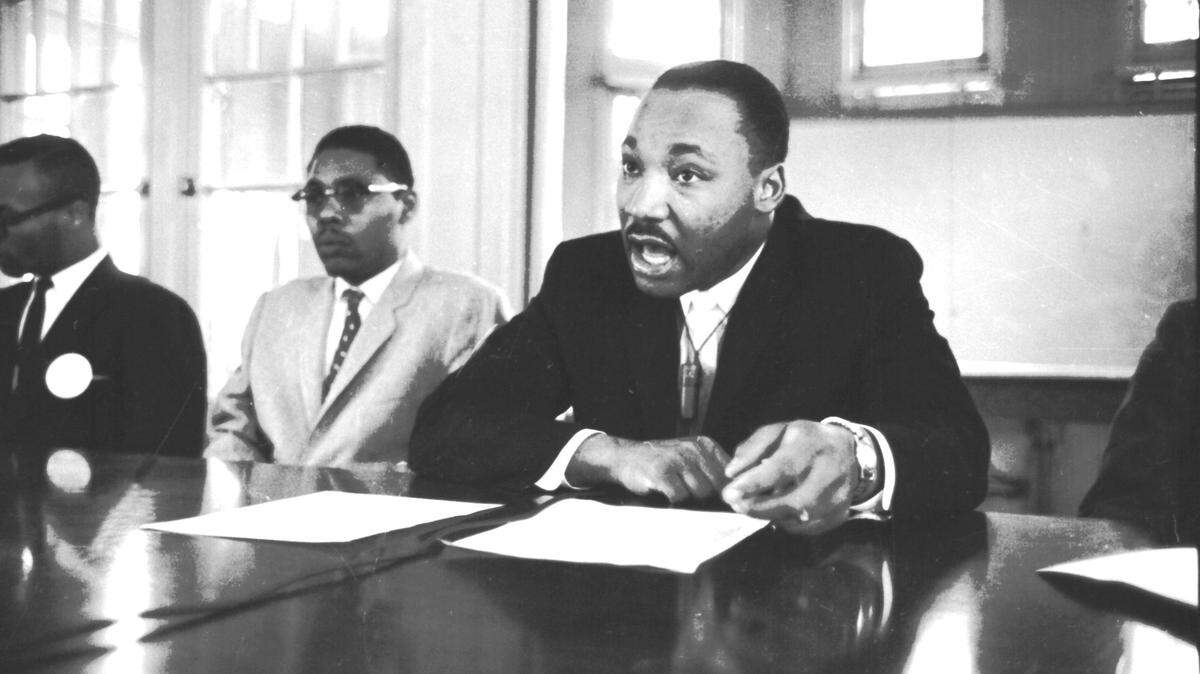
Launched by McKissick three years earlier, Soul City had at first seemed little more than a quixotic dream. McKissick, a lawyer by profession, had risen to prominence as head of the Congress of Racial Equality, one of the foremost civil rights groups of the 1960s. He was a fiery speaker and a visionary leader, but he had no experience building a city.
And the site he had chosen was an unlikely location for an urban utopia: 5,000 acres of farmland in Warren County, one of the poorest areas of the state. The site had none of the infrastructure a viable city needs — no water or sewer systems, no paved roads, no electrical grid. It also lay smack in the middle of what one roadside billboard boldly proclaimed “Klan Country.”
Perhaps the biggest obstacle was the idea itself. Although Soul City was intended to be integrated, McKissick made clear that his primary goal was to help Black people, especially the poor and unemployed. For that reason — and because of its name — Soul City was quickly branded an experiment in Black Nationalism.
This played well in certain circles, but to many who had fought for integration, or at least come to accept it, Soul City seemed like a step backward. As one Southern newspaper put it, “How terribly tragic it would be should all civil rights roads cut in the past 20 years lead to Soul City — a Camelot built on racism.”
In reality, McKissick’s dream was about economic equality, not separatism. It is true that he had emerged as a leading spokesman for Black Power and that his rhetoric was often inflammatory.
“If white America does not respond to peaceful protest,” he wrote in his 1969 book “Three-Fifths of a Man,” “Black People will be forced to work for their liberation through violent revolution.”
But he had also spent his entire life breaking down racial barriers, integrating the University of North Carolina Law School and leading nonviolent protests against segregated buses, lunch counters, dime stores, ice cream parlors, swimming pools, bathrooms, water fountains and amusement parks.
Over the years, however, he had become frustrated by the failure of the civil rights movement to bring about sustained, meaningful change. For Blacks to be truly free, he believed, they needed power — economic power.
“If a Black man has no bread in his pocket, the solution to his problem is not integration,” McKissick liked to say. “It’s to go get some bread.”
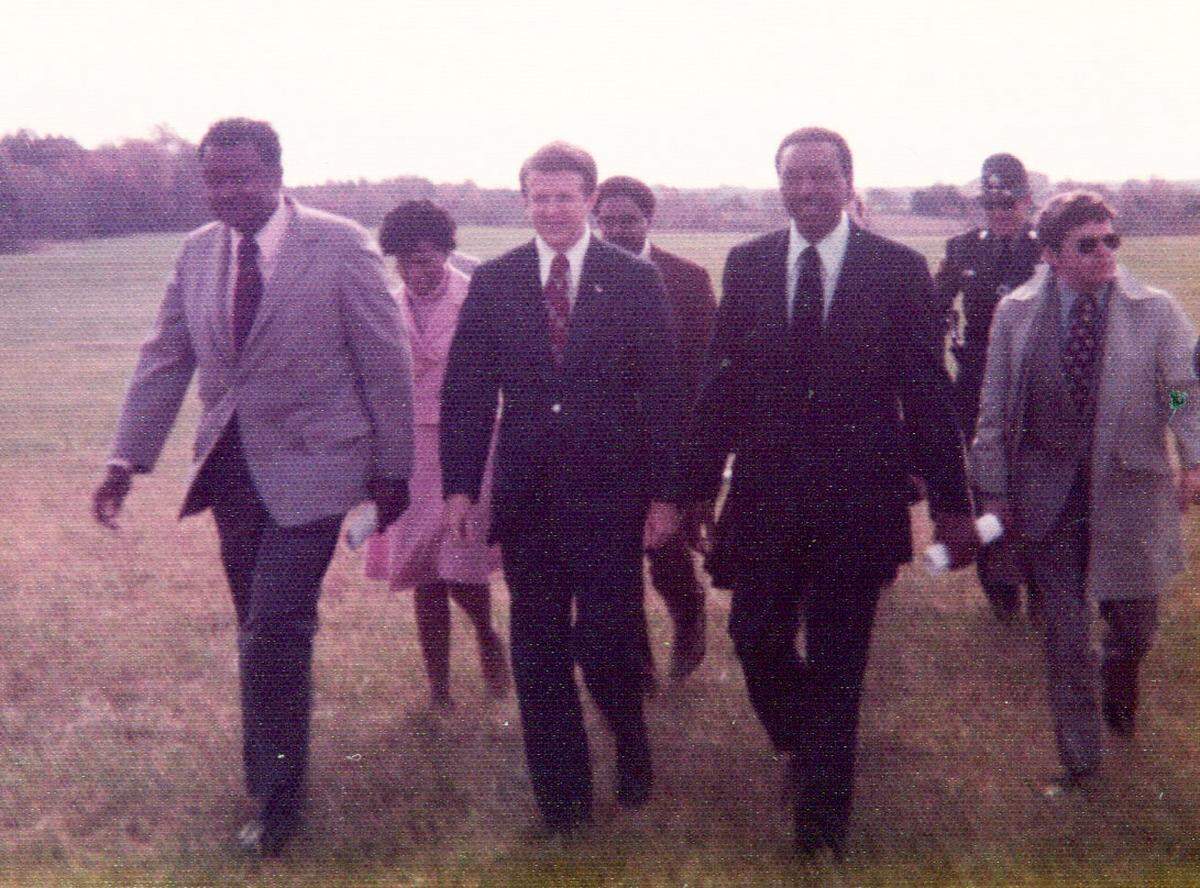
That’s why, although McKissick had no desire to exclude whites, his dream was to build a city where Blacks would call the shots, where a race of people who had once been bought and sold to enrich others would finally control its own destiny.
And despite the obstacles, that dream was no longer fantastical. Just weeks earlier, the Nixon administration had awarded Soul City a $14 million loan guarantee. The loan was part of a program to finance the building of new towns across the country, and Soul City was not the only project to receive support. So far, the government had approved the building of 11 new communities.
But Soul City was the only project located in a rural area and the only one led by a Black developer. And federal support had not come cheaply. In return for the loan guarantee, McKissick had changed his party affiliation from Democrat to Republican and endorsed Richard Nixon’s 1972 reelection campaign.
It was a bizarre political union: Nixon, the “law and order” president whose “Southern strategy” had exploited racism to win white votes, and McKissick, the militant Black leader who was under surveillance by the FBI. But like most political unions, it offered mutual benefits. For Nixon, Soul City was a chance to improve his image among Black voters without risking white support. McKissick, meanwhile, desperately needed federal backing to get Soul City off the ground. If becoming a Republican meant he could get the money he needed for his dream, he was prepared to take whatever heat came his way.
News of the loan guarantee had given Soul City a jolt of momentum. Major corporations such as General Motors had begun to take the project seriously, the governor had offered his full support, and the national press had weighed in enthusiastically. An editorial in The Washington Post praised Soul City as “the most vital experiment yet in this country’s halting struggle against the cancer of hectic urbanization.”
Now McKissick was living with his wife and youngest daughter in a trailer on the edge of a cornfield. They were joined by a half-dozen other families, mostly Black but a few white, some with babies still in diapers. They had come from different places, but all for the same reason: to build a new city. And after three years of planning, they were eager to get started.
The night before, they had celebrated with a banquet at the Warren County armory. Seven hundred supporters had packed inside the building, where the temperature soared above 100 degrees. They listened in rapt attention to a speech by Robert Brown, a Black Nixon aide who had played a key role in obtaining federal backing for the project. Praising McKissick for his vision and Nixon for his willingness “to put money where mouths and promises had been before,” Brown assured the crowd that, together, they were “about to transform a 19th-century slave plantation into a booming American city.”
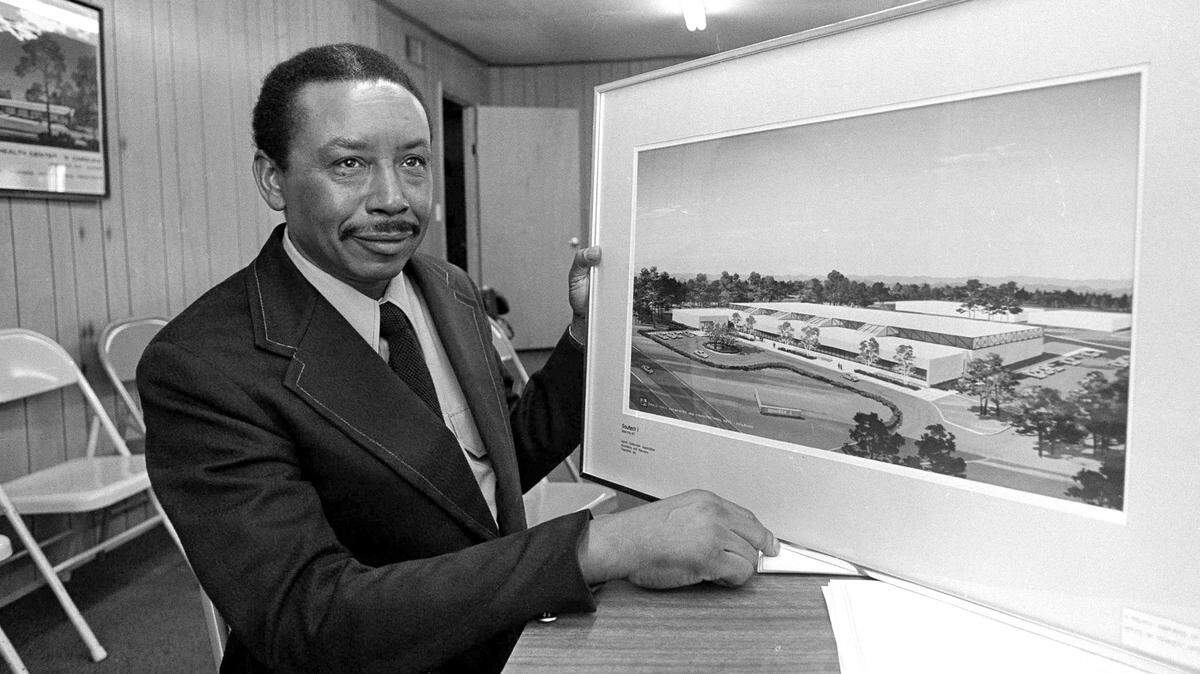
So as McKissick led the Times reporter across the grounds on that scorching July day, he had every reason to feel optimistic. His dream was finally coming to fruition. Soon construction crews and bulldozers would arrive to clear trees, pave roads, and build houses, shopping centers, schools, churches and factories. There would be hospitals, hotels, parks, art galleries, theaters, golf courses, and a college.
And if projections held true, within three short decades, a city of 50,000 people would populate this once forsaken land.
“Yes sir,” McKissick said once more. “I wonder what ‘ole massa’ would have to say now.”
Thomas Healy is a professor at Seton Hall Law School and the author of “Soul City: Race, Equality, and the Lost Dream of an American Utopia.” Published by Metropolitan Books/Henry Holt and Co. Copyright 2021. Used with permission.
This story was originally published February 19, 2021 at 1:20 PM with the headline "The story behind North Carolina’s Soul City, a dream of Black economic power."