
UNC System mental health experts assessed university services. Here’s what they found.

READ MORE
Crisis on Campus
Earlier this month, UNC-Chapel Hill was hit with a weekend of tragedy after a freshman ended his life on campus. Less than 24 hours later, UNC police responded to a similar call across campus. As more students enroll with mental health diagnoses, care across North Carolina’s campuses struggle to meet the demand. This is The N&O’s special report.
Expand All

Tragedy at UNC underscores the need for student mental health care on NC campuses
UNC System mental health experts assessed university services. Here’s what they found.
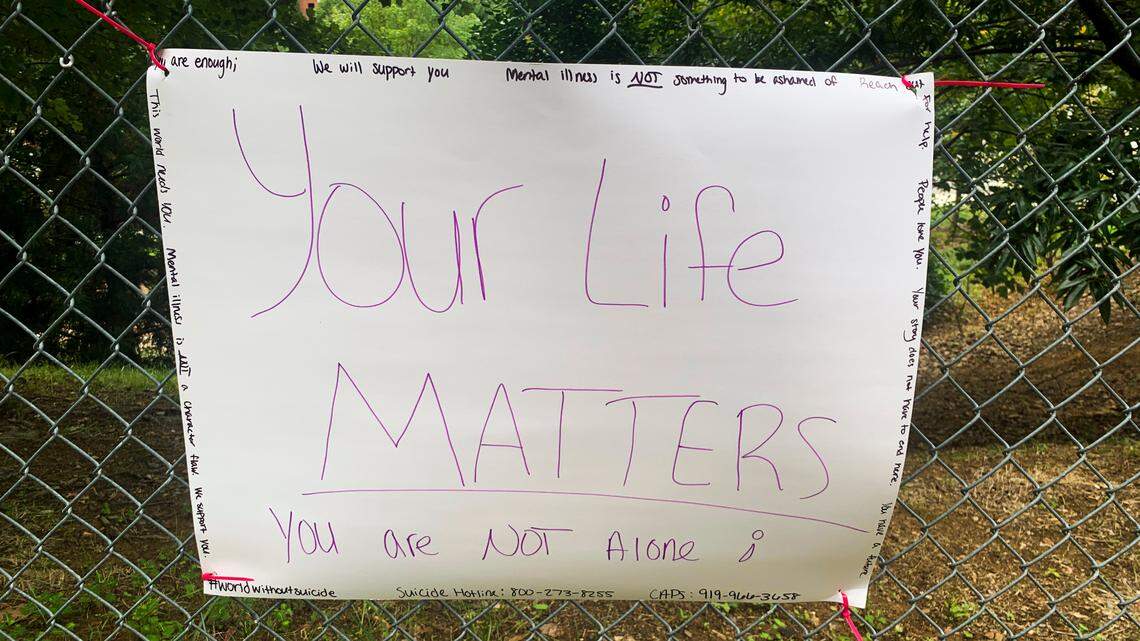
Don’t try to deal with mental health issues alone. Here’s where you can get help in NC

How to ‘check on your friends’ in a way that’s beneficial to the both of you
Students in the UNC System are showing a “significant increase in the incidence of mental health challenges,” which accelerated during the COVID-19 pandemic.
A team of mental health professionals and university leaders assessed universities’ mental health services and made several recommendations to improve campus resources. Their report “Healthy Minds, Strong Universities: Charting a Course to More Sustainable Student Mental Health Care” was presented to the Board of Governors in May.
The report explained the escalating demand for student mental health services, strained capacity at college counseling centers and higher stakes as student mental illness is one of the most cited reasons that students drop out of college.
Nationwide, about 20% to 30% of incoming college students come to campus with a mental health diagnosis, according to the report.
Students are increasingly reporting suicidal ideation, with 10% to 15% of college students saying they have had serious thoughts of suicide within the 12 months prior to the report being published, the report says.
And there’s been a rise in traumatic life events that students are coping with, including the death of family members, abuse and sexual assault.
The team found that campuses provide a variety of clinical and outreach services, but the “growth in the breadth and depth of student mental health needs are increasingly beyond the scope of what current mental health staff, funding streams and operational structures can provide.”
Mental health services are primarily funded through student fees, but that doesn’t cover the cost. And relying on money from the General Fund makes mental health centers financially fragile, the report says.
The authors of the report provided eight recommendations.
To improve service
▪ Increase investment in quality and coordination of student mental health care within and between institutions;.
▪ Invest in tools that enable better measurement of service delivery and outcomes so that campuses can make informed care decisions.
▪ Increase crisis intervention support and mental health education among various campus stakeholders.
▪ Invest in professional development and retention efforts of mental health professionals.
To improve financial sustainability
▪ Expand insurance recovery in ways and for purposes with demonstrated return on investment.
▪ Utilize federal coronavirus relief funds for non-recurring mental health service expenses.
▪ Pursue additional philanthropic funds to support student mental health services.
▪ Develop alternative service delivery models for specialized mental health services.
UNC System President Peter Hans and UNC System Office staff plan to work with the UNC System Board of Governors, campus leadership, mental health professionals, faculty, staff and students to address these issues “in the months and years to come,” the report said.
This story was originally published October 20, 2021 at 6:00 AM with the headline "UNC System mental health experts assessed university services. Here’s what they found.."
