‘There’s a big crack in the road’: The race to get cars off I-40 as Helene washed it away
READ MORE
Hurricane Helene Aftermath
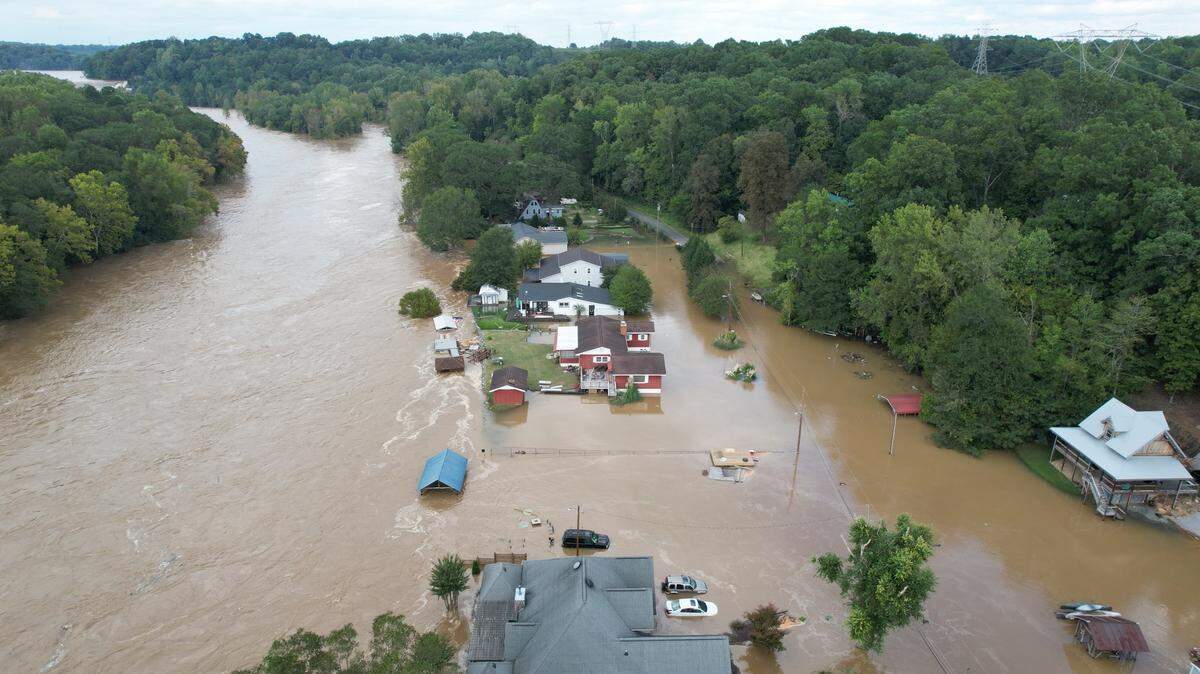
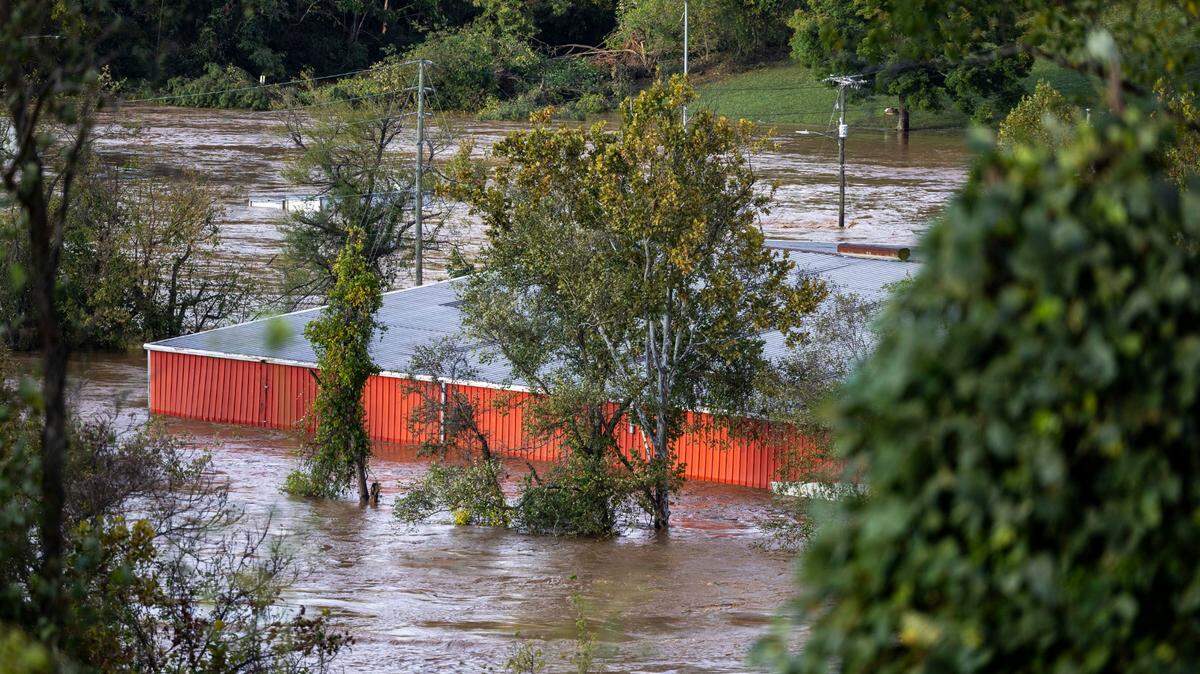
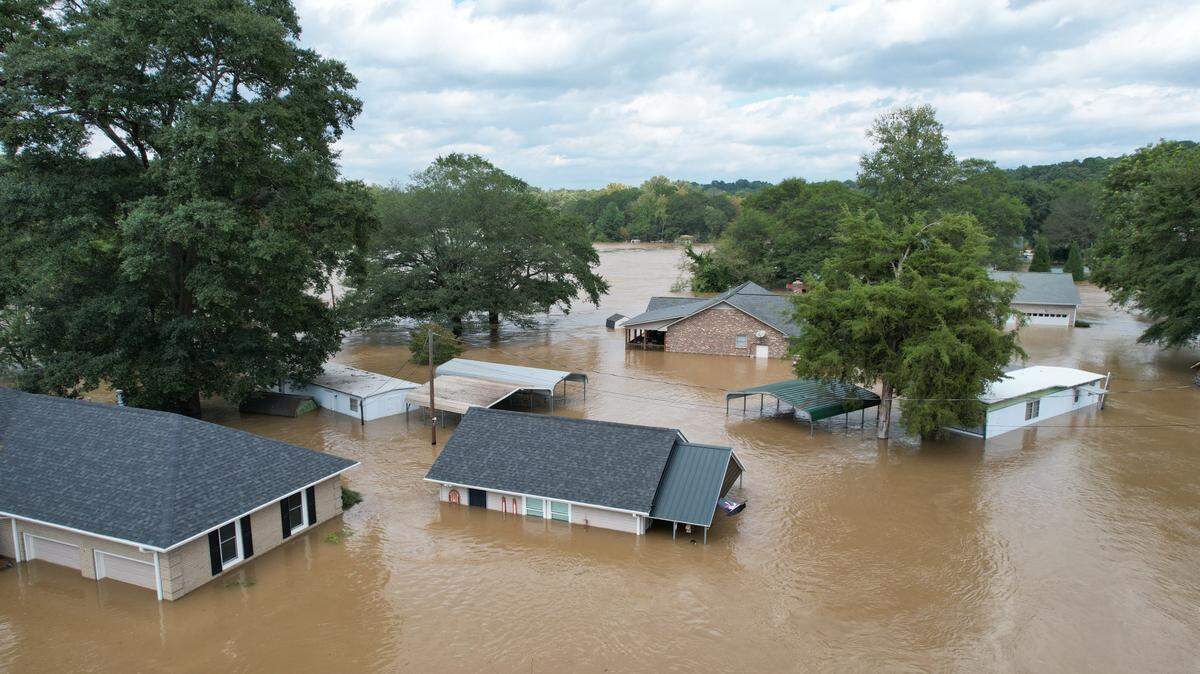
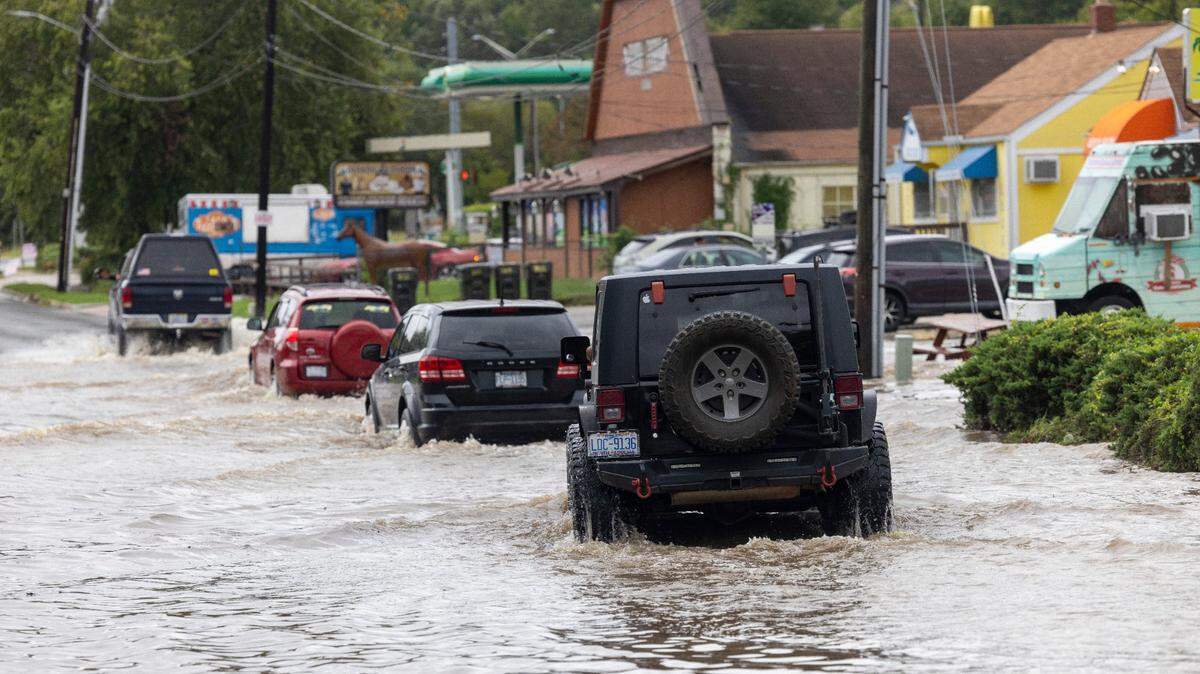
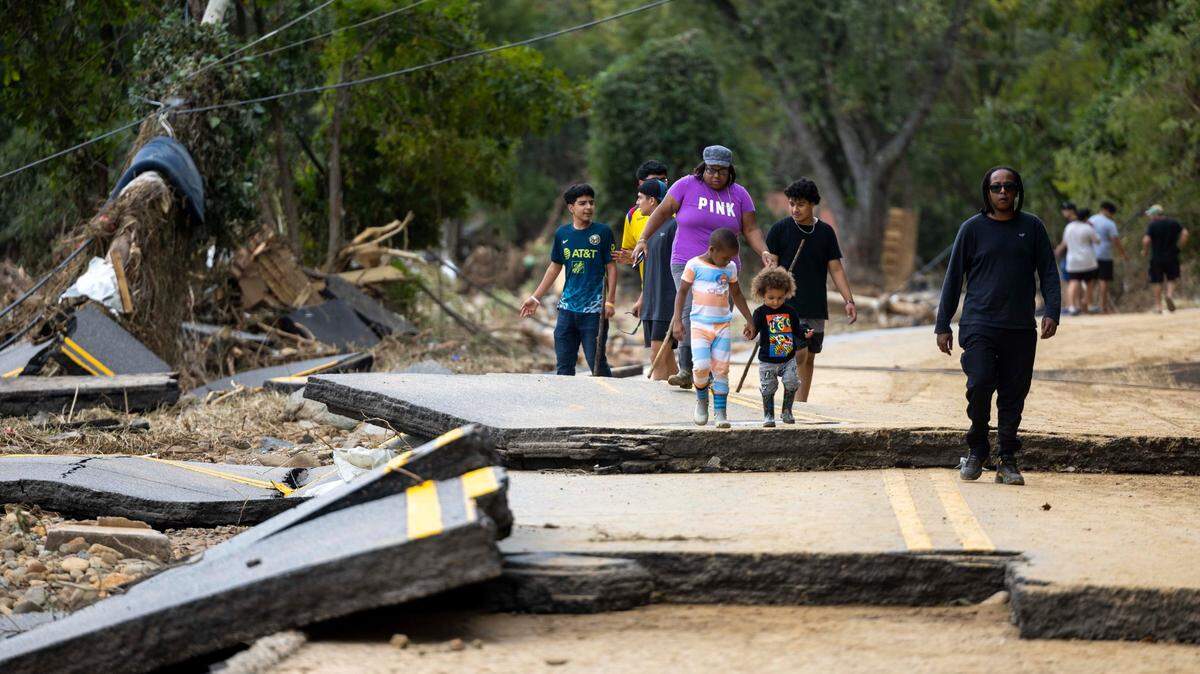
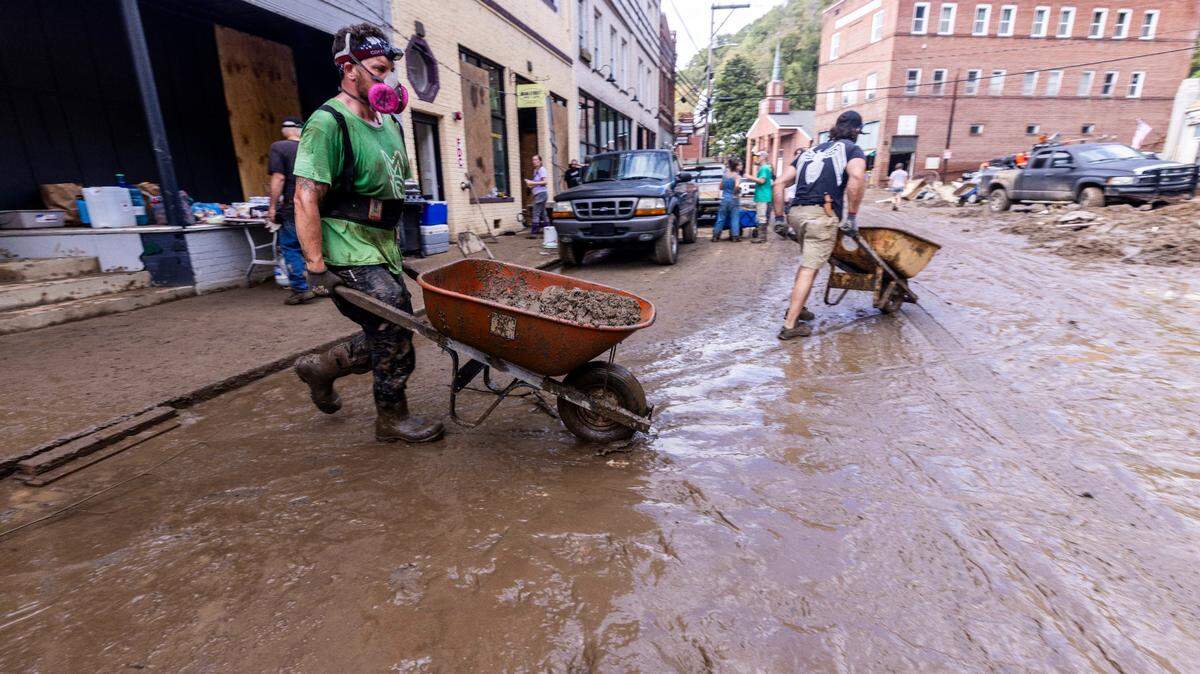
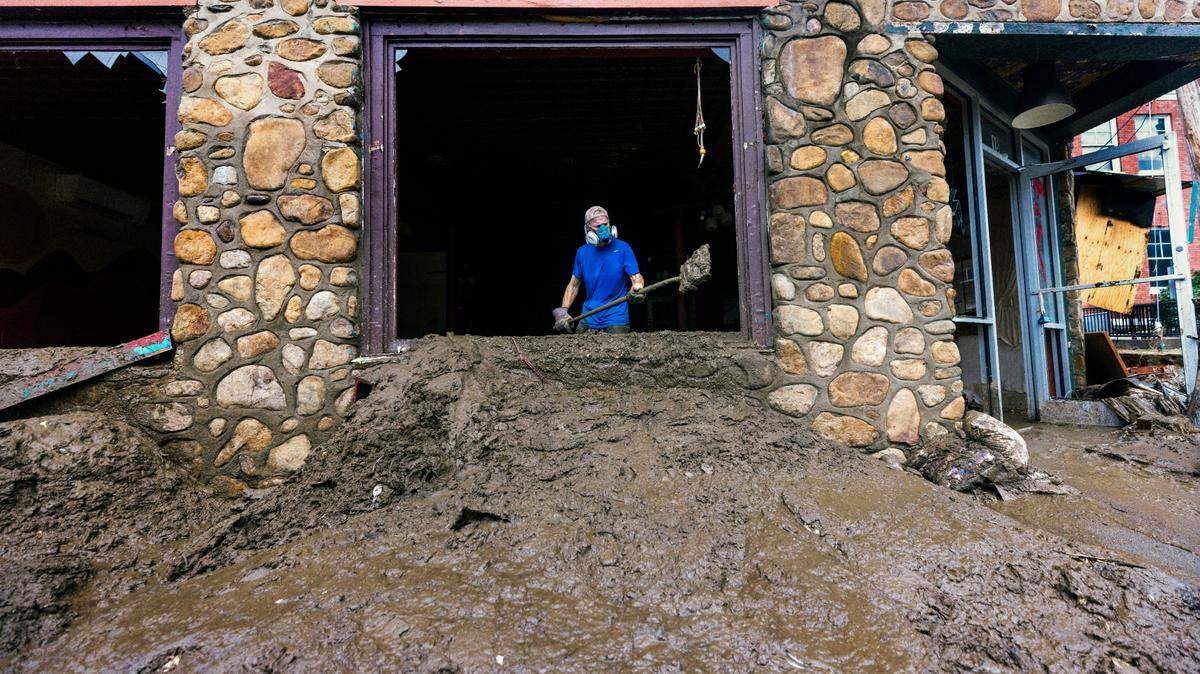
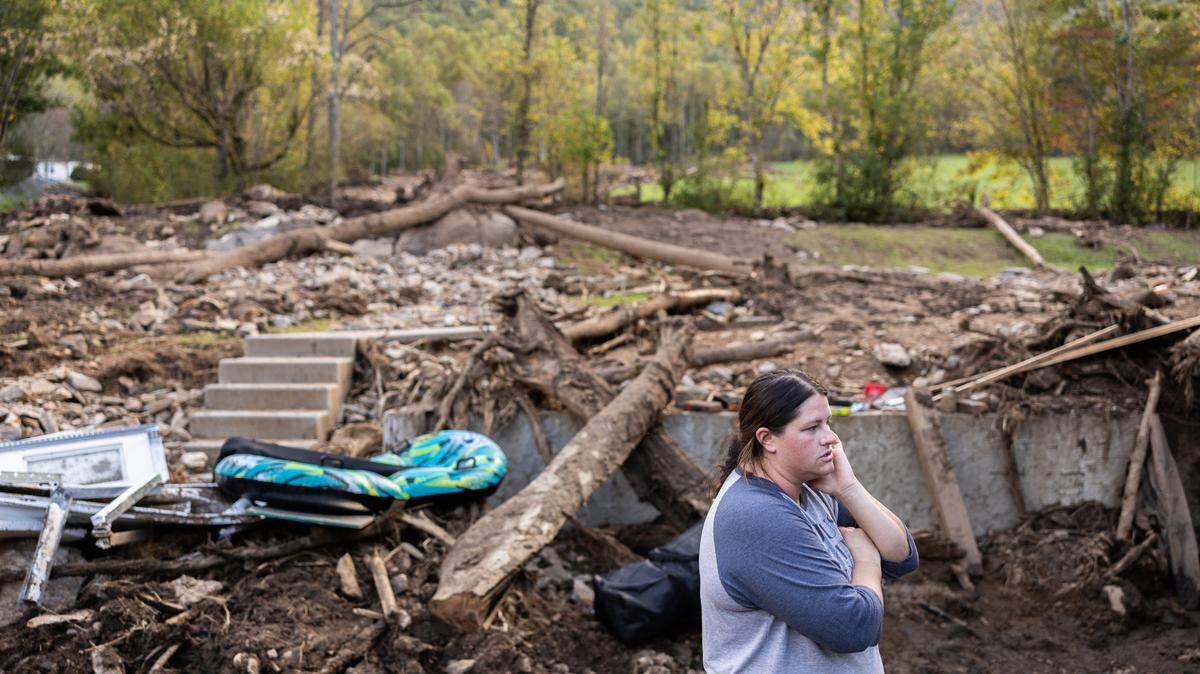
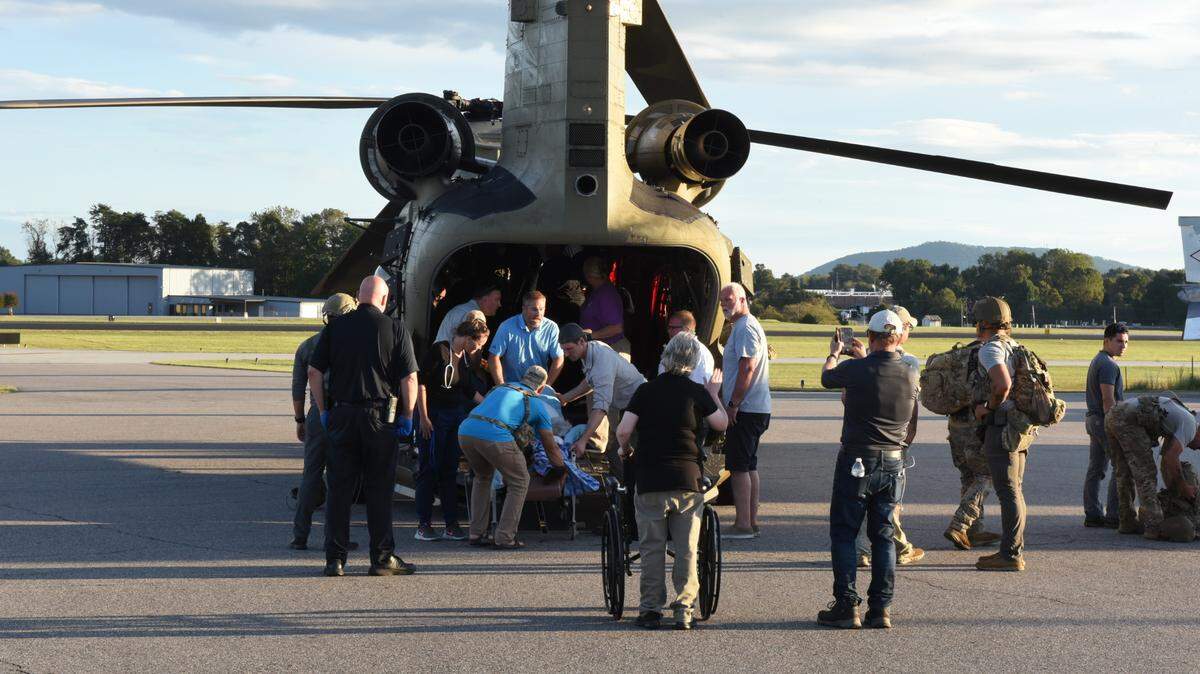
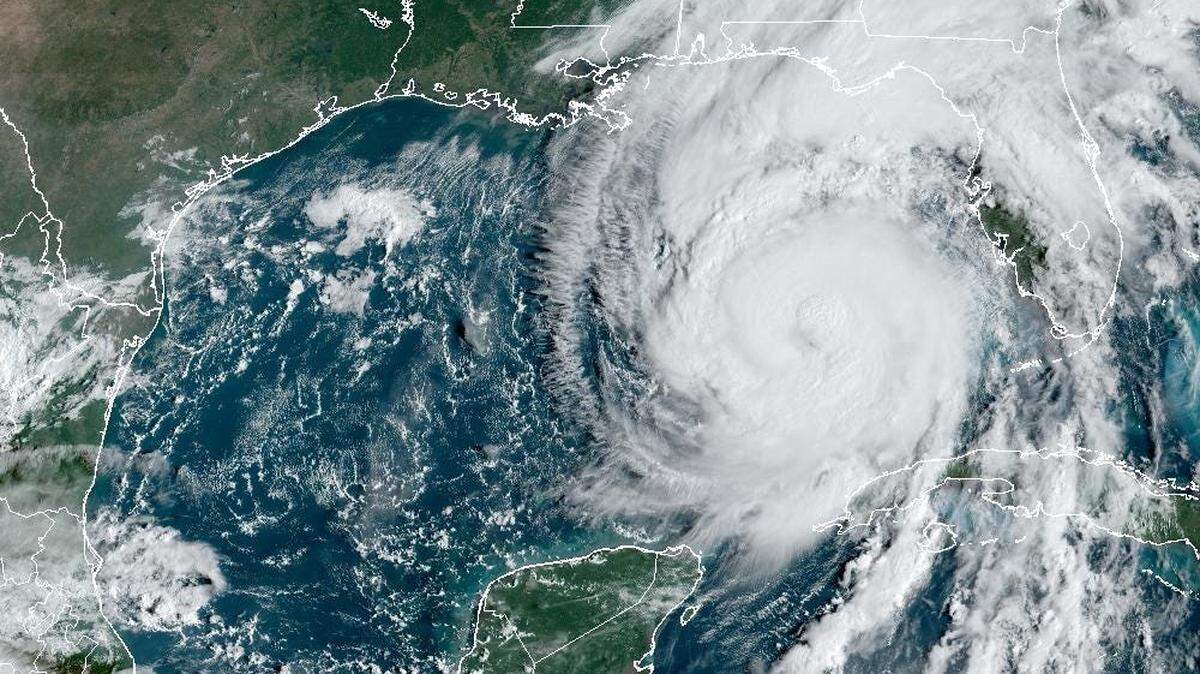
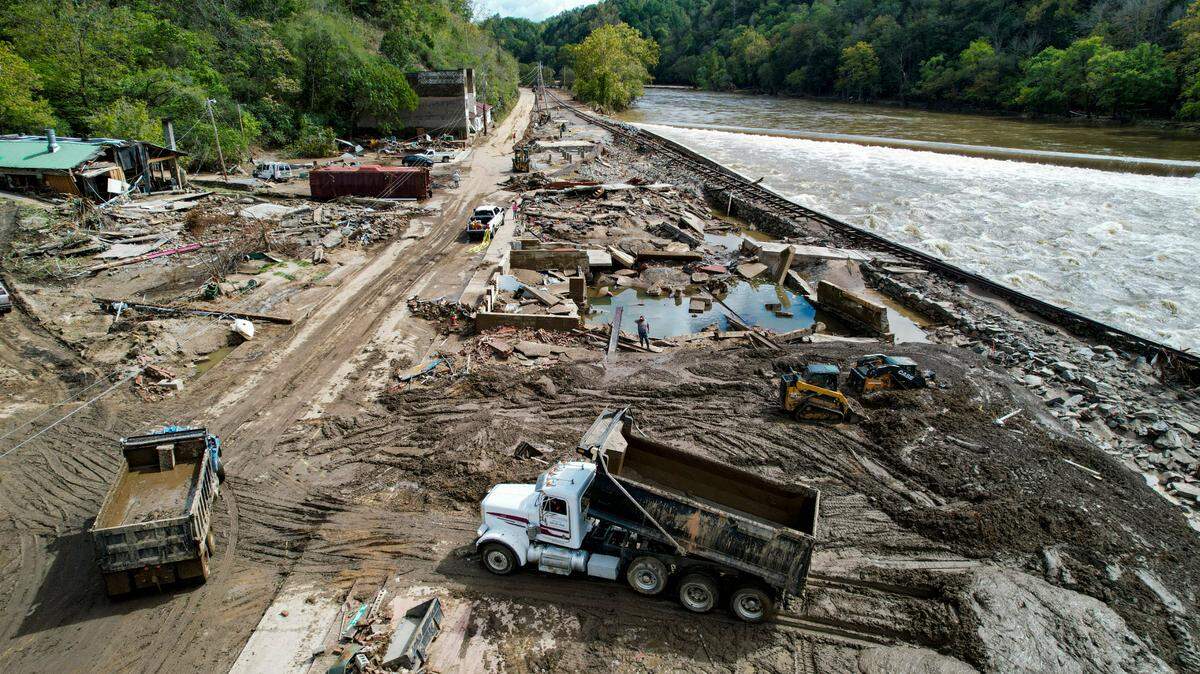
Hurricane Helene swept across the Southeast, causing major flooding and destruction throughout North Carolina. Here is ongoing coverage from The News & Observer and The Charlotte Observer about Hurricane Helene and the aftermath, particularly in Western North Carolina.
Expand All
The storm had begun to subside by late morning. The torrential rain from the remnants of Hurricane Helene that had wiped out mountain roads and communities in Western North Carolina the night before had largely stopped. Traffic on Interstate 40 through the Pigeon River Gorge was moving.
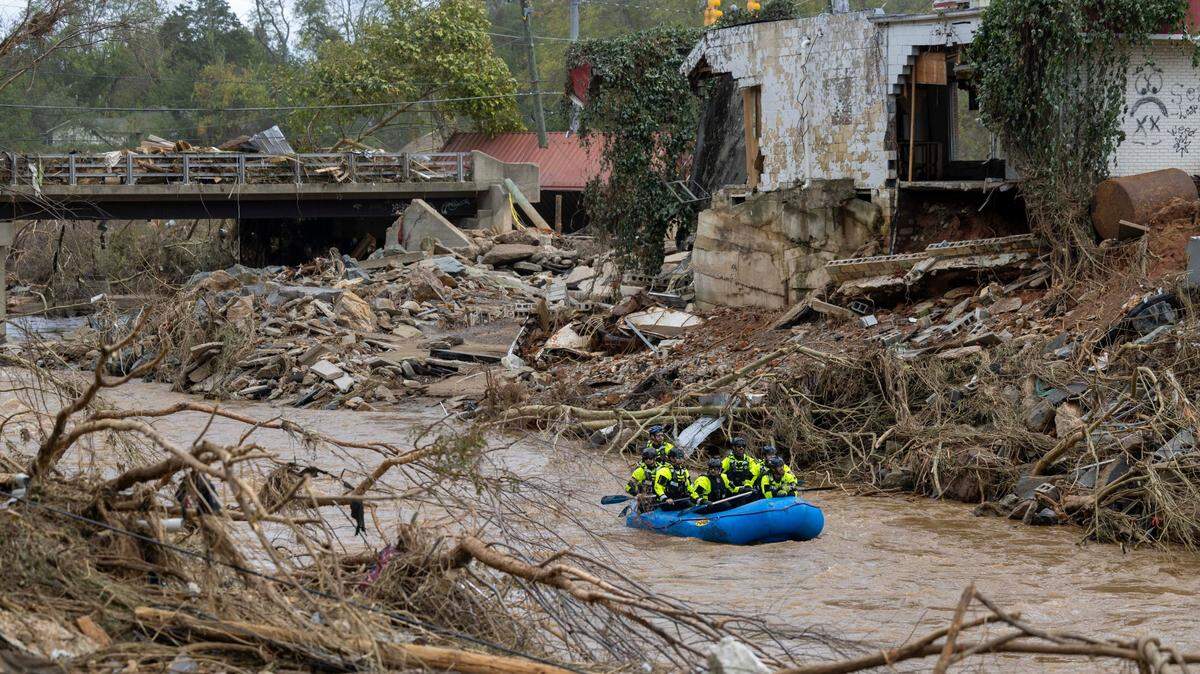
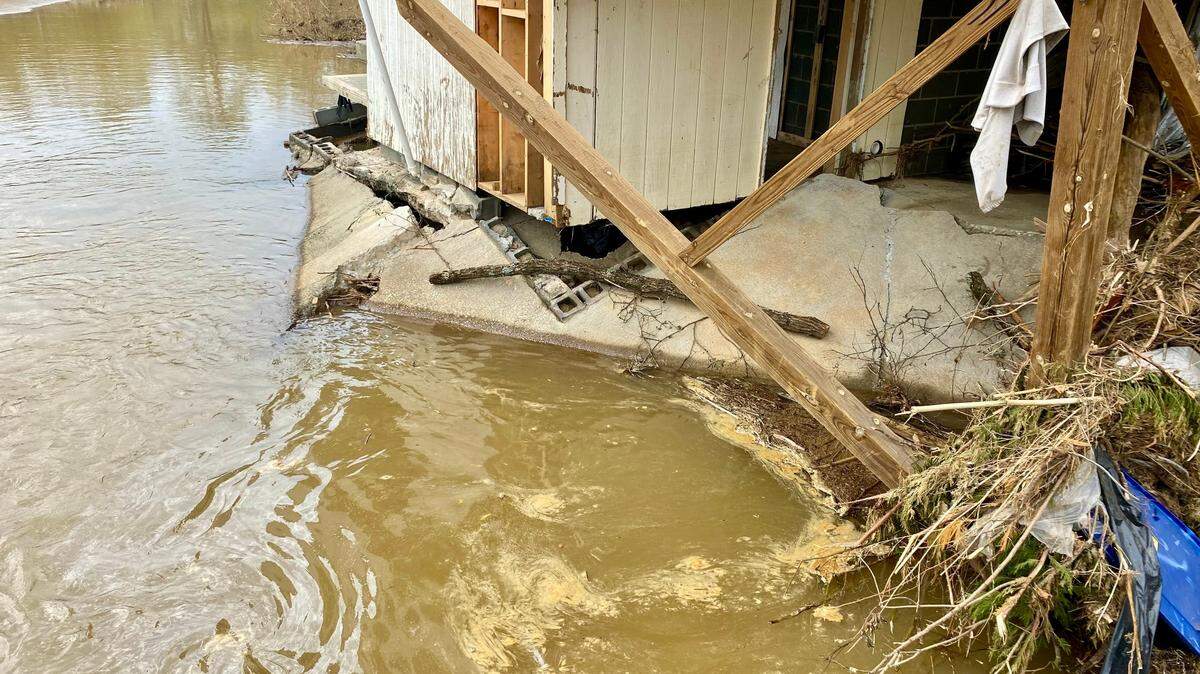
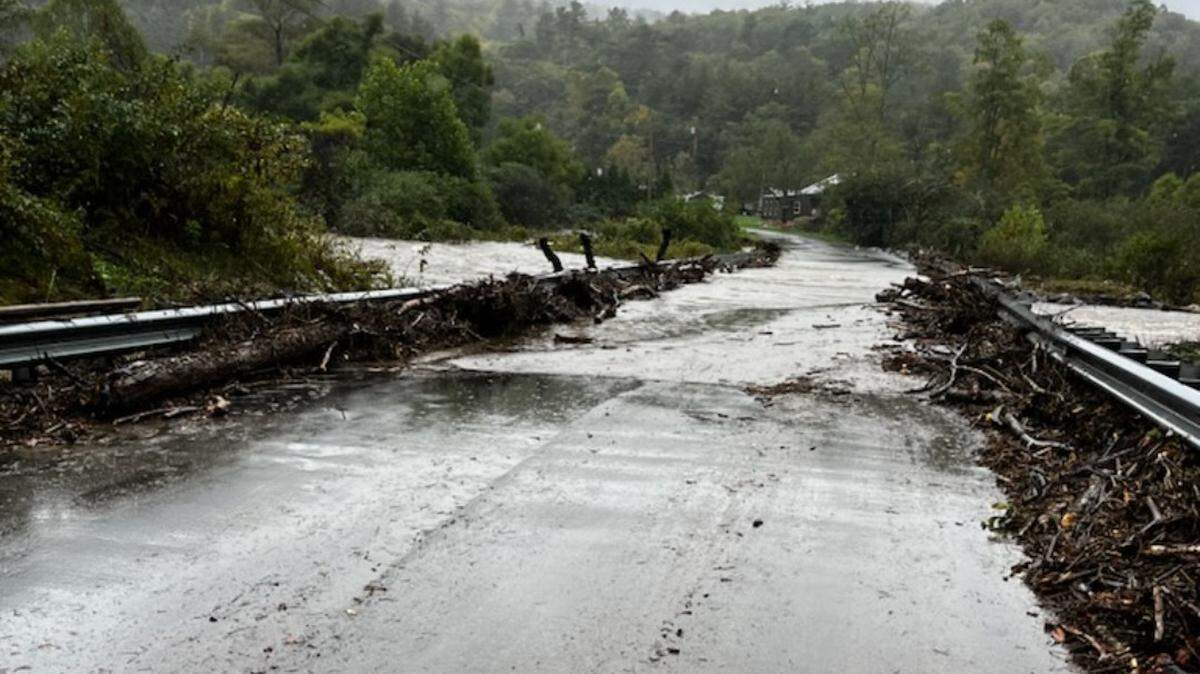
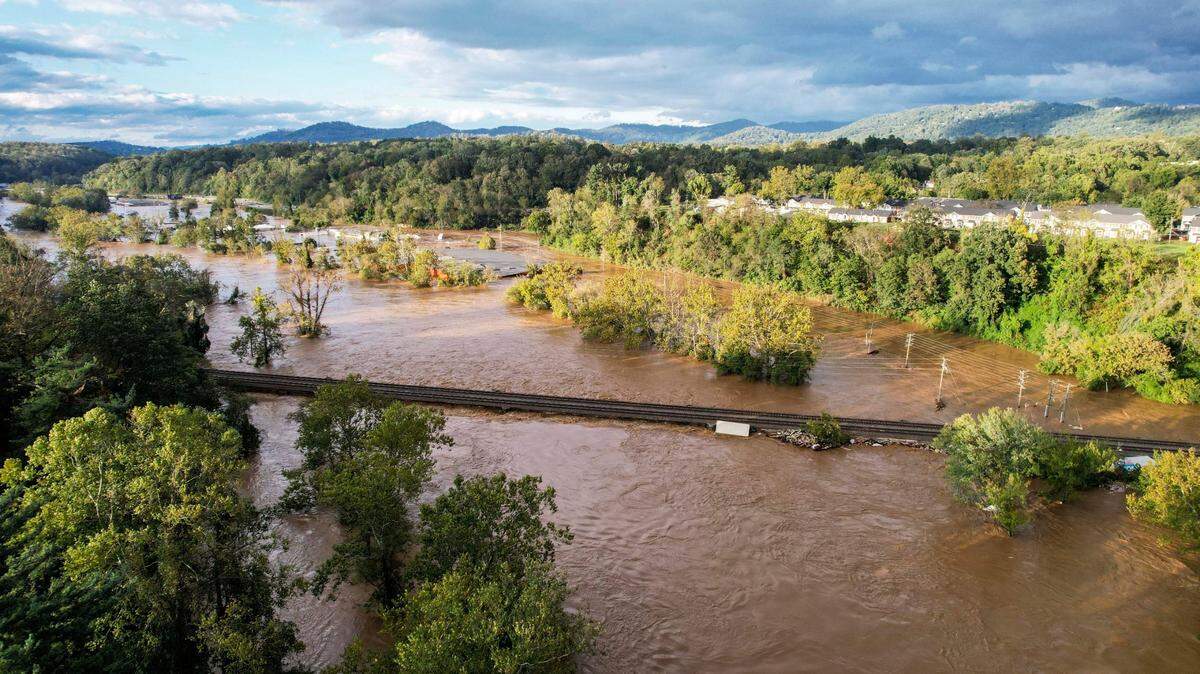
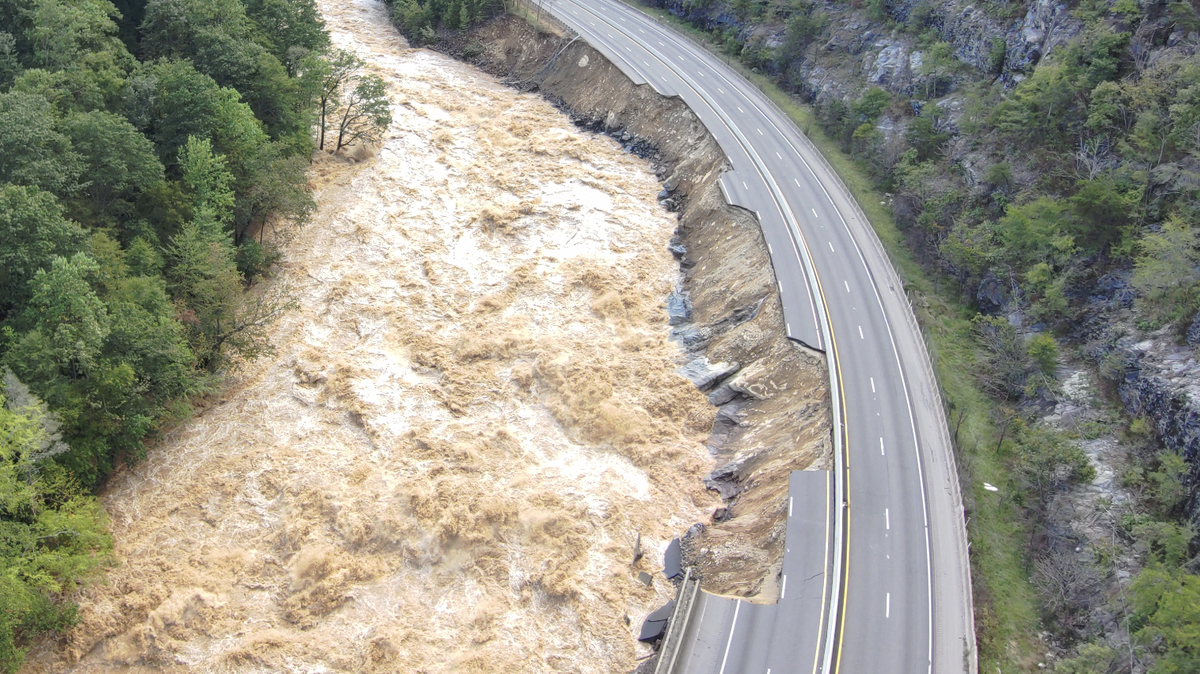
But off to the side of the highway, the swollen Pigeon River was eating into its banks. Trees began to fall away as the river came closer, until the water was scouring the earth under the guardrails.
Still, the cars and trucks kept passing by.
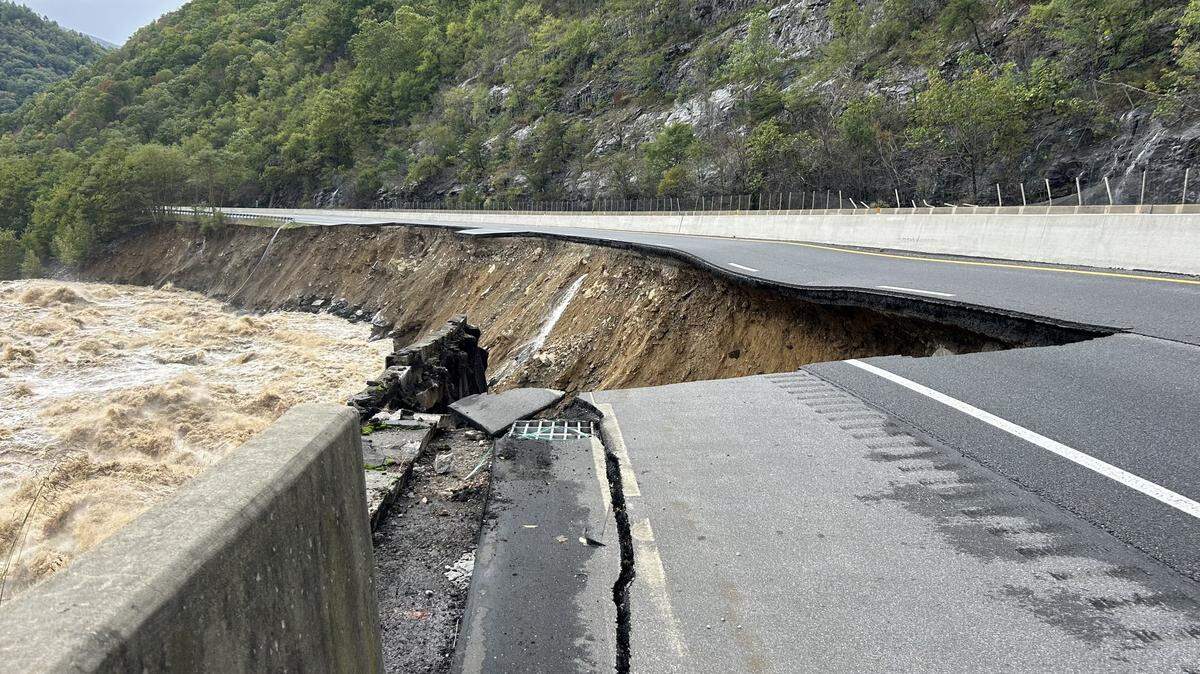
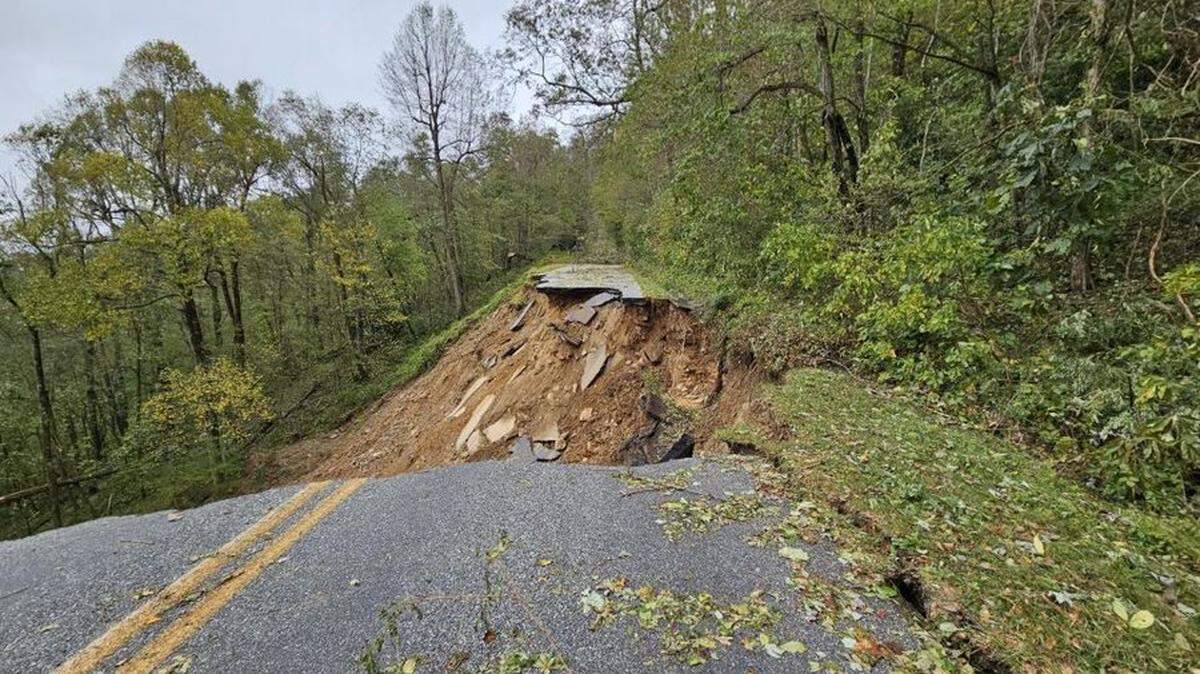
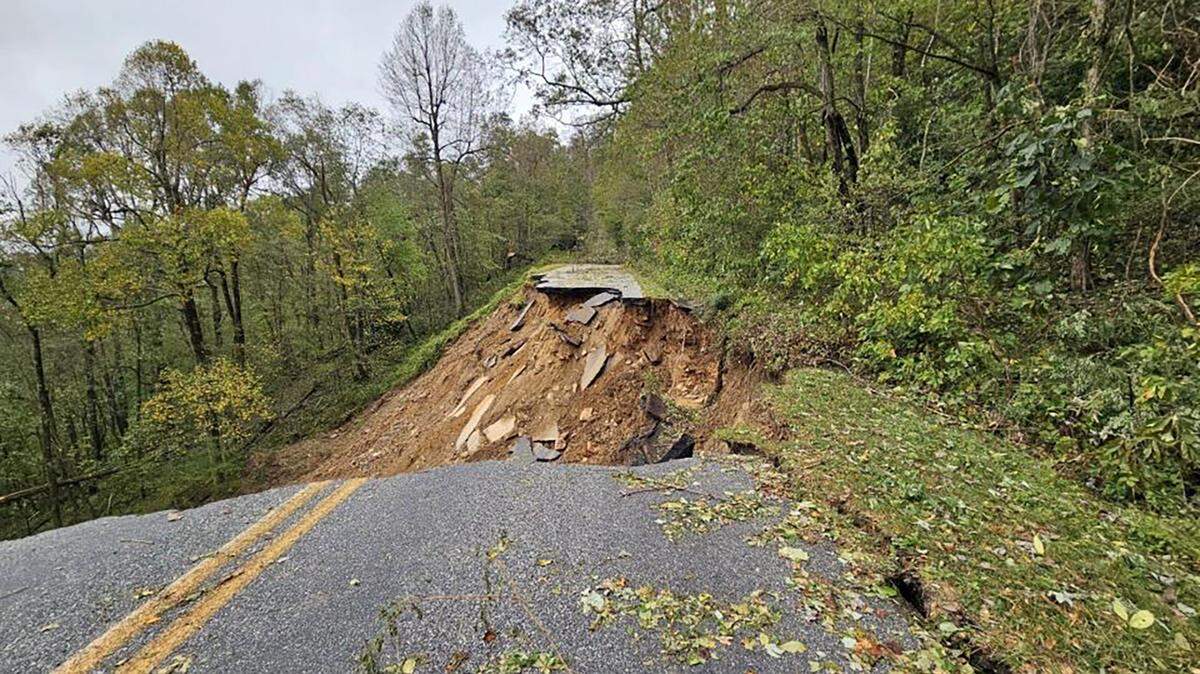
Two people called 911 just before noon on Friday, Sept. 27, to report a problem with eastbound I-40 at mile marker 4, just before the tunnel. “The shoulder is gone,” one of the callers said. “And there’s a big crack in the road.”
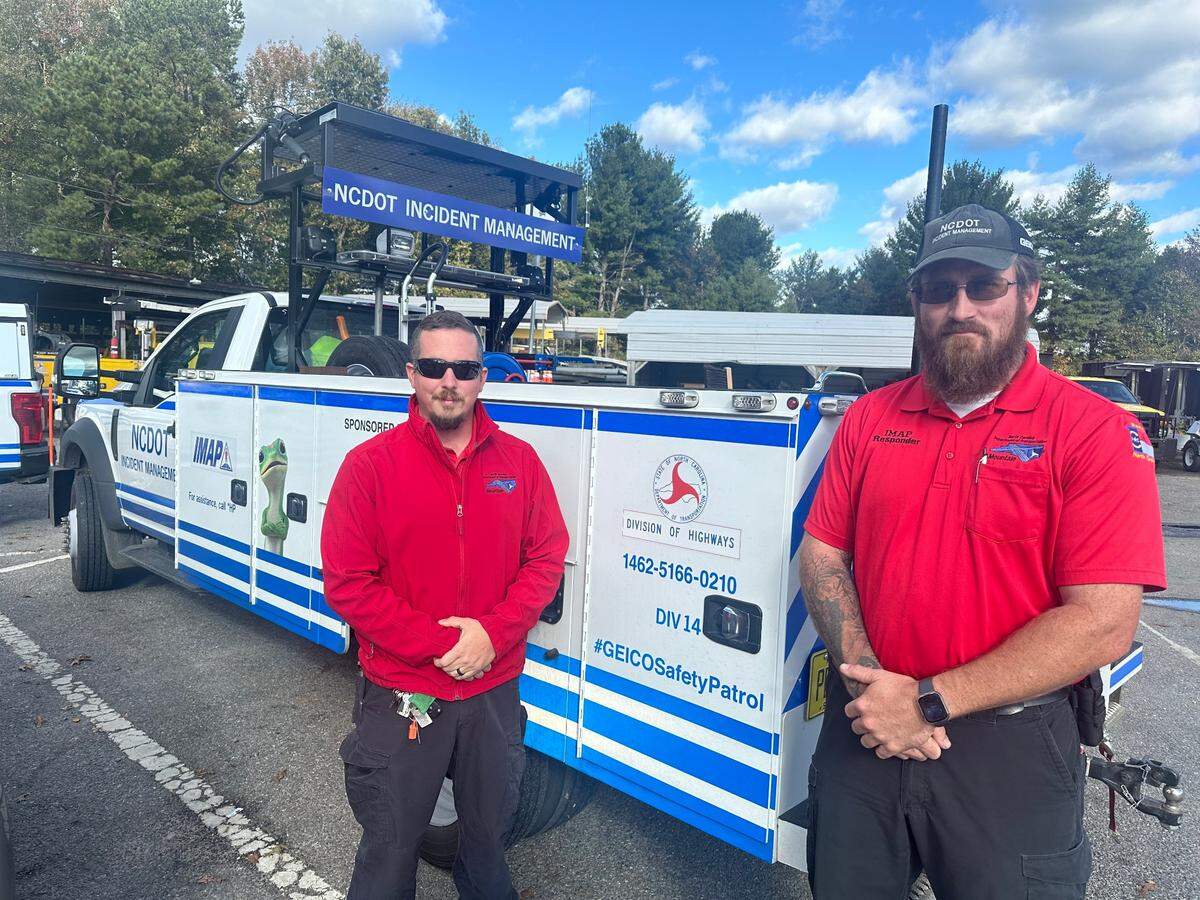
The State Highway Patrol responded, as did the N.C. Department of Transportation’s safety patrol, IMAP, whose trucks use lights and arrows to direct traffic around crashes, broken-down cars and, in the gorge, the occasional rock slide.
Garret McFalls was one of the IMAP drivers who headed westbound on I-40 into the gorge. When he got about 3.5 miles from the Tennessee line he saw eastbound traffic stopped and several people out of their cars.
“There’s people waving and pointing at the road that’s not there,” McFalls said. “The shoulder and the right lane were gone.”
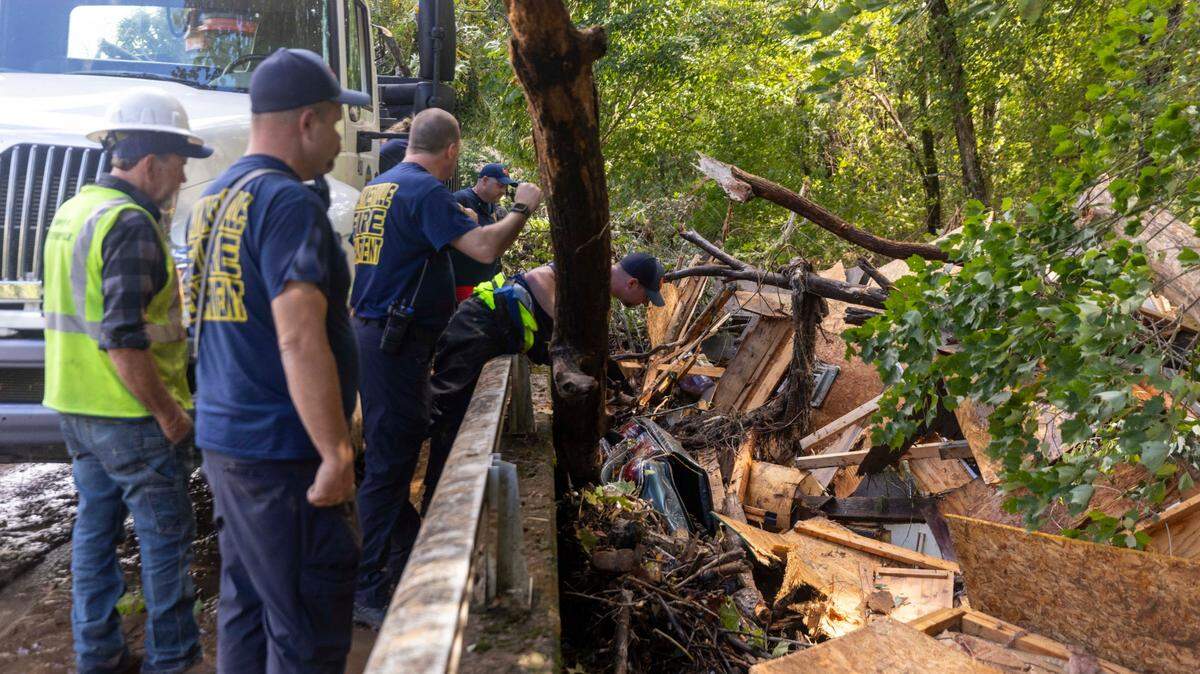
The Pigeon River was devouring eastbound I-40 bit by bit, with perhaps more than a hundred cars and trucks still on the road.
Keeping any of them from falling into the river would require concentration and urgency from several people. They included IMAP drivers like McFalls and a counterpart from Tennessee; state troopers; NCDOT engineers who had gone to check on a nearby rest area; the chief of a volunteer fire department and a group of drivers who, stuck on the highway, figured out how to open a steel median gate that offered the only escape onto the westbound lanes.
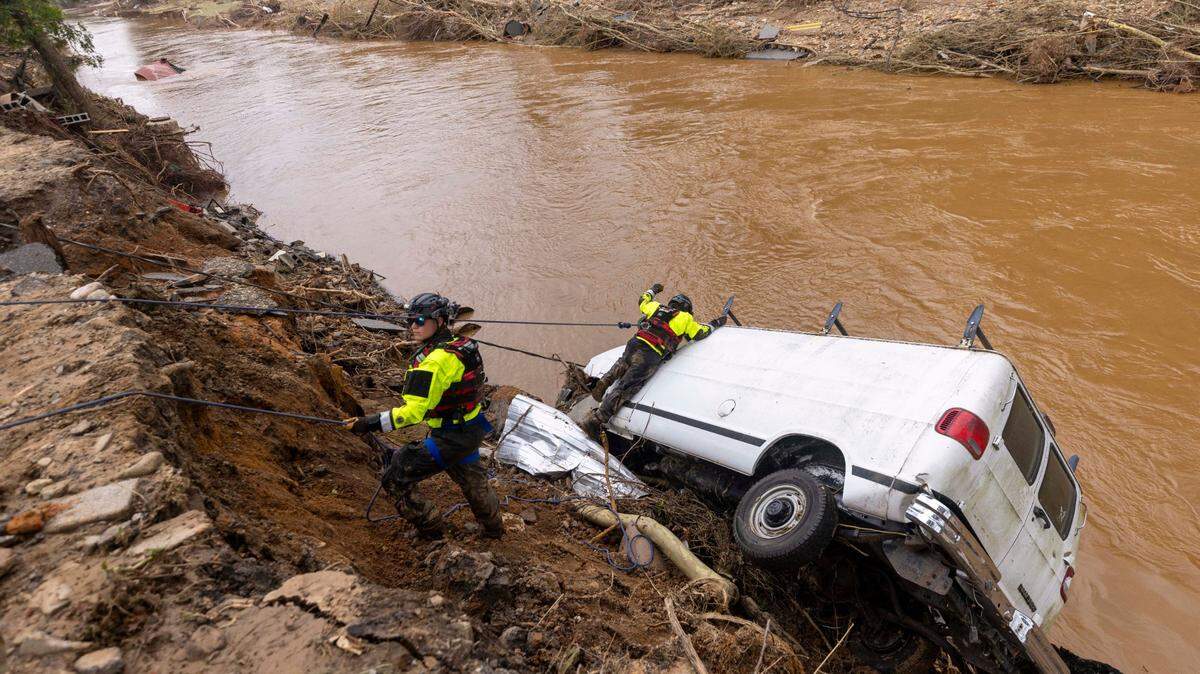
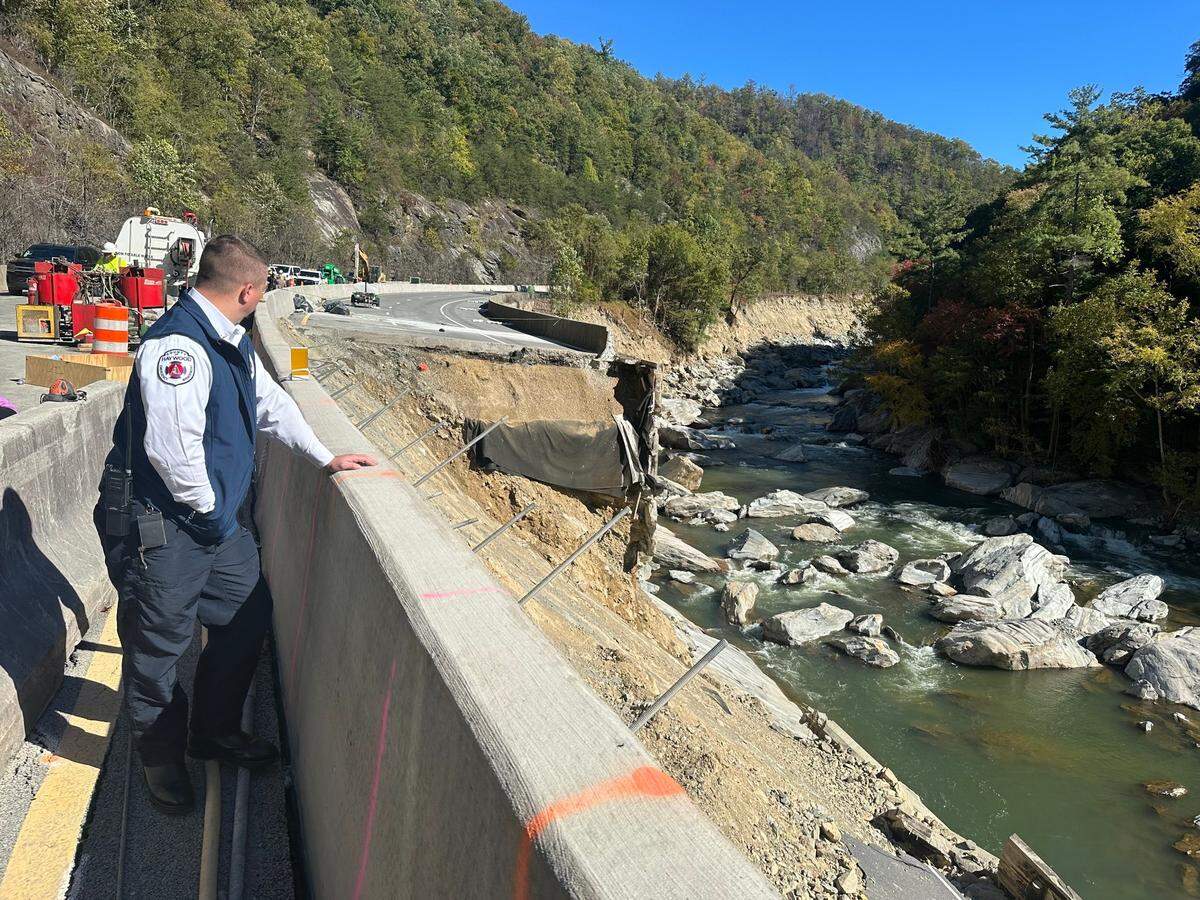
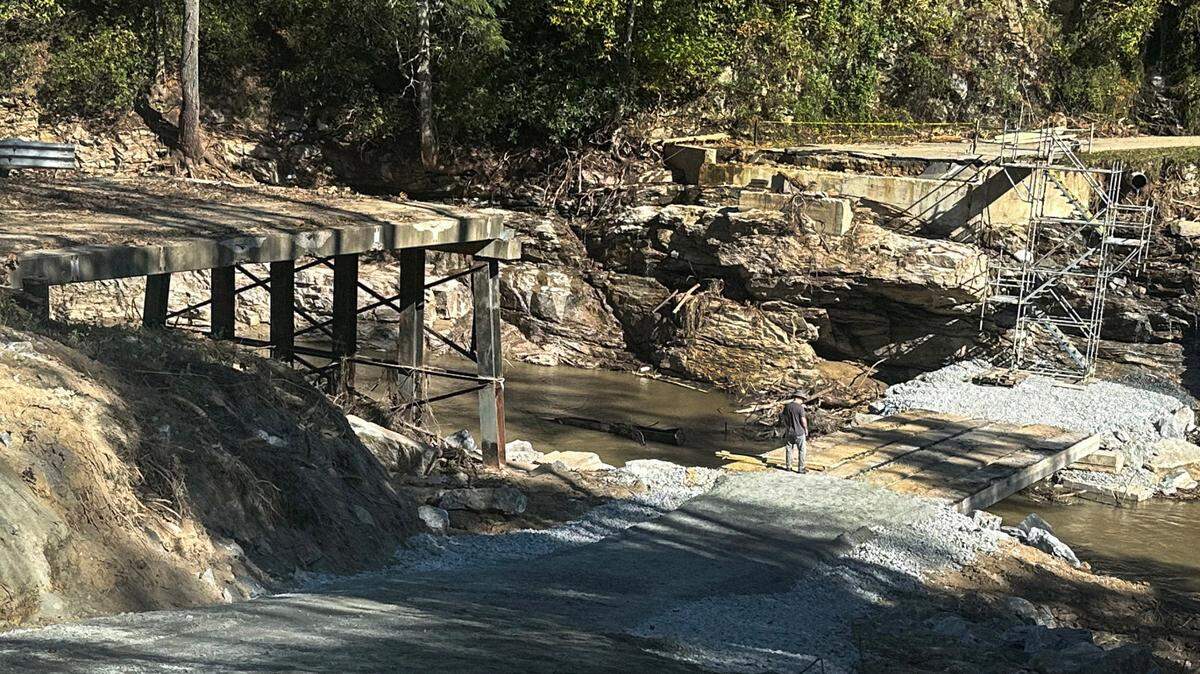
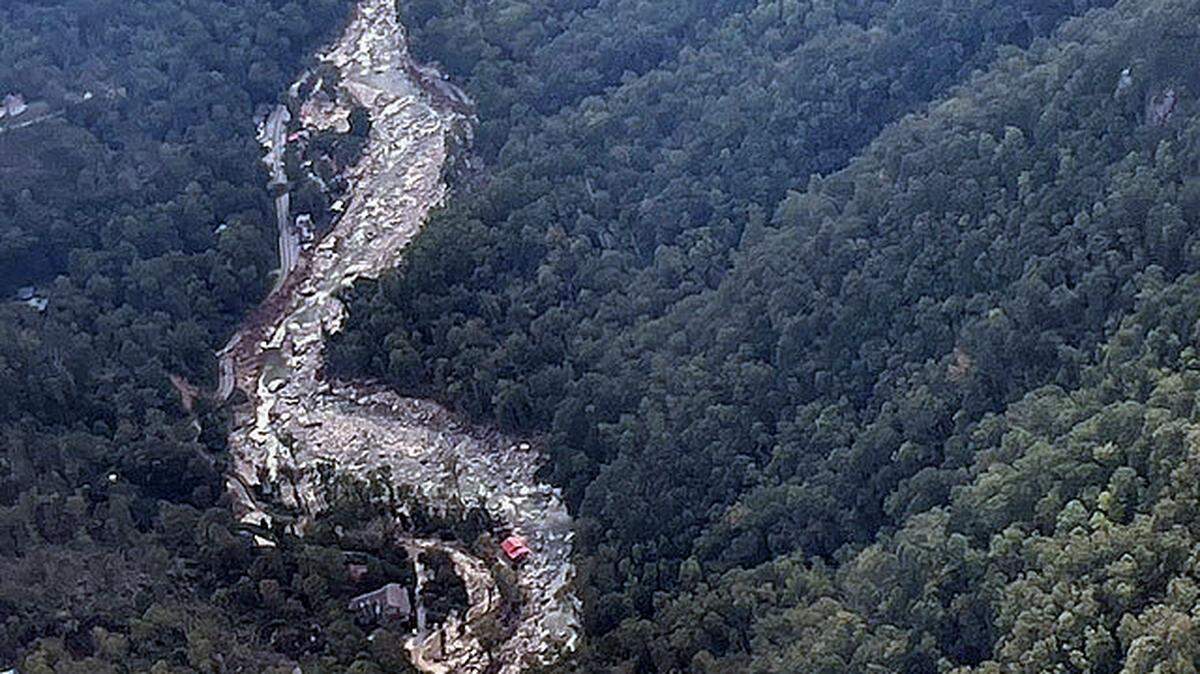
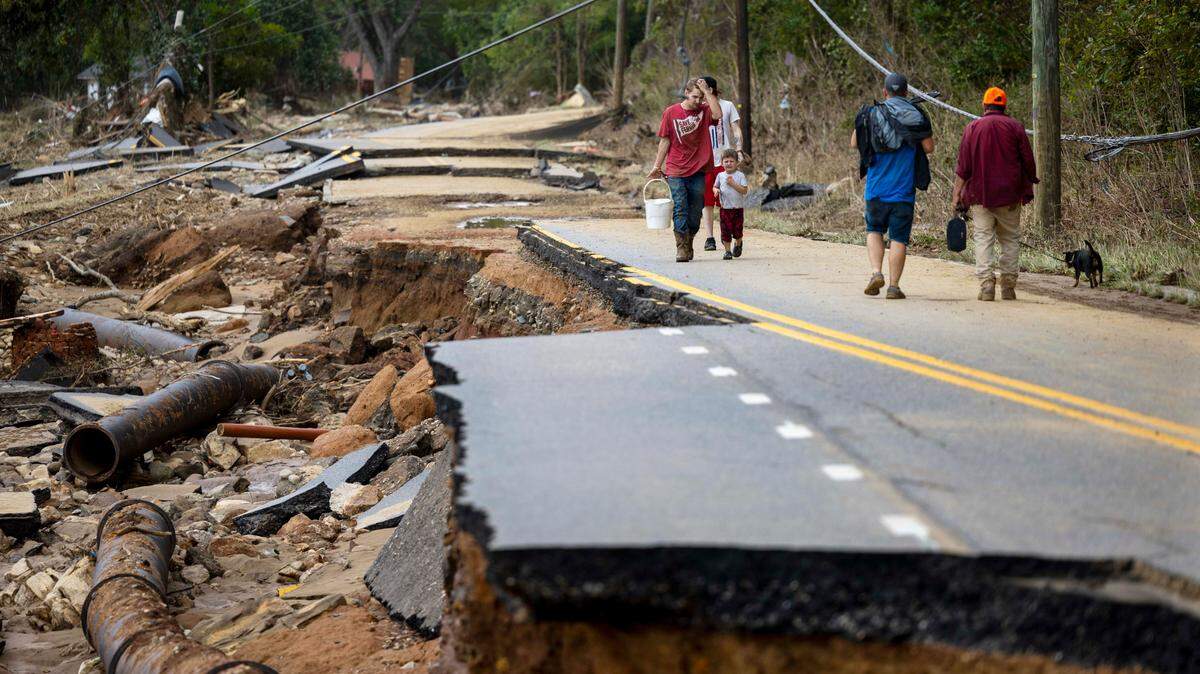
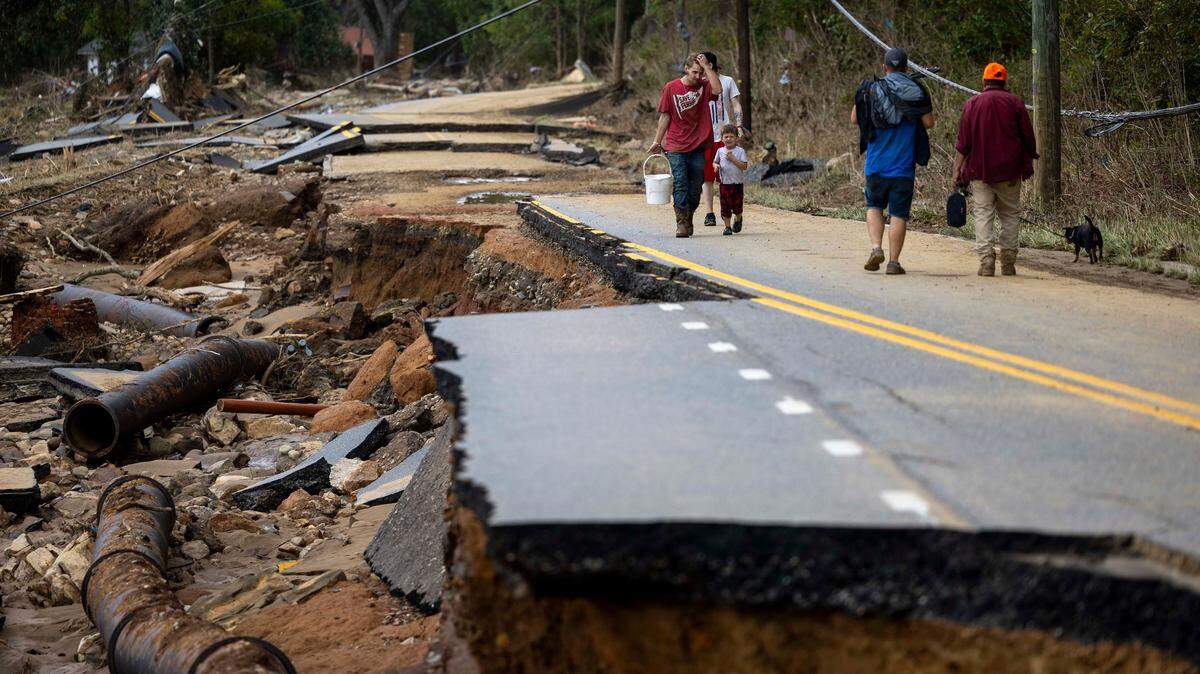
Parts of eastbound I-40 eventually collapsed in 10 places in North Carolina and several more in Tennessee. At some points just the shoulder had caved in; but in many places one or both eastbound lanes were gone, leaving only the concrete median between the westbound lanes and the river.
‘Did you see it start to fall?’
Walt Cross was headed east on I-40 when the drivers of two tractor-trailer trucks in front of him slammed on their brakes. Cross, chief of Grassy Fork Fire and Rescue in Tennessee, was about 3.5 miles into North Carolina, on his way to see if there were any problems with the Pigeon River dam that creates Waterville Lake a few miles upstream.
He pulled up beside the trucks to see what made them stop.
“Right there in front of us, the road was collapsing,” he said. “It was kind of like watching a movie out of Hollywood. The road was actually breaking, coming towards us. And then on the side of us, between us and the river, there was a little bit of a bank, and the trees started falling off, and the guardrail started falling off.”
Cross says he made several calls, starting with one to his fire station, where he had his lieutenant head toward I-40 to stop eastbound traffic. He says he made the last call, to the Haywood County 911 center using a non-emergency number, at 11:54 a.m.
He then got out to talk to the two truck drivers.
“I said, ‘Did you see it start to fall at the very beginning? Was the road there when you first saw it?’ And they said yes,” Cross said. “I said, ‘Was any cars on that?’ And they said no.”
Both tractor-trailer drivers agreed, he said, that no cars had fallen into the river.
Help comes from the Tennessee side
The first inkling David Wortham had about the torrential rains from Helene was some chatter on the radio about flooding in Hartford, Tennessee, a small community along the Pigeon River about 5 miles from the North Carolina line.
Wortham manages the Tennessee Department of Transportation team that responds to crashes and other incidents on highways in the eastern part of the state. In Knoxville, where he’s based, Helene hadn’t been much of a storm, and on Friday morning, the sun already was peeking through.
Wortham headed toward Hartford to see if the flooding might be affecting I-40 there. Traffic going east toward North Carolina that morning was normal, he said, and it wasn’t until he caught glimpses of the roaring, muddy water of the Pigeon and saw the flooded buildings and floating propane tanks at Hartford that he realized how much rain must have fallen in the Blue Ridge Mountains.
I-40 was fine at Hartford. But a Tennessee state trooper drove up and told Wortham he had seen some trees fall into the river near the guardrail further up the road. Wortham went to investigate.
He got out at mile marker 448 and shot some video of the river rushing a few feet from the highway. He called his boss to tell him what he was seeing. Just then, the dispatcher came on the radio: North Carolina’s traffic management team had called to say the road had washed away just before the tunnel, and they needed Tennessee to stop all eastbound traffic.
The timestamp on Wortham’s video is 12:08 p.m.
He drove his truck with its flashing lights to Exit 451, the last one in Tennessee, and set some cones across the road. He told a few drivers to get off and turn around, and set more cones across the on-ramp. As he did, three NCDOT engineers drove up on the westbound lanes.
“They were telling me that it had fell completely in before the tunnel and that they had quite a few cars and trucks stopped,” he said. “And they said the worst is there’s a place right behind them that looks like it’s fixing to go.”
One of those NCDOT engineers was Austin Phillips. He, Scottie Coggins and David Hall had driven down in a pickup to check on the westbound rest area at mile marker 10.5. The power was out, and the back-up generator wasn’t working. They were aware of the catastrophic flooding occurring in other parts of Western North Carolina, but didn’t think that would be a problem here.
“All three of us joked on the way down there that it’s a gorge. The water’s way down below. You won’t have any flooding much down there,” Phillips said. “And then lo and behold, all this occurred.”
A narrow ribbon of highway
The Pigeon River starts high in Pisgah National Forest, just below the Blue Ridge Parkway, and flows northwest through the Haywood County towns of Canton and Clyde. Near the Tennessee line, it enters a narrow valley, with steep mountains on either side.
I-40 was built on a shelf blasted into the side of the mountains. For more than 20 miles, the four-lane highway winds along that thin space between the rocky bluffs and the river. A concrete median separates the eastbound and westbound lanes. There are few places to turn around.
When a couple of local emergency management officials showed up at Exit 451, Wortham told them to direct everyone off the eastbound lanes and back west toward Newport.
He and the NCDOT engineers then drove east into North Carolina, looking for the back of the line of stopped cars and trucks. As he drove, Wortham noticed several places where the river had washed everything away up to the paved shoulder, including the guardrail.
Somewhere between mile markers 1 and 2 in North Carolina, they saw brake lights.
“Honestly, I don’t know how long the line of traffic was. But we got to the back of it and just started telling people in cars to turn around,” he said. “They were confused, of course. And we just said turn around, stay right up next to the wall and go back to the last exit.”
The road was too narrow to turn a tractor trailer truck around, though. They would have to wait.
A gate in the median the only way out
McFalls, the IMAP driver, shouted to the people standing by the collapsed highway near mile marker 3.5 that he would be back. He then drove west about four miles, to the first place he could turn around and get on the eastbound side.
It was Exit 451 in Tennessee, where he saw the eastbound lanes had been shut down. McFalls headed east and came across the NCDOT engineers near a spot where the shoulder was starting to give way.
Cars were starting to come westbound on the eastbound lanes, where Wortham was sending them, so McFalls set out some cones to make sure they stayed close to the median. He then caught up with Wortham.
McFalls knew there was a metal section of the median just beyond mile marker 3 that can be opened when the road is blocked from a rock slide or a bad crash. If they could open that, they could turn cars around there and send them back into Tennessee on the westbound lanes.
By this time, two other IMAP drivers had stopped westbound traffic at Exit 7, the last exit in North Carolina, so the westbound lanes were clear.
McFalls drove up the shoulder past the stopped traffic. When he got to the metal median, he found that some drivers had figured out how to work the crank to open the gate up to let cars through one at a time. McFalls and the three NCDOT engineers opened the remaining sections to create a hole big enough for a tractor trailer to swing through.
Now the real work began.
Threading cars and trucks through the median
The road was now collapsing behind and in front of the remaining cars and trucks in the eastbound lanes. The ones most at risk of falling into the river were ahead of the hole in the median. That’s where the travel lanes started collapsing, where McFalls had first seen drivers out of their cars and where Cross, the fire chief, had stopped behind the two tractor trailers.
The collapsed section was growing bigger, and the trucks and everyone behind them were slowly backing up toward the hole in the median. There, Wortham, McFalls and another IMAP driver, Christopher Strader, were directing traffic. They were joined by the three NCDOT engineers, who had driven east on the empty westbound lanes, and N.C. State Trooper Joe Henderson.
They alternated, letting some cars and trucks from behind the hole drive through, then some that were backing up. Some drivers who had gotten out of their cars and trucks, afraid they would fall into the river, had to be coaxed back behind the wheel.
Cross said a dozen or more tractor trailers were ahead of the break in the median and had to back up. Some of the truck drivers needed guidance. Some were panicked. Cross said one looked like he was going back over the cars behind him.
“I finally got him to stop, but he was just going to drive over people to get out of there,” he said. “They were scared. And rightfully so. It was scary.”
Everyone knew they had to act quickly.
“Just standing there, trying to direct traffic, you could hear trees start popping and cracking, and then 30 seconds later that tree was gone,” Phillips said. “The Pigeon swept it away. It was crazy.”
Saving Giles Harmon’s cross
By 1:23 p.m., when Wortham shot another video, the eastbound lanes of I-40 were clear. The drivers at the front of the line who stopped their trucks when they saw the road start to collapse were the last ones through the hole in the median, Cross said.
But the men directing traffic had one more bit of unfinished business.
State Trooper Giles Harmon was 26 when he was shot and killed in the gorge in 1985. Harmon pulled over a car from Kentucky, unaware that the passenger had kidnapped the driver and was forcing him at gunpoint to drive to North Carolina.
A wooden cross topped with an American flag and surrounded by stones marked the spot where Harmon died, just off the eastbound lanes of the highway. A small plaque on the cross included one of his patches. IMAP drivers Strader and McFalls knew it well.
Strader suggested they retrieve the cross before the river took it. They thought they’d pull it out of the ground, but it turned out the cross was cemented in. As they pulled and pried, 40-foot trees nearby sagged and fell into the river.
So they went to one of the trucks, got a chainsaw and cut the cross off at the base.
“We took it to the Highway Patrol office,” McFalls said. “And they were very, very appreciative, almost in tears, because some of those troopers worked with him.”
More than a mile of highway gone
The patch of ground where the cross once stood is now gone. So is the place where McFalls initially set out cones to make sure drivers who had turned around stayed close to the median.
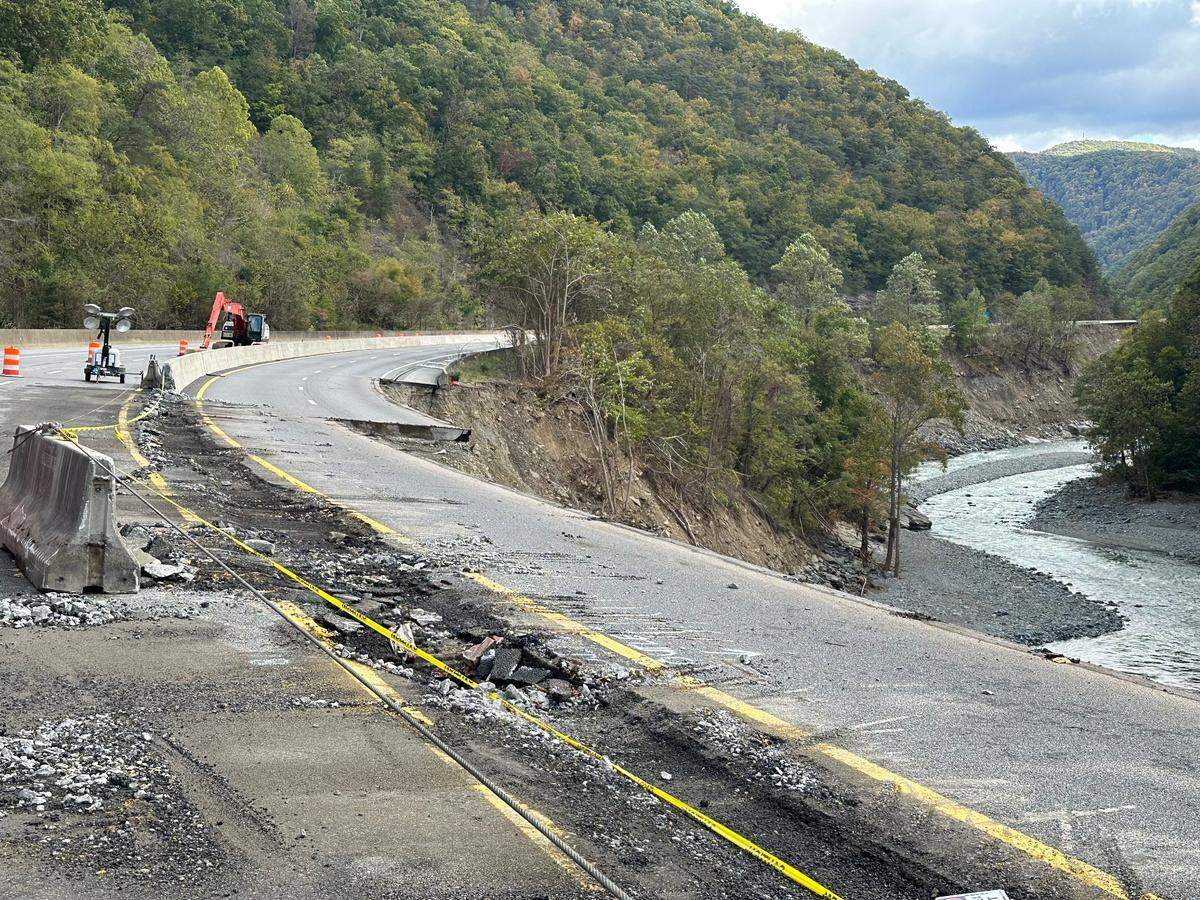
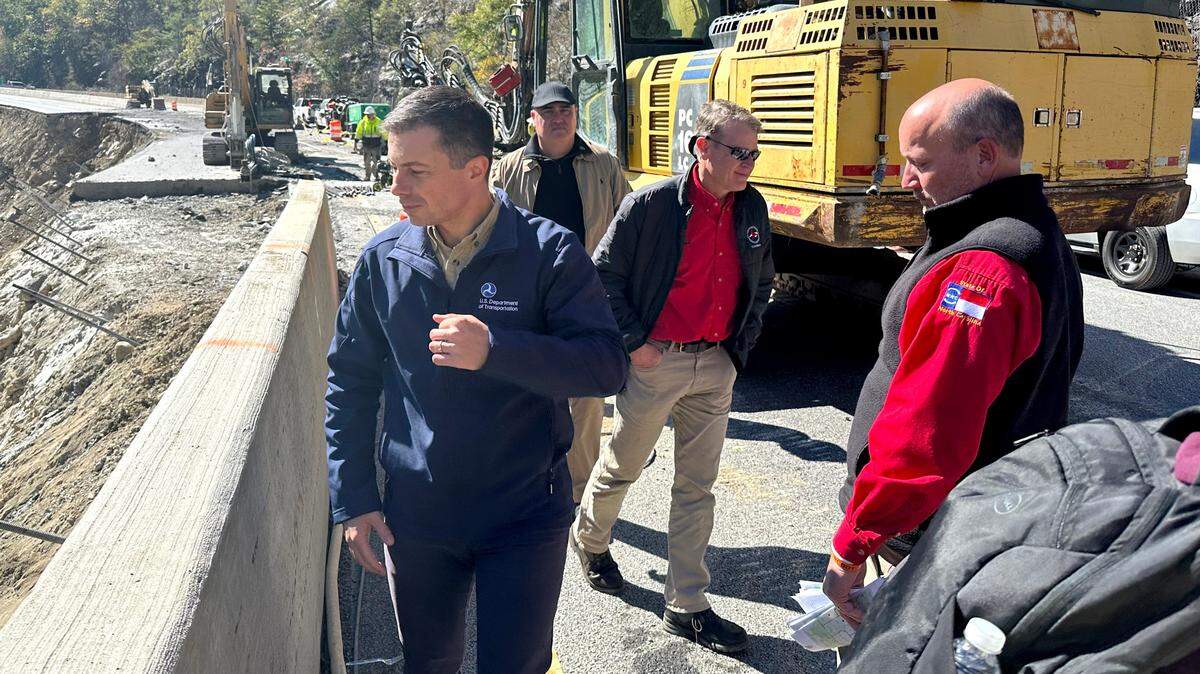
As the day went on, more and more sections of I-40 gave way. In all, the river took 7,000 linear feet of pavement, more than a mile, on the North Carolina side, says Daniel Ross, the NCDOT engineer who will oversee reconstruction. Ross drove down to the gorge that afternoon, shortly after the traffic had been cleared.
“You stand there and look at it, and you’d never imagine that anything would happen in such a place like this,” Ross said. “But we’ve never seen the water level get up like this. We’ve never seen such violence out of the Pigeon River before. It was a lot to take in.”
The men who worked to get cars and trucks off I-40 before it collapsed downplay their individual roles and say it was a team effort. A few said God had a hand in it. Henderson, the first state trooper to respond, declined to speak to a reporter because he didn’t want to draw attention to himself, said his supervisor, 1st Sgt. B.E. Hipp.
Hipp said he hopes to find a way to recognize what he considers heroism by Henderson, the NCDOT employees and others who helped clear the road.
“Every day that I drive down to that gorge, I’m amazed that we didn’t lose anybody,” he said. “And I’m grateful and thankful for their actions.”
This story was originally published November 14, 2024 at 5:00 AM with the headline "‘There’s a big crack in the road’: The race to get cars off I-40 as Helene washed it away."






.jpg)

.jpeg)
.JPG)
















.JPG)