The FDA changed who can get COVID vaccines. Here’s who’s still eligible in NC
AI-generated summary reviewed by our newsroom.
- FDA revoked emergency use and limited vaccine access to high-risk groups only.
- Children and healthy adults under 65 may face cost or coverage barriers to vaccines.
- CDC guidance, insurer policies and off-label limits could reduce future availability.
Update: Find our latest story on COVID-19 and vaccine access here.
New changes to COVID-19 vaccine policies spearheaded by U.S. Secretary of Health Robert F. Kennedy Jr. could make it tougher for some people to get their shots.
As of Aug. 27, the U.S. Food and Drug Administration (FDA) revoked emergency use authorization for COVID-19 vaccines and limited access to individuals 65 and older, as well as people of an age with at least one underlying health condition, The Associated Press reported.
That means healthy individuals under 65 are now largely excluded unless they pay out-of-pocket, potentially exceeding $150 if the shots aren’t covered by their insurance.
The new policies also limit access to the vaccines for children, with Pfizer’s updated vaccine no longer authorized for children under 5, and Moderna’s Spikevax only available to those under 5 with serious health conditions, AP reported.
The news comes just weeks after a new strain, NB.1.8.1, a variant that spreads faster than previous versions due to mutation in one of its spike proteins, continues to expand across the country, The Charlotte Observer reported.
The Charlotte Observer spoke to Dr. David Wohl, an infectious disease specialist at UNC Health, to find out how these new policies will impact North Carolina residents and whether you’ll still be able to get a shot.
Here’s what you need to know.
Will you still be able to get a COVID vaccine?
Maybe. It remains unclear whether younger, otherwise healthy adults will be able to access the shots easily, or if they’ll face new hurdles such as out-of-pocket costs or insurance barriers, Wohl said.
“We still don’t know for sure what practical implications this will have for accessing the updated COVID-19 vaccines for people who are aged below 65 who do not have one of the specified conditions that are associated with increased risk of severe COVID-19,” said Wohl.
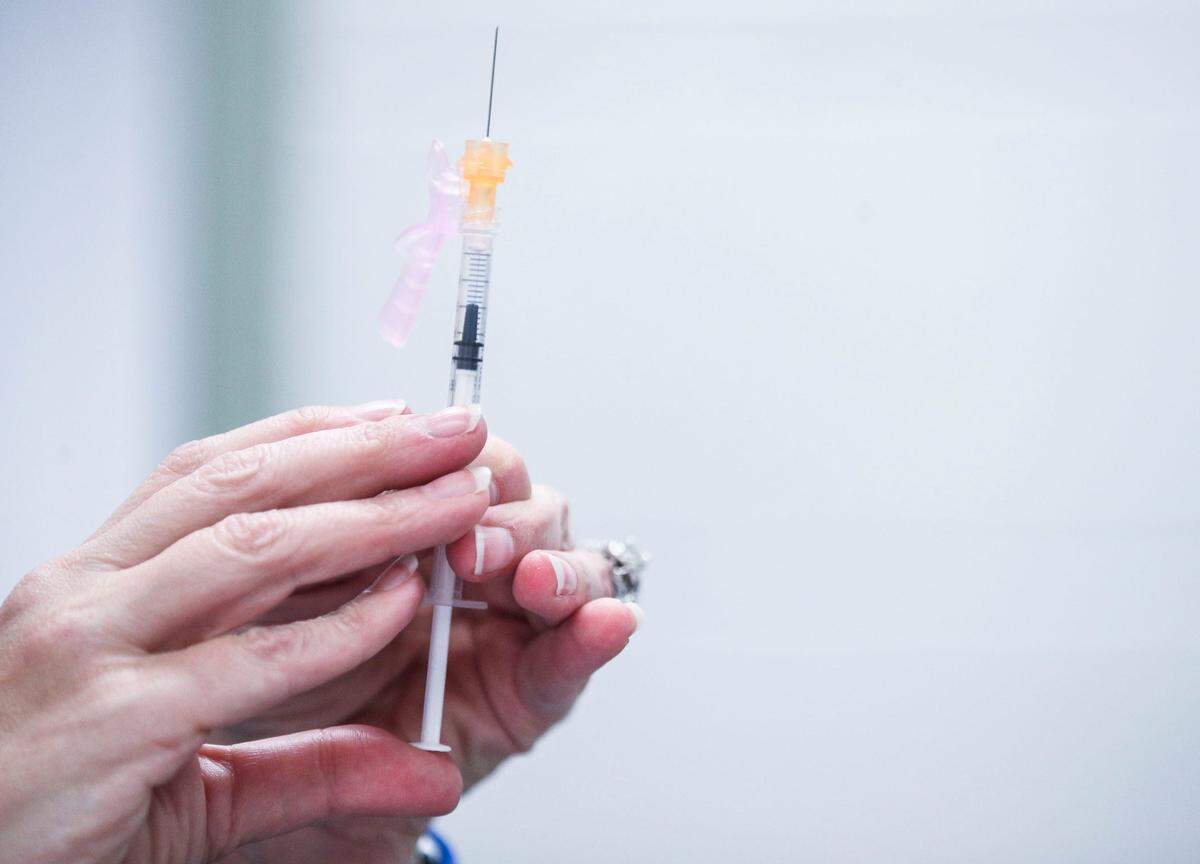
Who qualifies for the COVID vaccine under the new policy?
The FDA’s new policy restricts vaccine access to those under the age of 65 or those with serious health conditions.
Those health conditions, outlined by the Centers for Disease Control and Prevention, include:
- Asthma
- Cancer
- Cerebrovascular disease
- Chronic kidney disease (includes people receiving dialysis)
- Chronic lung diseases limited to: bronchiectasis, chronic obstructive pulmonary disease, Interstitial lung disease, pulmonary embolism and pulmonary hypertension
- Chronic liver diseases limited to: cirrhosis, non-alcoholic fatty liver disease, alcoholic liver disease, autoimmune hepatitis
- Cystic fibrosis
- Diabetes mellitus, type 1 and type 2
- Disabilities, including Down syndrome
- Heart conditions, such as heart failure, coronary artery disease, or cardiomyopathies
- HIV
- Mental health conditions limited to: mood disorders, including depression, schizophrenia and spectrum disorders
- Neurologic conditions limited to dementia and Parkinson’s Disease
- Obesity
- Physical inactivity
- Pregnancy and recent pregnancy
- Primary immunodeficiencies
- Smoking, current and former
- Solid organ or blood stem cell transplantation
- Tuberculosis
- Use of corticosteroids or other immunosuppressive medications
“Those conditions, fortunately for most of us, are pretty broad,” Wohl said. “So, being overweight or obese, for instance, or having asthma. It covers a lot of Americans, so I think that’s a sort of loophole for many people.”
“Where we don’t see as much of a loophole is in children, and I think the restrictions for children who are much less likely to have one of those conditions that increase the risk for severe COVID is going to have the greatest impact,” he continued.
Can you convince your doctor to give you the vaccine?
Possibly. Wohl explained that, even if the FDA continues to restrict vaccine access, doctors can still administer vaccines “off-label.”
When doctors prescribe a medication “off-label,” it means they are using an FDA-approved drug for a purpose, dose, age group or method of delivery that hasn’t been specifically approved by the FDA.
“Many medications that we’re taking right now are off-label,” Wohl said.
But since 90% of COVID-19 vaccines are administered at pharmacies, it could be difficult for patients to access since pharmacies cannot give the vaccine off-label, Wohl said.
“People would then have to go to their doctor’s office, maybe incurring a cost their insurer may not pay for off-label vaccines,” said Wohl.

Will insurance continue to cover vaccine costs?
It’s unclear whether insurers will continue to cover the cost of COVID-19 vaccines, Wohl said.
“The problem is that insurers today have been obligated to cover what the CDC Advisory Council, the advisory board, recommends,” he added. “If they don’t recommend the vaccines for many people, then the insurers do have the prerogative of not covering it.”
He explained that insurers owning some pharmacies could provide an incentive for them to continue covering vaccine costs, but since many of the newly-appointed members of the CDC Advisory Council are “vaccine hesitant,” there’s a real possibility the council’s guidance could shift in ways that make it easier for insurers to limit coverage.
“That’s going to really throw this into an uncharted territory,” said Wohl.
Will pharmacies continue to offer COVID-19 vaccines?
Following the FDA’s announcement, many pharmacies across North Carolina paused COVID-19 vaccinations.
On Friday, Aug. 29, CVS said it would delay offering the shots in 16 states, including North Carolina, because state law requires authorization from the FDA’s Vaccine Advisory Committee before pharmacies can administer them, The New York Times reported.
Other major chains have also held off. Walgreens’ website cites “pending approval of updated vaccines for 2025-2026,” while Walmart notes the vaccine “isn’t available yet,” leaving patients unable to book appointments. Publix, Harris Teeter and Rite Aid similarly are not allowing online scheduling for the vaccine in North Carolina, as of Friday morning when The Observer checked.
What are COVID numbers like in NC?
Wohl pointed out that the number of emergency room visits for people with COVID-19 are on the rise, which matches data from the N.C. Department of Health and Human Services that show a steady increase in the percentage of ER visits related to the virus since the week of July 5.
He also noted that 5% of those visits have been from young children, a number that will likely increase during the winter.
“They’re higher now than they were during this time last winter, especially among younger children,” Wohl said. “So, especially for parents who really do understand the data and who are interested in getting their children vaccinated, [the new FDA policies] really put a dent in that plan.”
Will the vaccine restrictions remain in place?
Wohl predicted that the restrictions will stay in place and that the CDC Advisory Council will move to tighten eligibility, making it harder for many healthy young adults, children and even some pregnant people to get vaccinated.
“If you’re a college kid who’s in really good shape…you’re gonna have a hard time getting this vaccine,” Wohl said. “If you’re a young child, and don’t have asthma or any other conditions, you’re gonna have a hard time. I think some pregnant people are going to have a hard time, even though pregnancy is clearly a condition associated with severe COVID-19. So I think there’s going to be barriers placed.”
With the new policies in place, Wohl said it is frustrating to see misinformation drive fears about the COVID-19 vaccines.
“We do know what works, and we do know what doesn’t work,” he said, pointing to the vaccines’ role in curbing the pandemic.
While he acknowledged it can be reasonable for some people to skip a shot if they have recent immunity, Wohl pushed back against claims that the vaccines are broadly harmful, calling those ideas “mythical” and dangerous.
“It just leads you to make poor decisions, like the gunman who shot hundreds of rounds into the CDC building, killing a police officer and demoralizing, traumatizing and terrorizing people in that building who are dedicated to keeping us all safe, Wohl said. “That’s unfortunately, an extreme result of that thinking.”
This story has been updated to include pharmacies pausing COVID-19 vaccinations.
This story was originally published August 28, 2025 at 3:40 PM with the headline "The FDA changed who can get COVID vaccines. Here’s who’s still eligible in NC."