In Beaufort County, hundreds arrested for DUI aren’t convicted. Why?
READ MORE
Over the limit
Drunk drivers in Beaufort County routinely escape DUI convictions. Here’s how.
Expand All
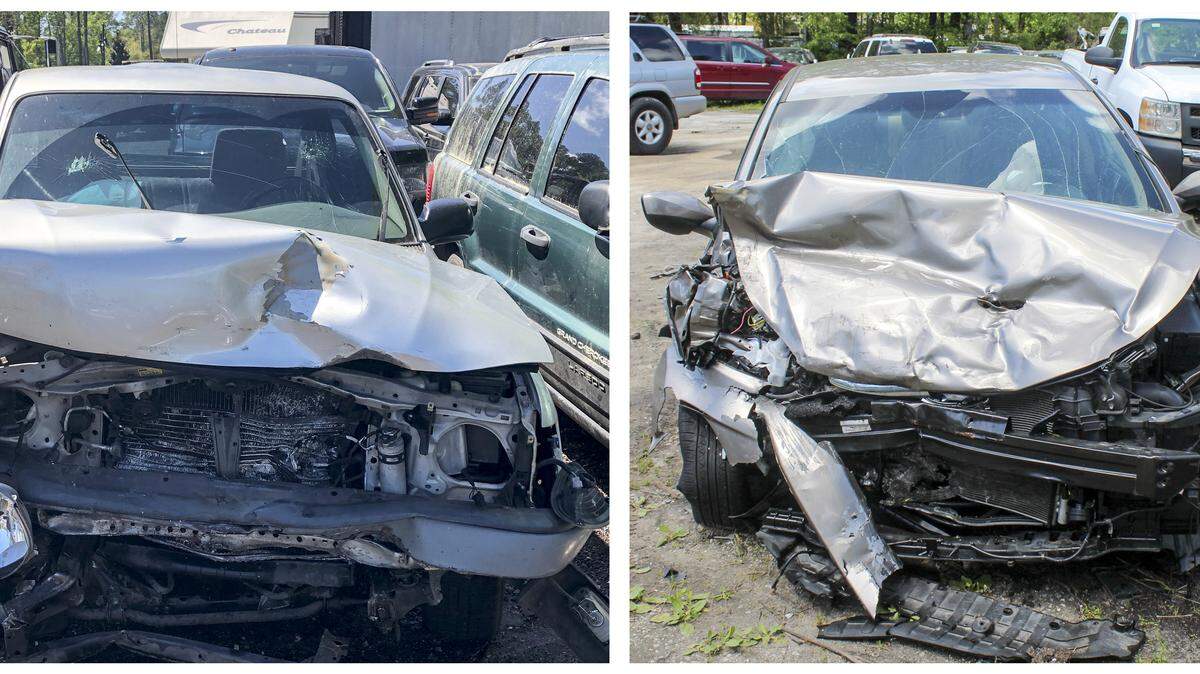
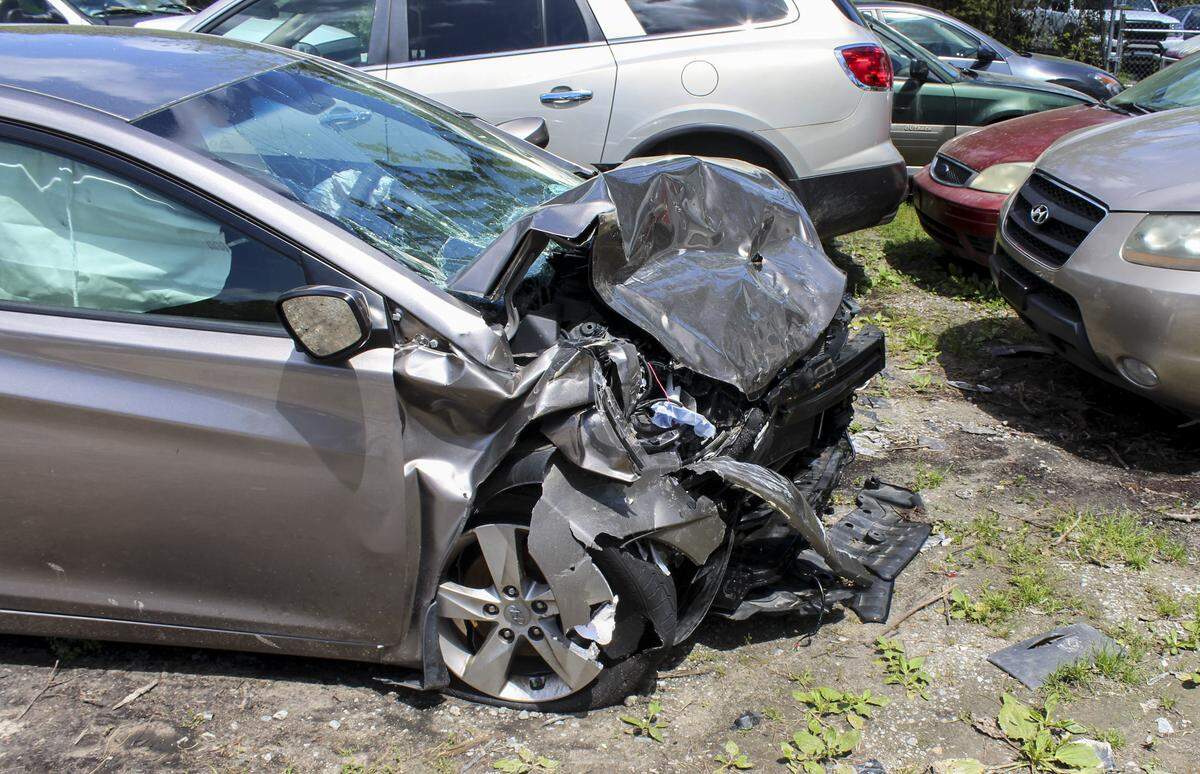
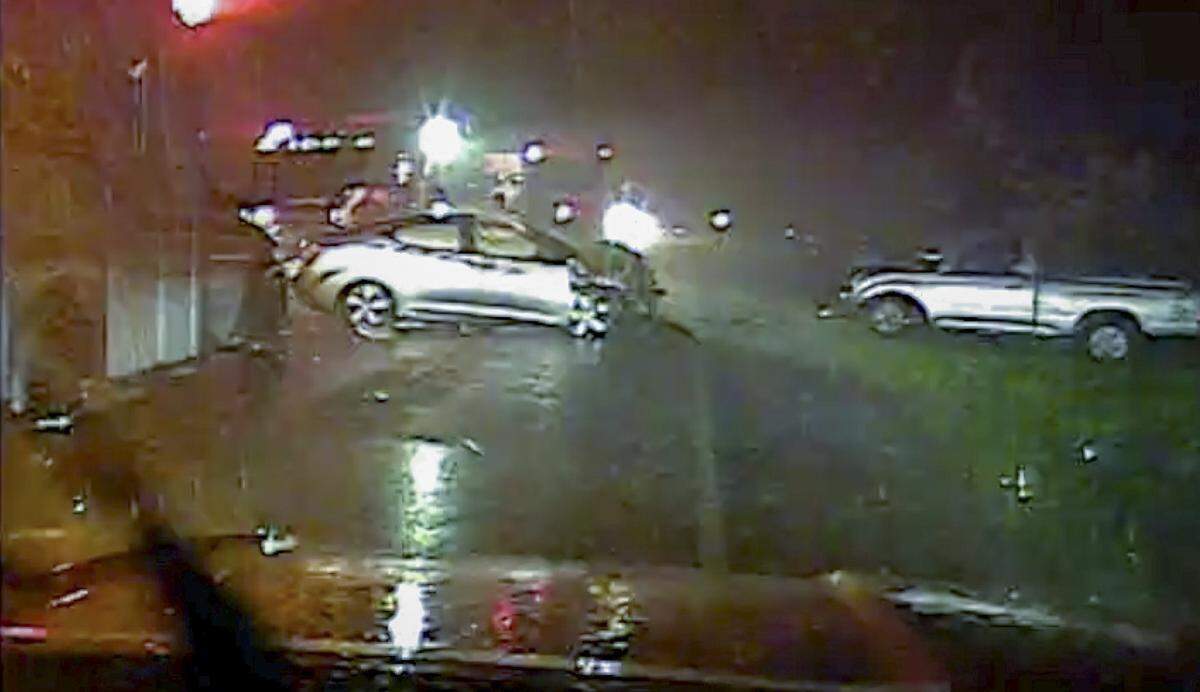
It was pitch dark and pouring on May River Road when Kayt Pierce left work at Ben and Jerry’s. The May River High School junior was still wearing her “Free Cone Day” shirt when she saw headlights cross over into her lane ahead, swerve away, then sharply back toward her.
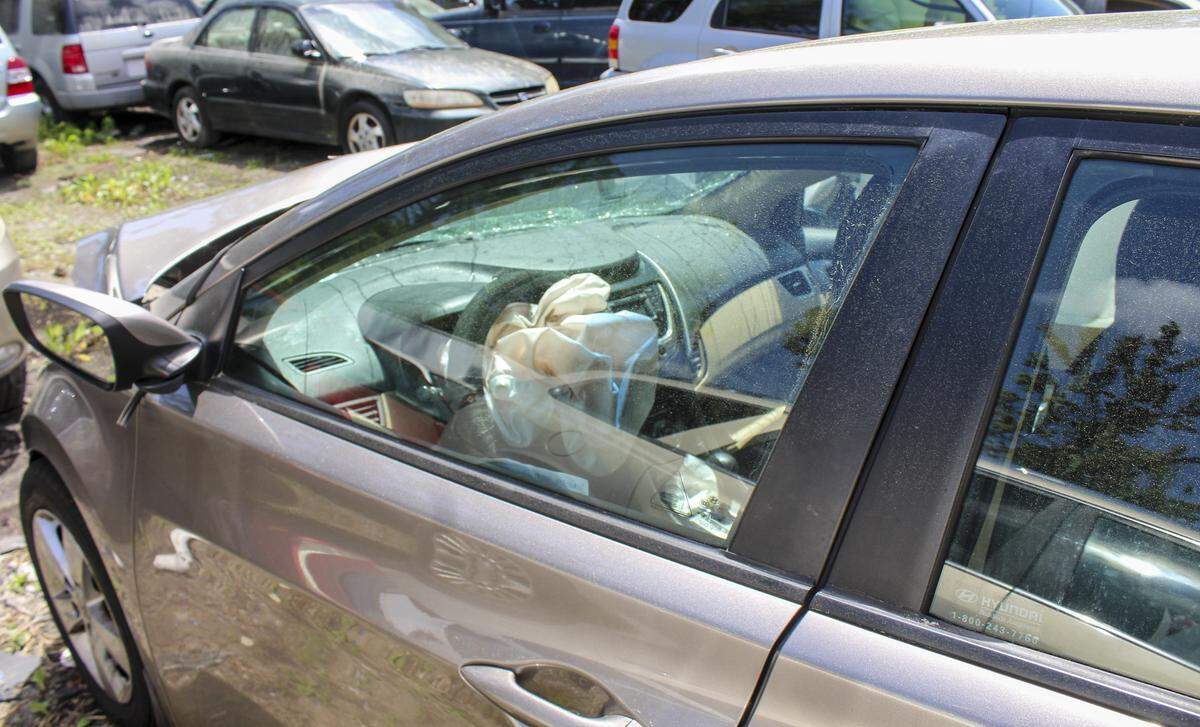
Time slowed. Kayt jerked the wheel. Metal crunched on metal. A flash of white — the airbag — and a pop. Then, ringing. Stillness.
She touched her face and felt moisture. “I thought there was blood everywhere. I got out of my car, and I couldn’t stand,” she said. Kayt fell to the wet pavement and started to scream.
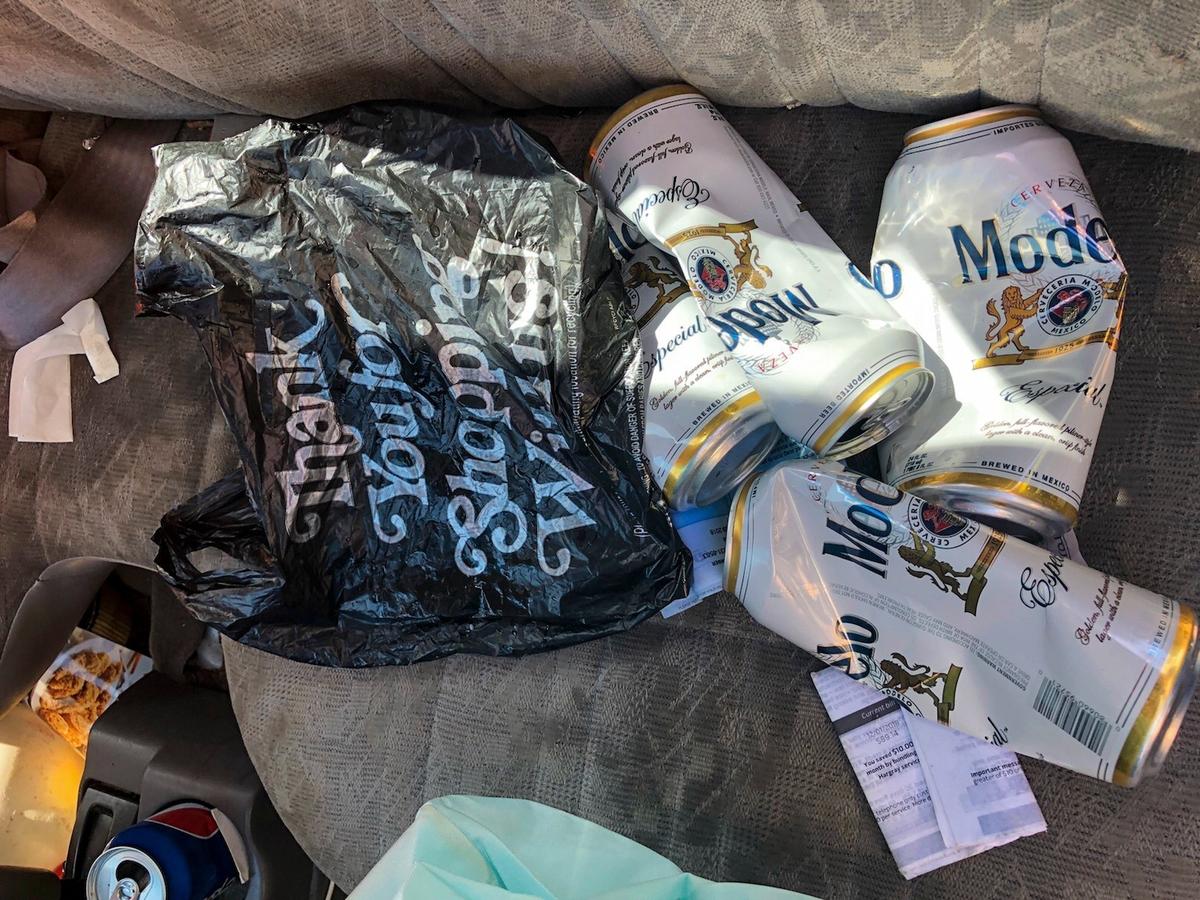
The driver of the pickup truck, Dulvin Garcia Roblero, didn’t leave the driver’s seat. Next to him sat a hard hat and four crushed 24-ounce Modelo beer cans. He stayed put as an ambulance took Kayt away. She remembers asking if he was okay, if the wreck was her fault.
It wasn’t. After he stumbled through a sobriety test and admitted to drinking several beers at a gas station in Savannah, a highway patrolman took Garcia Roblero to jail. Both cars were totaled. Three months later, he pleaded guilty to a first-offense driving under the influence charge.
But it wasn’t his first offense. He’d had another crash, another DUI and a conviction just three years prior. He’d even been drinking the same brand of beer, according to a police report.
And, according to a review of records by The Island Packet and Beaufort Gazette, Garcia Roblero is not alone. In Beaufort County — and across South Carolina — repeat offenders avoid elevated punishment, if they’re punished at all. Locally, only about one in three first-offense DUI arrests results in a DUI conviction, and hundreds of accused impaired drivers are let off with lesser charges or no charges at all.
The Packet and Gazette reviewed more than 2,000 DUI arrests made by four state and local law enforcement agencies in Beaufort County between 2017 and 2019. The newspapers found:
First-offense DUI conviction rates in Beaufort County lag behind other parts of South Carolina and no agency’s arrests result in conviction more than 35% of the time. At least one third of charges are dismissed entirely in some jurisdictions.
In some areas, like Bluffton in 2018, fewer than one in five arrests resulted in a DUI conviction.
Repeat offenders are let off again and again, sometimes more than once in the same year. DUI lawyers easily poke holes in cases.
Conviction rates for DUI are racially disproportionate, with African American and Latino defendants being convicted at rates 15 to 30% higher than whites.
And impaired driving kills more frequently in South Carolina than almost anywhere else in the U.S. The state ranks third in the nation for alcohol-impaired traffic fatalities per 100,000 people, according to data from the National Highway Traffic Safety Administration and U.S. Census Bureau. In both 2017 and 2018, the most recent years numbers are available, it was first among states with a population greater than 1.1 million people.
The biggest culprit behind drunk driving leniency? Prosecutors, police and advocates uniformly point to South Carolina’s byzantine DUI law filled with procedural loopholes — and the cottage industry of DUI defense lawyers that exploit them for several thousand dollars a case.
And, until recently in Beaufort County magistrate courts, police officers with no law degree were forced to prosecute their own cases against seasoned defense lawyers — a practice only sanctioned in four other states.
Many in local law enforcement recognize DUIs are a problem. But once cases get to court, agencies and municipalities don’t comprehensively track conviction rates. Neither does any state agency, so few can point to exactly how severe it is.
The Island Packet and Beaufort Gazette’s review revealed just that.
‘I ... don’t know how somebody can be so careless with somebody else’s life’
Kayt’s mother, Michelle Pierce, was in the middle of a busy shift at a Sea Pines restaurant. It was the week of the Heritage golf tournament, and she wasn’t checking her phone. She barely registered when a coworker approached her.
“Michelle, your husband’s on the phone,” she said.
“I’m kinda busy right now. Can you tell him I’ll call him back in a minute?” she replied.
But as soon as the words left her mouth, she paused. Why would he be calling? She checked her cell phone and saw all the missed calls.
Her coworker returned. “He can’t wait. You need to talk to him right now,” she said. Kayt had just been hit. “I was so frantic,” said Pierce. She dropped her apron and ran to her car in the rain.
When she got to the hospital in Savannah, Kayt was cocooned in blankets and a neck brace. Miraculously, she was okay. The blood she thought she felt in the immediate aftermath of the wreck turned out to be rain, or a figment of her panicked imagination. That night, doctors discharged her with bruises and small cuts, but no major injuries.
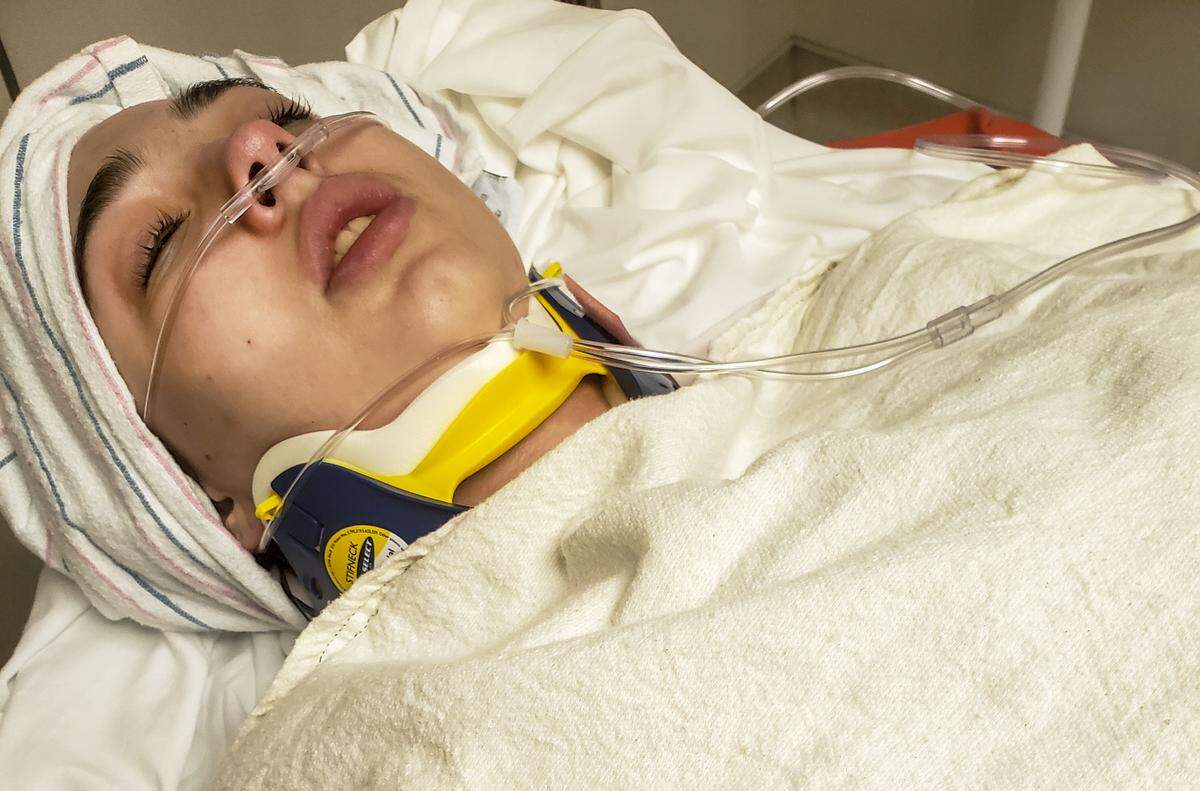
The migraines, sensitivity to loud noises and social anxiety would come, symptoms of what would later be diagnosed as post-concussion syndrome. Almost a year later, Kayt says she still wakes up with pressure headaches. She has nightmares of the accident, gruesome out-of-body experiences.

Weeks after the crash, she was at a school talent show when a classmate’s performance of Lady Gaga’s “Shallow” triggered a flood of memories. It had been playing on her car’s stereo when the truck swerved. She knows exactly which lyric.
What hurts the most is thinking about other victims of drunk driving. “There’s a lot of people who don’t get to live through these things,” she said.
She followed Garcia Roblero’s case as he pleaded guilty to a first-offense DUI charge in July. And as he was again arrested in December for the repeated rape of a Bluffton Middle School student. If convicted, Garcia Roblero faces up to 60 years in prison. He is currently incarcerated at the Beaufort County Detention Center, and a call and email to the lawyer that represented him on his DUI charge weren’t returned.
“I just don’t know how someone can be so careless with somebody else’s life,” said Kayt.
More complicated than murder
For some local prosecutors, low conviction rates are a symptom of South Carolina’s dysfunctional DUI law.
Murder is defined in state statute by a one-line sentence. The laws governing DUI are more than 20,000 words.
“It is unduly cumbersome, it is unduly confusing and it is fraught with loopholes and issues that make it very difficult on police officers,” said 14th Circuit Solicitor Duffie Stone in an interview at his offices, the thick section of the S.C. Code of Laws paper-clipped in front of him.
Across the state, another solicitor, Barry Barnette in the 7th Circuit covering Spartanburg and Cherokee counties, said he fears further revisions to the law.
“Every time we go back to try to change it, it seems like it creates more problems,” said Barnettte, a vocal critic of the current statute and an authority on DUI prosecution.
Phone book listings for attorneys, back when people used them, over-flowed with names of DUI specialists, said Stone. Today, their firms use billboards and Facebook ads. In South Carolina, “DUI law actually developed because of this type of statute,” he said. “You don’t see anybody that’s an expert in murder defense.”
“There’s a lot of defense attorneys that are making lots of money knowing the loopholes,” he said.
A 2019 Mothers Against Drunk Driving survey of 323 law enforcement officers across the state found that 71.1% of respondents listed “S.C. DUI laws were largely written by defense attorneys” as one of their top five reasons for decreasing trends in DUI enforcement, a reference to the profession’s healthy representation in the General Assembly.
The state’s DUI laws offer defendants stringent procedural protections, requiring the arrest, from the moment the officer activates their blue lights to after the driver has undergone a breathalyzer test at the police station, to be captured on video. And higher courts have interpreted the law to demand strict compliance for a successful case.
“No video in South Carolina, pretty much no conviction,” said Steven Burritt, MADD’s executive director in the state. Judges across the state have thrown out cases where a drivers’ foot left the frame, or the video’s audio skipped during a key moment.
‘We plead a lot of them down’
Some see the law differently. Defense attorney Joe Good of Mount Pleasant describes DUI as his “wheelhouse” — he’s defended hundreds of drivers charged with the crime. “When it’s bad, call Good,” reads his firm’s website.
Good said the law isn’t stacked against police.
“At the end of the day, everybody has a constitutional right to a defense,” said Good. “Our job as DUI defense lawyers is really to safeguard against the procedural mess-ups on the side of law enforcement.”
In one case he recounted, Good’s client blew .29% on a breathalyzer test, more than three and half times the legal limit. But the arresting officer turned on his body-worn microphone only after asking the driver to exit his vehicle and starting to administer field sobriety tests. “We ended up getting that case dismissed,” said Good.
In another, an affidavit included with evidence from the prosecution was included in a packet of papers. But it wasn’t signed. “That’s it. That’s all I needed. I didn’t go any further,” said Good.
“We plead a lot of them down,” Good said about his cases, referring to the common practice of striking plea deals for lower charges like reckless driving. Low conviction rates are just a reflection of the law giving someone “another chance” and an opportunity to be rehabilitated, he said.
“The defense lawyer’s goal from day one is to get it knocked down to a reckless,” said Terry Finger, Bluffton’s town attorney and a former part-time magistrate who presided over many drunk driving cases. While reckless driving will add six points to a driver’s license, it doesn’t carry the requirement of a special insurance rider — and corresponding steep rise in premiums — that can come with a DUI conviction.
MADD has never argued for 100% conviction rates, said Burritt.
“At some point you have to start connecting these cavalier attitudes about DUI with our ranking in the nation and the number of fatalities that we have,” Burritt said.
Beaufort County Sheriff P.J. Tanner agreed. “Getting a conviction for a first-offense DUI is extremely important,” he said. That sends a “powerful message” to the general public and deters future offenses with escalating penalties, he said.
One year, two arrests
Instead, the newspapers’ investigation found evidence of repeat offenders being let off again and again. On a September night in 2016, Bluffton Officer Darius Elkin pulled over a golf cart that skipped a stop sign a few blocks away from the bars in Old Town, according to a police report.
When the driver, Bradley Busbee, failed sobriety tests, Elkin arrested him and transported him to jail after he refused to provide a breath sample. Busbee had a prior drunk driving conviction on his record, according to court records.
But almost 10 months later, Busbee pleaded guilty to a lesser reckless driving charge and paid a $440 fine, records show. Reached by phone, Busbee declined an interview.
Three months after that, at almost 4 a.m., Bluffton Police responded to a call from employees at the Parker’s gas station on Jennifer Court. A man, the employees said, was “stumbling around” while attempting to purchase alcohol, according to a police report.
As an officer arrived at the gas station, the man, driving a blue BMW, nearly hit his squad car and a construction barrel, according to the report. After being pulled over, an officer asked him how much alcohol he had consumed.
“Honestly, I don’t know,” the man replied.
The man was Bradley Busbee, and the officer called to administer sobriety tests was again Elkin, who, again, took Busbee into custody. On the way to the department, Elkin brought up the previous arrest and asked if Busbee thought he should have been driving.
“Oh no, no, I should of just stayed home,” Busbee replied, according to the report.
Nine months later, Busbee was convicted, but the DUI charge again didn’t stick. Instead, he pleaded to reckless driving.
And Busbee isn’t alone. Out of just one year of Bluffton Police DUI arrests, the newspapers identified 25 people arrested two or more times in a several year period without facing escalated penalties because at least one of their charges was dismissed or pleaded down.
“People who get slaps on the wrist the first time are probably going to be more likely to try it again,” said Burritt of MADD.
In one local case of drunk driving tragedy, the fatal wreck that killed Bluffton real estate agent Cullen Mieczkowski in 2017, the responsible driver, Nikolai Wheeler, had an extensive record of prior offenses.
He had twice been arrested for DUI prior to the crash, according to police reports, although one of those charges was dismissed and the other was pending at the time. Wheeler also had multiple prior convictions for open container of alcohol in a motor vehicle and reckless driving.
He confessed to drinking a half a bottle of vodka and taking Xanax before the fatal crash. His blood alcohol concentration registered at more than three times the legal limit. In 2018, Wheeler was sentenced to 18 years in prison.
“The fact that so many people continue to think it’s not a big deal obviously flies in the face of our everyday experience of families lives being turned upside down by unpredictable, violent tragedies that occur all too often in our state,” said Burritt.
Where Beaufort County stands
Beaufort County’s first-offense DUI conviction rates lag behind benchmarks taken in other S.C. counties, and are significantly lower than averages in other states, the newspapers’ investigation found.
S.C. Highway Patrol arrests made in Beaufort County in 2017 and 2018 and tried in magistrate court resulted in DUI convictions an average of 33% of the time, the data show. Beaufort County Sheriff’s Office arrests, also tried in magistrate court, had a conviction rate of 30%.
A 2018 MADD court monitoring project conducted using a limited sample of first-offense DUI cases found higher rates in other parts of the state. In Richland County, 48% of cases surveyed resulted in a DUI conviction and 48% were pleaded down to a lesser charge. Just 3% were dropped or dismissed.
That last percentage is much higher in Beaufort County with a third of arrests surveyed being dismissed entirely in some jurisdictions, according to the newspapers’ analysis.
Beaufort Police Chief Matt Clancy tells his officers that what happens to their arrests in court is beyond their control. Their job is to “take that person off the road who is a danger to themselves and everybody out there,” he said. To do the job, “you’ve got to be satisfied with that.”
The conviction data compiled by the newspapers was racially skewed. In some courts, the disproportion was sharp. Highway Patrol and Sheriff’s Office arrests of African Americans and Latinos tried in magistrate court resulted in a DUI conviction at rates 23 to 27% higher than the conviction rate for whites.
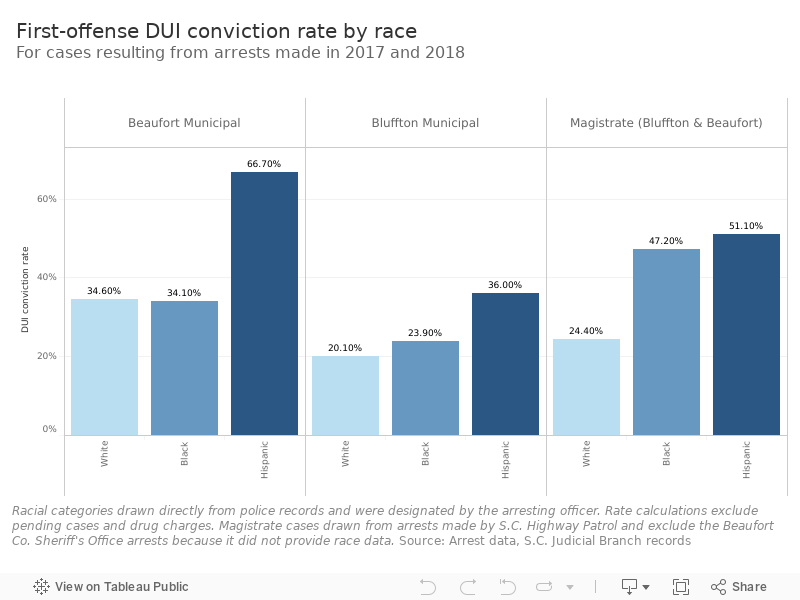
Prosecutors interviewed by the newspapers warned of limitations in conviction rate data. There are many “moving parts” between jurisdiction, including judges and magistrates with different tendencies and variability in who prosecutes DUI cases, Solicitor Stone said.
For Burritt and MADD, conviction rate analysis is a way to “get the conversation going” where it felt like “nothing was changing” with regards to DUI deaths in the state.
But each case is different, and there can be no “rubber-stamping” of charges determined by police, said Stone, whose office currently prosecutes repeat and felony DUI offenses in general sessions court. (Stone’s office doesn’t track DUI prosecution trends over time and couldn’t readily provide data on these more serious cases.)
Beaufort County officials recently took steps to dedicate more prosecutorial resources to first-offense cases, voting last year to provide almost $190,000 to Stone’s office in order to hire attorneys to take over first-offense DUI prosecution in magistrate court, where previously officers with minimal legal training had to bring their own cases.
The program began in December of last year, and Stone projects his attorneys will take on about 500 new cases this year as a result.
“I’m not going to promise you higher conviction rates,” Stone told the Beaufort County Council’s Finance Committee last year. Nonetheless, the money is contingent on results, and his office will begin tracking the first-offense cases it tries in the coming year.
“I think we’ll see improvement on the conviction rate,” said Sheriff Tanner. “Now we have lawyers versus lawyers in the summary courts.”
The Pierces will be watching. Kayt’s wreck “changed a lot of people’s lives that night,” said her mother. When Pierce hears sirens, the first thing she does is to make sure Kayt and her brother are okay.
For Kayt, the message is clear: “Don’t drink and drive because it could be a matter of somebody’s life.”
Mandy Matney contributed reporting.
BEHIND THE STORY
MOREWhy we chose to report on DUI
The Island Packet and Beaufort Gazette decided to investigate DUI enforcement and prosecution in Beaufort County, in part because it seemed no one else was. Data on convictions was fragmented between state and local agencies. Click the drop-down icon for our methodology.
What we learned has implications for all of South Carolina — read all of our three-part series.
How we collected data on DUI in Beaufort County
In order to conduct our data analysis, we requested basic information from police departments for almost every DUI arrest that took place in Beaufort County over the past three years using the South Carolina Freedom of Information Act. We asked for similar information for all resulting DUI charges from local courts, but many administrators referred us to the S.C. Court Administration, which denied our requests on the grounds that the information we were seeking was already available online. It is, but not in a format that is easily searchable for the purposes of a conviction analysis.
So we tracked down each of the approximately 2,000 Beaufort County cases in the state’s database, one-by-one, to figure how what happened as it moved through the system — a task complicated by the fact that plea deals are entered as new charges, separate from the initial case under a different case number. We verified conflicting information in our arrest data with police reports and from a S.C. Law Enforcement Division database of breathalyzer test results. We made efforts to include the Port Royal Police Department’s arrests, but since Port Royal Municipal Court’s case information isn’t available online key details couldn’t be verified and those arrests were excluded from our analysis. (All other agencies actively enforcing traffic violations in Beaufort County were included.) Traffic offenses, such as DUI, cannot be expunged in South Carolina, so we were able to rely on the publicly available information for each case. We made efforts to verify our results by comparing them to conviction totals reported to the S.C. Department of Motor Vehicles, accepting that some degree of inaccuracy was unavoidable because of the quality of arrest data and court records available to us.
We focused on first-offense charges because they are by far the most common, representing the majority of all cases filed. Our analysis grouped DUI charges with driving with an unlawful alcohol concentration (DUI per se) charges — a separate charge based on a blood alcohol content reading but carrying identical penalties. Repeat offense and felony DUI cases are tried in the higher General Sessions Court, and we chose to exclude them because they are frequently dismissed as part of plea deals related to multiple charges and they carry much more serious penalties. Our analysis also excluded first-offense DUI arrests that resulted in a plea to an associated drug charge but no DUI conviction (a small percentage of cases). We used arrests made in 2017 and 2018 because many made in 2019 and 2020 haven’t moved through the court system yet.
When we refer to “DUI conviction rate” we are referring to the percentage of DUI cases resulting in subsequent DUI convictions. Some members of law enforcement and prosecutors argued to include pleas to lesser charges, like reckless driving, in this rate, but we chose not to because of the unique penalties a DUI conviction carries, including higher car insurance rates, greater fines and jail time, driver’s license suspensions and potential implications for employment and professional licensing. For about half of the arrests we reviewed, law enforcement agencies provided arrest data in a format that made it difficult to distinguish between a plea deal to a lesser charge and a dismissed case or not guilty verdict. Where possible, we included percentages of pleas to lesser charges, dismissed charges and not guilty verdicts (less than 1% of cases) separately. Much of our methodology mirrors that used by S.C. Mothers Against Drunk Driving’s court monitoring project.
This story was originally published March 12, 2020 at 4:55 AM with the headline "In Beaufort County, hundreds arrested for DUI aren’t convicted. Why?."