No charges against deputies involved in Charleston jail death of Jamal Sutherland
READ MORE
Jamal Sutherland
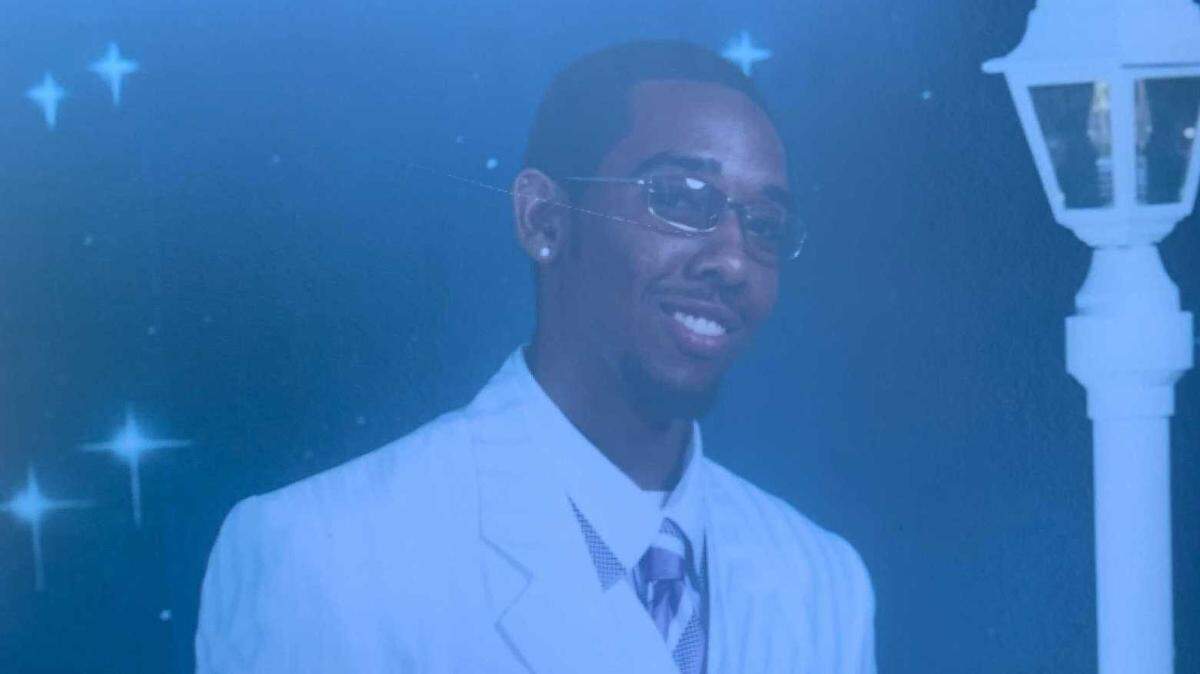
Jamal Sutherland, a Black man with a history of mental illness, died at the Charleston County Jail on Jan. 5. After graphic footage showing his death was released by the Charleston County Sheriff’s Office, many questions around the investigation remain.
Expand All
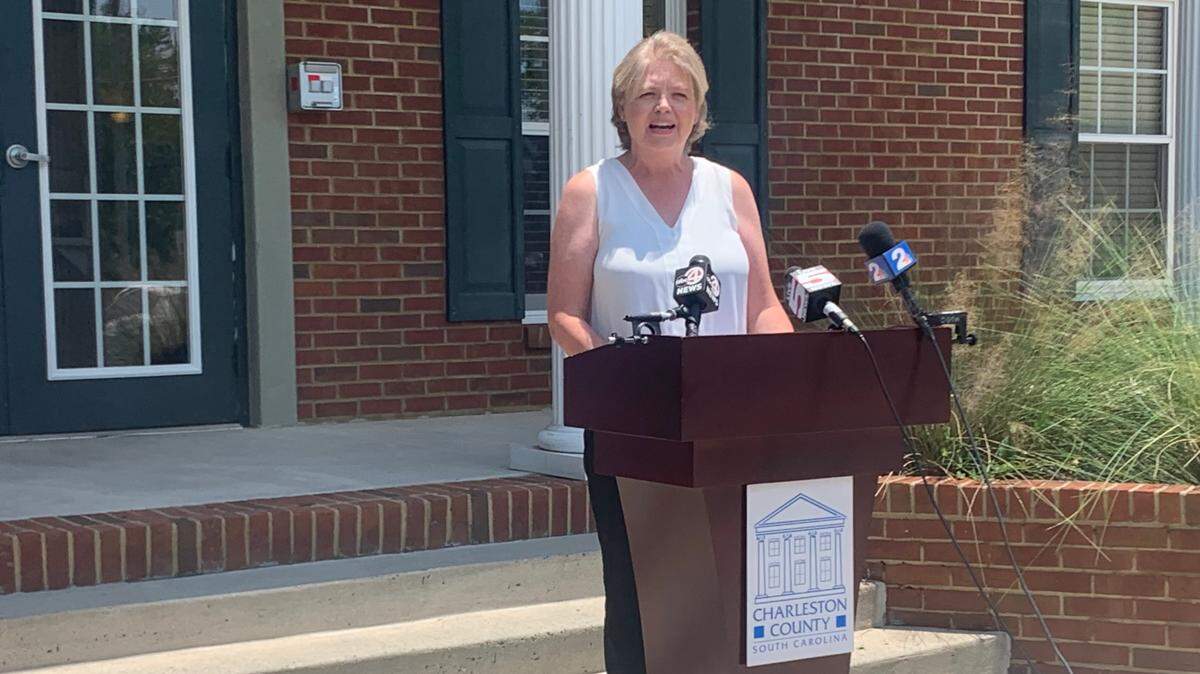
Jail deputies who repeatedly fired their Tasers at a mentally ill Black man shortly before he died inside the Al Cannon Detention Center will not face criminal charges, 9th Circuit Solicitor Scarlett Wilson announced Monday.
Sutherland, 31, died the morning of Jan. 5 after two Charleston County sheriff’s deputies forcibly removed him from his cell for a scheduled bond hearing. Sutherland, who had been transferred to the night before from a mental health facility where he was seeking help, was facing a misdemeanor charge connected to a fight at Palmetto Lowcountry Behavioral Health.
The deputies involved in the incident were detention deputy Brian Houle and detention Sgt. Lindsay Fickett.
“I can prove what they did. I cannot prove their criminal intent,” Wilson said at the conclusion of an hour-long press conference, where she called Sutherland’s death a tragedy and raised concerns about law enforcement training of the deputies involved in the incident.
She also distributed a 23-page report on Sutherland’s death on her findings, along with a 52-page assessment from Gary Raney, an expert on use of force in detention settings.
“Based on the facts and the law, I know that the evidence would not support convictions of Lindsey Fickett, or Brian Houle,” Wilson said in her 23-page report on Jamal Sutherland’s death.
However, she also stressed that Sutherland died through no fault of his own.
“The heartbreaking fact is that Mr. Sutherland’s death was entirely avoidable,” Wilson wrote. “With better treatment, care and concern by all the institutions involved, Jamal Sutherland would not have died the way he did on January 5.”
In explaining the basis of her decision, Wilson said her decision was based on her almost 30 years of experience as a prosecutor, and as a prosecutor who has brought cases against law enforcement officers.
Without mentioning the case by name, Wilson referenced the 2015 state murder trial she pursued against former North Charleston police officer Michael Slager, who shot and killed a fleeing Walter Scott after a traffic stop for a broken tail-light.
She said that while she could prove what the officers did that led to Sutherland’s death, she could not legally prove that there was any criminal intent behind their actions. Thus, she said, she could not ethically pursue charges.
“We have to get into what they were thinking, what they believed,” Wilson said. “They made some grave mistakes, but what you will hear is some of the reasons that they made these mistakes.”
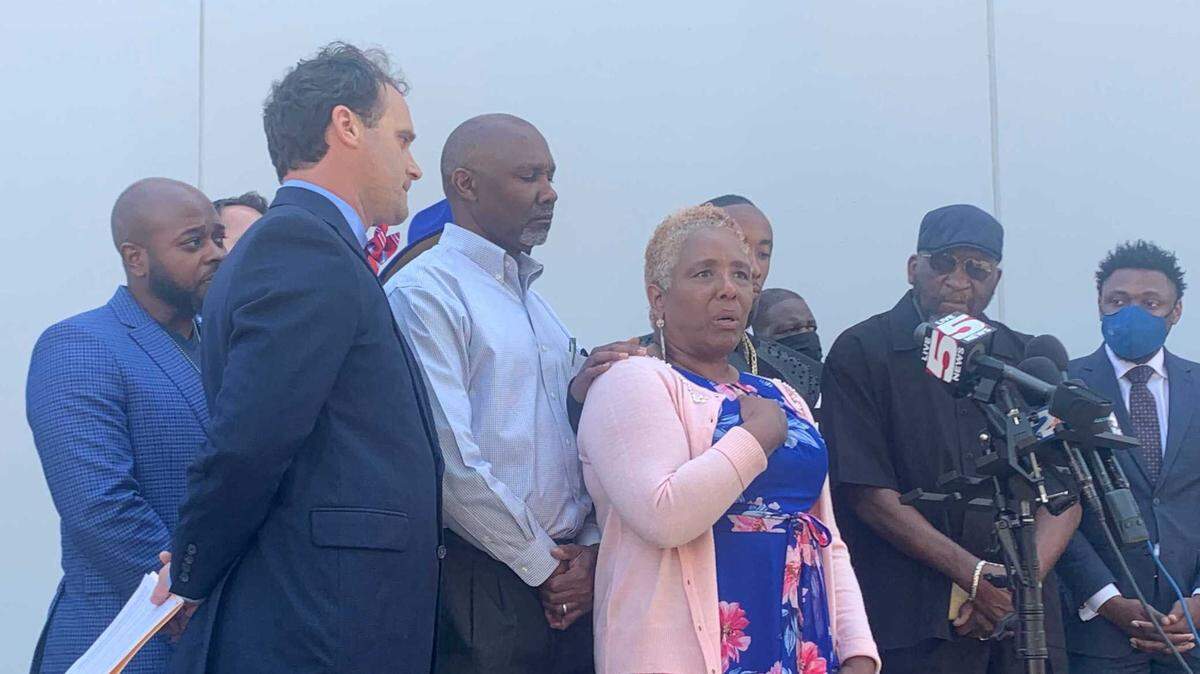
Wilson said she had spoken with Sutherland’s family prior to Monday’s announcement and said the Sutherlands are “angry, frustrated, disappointed. And I wouldn’t expect anything else.”
Sutherland’s family was expected to hold a news conference later Monday afternoon.
‘Damning’ details of Sutherland’s death
The Charleston County Coroner’s Office initially ruled Sutherland’s death as “undetermined” and said he died “as a result of excited state with pharmacotherapeutic effect during subdual process.” It was later decided that his manner of death was, instead, “homicide.”
That decision does not carry a legal conclusion. Charleston County Coroner Bobbi Jo O’Neal said when a death is not natural, homicide is one of the permissible classifications of death. The others are accident, suicide and undetermined.
O’Neal has said Sutherland likely died of a cardiac event. More specifically, she said it appears Sutherland died of an abnormal heart rhythm, also known as a fatal dysrhythmia.
For months, details surrounding Sutherland’s death were unknown. But in May, Charleston County Sheriff Kristin Graziano released graphic footage showing what happened. The public dissemination of dozens of videos came after months of mounting public pressure calling for their release.
Wilson, whose office reviewed the case, said she could not conclude that the officers had committed a crime.
Her decision came after Wilson investigated the findings of the State Law Enforcement Division. Along with the SLED report, Wilson sought a second opinion on Sutherland’s manner of death and requested an expert opinion and advice about use of force in a detention setting.
In mid-July, Wilson said the Charleston County Sheriff’s Office had handed over 162 gigabytes of information on the detention deputies involved in Sutherland’s jail death.
For a person to be held criminally responsible for another person’s death, Wilson has previously said, the state must prove that unlawful conduct was the proximate, or direct, cause of death.
“I cannot prove their criminal intent,” Wilson repeated Monday, as she simultaneously expressed disgust at the actions she saw in videos from the jail. The videos “are damning. They are disturbing. They are upsetting. And they are one of the reasons that this case and this analysis has taken as long as it has.”
Sutherland was booked into the jail on Jan. 4 after an alleged fight at Palmetto Lowcountry Behavioral Health Center, a mental health facility where Sutherland was receiving care for schizophrenia and bipolar disorder. He was arrested by North Charleston Police.
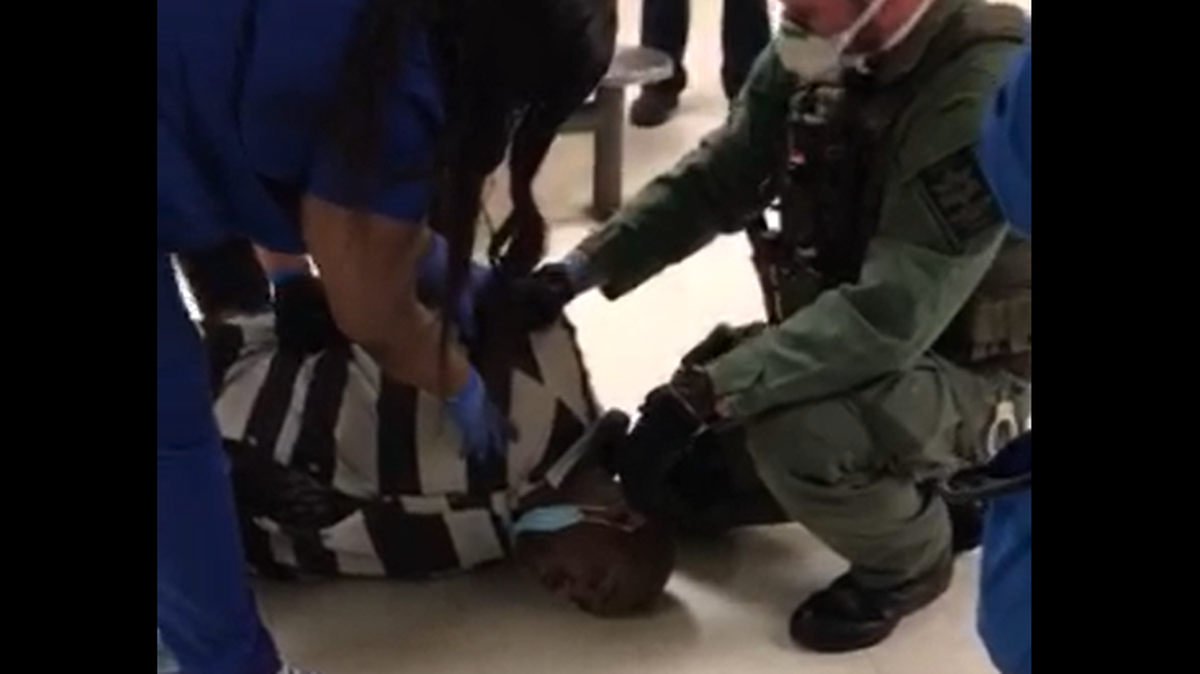
During Sutherland’s encounter with the two jail officers on Jan. 5, footage shows he was sprayed twice with a chemical irritant and shocked repeatedly with a stun gun. Sutherland wailed in pain as he lay face down on the floor, at one point screaming for 34 seconds straight.
As Sutherland lay on the floor with deputies on top of him, their knees pressed into his back, Sutherland at one point can be heard saying, “I can’t breathe.”
As medics tend to Sutherland, Houle can be heard telling medical staff members, “He got tased about probably six to eight times at least.”
“Oh my god,” a member of the medical staff responded.
“He kept fighting us through,” Houle said in the video.
Wilson said Monday that “after the first two Tasers, it is no wonder that Jamal Sutherland was afraid and was frantic.”
Summarizing his report, Raney said it was “unheard of” to send two people in to conduct a jail extraction. He also said only one of the deputies, Hule, was trained to do so.
Before deputies shocked Sutherland with their Tasers, though, deputies used chemical spray to subdue Sutherland. Raney said the practice is to typically wait 5-10 minutes to let the spray take effect. The deputies, he said, failed to do so.
Raney said his report also revealed that in 2008, under previous Charleston County Sheriff Al Cannon, the sheriff’s office adopted different tactics for cell extraction that deployed “intimidation and aggression rather than communication and de-escalation.”
Officers followed their training
Revealing new details, Wilson said that Houle had earlier asked his supervisors to not have to remove Sutherland from his cell for the bond hearing. But it was jail policy at the time to force detainees to attend hearings. And, Wilson added, it was officers’ training that guided them to use force against Sutherland.
“When all you have is a hammer, you see a nail,” WIlson said. “That’s what they saw. They saw they had to go in, per their supervisors,” Wilson said of Fickett and Houle.
“There’s no question they were negligent. There’s negligence throughout this case,” she continued, “But this is how they were trained.”
According to information provided by the sheriff’s office after the Jan. 5 death, Houle was employed with the agency since July 2016. Fickett, who could be seen kneeling on Sutherland’s back in video footage, had worked for the sheriff’s office since March 2011.
They were fired by Charleston County Sheriff Kristin Graziano on May 17.
Facing questions about their employment during a May 14 press conference, Graziano said Houle and Fickett had been placed on paid administrative leave for 30 days after Sutherland’s death.
The deputies then returned to work in desk jobs where they had no contact with the jail population, Graziano said at the time.
Since the public revelation of the actions that caused Sutherland’s death, Graziano has ushered in a number of changes at the jail, including ending the policy that inmates must be brought to bond hearings.
This story was originally published July 26, 2021 at 1:47 PM with the headline "No charges against deputies involved in Charleston jail death of Jamal Sutherland."