U.S. 521 needs to be wider, whether you know it as Charlotte Highway or Johnston Road
The backbone of Indian Land’s road network needs more lanes. They won’t come cheap.
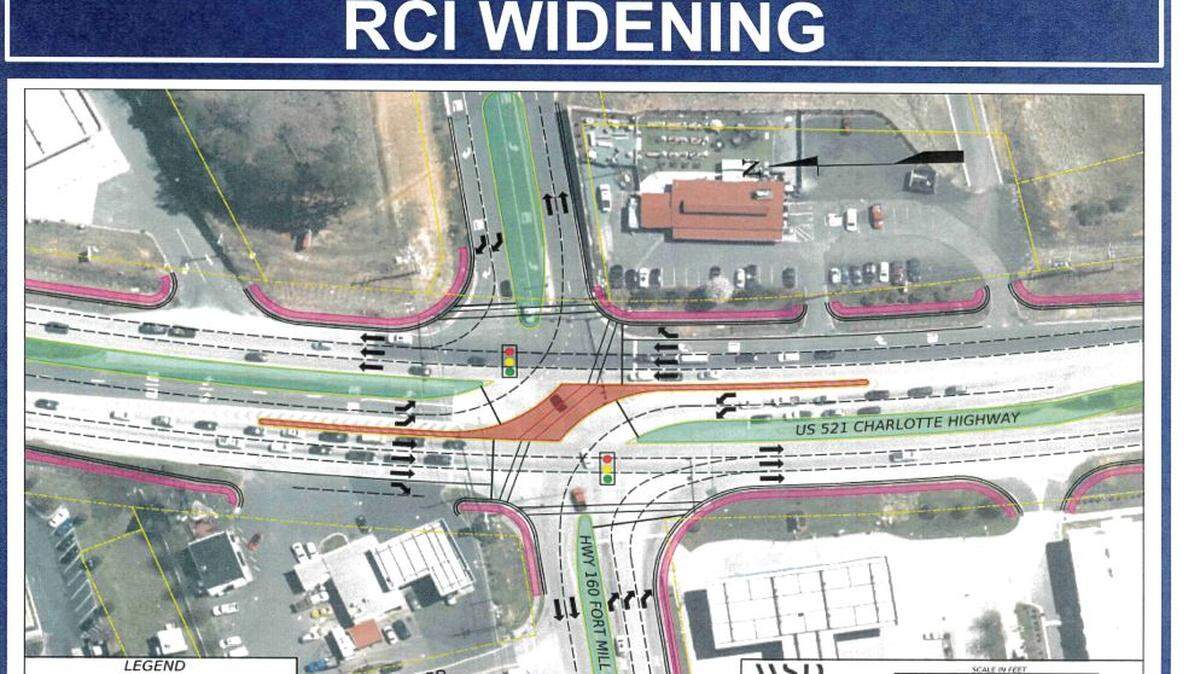
The Rock Hill-Fort Mill Area Transportation Study organization updated its policy committee earlier this month on options for U.S. 521 (Charlotte Highway). The transportation group studied an almost nine-mile stretch from the North Carolina line to Waxhaw Highway.
For Indian Land, an area of explosive residential and business growth for more than a decade, U.S. 521 runs like a spine through the middle. From Indian Land, U.S. 521 runs through Charlotte’s Ballantyne area of Mecklenburg County where it becomes Johnston Road and passes I-485 on the way to Charlotte.
Thousand of commuters from Lancaster and York counties in South Carolina and Union and Mecklenburg counties in North Carolina use the road daily traveling back and forth. For Lancaster County, the highway is critical to transportation.
“There is one key corridor,” RFATS administrator David Hooper told his policy committee earlier this month. “That’s it. We have to get this right.”
That stretch is proposed for expansion to six lanes.
“Also along with this, the parallel roads and roads that go off of Highway 521 are being looked at as well,” Lancaster County Councilman and policy committee member Brian Carnes said Monday night. “Specifically Henry Harris Road, Marvin Road, Possum Hollow Road and Harrisburg Road. These roads provide some avenues of being able to get traffic off of 521.”
Carnes updated county council on current planning options.
One approach in the RFATS study is simply widening the existing road.
The other involves what is sometimes called a superstreet concept. Lanes are added, but limited left turns or other measures move traffic in a way designed to create better flow.
“And then it’s routed to a traffic signal downstream from where the intersection is, and then the people are able to turn and go back the opposite way,” Carnes said. “These are especially useful when you have an intersection where you have a lot of traffic accidents.”
That setup, Carnes said, would have right turns from smaller roads onto U.S. 521. That would be similar to how the right-out setups work at Baxter or Kingsley in Fort Mill.
A role for Charlotte in the plan
David Hooper, RFATS administrator, told the committee there are three main non-interstate routes through the urbanized parts of York and Lancaster counties. York County has S.C. 160 and Celanese Road. Lancaster County has U.S. 521.
“Those three really drive the bulk of the demand,” Hooper said.
Policy committee members recognize the role of U.S. 521. Fort Mill Mayor Guynn Savage said she is glad to see its intersection with S.C. 160 addressed in the recent study.
“Historically that’s been a very dangerous intersection,” Savage said. “I’m aware of people being killed at that intersection.”
Tega Cay Mayor Chris Gray said RFATS should coordinate with Charlotte road planners so widening on the South Carolina side doesn’t hit a standstill at the North Carolina line. It’s a similar concern to past widenings on roads that cross the state line, like S.C. 160 west near Tega Cay.
“It’s going to choke it off, and we’re going to spend all this money and not fix anything,” Gray said.
Carnes said the intent is to coordinate with improvements in North Carolina, approved there several years ago but slow in getting a construction date.
$100 Million price tag
The U.S. 521 project won’t start today.
The RFATS study has work remaining, with updates expected early next year. The project isn’t yet funded. The estimate in today’s dollars, though, puts the project on par with some of the area’s larger road jobs.
The price to widen the road to six lanes for the full stretch of study area, with traditional widening, would cost almost $103 million. A full superstreet concept the whole way would cost almost $125 million. A hybrid, with some traditional and some superstreet widened intersections, would likely cost somewhere in the middle, depending on specific intersection plans.
Chief Bill Harris with the Catawba Indian Nation saw the price tags when the policy committee reviewed the study. Harris knows that timing is an important part of cost.
“They never get cheaper,” Harris said. “They only go up.”
The county has about $10 million. Other possible funding sources include federal guideshare money through RFATS, the state infrastructure bank, the federal highway administration and a county capital sales tax.
For comparison, this fall the state infrastructure bank approved $64 million for improvements at I-77 and Carowinds Boulevard in Fort Mill. The full project at the Carowinds exit should cost about $86 million.
Two years ago the infrastructure bank approved almost $75 million for I-77 upgrades at the S.C. 160 exit in Fort Mill, and the Cherry Road-Celanese Road exit in Rock Hill. Infrastructure bank funding comes with a requirement that local governments match the funding they get. Upgrading those two intersections is likely double, or more, what the infrastructure bank itself would allocate.
Guideshare and other funding sources will contribute.
A plea for help
RFATS doesn’t yet have details, without funding, for when work on the South Carolina side of U.S. 521 might happen.
“I don’t know when it’s going to start,” Carnes said.
More information from the study should come in January.
John Delfausse sits on the Lancaster County transportation committee. He has been involved in various county activities related to growth, including the failed referendum in 2018 on whether Indian Land should become a town.
Delfausse addressed RFATS this month with calls for help.
Growth brings lots of issues to the area, he said.
“But mostly, clogging up our roads,” Delfausse said.
“What we need is for traffic to flow better,” he said.